
Macchiato Cup Buying Guide: Compact Ceramic Sizes Compared
Reading time: about 9 minutes
On a small kitchen counter, the wrong cup reveals itself right after the pour: the milk cap sits at the rim, the walk to the desk leaves drips, and a compact drink looks lost in a large mug. A macchiato cup should give the drink enough room without turning it into an oversized milk beverage. In our store, the useful comparison is not simply smallest versus largest. It is completed drink volume plus practical headroom.
Which macchiato cup capacity leaves useful headroom?
Macchiato proportions are not universal. Some people prepare a short espresso marked with a small amount of milk or foam, while some cafe menus use the same name for a larger, milkier drink. Your own completed pour is a better buying reference than a rigid recipe.
Measure one normal serving, including espresso, milk, and foam. Then leave room above it. As a practical starting point, we often allow roughly 30 to 50 ml of unused capacity for foam, stirring, and carrying the cup from the machine to a desk or table. That range is guidance, not a rule, because foam volume and cup geometry vary.
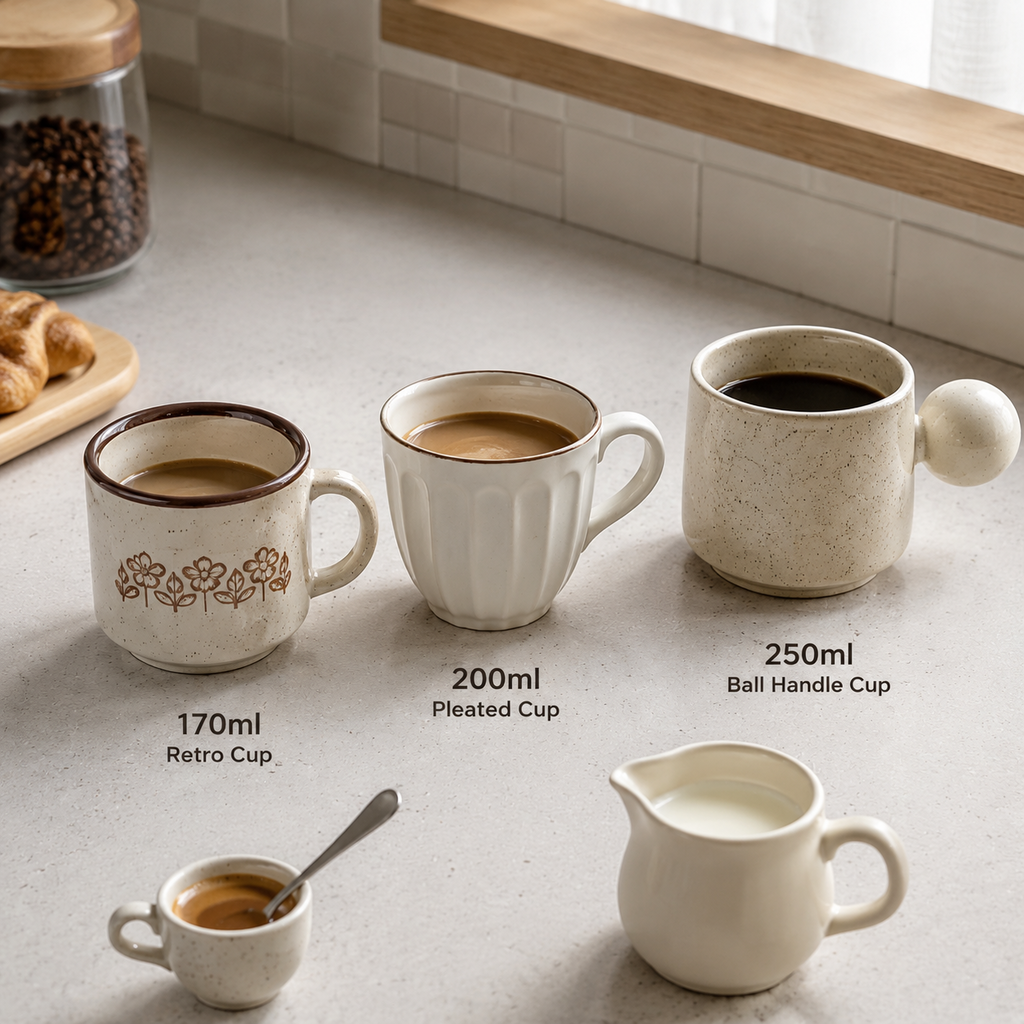
- A completed drink around 100 to 120 ml: A 170 ml cup provides a compact presentation with theoretical headroom of 50 to 70 ml.
- A completed drink around 130 to 160 ml: A 200 ml cup gives more flexibility for milk and foam without moving into full-size mug territory.
- A completed drink around 170 to 210 ml: A 250 ml cup is the more forgiving option, especially if your pour changes from day to day.
These examples use simple subtraction from the listed capacity. Actual usable space can feel different depending on the cup's taper, rim width, wall thickness, and how high you are comfortable filling it. Treat listed capacity as a size category, not a target fill line.
170 ml, 200 ml, or 250 ml: matching the cup to your pour
| Listed capacity | Best fit | Main trade-off | Option to compare |
|---|---|---|---|
| 170 ml | Short, controlled servings with a compact visual scale | Less forgiving if you add extra milk or a tall foam cap | Retro Coffee Tea Cup |
| 200 ml | Shoppers balancing compact size with moderate headroom | Larger than a very short espresso-style serving requires | Pleated Coffee Tea Cup |
| 250 ml | Larger macchiato interpretations and variable home pours | May feel oversized for a small espresso with only a mark of milk | Ball Handled Coffee Tea Mug |
The 170 ml Retro cup is the smallest listed option. It suits a shopper who already knows the finished drink stays well below that capacity and wants the cup to look proportional to a short pour. The limitation is clear: an extra splash of milk can quickly use the available headroom.
The 200 ml Pleated cup adds 30 ml over the Retro cup. That difference is modest on paper but useful when foam height or milk quantity changes slightly. The 250 ml Ball Handled cup adds another 50 ml over the Pleated cup and 80 ml over the Retro cup, giving the most room of these three ceramic options.
Capacity does not prove exterior dimensions. Handles, walls, and silhouettes can change how a cup fits under a coffee machine, on a shelf, or beside a keyboard. For more visible forms beyond these three sizes, browse our unique coffee mugs collection and check each listing rather than assuming every compact-capacity cup has the same footprint.
How do ceramic form, rim, and handle shape affect daily use?
Ceramic gives a compact coffee cup a substantial feel, but the visible form determines much of the handling experience. We pay attention to three contact points when handling this category: the rim, the handle, and the foot ring.
- Rim: A smooth, evenly finished rim matters because small cups bring the drinking edge into frequent contact with your lips and spoon. A chip is more noticeable here than it would be on the side wall.
- Handle: A ball-shaped handle creates a different grip from a conventional loop. Some shoppers like bracing or pinching a shaped handle; others prefer putting one or two fingers through a loop. The Ball Handled cup should be chosen for its visible form and capacity, not on the assumption that one grip works for every hand.
- Foot ring: The underside should sit steadily on a flat surface. A rough exposed ceramic edge can mark a polished desk or table, so a saucer or coaster is sensible if the base feels abrasive.
The Pleated cup has a visibly ridged exterior, which gives it more surface detail than a plain wall. That form can be appealing on an open shelf or guest tray, though dried milk or coffee residue may require extra attention around the pleats. Shoppers considering that form can use our detailed Pleated Ceramic Coffee Cup 200 ml comparison alongside the product listing.
Retro styling and a ball handle are visual choices as much as functional ones. Neither replaces checking the listed capacity, care information, and product images. A distinctive cup can be enjoyable to display, but it still needs to suit the way you hold and fill it.
What should you inspect and clean on a compact ceramic cup?
Compact cups are easy to handle one at a time, yet their rims and handles can knock against spoons, sinks, and neighboring dishes. During a new-cup unboxing, we inspect the drinking rim first, then the handle joins, interior glaze, and base.
- Check before the first pour. Look for rim chips, a hairline crack through the ceramic body, an interior patch that appears unintentionally unglazed, or movement where the handle joins the cup. Contact the seller before using a damaged cup with a hot drink.
- Warm it gradually. A warm-water rinse before adding hot espresso can reduce the temperature jump and help a small serving remain warm. Avoid moving ceramic directly from a very cold environment to boiling-hot liquid.
- Rinse milk residue promptly. Foam and milk films are easier to remove before they dry around the rim or textured exterior. Use mild dish detergent and a nonabrasive sponge when hand washing.
- Verify appliance care. Do not assume a ceramic cup is dishwasher-safe or microwave-safe solely because it is ceramic. Follow the current product listing or included care information.
- Store without rim pressure. If cups are stacked, make sure the upper cup does not grind against the glazed rim below it. A liner between pieces can help when shelf space is tight.
Also avoid using a metal spoon to strike the rim when shaking off drops. That repeated point impact is unnecessary and can eventually expose a weak spot. Gentle stirring is enough for a compact drink.
Which compact cup fits a kitchen, office, guest tray, or gift?
The best recommendation depends on where the cup will be used and how predictable the pour is. Each option should solve a specific situation rather than simply being the most decorative choice.
- For a small, consistent home pour: Choose the 170 ml Retro cup if your measured drink stays comfortably under capacity. Its smaller listed volume keeps a short serving visually compact, but it is not the forgiving choice for frequent extra milk.
- For a shared kitchen or changing recipes: The 200 ml Pleated cup offers a middle position. It fits someone who wants more headroom than 170 ml without automatically stepping up to 250 ml.
- For an office desk: The 250 ml Ball Handled cup gives more room to carry the drink without filling close to the rim. Check that the shaped handle suits your grip and that the cup fits the available desk area.
- For a guest tray: A 170 ml or 200 ml cup can keep the setup compact when serving shorter drinks. Our small ceramic cup guest tray guide covers tray space, arrangement, and serving considerations in more detail.
- For gifting: Select by the recipient's usual drink first, then by visible form. A pleated exterior, retro shape, or ball handle can make the unboxing more distinctive, but capacity remains the practical filter.
Do not assume that a saucer, spoon, lid, or gift box is included unless the current listing explicitly shows or states it. Product photos can help you compare form, but the written listing should guide decisions about included pieces and care.
Where does a compact ceramic cup fall short?
A compact cup is not the right tool for every coffee routine. Ice takes up substantial room, so these capacities are generally restrictive for iced coffee. They are also a poor fit for long drip coffee, large milk drinks, or anyone who wants one cup to last through an extended meeting without a refill.
The 250 ml option provides the most flexibility in this group, but it is still far smaller than a large everyday mug. At the other end, 170 ml may be too tight for a person who does not measure milk and regularly pours by eye.
Tea drinkers who prefer a longer steep and a larger serving should compare their needs separately instead of assuming a macchiato-sized cup will cross over. Our tea ceramic cup buying guide explains the different size and daily-use questions. A travel mug is also a better choice if you need a sealed lid, insulation, or bag-friendly carrying.
Frequently asked questions
Is a 170 ml macchiato cup too small?
Not if your completed drink stays well below 170 ml. A 100 to 120 ml serving leaves useful theoretical headroom, while a 150 ml serving leaves only 20 ml and may be awkward with foam. Measure your normal pour before ordering.
How much empty space should I leave above a macchiato?
Roughly 30 to 50 ml is a practical shopping allowance for many compact servings, especially when milk foam is involved. It is not a universal standard. Leave more space if you carry the cup between rooms or tend to pour without measuring.
Is 250 ml still compact enough for a macchiato cup?
It can be compact relative to a full-size mug, but it will look generous around a very short espresso-style drink. The 250 ml capacity makes more sense for a milkier interpretation, a variable home pour, or a shopper who prioritizes spill headroom.
Can a ceramic macchiato cup go in the dishwasher or microwave?
Only follow dishwasher or microwave guidance stated on the current product listing or supplied care information. Ceramic material by itself does not confirm appliance compatibility. If that information is absent, hand wash with mild detergent and use a separate microwave-safe vessel for reheating.
Use this five-point check before ordering
- Measure one completed drink, including milk and foam.
- Add about 30 to 50 ml of practical headroom, adjusting for your carrying habits.
- Compare 170 ml, 200 ml, and 250 ml rather than choosing by appearance alone.
- Decide which visible form suits your grip: retro, pleated, or ball handled.
- Confirm care instructions, included pieces, and exterior fit on the current product page.
For a short, controlled pour, start with 170 ml. Move to 200 ml for a middle ground or 250 ml when extra milk and carrying room matter more than a tightly scaled presentation. Then compare the available forms in our unique coffee mugs collection against your measured serving before ordering.
Read more
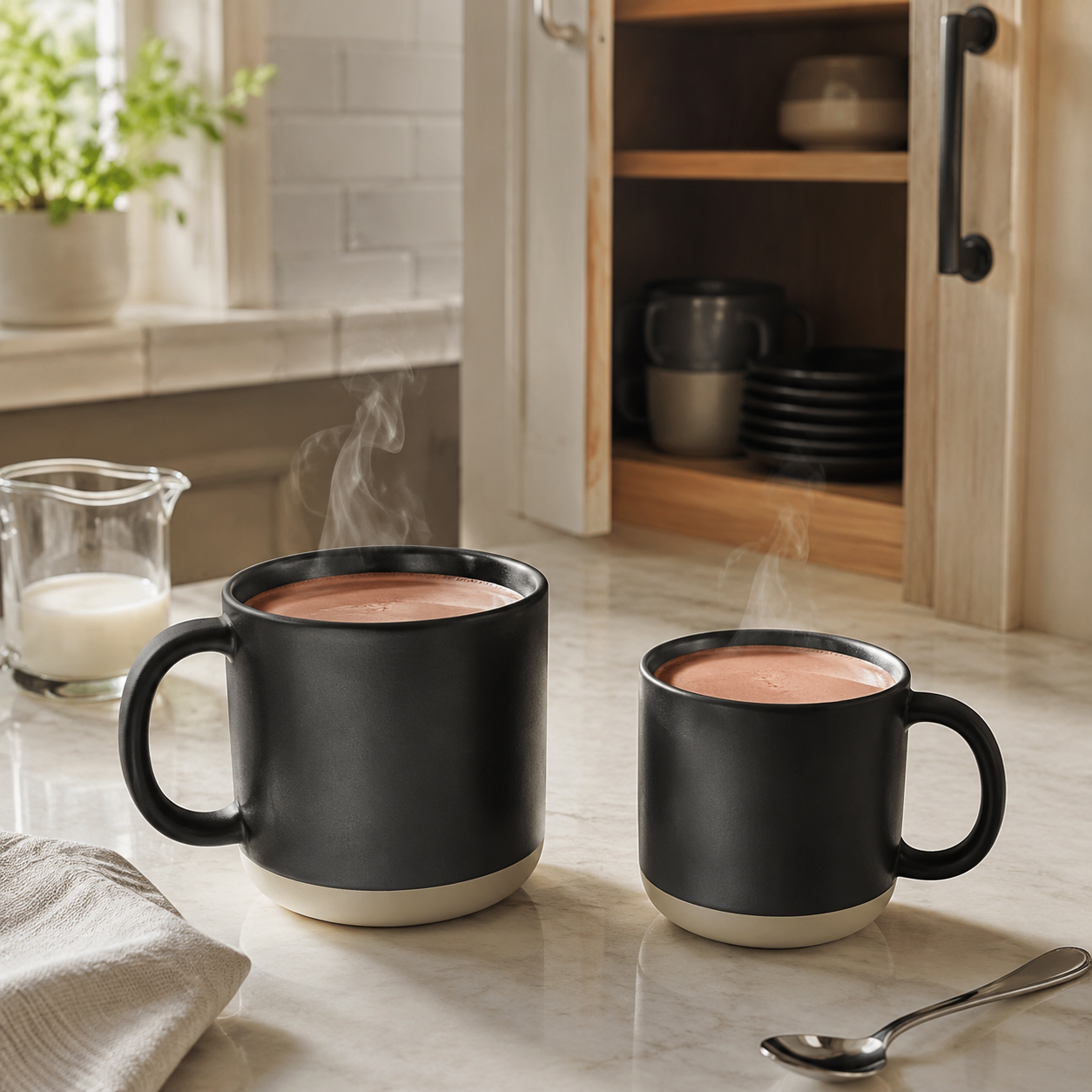
Hot Cocoa Mug Buying Guide: Capacity, Handle, and Everyday Fit
Compare 400 ml and 480 ml cocoa mugs by usable capacity, handle comfort, storage fit, care needs, and real-life serving habits before choosing a CoffeifyMug design.
Read more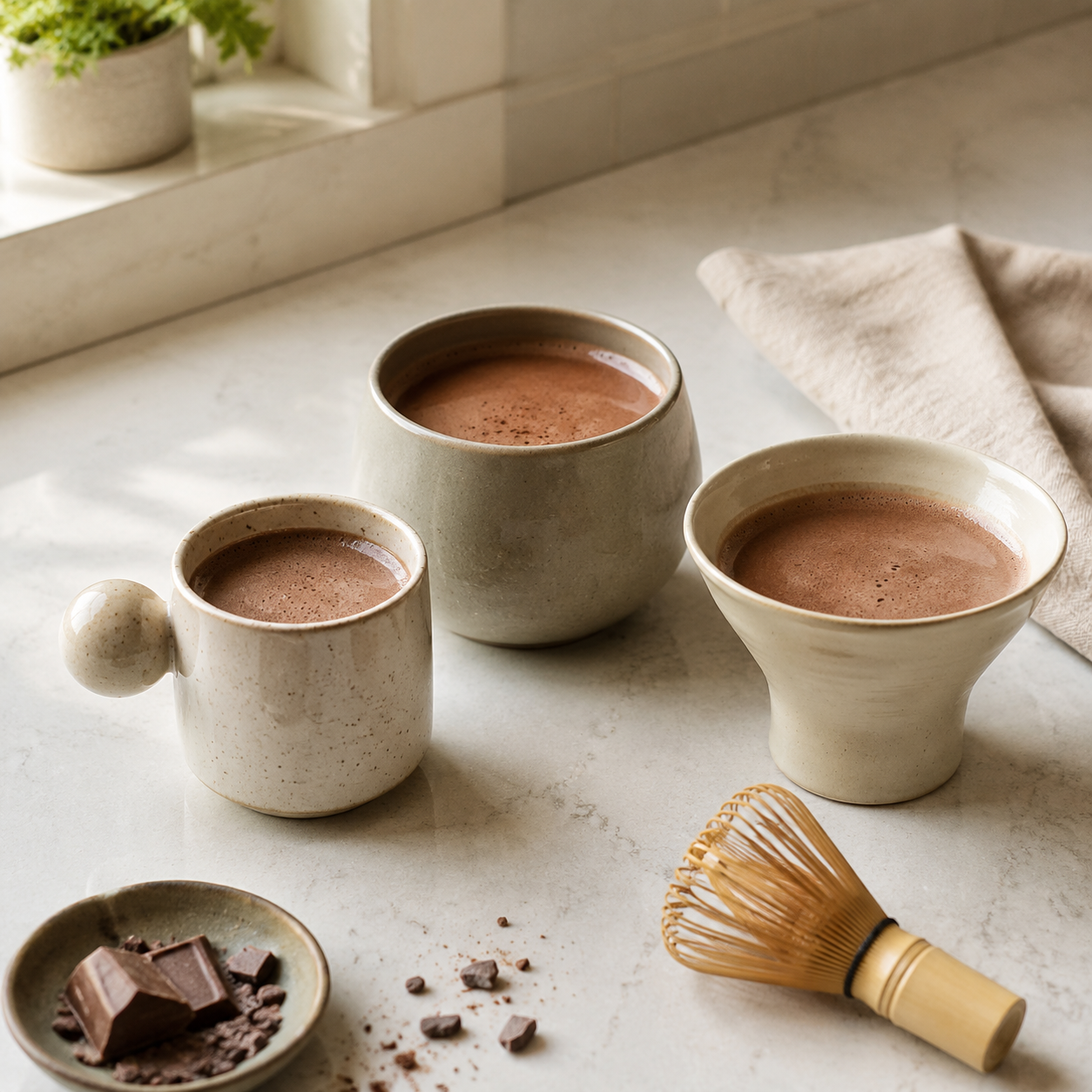
Cacao Cup Buying Guide: Capacity, Opening, and Ceramic Options
Compare 250 ml, 390 ml, and 400 ml ceramic cups by usable serving size, visible opening, countertop footprint, care needs, and everyday fit.
Read more
Los kommentaar
This site is protected by hCaptcha and the hCaptcha Privacy Policy and Terms of Service apply.