
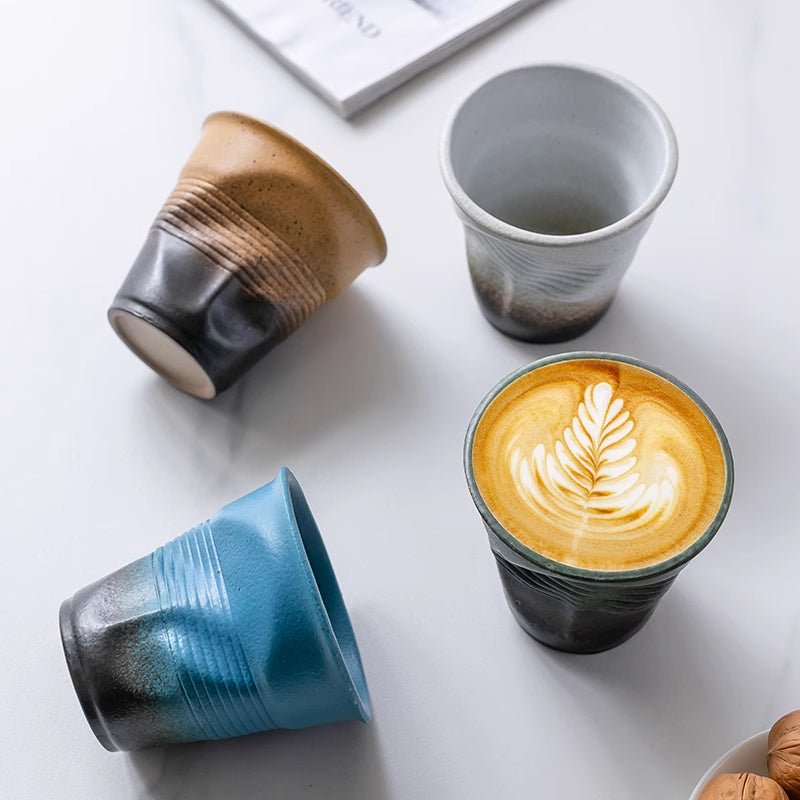
Lungo Coffee Cup Capacity Guide: 170, 200, or 270 ml?
Reading time: about 10 minutes
A cup that looks comfortably sized on a kitchen counter can feel very different once a regular pour leaves only a few milliliters below the top. That small margin matters when you carry the cup to a desk, add anything after pouring, or simply prefer not to drink from a nearly full vessel.
This lungo coffee cup capacity guide compares the three capacities currently listed in our compact lineup: 170 ml, 200 ml, and 270 ml. We are keeping the comparison deliberately narrow. The numbers below address listed capacity, planned headroom, and likely refill patterns; they do not assume that every lungo has one universal volume.
In our store, the useful question is rarely just which cup is biggest. It is how much room remains after your usual pour. You can compare the complete current range in our unique coffee mugs collection, but the calculations below will help you narrow the choice before opening several product pages.
Lungo coffee cup capacity guide: how much headroom does each size leave?
Listed capacity is the starting number, not a suggested serving line. To estimate headroom, subtract your normal measured pour from the listed capacity. For example, a 150 ml pour in a 200 ml cup leaves 50 ml of theoretical headroom.
The word theoretical matters. This is planning arithmetic based on the published capacity, not a guarantee of an exact fill line or a recommendation to pour to the rim. The practical level you enjoy can be lower, especially if the cup will be carried from the kitchen to another room.
| Listed capacity | Headroom at 150 ml | Headroom at 170 ml | Headroom at 190 ml | Best capacity pattern |
|---|---|---|---|---|
| 170 ml | 20 ml | 0 ml | Pour exceeds listed capacity | Compact measured pours with limited spare room |
| 200 ml | 50 ml | 30 ml | 10 ml | Moderate pours with a controlled margin |
| 270 ml | 120 ml | 100 ml | 80 ml | Generous headroom or fewer refills |
These three reference pours are comparison points, not definitions of a lungo. Measure what you actually prepare at home or at work. A 20 ml difference in your routine changes the remaining space by the same 20 ml, which can move a buyer from the compact option to the middle size.
Is the 170 ml Retro cup right for a compact serving routine?
The Retro Coffee & Tea Cup has a listed capacity of 170 ml. It is the closest match for a shopper whose measured serving stays clearly below 170 ml and who actively wants the smallest capacity among these three products.
Consider it when your routine looks like this:
- You measure a compact pour and do not need a large buffer above it.
- You would rather refill than keep substantial unused capacity in the cup.
- Your priority is staying close to the amount you normally prepare.
At a 150 ml reference pour, the capacity calculation leaves 20 ml. That is a narrow margin compared with the other two options. A measured 170 ml serving would use the full listed capacity on paper, leaving no planned headroom, so we would not choose this size for someone who already knows that 170 ml is their normal pour and dislikes a near-full cup.
The Retro is also not the forgiving option for estimates made by eye. If your pours regularly vary upward, or if a second addition needs to fit after the initial pour, the 200 ml or 270 ml listing gives you more numerical room. For a compact, repeatable routine, however, 170 ml is the most direct fit in the current range.
Does the 200 ml Pleated cup offer the most balanced margin?
The Pleated Coffee & Tea Cup is listed at 200 ml. It sits only 30 ml above the Retro but 70 ml below the Emerald, making it the middle step rather than a slightly smaller version of the largest option.
For a shopper pouring 150 ml, the calculated headroom is 50 ml. At 170 ml, it is 30 ml. Even a 190 ml pour remains within the listed capacity, although the resulting 10 ml margin is tight and may not suit someone who carries a full cup across an office or up stairs.
We commonly see the middle capacity make sense when the serving itself is fairly consistent but the buyer does not want to plan around an exact upper limit. The situation-to-product match is straightforward: a moderate measured pour plus a preference for some spare room points to the Pleated 200 ml cup.
Its limitation is equally clear. It does not provide the large buffer of the 270 ml mug. If your normal measured amount is already close to 200 ml, or frequent top-ups are part of the routine, choosing 200 ml only because it sounds compact can leave you with less headroom than expected.
Who gets better daily use from the 270 ml Emerald mug?
The Emerald Coffee & Tea Mug has a listed capacity of 270 ml. Choose it when extra space is intentional: you want a broad margin above a compact pour, your serving amount changes from day to day, or reducing refill frequency matters more than keeping the vessel close to the initial serving size.
The numerical difference is noticeable. A 150 ml pour leaves 120 ml of calculated headroom, while 170 ml leaves 100 ml. At the 190 ml reference point, 80 ml remains. Those margins make the Emerald the least restrictive option in this comparison.
That does not make 270 ml the automatic best buy. Someone who consistently pours 150 ml and prefers the drink to occupy most of the listed capacity may find 120 ml of unused room excessive. The Emerald is not the closest-fitting choice for a tightly measured compact serving; the Retro or Pleated may better match that preference.
The practical recommendation is to connect the larger size to a real habit. A variable pour, a desire for substantial headroom, or a preference for fewer refills justifies the 270 ml step. Buying it only because it is the largest can create a mismatch if compact proportions are the reason you started looking for a lungo cup.
How do refills change the 170, 200, and 270 ml decision?
Refill behavior is often more revealing than the name of the drink. On an office desk, one shopper may prepare a measured serving and return to the kitchen later. Another may add a small top-up before the cup is empty. Those routines put different pressure on the same listed capacity.
- Frequent fresh refills: The 170 ml Retro can suit a shopper who intentionally prepares compact servings and is comfortable returning for another.
- One measured serving with breathing room: The 200 ml Pleated cup gives a moderate pour more headroom without moving to the largest current option.
- Variable pours or fewer refill trips: The 270 ml Emerald provides the widest capacity margin of the three.
Do not add separate servings together unless you actually keep the first one in the cup. If you finish a 150 ml serving before refilling, the cup still only needs to accommodate 150 ml at one time. If you top up while liquid remains, measure the highest combined level you normally reach and compare that number with the listed capacities.
This distinction keeps the decision tied to daily use. It also avoids treating a capacity label as a promise about a specific recipe, preparation method, or piece of equipment.
What should you measure before ordering a lungo cup?
Use the cup you already reach for and measure one ordinary serving. Do not increase or reduce it to match a product listing. The goal is to capture your established habit.
- Record your usual pour in milliliters.
- Record the highest combined amount if you top up before finishing.
- Decide how much planned headroom feels acceptable for carrying and drinking.
- Subtract the measured amount from 170 ml, 200 ml, and 270 ml.
- Remove any option that produces zero, a negative number, or a margin you consider too tight.
For example, a shopper measuring 160 ml would calculate 10 ml of headroom in the Retro, 40 ml in the Pleated, and 110 ml in the Emerald. The math does not decide which margin feels best. It makes the trade-off visible.
If your routine has moved beyond compact lungo cups, our Americano cup capacity comparison for 200, 270, and 350 ml covers a larger set of listed capacities. For another comparison using the same three current sizes, the 170, 200, and 270 ml cappuccino mug guide keeps the focus on capacity rather than assuming one universal serving volume.
Which capacity makes the safer gift choice?
A gift buyer often does not know the recipient's measured pour. In that situation, the 200 ml Pleated cup is the middle-capacity choice, while the 270 ml Emerald gives the widest allowance for variation. The 170 ml Retro is more specific: it fits best when you already know the recipient prefers compact servings.
Capacity alone cannot tell you which appearance or product format the recipient will prefer, and we would not present it as a universal gifting rule. Use what you know. A recipient who regularly refills a small cup may appreciate 170 ml; someone who dislikes filling close to the top may be better matched with 200 ml or 270 ml.
For an uncertain gift, compare the product pages and confirm that the visual design suits the recipient after using this guide to narrow the capacity. That separates two decisions that are easy to blur during online shopping: how the product looks and how much it is listed to hold.
Frequently asked questions
What size cup should I buy for a 150 ml lungo?
Based only on listed capacity, 170 ml leaves 20 ml of calculated headroom, 200 ml leaves 50 ml, and 270 ml leaves 120 ml. Choose the Retro for the closest fit, the Pleated for a moderate margin, or the Emerald if generous spare capacity matters more than compact fit.
Does a 170 ml cup leave enough room for a 170 ml pour?
No planned headroom remains in the capacity calculation because the pour equals the listed 170 ml capacity. We would choose a larger listing if 170 ml is your regular measured serving and you want space below the top.
What does this lungo coffee cup capacity guide recommend for fewer refills?
The 270 ml Emerald is the largest current option and therefore allows the most total capacity before a refill. That recommendation only applies if you actually use the extra capacity; finishing a compact serving before every refill may make the 170 ml or 200 ml option a closer fit.
Is 200 ml a better choice than 270 ml for a compact pour?
It can be. At a 150 ml reference pour, 200 ml leaves 50 ml of calculated headroom, compared with 120 ml in the 270 ml mug. Choose 200 ml if you want a moderate buffer, and 270 ml if a larger margin or more variable serving amount better reflects your routine.
Are these capacities guaranteed serving lines for every lungo recipe?
No. They are the products' listed capacities, used here for comparison arithmetic. Your preferred recipe and pour amount can differ, so measure your own serving rather than treating 170, 200, or 270 ml as a universal lungo standard.
Use your measured pour to make the final choice
Keep the last comparison simple: choose 170 ml for a compact measured pour and limited headroom, 200 ml for a moderate buffer, or 270 ml for the widest margin and more flexibility between refills. If your calculation lands close to a listed capacity, move up unless a near-full cup is genuinely your preference.
With that number in hand, return to the CoffeifyMug collection and compare the Retro, Pleated, and Emerald product pages. Start with capacity, confirm the product you prefer, and order the option that matches the serving routine you already have.
More from our blog
Read more
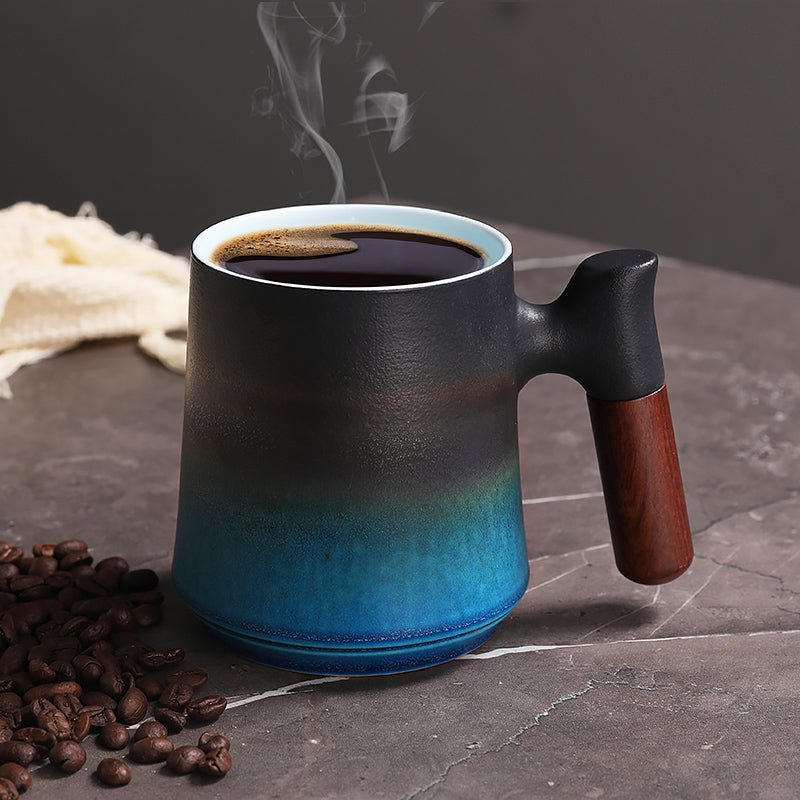
Cute Ceramic Coffee Mugs Capacity Guide: 400, 440, or 480 ml?
Compare three current ceramic mug capacities by serving routine, refill frequency, and counter or desk use. See where the 400, 440, and 480 ml options fit and where each one may feel too small or t...
Read more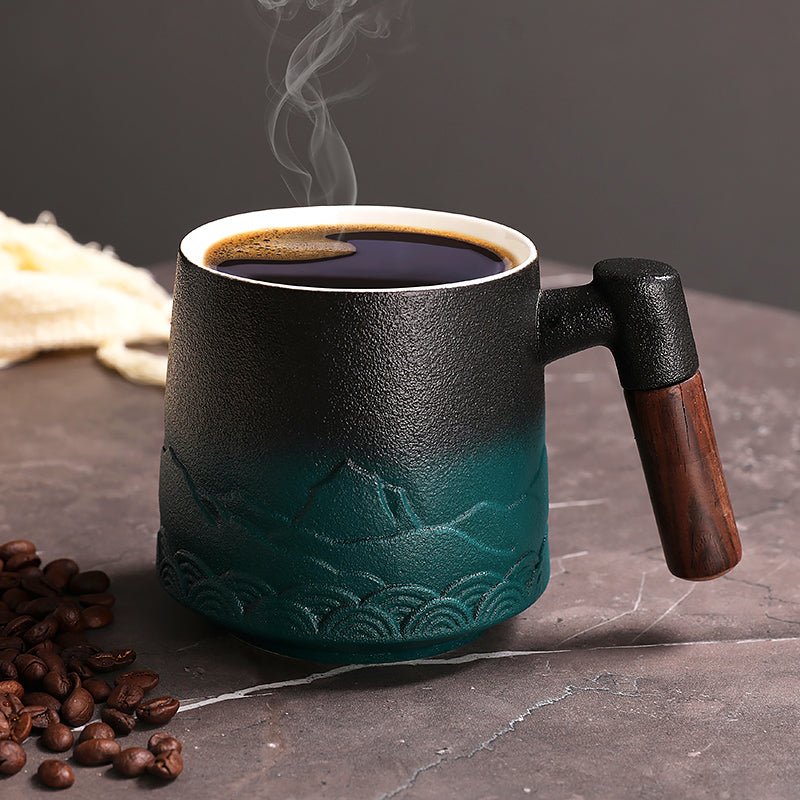
Coffee Mug Gift Ideas for Him Capacity Guide: 400-480 ml
Compare the listed 400, 440, and 480 ml capacities of three current CoffeifyMug designs. See which size fits shorter coffee servings, 12 oz pours, added milk, tea, cocoa, and fewer-refill desk rout...
Read more
Los kommentaar
This site is protected by hCaptcha and the hCaptcha Privacy Policy and Terms of Service apply.