
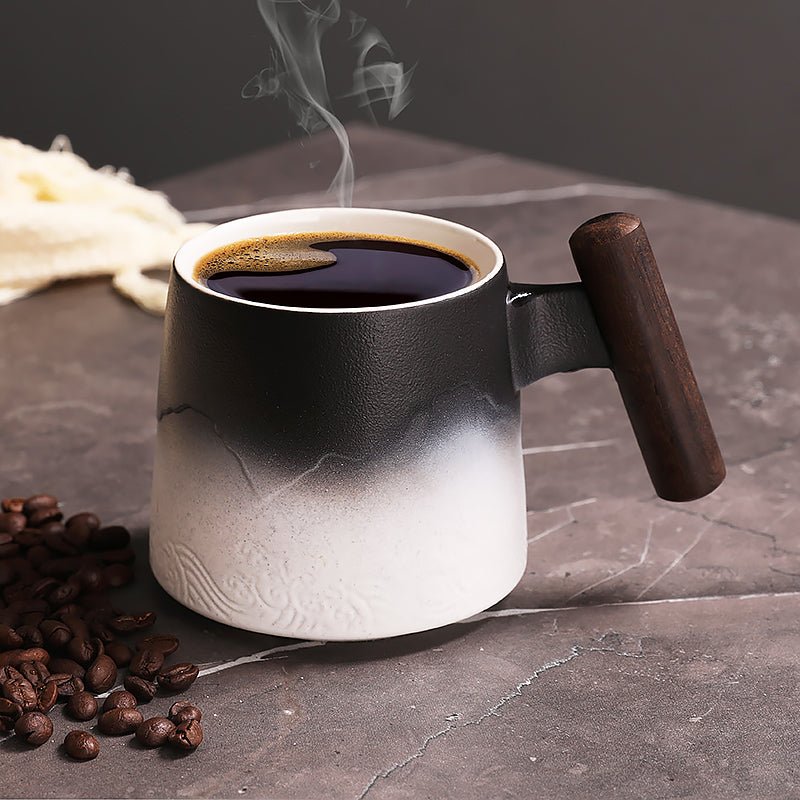
How to Clean Coffee Stains from Mugs Without Damaging the Finish
Reading time: about 10 minutes
A white mug can look fine after a quick rinse, then the dried brown ring shows up around the bottom once it is dry on the counter. We see this in kitchens, office break rooms, and gift mugs that have been opened, used a few times, and left on a desk between refills.
If you are trying to figure out how to clean coffee stains from mugs without dulling the glaze or rubbing through a printed design, the method matters as much as the cleaner. Ceramic, porcelain, matte finishes, and stainless steel all react differently. In our store, we handle mugs that are meant for daily use, so we pay attention to what actually removes coffee residue and what just trades one problem for another.
The short version: start with the least aggressive method that can still do the job. That usually protects the mug, and it usually works.
Why do coffee stains cling to mugs in the first place?
Coffee leaves behind tannins, oils, and fine particles. Those compounds settle into tiny surface irregularities in the glaze, especially near the bottom of the mug where liquid sits after the last sip. A mug with a smooth glossy interior is easier to clean than one with a rougher matte surface or a finish that has been scratched by hard scrubbing.
We also see stains build faster in real use than people expect. A mug left half full on a desk, a cup that goes through repeated dishwasher cycles, or a travel mug with a lid gasket that traps residue around the rim will stain more quickly than a mug that is washed right away. That is not necessarily a defect. It is the result of how the mug is used.
There is also a difference between removable buildup and surface wear. A stain sitting on top of the glaze can usually be cleaned. A mug with crazing, tiny chips, or worn decoration may keep looking dingy because the surface itself is already compromised.
What is the safest cleaning method for most mugs?
For most glazed ceramic and porcelain mugs, warm water, dish soap, and a soft sponge are the safest first step. If that does not clear the ring, baking soda is usually the next move. We use that order because it removes a lot of everyday coffee staining without scratching the finish.
- Rinse the mug with warm water so loose residue is gone before you scrub.
- Add a small amount of dish soap and wash the inside with a soft sponge or microfiber cloth.
- If a brown ring remains, mix baking soda with a little water to make a paste.
- Apply the paste to the stain and rub lightly in small circles for 20 to 30 seconds.
- Let the paste sit for a few minutes if the stain is older, then rinse thoroughly.
- Dry the mug completely so you can see whether any shadowing remains.
This approach works well for everyday mugs with a glossy glazed interior, including the styles shoppers browse in our product catalog. It is not the best choice for metallic accents, hand-painted details, or delicate matte finishes that can show rubbing more easily.
If you are comparing mug styles before buying, the finish matters as much as the shape. A smooth interior is easier to keep clean than a deeply textured surface, and a wider opening is easier to reach with a sponge than a narrow one.
Which method fits each mug material?
Material changes the cleaning strategy. A glossy ceramic mug can handle a little more gentle scrubbing than a printed travel mug, and a stainless steel liner needs a different approach than a porcelain cup. The table below is the simplest way to match the cleaning method to the mug.
| Mug type | Best first step | What to avoid |
|---|---|---|
| Glossy ceramic | Dish soap, warm water, then baking soda paste | Steel wool and hard scouring pads |
| Porcelain | Soft sponge and mild soap, then a light baking soda scrub | Abrasive powders and heavy pressure |
| Matte finish | Gentle hand wash with minimal scrubbing | Coarse cleaners that leave shiny worn spots |
| Printed or logo mug | Short hand wash with mild soap | Bleach, harsh abrasives, and repeated soaking |
| Stainless steel travel mug | Dish soap, warm water, bottle brush, then baking soda if needed | Chlorine bleach and rough pads |
A few concrete details matter here. A standard 12 oz mug usually has enough depth for coffee to pool at the bottom and leave a visible ring there. A 16 oz mug has more interior wall area, so residue can spread higher up the side if the coffee sits for hours. Travel mugs often have narrow openings and silicone gaskets, which means the lid can hold odor and staining even when the cup body looks clean.
That is one reason some shoppers choose a simpler mug when they want easier care. If you are browsing options, our full collection is a useful place to compare finish, opening width, and care notes side by side.
What should you avoid if you want to keep the finish intact?
A lot of cleaning damage starts with a tool that is too aggressive for the surface. The stain may come off, but the mug ends up with a dull patch, a scratched glaze, or worn print.
- Avoid steel wool on ceramic or porcelain. It can leave permanent micro-scratches.
- Avoid bleach on decorated mugs unless the care instructions clearly allow it.
- Avoid coarse abrasive powders on matte finishes. They can create shiny worn spots that stand out more than the original stain.
- Avoid very hot water on a mug with crazing, chips, or hairline cracks. Sudden temperature change can make the damage worse.
- Avoid soaking mugs with metallic trim or delicate decals unless the maker says the finish is dishwasher safe.
The trade-off is simple. Faster cleaners are not always better cleaners. A mug that looks spotless after one aggressive scrub but loses its finish after a week is a worse result than a mug that needs a second gentle pass.
If the stain is dark but the glaze still feels smooth, cleaning can usually improve it. If the surface feels rough, the print is fading, or the ring sits in fine cracks, you may be looking at wear rather than removable buildup.
How do you remove old coffee rings and stubborn buildup?
Older stains usually need more time, not harsher force. We normally start with a soak, then move to a baking soda paste, and only step up if the mug still looks dull after rinsing.
- Fill the mug with warm water and a small amount of dish soap.
- Let it sit for 10 to 15 minutes so dried residue loosens.
- Drain the mug and apply a baking soda paste to the stained area.
- Use a soft sponge or folded microfiber cloth to rub lightly in circles.
- Rinse and inspect under bright light, especially at the bottom of the mug.
- For stainless steel travel mugs, clean the interior seam and lid parts separately.
Older buildup often collects at the bottom because that is where the last sip sits. On white mugs, a faint ring can remain after cleaning if the glaze has already been worn down from repeated use. We see this a lot with office mugs that get a quick rinse, get refilled, and never fully dry between uses.
That is one reason we pay attention to finish when we recommend everyday mugs. A darker glaze can hide light staining better. A smooth light glaze is easier to keep clean, but it may show coffee residue sooner. Neither is universally better. It depends on whether you care more about easy maintenance or a lighter look.
How do you stop coffee stains from coming back?
Prevention is easier than removal, especially for mugs used at a desk, on a kitchen counter, or in a car between meetings. Small habits make a real difference.
- Rinse the mug soon after you finish coffee instead of letting residue dry overnight.
- Wash the inside bottom and the drinking rim, not just the part you sip from.
- Dry the mug after washing so mineral spots do not mix with coffee residue.
- Use a bottle brush for narrow travel mugs and lid channels.
- Let mugs dry fully before stacking them in a cabinet.
In our experience, shoppers who want lower-maintenance mugs tend to do best with a smooth glazed interior, a simple shape, and fewer decorative ridges. Deep embossing, matte coatings, and heavy printed graphics can look great, but they are not always the easiest to keep spotless. That is a fair trade if visual style matters more than quick cleanup.
If you are comparing mugs for daily use, start with the finish, then check the opening width, then look at care instructions. A mug that is easy to reach with a sponge is usually easier to keep looking new.
What makes some mugs easier to clean than others?
The easiest mugs to maintain usually share a few traits. They have a smooth glazed interior, a shape that does not trap residue at the base, and a surface that tolerates gentle hand washing. Mugs with rough matte exteriors, deep grooves, or printed wraps need more careful attention.
We see this difference clearly with customer purchases and gift unboxings. A mug that looks bold on a shelf can be slightly more annoying at the sink if the inner wall narrows sharply or the decoration extends into the drinking area. A simpler interior finish is often the better choice for a daily driver.
If you want a practical rule, use this checklist before buying:
- Choose a smooth glazed interior if easy cleaning matters most.
- Pick a wider opening if you want to reach the bottom with a sponge.
- Check whether the mug is dishwasher safe before relying on machine washing.
- Be careful with metallic accents, raised texture, and delicate decals.
- Match the mug size to your habits. A smaller mug is easier to rinse quickly; a larger one can sit longer and show more residue.
Our mug products are a good place to compare those details in one place, especially if you are choosing between a daily-use mug and a gift mug that will be used less often.
Frequently asked questions
Can I use baking soda on coffee stains in a ceramic mug?
Yes. Baking soda is one of the safest stain removers for glazed ceramic because it is mildly abrasive without being harsh like a scouring powder. Use it as a paste with water and apply only light pressure. If the mug has a matte finish or a printed design, test a small area first.
Does vinegar remove coffee stains from mugs?
Vinegar can help loosen odor and some residue, but we do not treat it as the main stain remover for most mugs. For routine coffee rings, dish soap and baking soda are more predictable. Vinegar is more useful as a support step when a mug also has a lingering smell.
Why does my white mug stay brown after washing?
That usually means the stain is older, the glaze has micro-scratches, or the mug has some wear from repeated use. A longer soak and a gentle baking soda scrub may improve it, but permanent etching will not fully disappear. If the surface feels rough, you are probably seeing wear rather than loose stain.
Are coffee stains a sign that my mug is low quality?
Not necessarily. Even a good mug will stain if coffee sits in it long enough or if it has a light-colored glaze. The better question is whether the mug cleans up easily and keeps its finish after repeated washing. A mug that stays smooth and resists dulling is usually the better long-term buy.
What mugs are easiest to keep clean?
Smooth glazed ceramic or porcelain mugs are usually the easiest to maintain. A wide opening helps you reach the bottom, and a simple interior without heavy texture makes rinsing easier. Mugs with matte finishes, deep embossing, or delicate prints can look good, but they usually need more careful washing.
If you are comparing mugs with easy care in mind, start with the finish and shape, then check the care notes. Browse our full collection and look for a smooth interior, a comfortable opening, and cleaning instructions that match how you actually wash dishes. That is the simplest way to avoid buying a mug that looks great on day one but is annoying to keep clean after a few uses.
More from our blog
Read more
14 oz Coffee Mug: What Buyers Should Check Before They Buy
A 14 oz coffee mug is the middle-size option many shoppers end up choosing after 11 oz feels cramped. This guide explains the real trade-offs we see at checkout: comfort, heat retention, cabinet fi...
Read more
Syracuse China Coffee Mugs: What Buyers Should Check Before Ordering
Syracuse China coffee mugs can be sturdy daily drivers or better left on a shelf. We cover what to inspect, which sizes work, and when a modern mug is the smarter buy.
Read more
Los kommentaar
This site is protected by hCaptcha and the hCaptcha Privacy Policy and Terms of Service apply.