
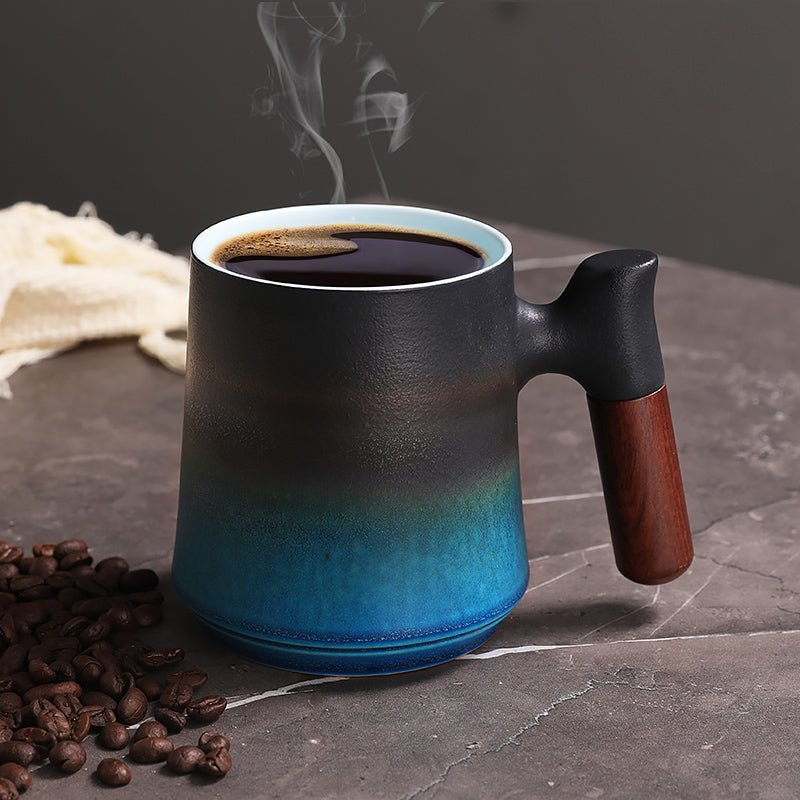
Coffee Mug Storage Ideas for Safer Cabinets and Better Displays
Reading time: about 11 minutes
The cabinet problem usually shows up before the coffee is even ready. You reach for one mug, the handle catches another, and suddenly the shelf sounds like ceramic tapping ceramic. That small clink is often the warning sign that your storage setup is working against you.
Good coffee mug storage ideas are not only about making a shelf look neater. They affect breakage, daily convenience, and even what kind of mug makes sense to buy in the first place. In our store, we see this all the time: shoppers fall in love with a mug shape, then realize their cabinet is shallow, their coffee corner is cramped, or their office desk only has room for one stable cup beside a laptop and notebook.
We handle mugs from the selling side and the real-use side, so we pay attention to details that generic roundups often skip. A mug's handle projection changes how many fit in a row. A rough foot ring can scuff a painted shelf or rub against a smoother glaze below it. A sculptural silhouette may look excellent on open shelving but take up more usable width than a plain straight-sided cup. Those trade-offs matter.
If you are comparing styles while planning storage, our full collection is a practical place to start because you can look at compact cups, more decorative mugs, and display-friendly shapes side by side instead of guessing from memory.
What is the best coffee mug storage setup for everyday use?
The best setup is the one that still works on a rushed weekday morning. That usually means easy access, one clear place to put the mug back, and enough spacing that you are not dragging a rim across the next cup every time you unload the dishwasher.
For most households, we recommend dividing mugs into use-based zones:
- Daily-use mugs: Keep these closest to the coffee maker, kettle, or sink.
- Guest mugs: Store them one shelf higher or in a secondary cabinet zone.
- Display mugs: Give them breathing room on an open shelf or styled nook.
- Gift or seasonal mugs: Keep them away from heavy daily traffic so they stay cleaner and safer.
A simple single row is usually the safest starting point. Handles turned the same direction help, especially in tighter cabinets. If you need to lift one mug up and over another to remove it, the shelf is already too crowded.
We have also found that daily-use storage should match how the mug gets washed. If a mug comes out of frequent dishwasher cycles, let it dry fully before it goes back into a closed cabinet. That sounds basic, but trapped moisture is one of the fastest ways to end up with a musty shelf smell, especially in smaller kitchens where the cabinet sits near a steamy dishwasher or kettle.
Which storage ideas work best in a small kitchen or apartment?
Small kitchens expose every weak storage choice. Deep cabinets waste space at the back. Narrow shelves punish oversized handles. Countertops disappear fast once a coffee machine, grinder, sugar jar, and spoon rest move in.
These are the setups we see work most often:
- One front-row cabinet shelf: Keep only the mugs you use several times a week here. No stacking. No backup mugs behind them.
- Undershelf hooks: Useful for lighter ceramic mugs with sturdy handle joins. They free up shelf surface but are not ideal for heavier, bulkier mugs.
- A tray-based coffee station: Put two or three mugs, spoons, and small extras on one tray. It keeps a tiny counter organized and makes cleaning easier because the whole setup lifts at once.
- Cabinet risers: These can double useful shelf levels if your mugs are fairly uniform in height. They are less helpful if your collection is a mix of tall gift mugs, low teacups, and broad statement pieces.
- Drawer storage with dividers: This can work in modern kitchens, but only if the drawer is tall enough and lined so ceramic bases do not slide.
In our experience, the smallest kitchens benefit most from buying storage-friendly shapes instead of trying to solve everything with organizers. A more compact profile like the Pleated Coffee Tea Cup is often easier to line up in a short cabinet or on a breakfast station tray because it claims less visual and physical space than a broad oversized mug. That does not make it the right choice for everyone. If you prefer a larger hand feel or want a mug that doubles as a display piece, a smaller footprint may feel too restrained.
The mistake we would avoid is keeping every mug near the machine just because you own it. Prime space should be earned by the mugs you actually reach for.
Are open shelves, cabinets, hooks, or drawers safest for ceramic mugs?
Each storage style solves a different problem, and none of them is perfect. The safer choice depends on the mug's weight, handle shape, finish, and how often it gets used.
| Storage style | Best for | Main benefit | What it is not good for |
|---|---|---|---|
| Closed cabinet shelf | Most daily-use ceramic mugs | Less dust and kitchen grease | Overpacked collections where handles tangle |
| Open shelf | Display-worthy mugs and fast access | Easy visibility and cleaner styling | Homes where shelves collect cooking residue quickly |
| Hook rail | Light to medium mugs with solid handles | Uses vertical space well | Heavy stoneware mugs or delicate handles |
| Drawer with dividers | Minimalist kitchens with deep drawers | Keeps counters clear | Short drawers or mugs that slide around |
For ceramic mugs, we usually tell shoppers to watch three stress points: the rim, the handle join, and the base ring. Rims chip from contact. Handle joins take repeated load on hooks. Base rings can scrape shelves or the mug underneath if people force stacking.
Open shelving looks great, but it asks more from you. Mugs on a shelf near the stove pick up dust and grease faster than people expect, so they need a rinse before use if they sit there for days. Hooks look tidy too, but spacing matters. If the mugs twist and bump when you lift one off the rail, the setup is decorative first and practical second.
If you want a mug that plays a stronger visual role in the room, a piece like the Golden Waves Kio Coffee Tea Mug makes more sense on an open shelf or styled coffee corner than squeezed into the middle of an overstuffed cabinet row. The trade-off is simple: display impact usually costs space efficiency.
How do you store mugs so they do not chip, smell stale, or look worn out?
Most mug damage happens slowly. It is not usually one dramatic fall. It is repeated friction, rushed unloading, damp cabinets, and poor spacing.
These habits make a real difference:
- Store mugs fully dry: Moisture trapped inside a cup or under the base can leave a stale odor in closed cabinets.
- Leave a small gap between handles: Handle-on-handle contact is one of the easiest ways to knock a mug sideways.
- Avoid forced nesting: If mugs were not designed to stack, the upper mug may press on the rim instead of resting securely on the body.
- Keep heavier pieces lower: A weightier ceramic mug is safer at chest or waist height than on a top shelf above glassware.
- Check for hairline cracks: After frequent hot coffee, cold rinses, and dishwasher cycles, inspect the handle area and rim before putting the mug back into regular rotation.
Finish matters too. Smooth glossy glazes often tolerate close cabinet storage better because they are easier to wipe and less likely to show rubbing marks right away. Matte or textured exteriors can look richer on display, but in tight storage they may show contact sooner, especially if the shelf is packed and mugs slide against one another.
We also recommend paying attention to the shelf surface itself. Bare wood is usually gentler than a rough metal rack, but it should stay dry. A thin liner can help on slippery shelves, though very thick padded liners sometimes make narrow-based mugs wobble. That is a small detail, but it matters in real kitchens where mugs are grabbed one-handed while the other hand is dealing with the coffee machine.
Should your everyday mug be different from your display mug?
Very often, yes. One mug does not always have to do every job.
An everyday mug should be easy to grab, stable on the counter, and simple to store. A display mug can be more expressive, more sculptural, or more giftable, but that usually means asking for more room and gentler handling. Shoppers sometimes assume the most eye-catching mug will also be the best daily workhorse. Sometimes it is. Often it is not.
We see this most clearly with kitchen styling versus office use. On an office desk, you usually want a stable base, moderate footprint, and a shape that does not hog space beside a keyboard or planner. On an open kitchen shelf, a mug can be part storage and part decor. That is where a piece like The Flow Coffee Tea Mug makes sense for buyers who want personality on display. It is a stronger shelf piece than a buried-back-cabinet piece. If your cabinet is cramped and your routine is rough, a simpler shape may serve you better.
This is also where gift unboxings matter. If you are buying a mug to give, keep it out of the heavy daily wash-and-stack cycle until you actually need it. Decorative finishes and more artful silhouettes simply stay nicer when they are not being knocked around by bowls, plates, and weekday cleanup.
What should you check before buying a mug if storage space is limited?
This is where shopping and organizing meet. A mug can look perfect online and still be wrong for your kitchen.
Before buying, check these practical points:
- Shelf height: Measure from the shelf surface to the underside of the shelf above, especially if you use a liner or riser.
- Handle width: Some handles extend farther than the cup body, which reduces how many mugs fit side by side.
- Base stability: Broad, even bases tend to sit better on trays, narrow shelves, and office desks.
- Surface finish: Glossy and smooth often store more easily in tight rows; more textured finishes usually deserve spacing.
- Intended use: Daily coffee, shelf display, guest service, and gifting all ask for slightly different priorities.
We encourage shoppers to think about storage before they click buy, not after. If your kitchen has one shallow cabinet and a crowded counter, choose with that reality in mind. If you have open shelving and want the mugs to contribute to the room visually, you can afford to be more selective about shape and finish. Browsing our collection with those storage questions in mind usually helps narrow the field much faster.
What is the simplest mug organization plan that actually stays tidy?
The best system is usually the one with the fewest moving parts. Busy households do better with a plan that survives rushed mornings, late-night dish unloading, and guests putting things back in the wrong place.
- Choose your true daily set, usually two to six mugs.
- Give that set the easiest shelf, tray, or hook position near the coffee setup.
- Move occasional mugs to a second zone so the front row stays easy to maintain.
- Separate display or gift mugs from heavier daily dish traffic.
- Do a quick monthly reset: wipe the shelf, check for chips, and retire mugs with cracks or unstable handles.
That is not a fancy system, but it works. It reduces friction, keeps your usable mugs visible, and makes future purchases easier because you know exactly how much room you really have.
Frequently asked questions
Is it better to store coffee mugs rim up or rim down?
Rim up is usually safer for most ceramic mugs because it reduces pressure on the drinking edge and helps any remaining moisture evaporate. Rim-down storage can work on a very clean, dry surface, but it is more likely to trap moisture and put unnecessary contact on the rim.
Can ceramic mugs be stacked to save cabinet space?
Only if they were designed to stack cleanly and the rims are not carrying the weight. Most mixed mug collections should not be stacked because uneven shapes create pressure points, rubbing, and chips. In our experience, a single row is safer than a clever stack that fails after two weeks.
Are mug hooks safe for heavy ceramic mugs?
They can be, but only if the hooks are smooth, well spaced, and the mug has a sturdy handle join. We would avoid hook storage for especially heavy mugs, oversized novelty mugs, or delicate decorative shapes. Those are better on a shelf where the base carries the weight.
How many mugs should stay near the coffee maker?
Keep only the mugs you use regularly in that prime spot. For many homes, that means a small daily set rather than the whole collection. The less crowded the coffee zone is, the easier it is to keep clean and the less likely you are to chip something before breakfast.
What mug shape is easiest to store in a small kitchen?
A compact mug with a stable base and a handle that does not flare too far outward is usually easiest to store. Straightforward silhouettes fit cabinet rows, tray stations, and office shelves more cleanly than wide or highly sculptural mugs. If storage is tight, shape matters almost as much as style.
If you are ready to make better storage and buying decisions at the same time, compare shapes in our full collection and measure your shelf before you choose. Check height, handle clearance, and how the mug will actually live in your kitchen, not just how it looks in a photo.
More from our blog
Read more
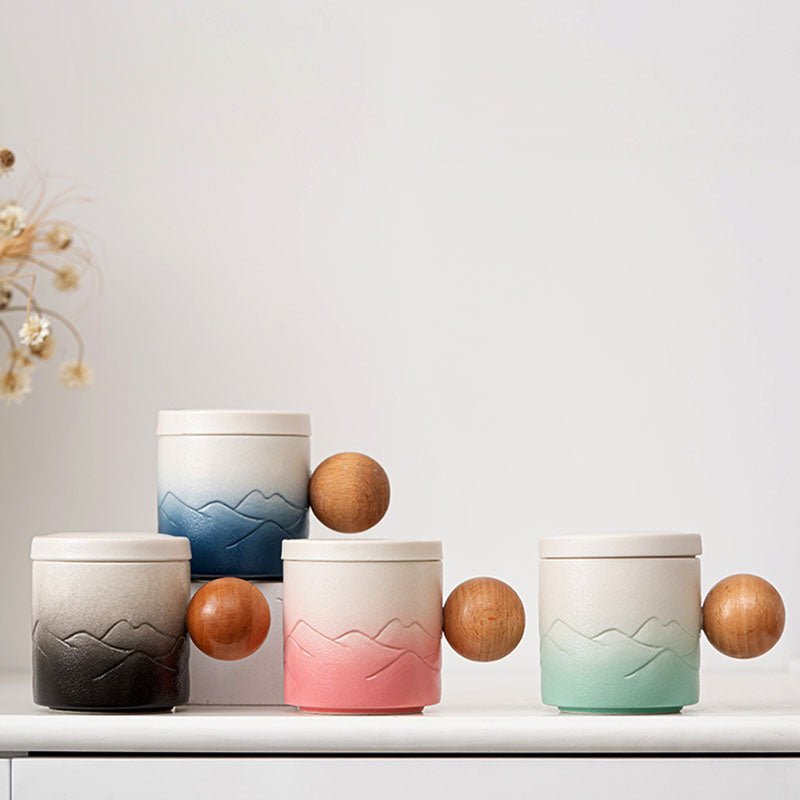
Coffee Mug Storage Ideas for Kitchens, Offices, and Gift Sets
Practical coffee mug storage ideas for tight cabinets, open shelves, desks, and gift sets, with real trade-offs on stacking, hooks, and display.
Read more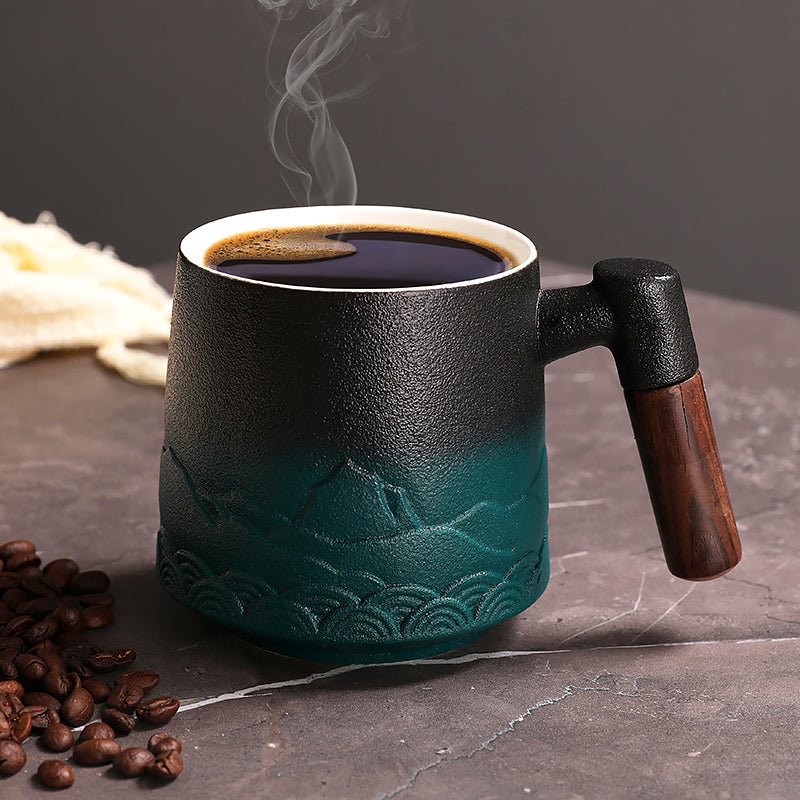
Linus Coffee Mug: What to Check Before You Buy
A practical guide to choosing a Linus coffee mug for daily use, gifting, or desk coffee. We cover size, comfort, care, and the details that matter before you buy.
Read more
Los kommentaar
This site is protected by hCaptcha and the hCaptcha Privacy Policy and Terms of Service apply.