
Coffee Mug Storage Ideas for Kitchens, Offices, and Gift Sets
Reading time: about 8 minutes
Two mugs rarely stay two mugs for long. A daily cup, a weekend favorite, and a gift set you do not want to break apart can turn one cabinet into a cluttered pile fast, especially when the handles catch and the rims knock together every time the door closes.
That is the real problem behind most coffee mug storage ideas: not space in the abstract, but mug shape, access, dust, and chip prevention. In our store, we see this most often with ceramic and stoneware mugs that are perfectly usable yet awkward to stack because the handle sits wide or the body tapers in a way that wastes shelf space.
If you are comparing storage layouts before you buy more mugs, start by deciding what matters most: easy grab-and-go access, a cleaner display, or protection for a set you only use occasionally. The right answer is different for a busy kitchen, a desk drawer, and a gift shelf.
What problem are you actually solving with mug storage?
The best storage choice depends on what is going wrong now. If the cabinet is crowded, the fix is usually better spacing or vertical storage. If mugs are dusty, open shelving may be the issue. If chips keep showing up on the rim or handle, stacking may be too tight or the shelf may be too shallow.
We usually group the problem into four real-life scenarios:
- Daily-use mugs: need fast access and enough clearance for the handle.
- Display mugs: need a cleaner visual layout and a surface that does not look overloaded.
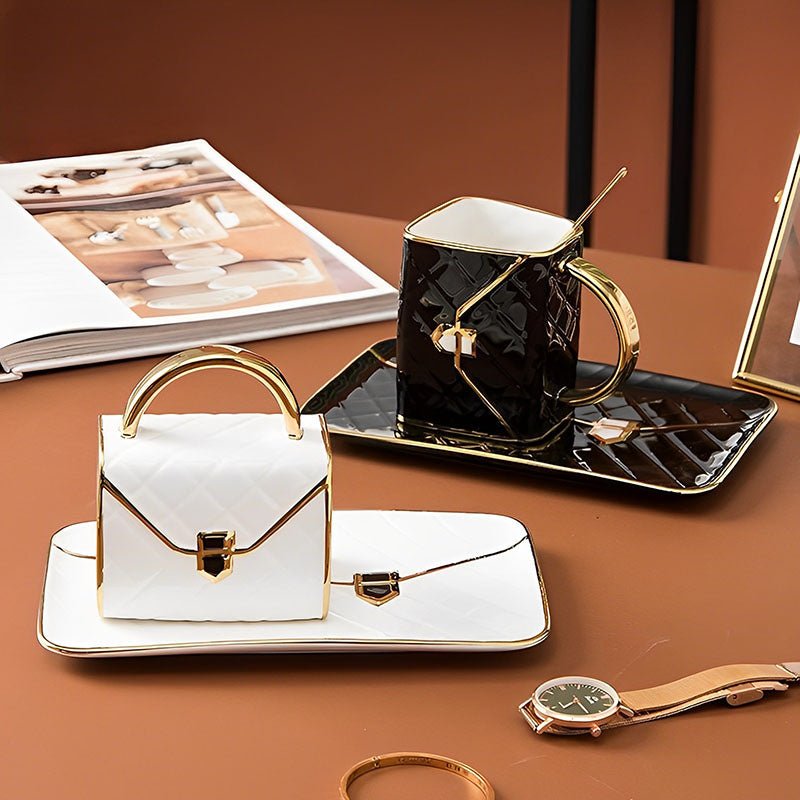
- Gift sets: need protection from dust, box crush, and accidental cabinet damage.
- Office mugs: need low-maintenance storage that does not collect dust between uses.
If you are trying to solve more than one of those at once, this is where a dedicated storage plan helps. Our related post, Coffee Mug Storage Ideas for Small Kitchens, Offices, and Gifted Sets, goes deeper into space-specific layouts that work in real homes and workspaces.
Which storage ideas work best for your space?
There is no single best mug storage setup. A wall rack looks clean in one kitchen and feels awkward in another. A closed cabinet is practical for dust control but can slow you down if you use the same mug every morning. The table below is the fastest way to compare the trade-offs.
| Storage option | Best for | Watch out for |
|---|---|---|
| Open shelf | Daily mugs you want to reach quickly | Dust, visual clutter, and handle crowding if the shelf is too narrow |
| Under-cabinet hooks or rail | Small kitchens and narrow counters | Tall mugs can bump the cabinet bottom, and heavy stoneware needs sturdy hardware |
| Mug tree or stand | Small collections and countertop display | Can look busy if overloaded and is not ideal for very large mugs |
| Closed cabinet | Dust-free storage and backup mugs | Needs fully dry mugs, or moisture can sit inside the cabinet |
| Gift box or basket | Sets you plan to give, rotate seasonally, or store carefully | Not a great everyday solution if you need fast access |
If you want the cleanest display possible, our Coffee Mug Shelf Display Ideas for Real Kitchens and Small Spaces article shows how to make shelves feel intentional instead of crowded. If you are choosing hardware rather than display style, the Coffee Mug Rack Guide: Materials, Fit, and Storage Choices breaks down wood, metal, and wall-mounted options without glossing over their limits.
How do you keep mugs from chipping or trapping moisture?
The damage we see most often is small but annoying: a hairline chip on the rim, a glaze mark where two mugs rubbed together, or a crack starting near the handle after repeated pressure in a tight stack. None of those problems usually come from normal use alone. They come from storage that leaves too little room or does not let the mug dry fully.
These habits help more than fancy organizers:
- Let mugs dry completely before closing the cabinet. A mug that still holds moisture at the base can smell stale in a closed space.
- Stack only matching shapes. A wide 12 oz mug does not always sit safely inside a narrower 10 oz profile.
- Avoid rim-to-rim contact. The rim is one of the easiest places to chip when mugs slide during cabinet movement.
- Keep heavier stoneware lower. It is less likely to wobble or knock lighter mugs out of place.
- Use separators if you must stack. Thin felt, cork, or paper dividers reduce friction, though they do not solve poor sizing.
This is also where material matters. Glazed ceramic is easy to wipe down, but the glaze edge can still chip if it is banged against another mug. Stoneware tends to feel sturdier in the hand, yet it can be heavier on a hook or rack. If you are comparing materials, start with the fit and finish details in our rack guide before choosing the storage hardware.
Open shelving looks neat only if you can keep up with dust and spacing. If you want set-it-and-forget-it storage, a closed cabinet is the safer option, even if it is less photogenic.
What should you check before buying mugs for a storage setup?
A mug can look perfect in a product photo and still be the wrong shape for your cabinet. The oz label helps, but it is not enough by itself. What matters more is the overall height, the rim width, and how far the handle sticks out from the body.
Before you buy, check these details:
- Shelf depth: Make sure the mug body and handle both fit without forcing the door.
- Handle clearance: A wide handle can make a standard shelf feel too shallow.
- Mug height: Taller mugs may not work under a cabinet lip or on an under-shelf hook.
- Stacking shape: Straight-sided mugs stack more cleanly than flared or tapered ones.
- Care routine: If you use the dishwasher often, choose a mug that can handle repeated wash cycles without making storage harder because of trapped moisture or lingering odor.
If you are shopping by size, our guides for 10 oz Coffee Mug: Size, Fit, and What to Check Before You Buy, 11 oz Coffee Mug: Size, Fit, and What to Check Before You Buy, and 12 Ounce Coffee Mug Buying Guide: Size, Fit, and Best Uses will help you match the mug to the shelf instead of guessing from the label alone.
For shoppers choosing between individual mugs and a fuller assortment, our products page and full collection make it easier to compare shapes, sizes, and finishes in one place.
How do you make mug storage look intentional instead of crowded?
Good mug storage is not just about fitting more cups into less space. It should look like a decision, not a pile. The easiest way to get there is to reduce visual noise.
These approaches work well in real kitchens and offices:
- Group by finish or color. Matte mugs, glossy mugs, and speckled stoneware each read differently on a shelf.
- Keep handles aligned. Facing them the same way makes the shelf look planned, even with mixed pieces.
- Reserve one row for daily mugs. Keep the rest in backup storage so the shelf does not spill over.
- Use one tray or basket for overflow. This works better than spreading single mugs across several cabinets.
If the mugs are part of a gift display or a seasonal setup, our articles on Coffee Mug Gift Ideas That Feel Personal and Practical and Personalized Coffee Mug Ideas That Actually Look Good are useful because they focus on mugs that still look good once they leave the box and end up on a shelf or counter.
One limitation worth saying out loud: open display is not the best choice if your shelves sit near a stove, if your kitchen collects dust quickly, or if you do not wipe surfaces often. In those cases, closed storage wins even if it feels less styled.
Frequently asked questions
Should coffee mugs be stacked or hung?
Stack them only if the shapes are close and the rims do not rub. Hang them if you have enough vertical clearance and the hardware is strong enough for the mug weight, especially with heavier stoneware. If your mugs have wide handles or tall bodies, a cabinet or shelf usually works better than a hanger.
What is the best way to store coffee mugs in a small kitchen?
Use the space you already have before adding hardware. Under-cabinet hooks, a narrow wall rail, or a single open shelf for daily mugs usually works better than trying to force a full cabinet into a cramped layout. Keep backup mugs elsewhere so the main zone stays easy to use.
How do you stop mugs from getting dusty on open shelves?
Open shelves always need some upkeep, so the best fix is a manageable setup, not a perfect one. Group the mugs tightly enough to look neat, leave room to wipe around them, and avoid placing them near the stove or a window that collects grease or grit. If you want near-zero dust, use a closed cabinet instead.
Can I keep a mug gift set in storage for later?
Yes, as long as the box or container stays dry and the mugs are padded so they do not knock together. Tissue, cardboard dividers, or the original packaging work well for short- to medium-term storage. Do not leave gift sets in damp areas like garages or basements, because moisture and carton wear can damage both the box and the mug finish.
What mug size is easiest to store?
Usually a straight-sided mug around the 10 oz to 12 oz range stores more cleanly than a highly tapered or oversized mug, but shape matters more than the number alone. A shorter mug with a narrower handle can fit a shelf better than a larger mug with a wide profile. That is why we recommend checking the actual dimensions before buying.
If you are choosing mugs and storage at the same time, start with the shape that fits your shelf, then compare the rest of the collection. Browse our full collection, check the size guides for the 10 oz, 11 oz, and 12 oz options, and pick the storage method that matches how often you actually reach for the mug.
Read more
Coffee Mug Printable: What Buyers Should Check Before Ordering
A coffee mug printable can look great online and still disappoint if the wall is tapered, the glaze is uneven, or the care instructions are vague. We break down the checks our team uses for gifts, ...
Read more
Coffee Mugs 12 oz: Size, Materials, and Fit Guide
A practical guide to coffee mugs 12 oz, covering size, materials, daily use, and the trade-offs we see most often in the store. Use it to pick a mug that fits your coffee, counter space, and cleani...
Read more
Los kommentaar
This site is protected by hCaptcha and the hCaptcha Privacy Policy and Terms of Service apply.