
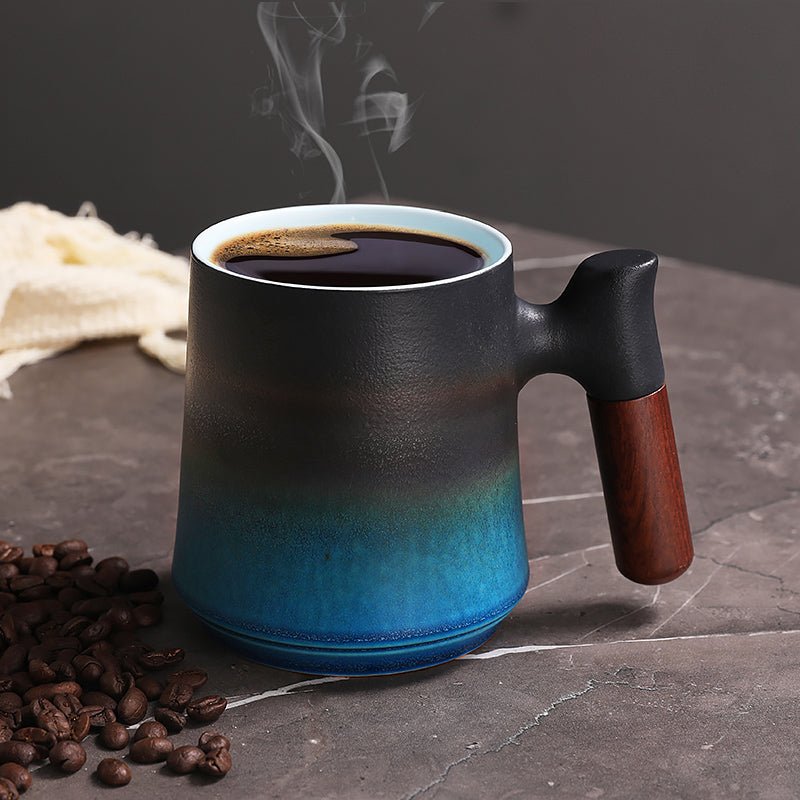
Coffee Mug Ounces: How to Choose the Right Mug Size
Reading time: about 7 minutes
A mug can look perfect on the shelf and still feel wrong after the first pour. We see that a lot when shoppers compare coffee mug ounces for a kitchen counter, an office desk, or a gift box and want a size that actually matches how they drink coffee.
The number on the mug is only part of the story. The real question is how much coffee you want to pour, how much milk or foam you add, and whether you want a compact cup that stays hot or a larger one that gives you room to breathe.
What do coffee mug ounces actually measure?
In simple terms, coffee mug ounces usually describe capacity, not comfort. A mug marked as 12 oz may hold 12 fluid ounces only when filled close to the rim, which is not how most people drink from it at the kitchen table or while walking back to a desk.
One US fluid ounce is about 29.6 ml, so a 12 oz mug is roughly 355 ml and a 16 oz mug is about 473 ml. That helps when you are comparing mugs across brands, but the usable amount depends on the shape of the mug and how much headroom you want before the coffee sloshes.
We tell shoppers to think about two numbers:
- Nominal capacity: the size listed by the seller or manufacturer.
- Practical pour: the amount you actually serve without filling to the brim.
If you add cream, oat milk, or foam, the practical pour matters more than the label. A mug that sounds small on paper can feel right once you leave room for toppings.
Which coffee mug ounces fit the drinks people actually make?
The best size depends on what ends up in the cup. A straight black drip coffee drinker and a latte drinker do not need the same mug, even if both say they want a regular size.
| Drink or use case | Typical mug size | Why it works | When to avoid it |
|---|---|---|---|
| Espresso or small cappuccino | 6 to 8 oz | Keeps the drink compact and hot | Too small for drip coffee or milk-heavy drinks |
| Daily drip coffee | 10 to 12 oz | Feels balanced and fits most counters and dish racks | May feel tight if you pour large servings |
| Latte or coffee with milk | 12 to 16 oz | Leaves space for milk, foam, and a more relaxed pour | Can cool faster if the opening is wide |
| Desk mug or second cup | 16 to 20 oz | Good for long work sessions and refill-free mornings | Bulky for small hands or crowded cabinets |
For most shoppers, 12 to 14 oz is the safest middle ground. It feels generous without becoming awkward, and it is usually easier to wash, dry, and store than an oversized mug.
If you want a deeper size comparison, our guides on How Many Ounces Is a Coffee Mug? Real Sizes and Buyer Tips and How Many Ounces Is a Regular Coffee Mug? Buyer Guide cover the common ranges people usually mean by standard mug size.
How do mug shape and handle size change the usable capacity?
Two mugs can share the same ounce rating and still feel completely different in hand. A wide mug exposes more surface area, which can make coffee cool faster. A taller, narrower mug usually helps retain heat a little better and often feels less awkward on a tray or under a machine.
The handle matters just as much. We look for a handle that can fit two fingers without pinching, because a full mug gets heavier than buyers expect. A handle that is too small makes a cup feel worse than the ounce count suggests, especially when the mug is full of hot coffee and you are moving quickly across a kitchen or office.
In our experience, the details that separate a solid everyday mug from a frustrating one are small but real:
- A flat, stable base that does not wobble on a desk or countertop.
- A smooth rim that feels comfortable on the lips and does not catch when you sip.
- A glaze that looks even, with no pinholes, rough spots, or thin areas near the lip.
- A handle joint that does not show hairline cracks after a few wash cycles.
We pay the closest attention to the rim, the handle, and the base. That is where a mug feels premium or annoying in daily use.
There is also a trade-off shoppers should know. Bigger mugs are not always better if you want coffee to stay hot for a long time. A 20 oz mug may suit long desk sessions, but it is not the best choice for someone who wants a smaller pour that stays warm from first sip to last.
Which mugs in our store suit different buyers?
If you want a straightforward shape that works for everyday coffee, start with our Round Coffee Tea Mug. A round profile is easy to hold, easy to rinse, and usually the least fussy option for home kitchens and office desks.
If you want a mug that feels more giftable or more expressive, our Elk and Moon Coffee Tea Mug and Koi Fish Coffee Tea Mug are better fits. These are the kinds of pieces people notice when they open the box, set them near a monitor, or keep them on a shelf between uses.
To see the full range side by side, browse our collection. That is usually the fastest way to compare style, use case, and which coffee mug ounces make sense before you commit to one.
If you are still sorting out the wording around standard sizes, the article How Many Ounces Is a Standard Coffee Mug? A Buyer’s Guide is a useful companion read before you decide.
What should you check before buying by ounces?
Before you buy, we recommend checking the mug the same way you would check a product on your own counter. A size label is only useful if the mug fits your drink, your cabinet, and your washing routine.
- Confirm the practical size you usually pour, not just the maximum fill line.
- Check whether you want room for milk, foam, or a splash of cream.
- Look at the handle opening and base width, not just the ounce number.
- Decide how the mug will be cleaned. If the maker says it is dishwasher-safe, top-rack placement is the safer choice, and printed surfaces should not be scrubbed with steel pads.
- Think about storage. A large mug can crowd a shelf or not fit neatly under a cabinet.
A few common defect modes are worth watching for if you are comparing mugs online or unboxing a gift: a chipped rim, a rough glaze line, a base that rocks on the table, or decoration that looks uneven near the handle. Those issues do not always make a mug unusable, but they do affect everyday satisfaction.
Trade-offs matter here. A bigger mug is better for milk-heavy drinks and long work sessions. It is not as good if you want compact portions, a lighter hand feel, or a mug that slides easily into a crowded dishwasher rack.
If you want more background before choosing, our article How Many Ounces Is a Coffee Mug? Sizes, Fits, and Buying Tips adds another angle on how size and shape interact in daily use.
Frequently asked questions
How many ounces is a normal coffee mug?
Most people mean something around 10 to 12 oz when they say a normal coffee mug. That range works well for drip coffee, tea, and small milk additions without making the cup feel oversized. If you like larger pours, 14 to 16 oz is the next step up.
Is a 16 oz mug too big for everyday coffee?
Not if you actually drink that much. A 16 oz mug is useful for lattes, long mornings, or anyone who wants extra room for milk. It can feel too large for someone who prefers a tighter pour and wants the coffee to stay hot longer.
What matters more, coffee mug ounces or shape?
Both matter, but shape often changes the experience more than buyers expect. Two mugs with the same ounce rating can feel very different if one is wide and shallow while the other is tall and narrow. Shape affects heat retention, grip, and how easy the mug is to handle when full.
Can I put decorative coffee mugs in the dishwasher?
Only if the product listing says the mug is dishwasher-safe. For decorated mugs, the top rack is usually the safer choice, and harsh scrubbing can wear down printed or detailed surfaces over time. If a mug has delicate artwork, hand washing is often the gentler option.
What size mug is best for coffee with milk?
Most milk-heavy drinks are more comfortable in a 12 to 16 oz mug. That gives you room for espresso, steamed milk, and foam without overflowing or forcing a messy pour. If you want a compact drink, a smaller mug works better, but it will leave less space for milk.
If you want the simplest next step, start with the mug style that fits your routine, then compare the ounces against how you actually drink coffee. Browse our collection, and use the size ranges above to narrow the choice before you buy.
Read more
Shutterfly Coffee Mug Buying Guide: What to Compare Before You Order
If you are comparing a Shutterfly coffee mug to other photo mug options, the details that matter are size, print style, handle comfort, and daily care. Here is the practical checklist we use when c...
Read more
Wood Mug Buying Guide: What to Check Before You Buy
A wood mug feels different on a desk, but not every design suits daily use. We break down what to check, what to avoid, and which of our wood-handled mugs is better for coffee, tea, or gifting.
Read more
Los kommentaar
This site is protected by hCaptcha and the hCaptcha Privacy Policy and Terms of Service apply.