
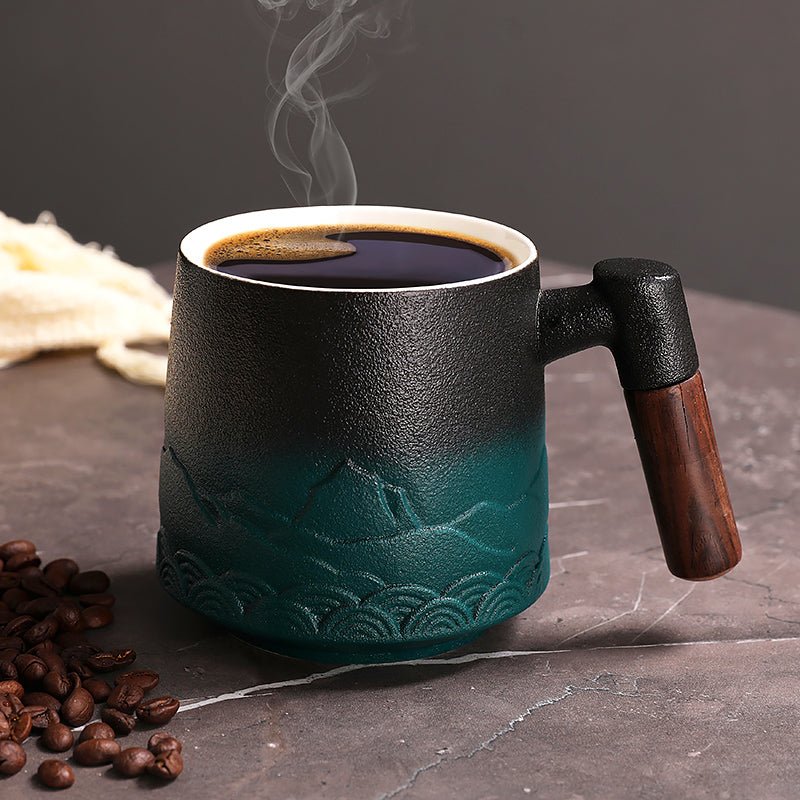
Coffee Mug Dimensions: What Buyers Should Measure Before Ordering
Reading time: about 9 minutes
A mug that looks right on screen can still miss the mark at the kitchen shelf, the dishwasher rack, or the office coffee machine. We see that mismatch a lot in our store: the shape is appealing, but the mug is too tall for the cabinet, too wide for a drip tray, or awkward in the hand.
Coffee mug dimensions are not just about ounces. Height, rim width, base width, handle opening, and wall thickness all change how a mug feels and where it works. That is the part shoppers usually discover only after the box arrives.
If you want to compare shapes first, start with our all mugs collection. It is the fastest way to see how form, size, and handle style change the experience before you commit to one specific mug.
What do coffee mug dimensions actually measure?
When we talk about mug dimensions, we are usually looking at more than one number. Capacity matters, but it does not tell the whole story. Two mugs can both be listed as 12 oz and still feel very different because one is short and wide while the other is tall and narrow.
In practice, we check the numbers that affect daily use:
| Measurement | What it tells you | Why we check it |
|---|---|---|
| Height | How tall the mug sits on the counter or shelf | Helps avoid cabinet clearance problems and fit issues under brewers |
| Rim diameter | How wide the drinking opening feels | Affects sipping comfort and how fast the drink cools |
| Base diameter | How stable the mug is | A wider base usually feels steadier on a desk or table |
| Handle opening | How easily fingers fit through the handle | One of the biggest comfort checks for larger hands |
| Wall thickness | How heavy and insulated the mug feels | Thicker ceramic often feels sturdier but adds weight |
| Capacity | How much liquid it holds | Useful, but not enough on its own to judge real fit |
One detail shoppers often miss: capacity is usually not the same thing as a comfortable pour line. A mug can be labeled 11 oz or 12 oz, but most people do not fill to the brim. That is why we always compare the measurements together instead of relying on the number alone.
How do dimensions change the way a mug feels every day?
Small changes in shape change the mug more than people expect. A shorter mug with a wider body usually feels stable and relaxed in the hand. A taller mug can look elegant and hold more room for milk or foam, but it is less forgiving if your shelf clearance is tight.
In real use, these trade-offs show up in a few predictable places:
- Kitchen storage: Tall mugs may not fit under shallow cabinets or inside crowded mug trees.
- Brewer clearance: A mug that works on the counter may still be too tall for a single-serve machine or a low espresso setup.
- Desk use: A wider base and lower profile often feel safer near a laptop or paperwork.
- Cleaning: Narrow openings can be harder to scrub by hand, especially if coffee oils build up around the inside curve.
Material also changes the feel. Many mugs in this category are ceramic or stoneware, and that usually means a solid, familiar weight with decent heat retention. Thicker walls can keep a drink warm a little longer, but they also make the mug bulkier in the hand and heavier in a crowded sink.
That is the trade-off we try to be honest about. A tall mug is not automatically better. A novelty mug is not automatically more practical. If you want something that stacks neatly or slides easily onto a narrow shelf, a simpler shape is usually the safer choice.
For a more angular profile, the Rhombus Coffee Tea Mug shows how a geometric form changes the silhouette without turning the mug into a display-only piece. If you prefer a more playful shape, the Handbag Coffee Tea Mug is a good reminder that novelty styling can affect balance, handle feel, and where the mug will actually fit on a shelf.
Which coffee mug dimensions should you compare before buying?
We recommend checking the same handful of measurements every time. It keeps the decision practical and avoids surprises after delivery. In our experience, most returns and regrets come from one of three things: a handle that is too tight, a mug that is too tall, or a shape that looks compact online but takes up more space than expected.
- Height: Measure the space where the mug will live, not just where you will use it.
- Rim width: A wider rim can feel comfortable, but it also cools coffee faster.
- Base width: This matters for stability, especially on a desk, bedside table, or tray.
- Handle opening: Check whether your fingers can fit without pressing against the mug body.
- Wall thickness: Thicker walls can feel more substantial, but they add weight and bulk.
- Capacity: Useful for deciding how much coffee you actually want per pour.
If you are shopping by shape, the White Golden Waves Tall Coffee Tea Mug is the clearest example of a taller profile. That kind of mug can work well for people who like a longer drink or a generous serving space, but it is not the best choice if you keep mugs under low cabinets or want an easy fit under every machine.
Our team also uses where the mug will be used as a sizing filter. A mug for office desks needs different proportions than a mug for slow weekend coffee at home. A gift mug needs to look good unboxed, but it also needs to be usable after the first reaction wears off.
How do standard mugs compare with tall or novelty mugs?
Most buyers start by asking for a standard coffee mug, but standard is a loose term. Some shoppers want a compact daily mug. Others want a larger shape that feels more substantial in the hand. That is why we compare proportions, not just labels.
If you want a broader sizing framework, our guides on Coffee Mug Dimensions: Sizes, Fit, and What to Check Before Buying and Standard Coffee Mug Dimensions: What Buyers Should Check walk through the same buying questions from a shopper's point of view.
| Style | Best for | Trade-off |
|---|---|---|
| Standard mug | Everyday coffee, easy cabinet storage, simple replacement buying | Can feel plain and may not stand out as a gift |
| Tall mug | Longer drinks, more vertical presence, stronger visual profile | May not fit under low shelves or some brewers |
| Novelty mug | Gifts, display value, personality-driven purchases | Often less stackable and sometimes less balanced in the hand |
That trade-off matters. A novelty mug may be the right gift, but it is not always the best daily driver. A standard mug may be less memorable, but it is usually easier to store, wash, and replace later. We tell customers the same thing in-store: buy the shape that matches the way you actually drink coffee, not the one that just photographs well.
What should you inspect when the mug arrives?
We look at mugs the same way a careful buyer should. Open the box, turn the mug in your hand, and check the parts that matter before you put it into a cabinet. That quick inspection catches most problems early.
- Rim: Make sure the drinking edge feels smooth, not sharp or uneven.
- Foot ring: Check that the base sits flat and does not wobble on the counter.
- Handle join: Look for rough spots where the handle meets the body.
- Glaze: Watch for pinholes, dull patches, or inconsistent finish inside the mug.
- Balance: Fill it once with water and see how it feels in the hand and on the table.
Common defect modes in this category are usually simple, not dramatic. We most often see an uneven foot ring, a slightly off-center handle, a rough patch near the handle join, or a glaze irregularity inside the cup. Those issues are not always catastrophic, but they do affect day-to-day use.
Care is part of the buying decision too. If a mug is dishwasher-safe, that helps, but the shape still matters in a loaded rack. Tall mugs may need more clearance on the top rack. Wide novelty handles can knock into neighboring items. If you plan to use a microwave, check the full mug profile, not just the listing title.
There are also situations where a mug is simply the wrong tool. Tall decorative mugs are not ideal for tight mug trees, compact travel cup holders, or shelves with very little vertical clearance. If you need one mug to do everything, choose a simpler silhouette first.
Frequently asked questions
How do I measure coffee mug dimensions before buying online?
Check the listed height, rim diameter, base width, handle opening, and capacity. If the product page only gives one number, that is usually not enough to judge fit. We always compare the mug against the space where it will be stored and used.
Is a 12 oz mug too big for everyday coffee?
Not necessarily. For many people, 12 oz is a practical daily size because it leaves room for milk or cream without feeling oversized. The bigger question is whether the mug is proportioned well enough to fit your cabinet, dishwasher rack, and hand comfortably.
What coffee mug dimensions fit under a coffee machine?
That depends on the machine, but height is the first measurement to check. A mug that works on an open counter may still be too tall under a low drip tray or espresso spout. Measure the clearance of your machine first, then compare it to the mug height with a little extra room for easy placement.
Are tall coffee mugs harder to clean?
They can be, especially if the opening is narrow and the inside curve is deep. A bottle brush or long sponge helps, but day-to-day cleanup is still easier with a mug that has a slightly wider opening. Tall mugs are fine if you like the shape, just know the trade-off before you buy.
Do wider coffee mugs cool drinks faster?
Usually, yes, because the drink has more surface area exposed to air. That can be useful if you prefer to sip sooner, but it is less ideal if you want coffee to stay warm longer. A wider mug also tends to feel less enclosed in the hand, which some buyers like and others do not.
Before you buy, compare height, rim width, base width, and handle clearance against the cabinet, machine, and desk where the mug will live. If you want to browse shapes with those trade-offs in mind, start with our all mugs collection and choose the profile that fits your space first.
More from our blog
Read more
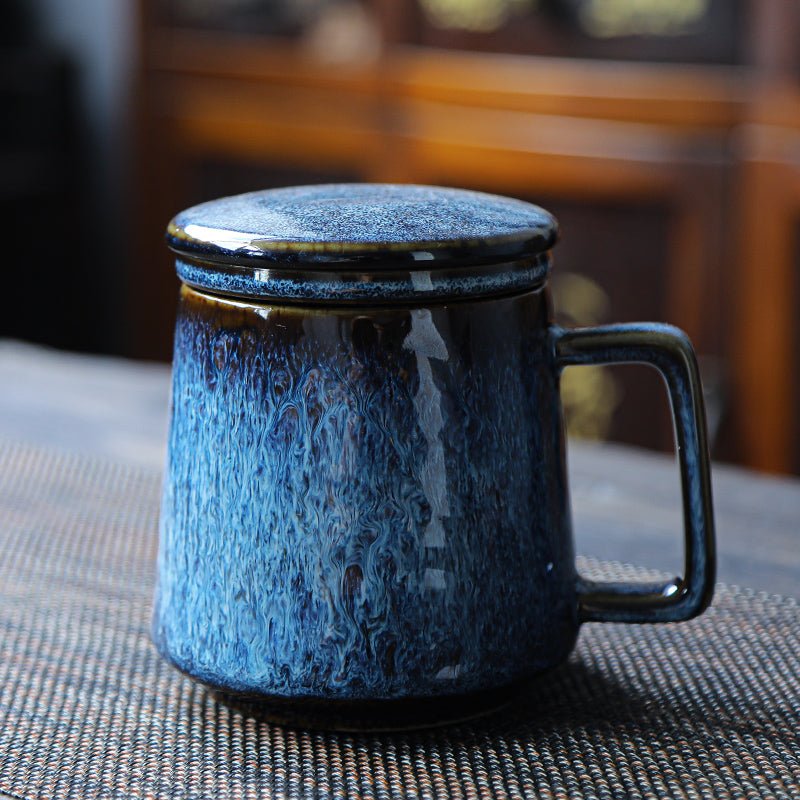
Coffee Mug Dimensions: How to Measure Fit Before You Buy
Coffee mug dimensions affect cabinet fit, handle comfort, and daily use more than most shoppers expect. We break down what to measure, what shape changes feel like in hand, and which details matter...
Read more
8oz Coffee Mug: Size, Fit, and What to Check Before You Buy
An 8oz coffee mug is a better fit than many buyers expect for espresso, tea, and smaller pours. This guide breaks down fit, daily use, and what to inspect before you buy.
Read more
Los kommentaar
This site is protected by hCaptcha and the hCaptcha Privacy Policy and Terms of Service apply.