
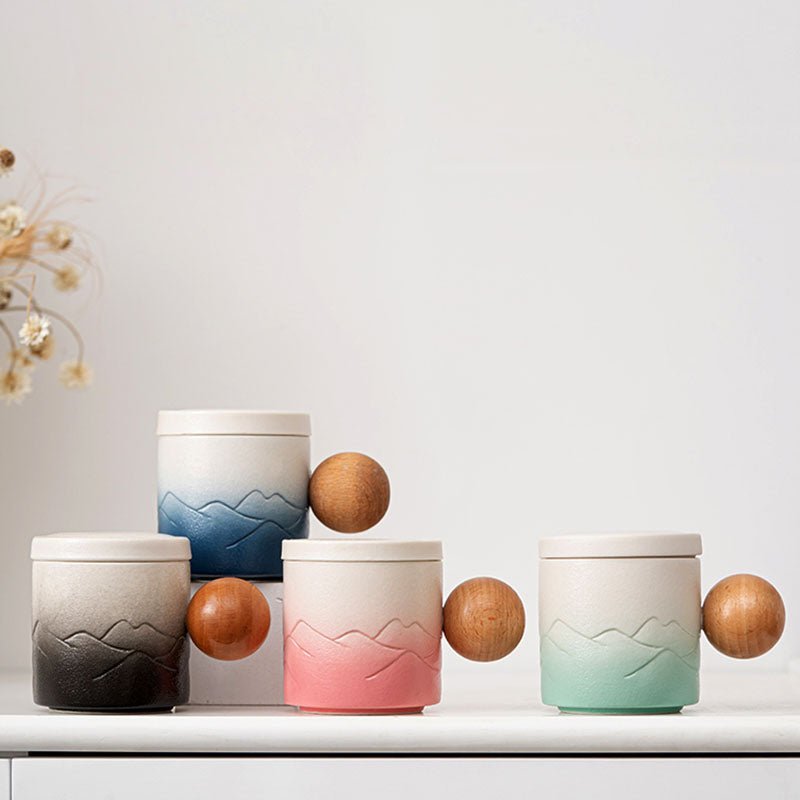
Ceramic Sculptural Mug Capacity Guide: 250, 310 or 400 ml?
Reading time: about 9 minutes
A mug can look substantial on a kitchen counter and still hold less than the plain cup beside it. Sculptural handles, curved walls, and novelty silhouettes change the visual scale, so capacity is the detail to check before buying. This ceramic sculptural mug capacity guide compares the three current sizes in our store: 250 ml, 310 ml, and 400 ml.
We handle sculptural mugs as functional drinkware, not just display pieces. That means looking past the silhouette and asking practical questions: Does one pour cover your usual coffee break? Will you refill it before lunch? Is the form comfortable for the way you normally pick up a mug? The products here are defined by three-dimensional ceramic form rather than printed surface artwork, but their capacities create three noticeably different daily routines.
Ceramic sculptural mug capacity guide: what do the three sizes hold?
The current range spans 150 ml from smallest to largest. That difference is meaningful in daily use. Using standard volume conversion and rounding to one decimal place, 250 ml is approximately 8.5 US fluid ounces, 310 ml is about 10.5 ounces, and 400 ml is roughly 13.5 ounces.
| Current mug | Listed capacity | Approximate US fl oz | Form detail | Best starting point for |
|---|---|---|---|---|
| Ball Handle Coffee & Tea Mug | 250 ml | 8.5 fl oz | Rounded sculptural handle | Shorter servings and planned refills |
| Handbag Coffee & Tea Mug | 310 ml | 10.5 fl oz | Purse-shaped silhouette | Moderate everyday pours and gifting |
| The Flow Coffee & Tea Mug | 400 ml | 13.5 fl oz | Flowing sculptural curves | Long drinks and fewer refills |
These figures describe nominal listed capacity. Your practical pour may be lower because coffee, tea, milk, foam, toppings, and carrying room all need space below the rim. If you routinely fill a mug to its stated maximum, even a small movement from the counter to an office desk can become awkward.
For a broader view of the available shapes, browse our unique coffee mug collection. Capacity should narrow the choice first; the sculptural form can then decide which mug feels right for your space or recipient.
Which capacity matches your refill pattern?
The easiest way to choose is to measure what you already pour. Check the marked volume on your coffee machine, use a measuring jug once, or note the size of the vessel that currently works. Buyers often compare mugs by overall appearance, but an outward curve or prominent handle can make a ceramic mug appear larger without telling you its internal volume.
- Choose 250 ml for deliberate, shorter servings. This size suits someone who finishes a drink in one sitting and does not mind returning for a refill. It can also reduce the amount of coffee or tea left cooling on the desk.
- Choose 310 ml for a middle-ground routine. It gives 60 ml more than the 250 ml mug without moving into the largest option. This is the practical compromise for a familiar everyday pour with a more distinctive silhouette.
- Choose 400 ml for fewer interruptions. The extra volume suits longer desk sessions, generous tea servings, or coffee with room reserved for milk. It is the strongest fit for someone who knows a 250 ml cup leads to immediate refilling.
Capacity does not guarantee temperature retention, and we do not treat a larger mug as automatically better. A 400 ml drink may cool before it is finished if you sip slowly. In that situation, the 250 ml Ball Handle mug can produce a fresher second pour rather than one long serving that sits untouched.
250 ml Ball Handle: who benefits from the compact serving?
The 250 ml Ball Handle mug is the smallest current option. Its defining feature is a rounded, sculptural handle, so it makes sense for a shopper who wants the three-dimensional character to be visible without choosing a high-capacity vessel.
In our experience, 250 ml works best for a focused coffee break, a modest tea serving, or a routine built around multiple fresh pours. On an office desk, the smaller volume can be useful if a drink is regularly forgotten during calls. At home, it suits someone who would rather brew again than finish lukewarm coffee.
This is not the most suitable option for a large latte-style drink, a long tea session, or anyone trying to minimize trips to the kitchen. The rounded handle is also a form-led choice. Since hand sizes and grip preferences vary, study the product images before buying rather than assuming it will feel like a conventional loop handle.
Shoppers comparing similarly compact drinkware can also consult our ceramic espresso cup capacity guide for 170, 200, and 250 ml. It helps show where this 250 ml sculptural mug sits relative to smaller coffee servings.
310 ml Handbag: is it the most flexible middle size?
The 310 ml Handbag mug occupies the middle position and uses a purse-shaped silhouette as its main sculptural detail. It offers 60 ml more than the Ball Handle and 90 ml less than The Flow.
That middle capacity is useful for a shopper whose usual drink is too generous for a compact cup but does not require a 400 ml mug. It can accommodate a moderate coffee or tea routine while keeping the object-like handbag shape central to the purchase. For gift unboxings, the recognizable silhouette also gives the recipient something to notice before the mug is filled.
The trade-off is specificity. A purse-shaped ceramic mug is not a neutral choice, and it may be less appropriate for someone who prefers conventional drinkware or needs stackable, space-efficient cups. We would choose it for a recipient who already enjoys object-inspired homeware, not simply because 310 ml is the middle number.
If the buyer already uses a common 12-ounce mug, compare that routine with our 12 oz ceramic coffee mug capacity guide. A 310 ml mug is smaller than a nominal 12 US fluid ounce serving, so checking the actual pour can prevent a disappointing size mismatch.
400 ml The Flow: when does the larger size make sense?
The 400 ml The Flow mug is the largest of the three and is distinguished by sculptural curves. Its capacity is 90 ml above the Handbag and 150 ml above the Ball Handle, making it the clearest choice for buyers who prioritize a longer serving.
A 400 ml mug fits a home worker who wants to make tea before a meeting block, a reader who prefers one generous pour, or a coffee drinker who adds milk and still wants usable space. It also gives more flexibility for hot cocoa or other drinks that need room for additions, although toppings should still sit below the rim for easier carrying.
The limitation is equally practical: more liquid means a fuller, heavier mug, and the drink may remain on the desk longer. The Flow is not the best match for someone who drinks small, concentrated servings or dislikes holding a larger filled vessel. A conventional straight-sided mug may also be preferable if compact cupboard storage and easy nesting matter more than sculptural curves.
How should ceramic form affect daily use and care?
Capacity is measurable; comfort is personal. Sculptural curves, a rounded handle, and a handbag silhouette create different contact points from standard cylindrical mugs. Before choosing, inspect the product photographs from several angles and consider where your fingers, thumb, and palm normally sit. We do not assign exact grip clearance without published dimensions.
Three-dimensional ceramic details also deserve deliberate handling around sinks, drying racks, and crowded cupboards. Projecting forms may contact neighboring dishes before the main mug wall does. A sensible routine is:
- Check the individual product page for its current care directions before the first wash.
- Do not assume dishwasher or microwave compatibility unless it is stated for that product.
- Leave space around raised curves, rounded handles, and shaped edges in the sink or drying area.
- Inspect contact points for chips or cracks after an impact, especially before filling the mug with a hot drink.
- Store the mug where its sculptural profile is not pressed tightly against other ceramic pieces.
Common ceramic damage begins at exposed edges, handles, or points that strike another hard surface. That does not make sculptural drinkware impractical, but it does mean a tightly packed office dishwasher basket or overcrowded cabinet may not be its ideal setting. Buyers who need uniform stacking for a shared kitchen should consider a simpler mug profile.
Which current mug fits your serving routine?
Use the drink first and the form second. This keeps a striking mug from becoming one that stays on the shelf.
- You pour about 250 ml and enjoy a fresh refill: choose the Ball Handle for its compact capacity and rounded sculptural handle.
- You want a moderate daily mug with a recognizable gift shape: choose the 310 ml Handbag for its middle capacity and purse-shaped silhouette.
- You make one longer coffee or tea and dislike frequent refills: choose the 400 ml Flow for its larger capacity and sculptural curves.
- You need stacking, maximum cupboard efficiency, or a conventional grip: a simpler mug style may serve you better than any of these sculptural forms.
Our practical rule: choose the smallest capacity that comfortably holds your normal prepared drink with carrying room left at the top. Move up only when your current serving genuinely needs the extra volume.
Frequently asked questions
What is the best size in this ceramic sculptural mug capacity guide?
There is no single best size. The 250 ml Ball Handle suits shorter servings and refills, the 310 ml Handbag covers a moderate everyday pour, and the 400 ml Flow fits longer drinks with fewer trips back to the kitchen.
Is a 250 ml sculptural mug large enough for daily coffee?
It is large enough if your prepared drink stays near 250 ml and you leave some room below the rim. It is less suitable for a large milk-based coffee or for someone who expects one mug to last through a long work session.
How much larger is the 400 ml Flow than the 310 ml Handbag?
The listed difference is 90 ml, or approximately 3 US fluid ounces. That extra space is noticeable if you add milk, prepare generous tea servings, or regularly refill a medium mug soon after pouring it.
Can sculptural ceramic mugs go in a dishwasher or microwave?
Do not assume they can based on ceramic material alone. Follow the current care information on the individual product page, since compatibility can depend on the mug’s complete construction and finish.
Are these mugs decorated with artwork or shaped as three-dimensional objects?
The comparison here focuses on three-dimensional form: The Flow has sculptural curves, the Ball Handle has a rounded sculptural handle, and the Handbag uses a purse-shaped silhouette. This is distinct from choosing an otherwise standard mug mainly for printed surface artwork.
For the next step, measure one normal prepared drink, decide how often you are comfortable refilling, and check the product images for grip and cupboard fit. Then compare the 250 ml, 310 ml, and 400 ml options in our collection of unique coffee mugs before selecting the sculptural form that matches the routine.
More from our blog
Read more
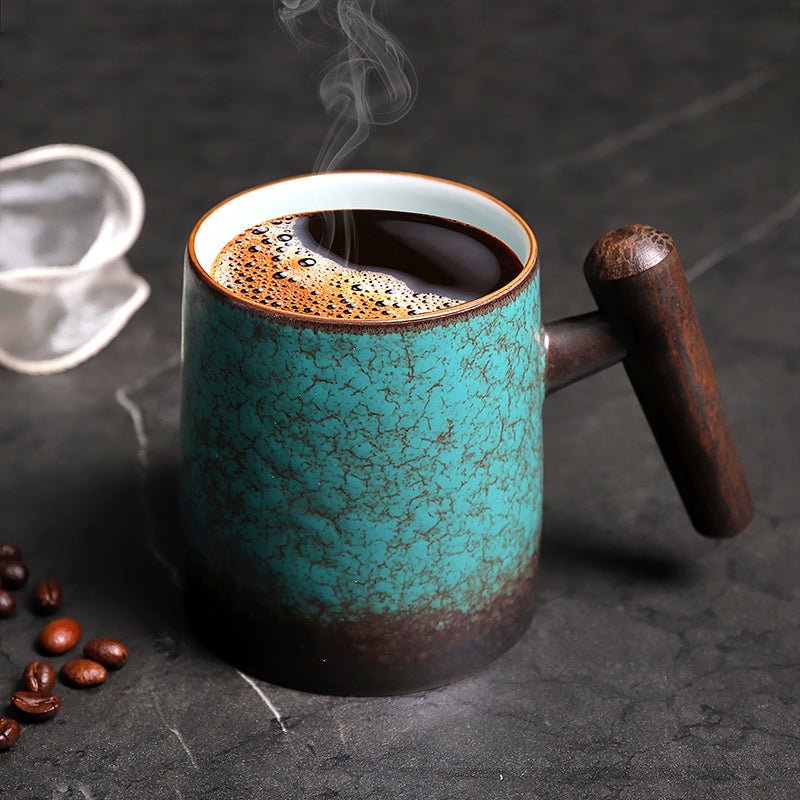
Americano Coffee Cup for Small Coffee Setup: Space and Capacity
Compare CoffeifyMug's current 200, 270, and 350 ml options by listed capacity, potential headroom, shelf constraints, and counter-space priorities before choosing a cup for a compact setup.
Read more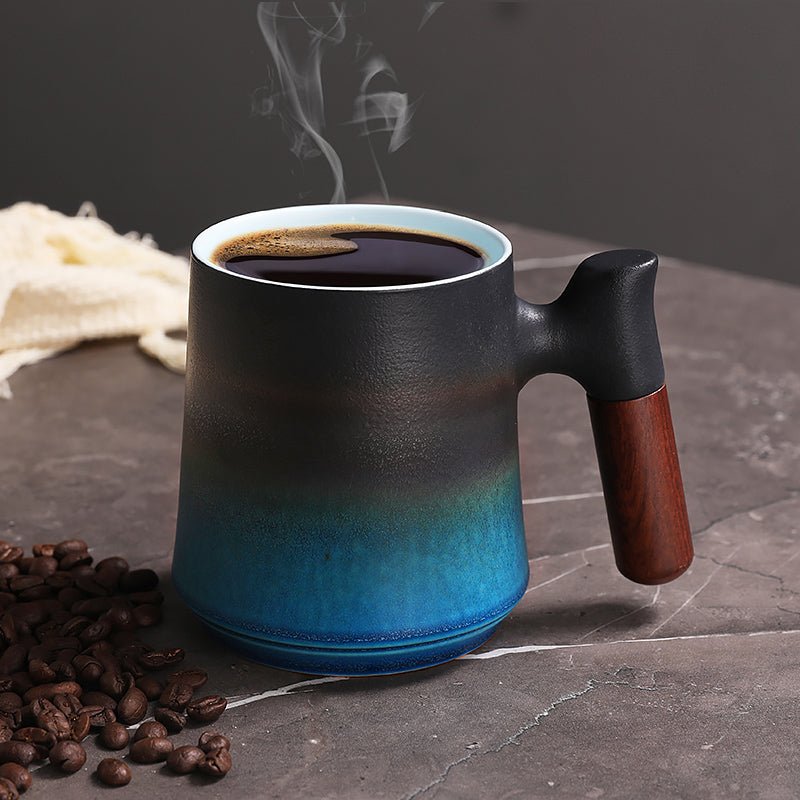
Black Tea Mug Capacity Guide: 390 ml vs. 400 ml
Compare CoffeifyMug's current 390 ml and 400 ml black tea mugs by practical pour space, refill routine, handle preference, and everyday fit.
Read more
Los kommentaar
This site is protected by hCaptcha and the hCaptcha Privacy Policy and Terms of Service apply.