
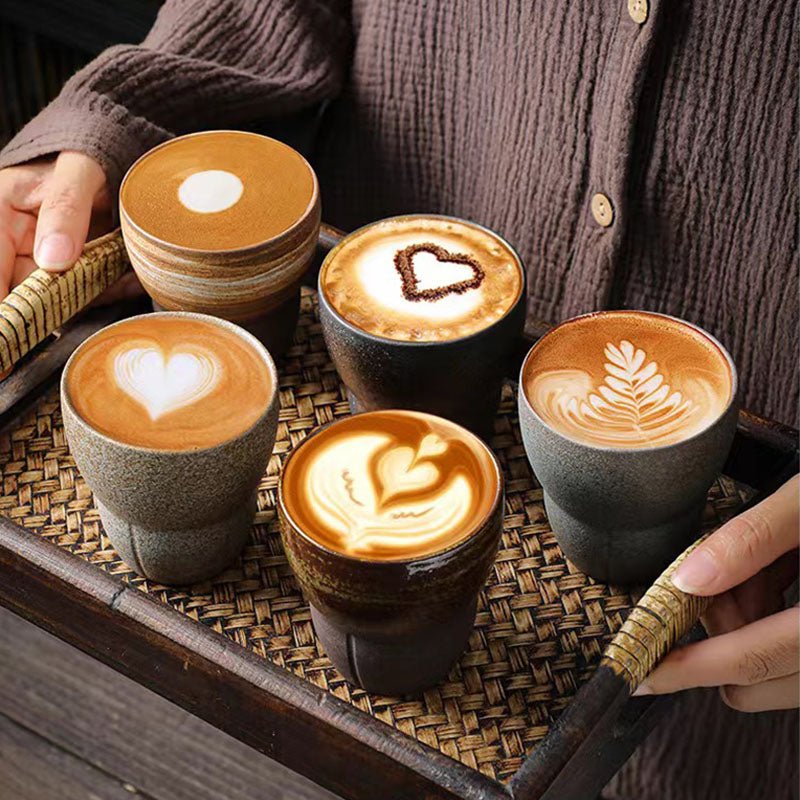
Ceramic Espresso Cup Shape and Handle Guide: Current Options
Reading time: about 9 minutes
A cup can look compact in a product photo and still hold considerably more than a traditional single espresso serving. The handle can also be the detail that determines whether the cup works on a crowded office desk, fits comfortably in a particular hand, or feels too decorative for an everyday kitchen routine. This ceramic espresso cup shape and handle guide compares the visible forms and listed capacities of three ceramic options in our store without turning appearance into unsupported performance claims.
The current choices cover three distinct directions: the 170 ml Retro cup, the 200 ml Pleated cup, and the 250 ml Ball Handle mug. All three may be larger than a traditional single-shot demitasse. Capacity tells you the maximum listed vessel size; it does not establish the ideal fill level, machine clearance, drink recipe, heat retention, or professional café suitability.
Ceramic espresso cup shape and handle guide: three current forms
We sell cups to shoppers who often begin with a visual preference and then realize that shape affects practical details such as storage, grip, and occupied counter space. Here is the useful distinction between the three current options.
- For a shopper who wants the most compact listed capacity: the Retro Coffee Tea Cup is listed at 170 ml. Its retro-style form is the main visual reason to choose it. Check the current product images and listed measurements if handle clearance, shelf height, or opening diameter is critical.
- For someone drawn to surface texture: the Pleated Coffee Tea Cup is listed at 200 ml. The pleated exterior creates a more visibly structured body than a plain-sided cup, while its capacity sits between the other two options.
- For a shopper who wants a statement handle and the largest listed capacity here: the Ball Handled Coffee Tea Mug is listed at 250 ml. Its ball handle is a deliberate sculptural feature, not a promise that it will suit every grip.
Shoppers who are still deciding between these forms and other distinctive designs can compare the broader unique coffee mug collection. Product and collection pages are also the right place to confirm current dimensions and care information before purchase.
How do 170, 200, and 250 ml change the cup choice?
The listed capacities create a clear progression, but none should automatically be treated as a traditional single-shot demitasse. A small espresso cup in the classic sense is often selected for a short serving with little unused space. These ceramic vessels provide progressively more room and can also be considered by shoppers who want a coffee cup for espresso plus milk, water, or another preferred addition.
| Current option | Listed capacity | Visible design cue | Dimension check |
|---|---|---|---|
| Retro | 170 ml | Retro-style overall form | Confirm current height, width, and handle projection on the product page |
| Pleated | 200 ml | Pleated exterior surface | Confirm current opening, base, and overall measurements on the product page |
| Ball Handle | 250 ml | Sculptural ball-shaped handle | Confirm current body and handle dimensions on the product page |
The 30 ml difference between the Retro and Pleated options is smaller than the 50 ml step from Pleated to Ball Handle, but numbers alone do not describe how large each cup appears in hand. Body width, height, wall profile, and handle projection all influence visual scale. We have not substituted estimated measurements for verified listing data; shoppers with a fixed shelf, espresso machine tray, or cup holder should compare those spaces against the current product dimensions.
For a capacity-first breakdown, our ceramic espresso cup capacity guide for 170, 200, and 250 ml examines the size progression in more detail.
Which handle form suits a kitchen counter or office desk?
A handle deserves separate attention because it extends beyond the body and changes how a vessel occupies space. On a crowded kitchen counter, that projection may determine whether cups can sit closely together. On an office desk, a prominent handle may be easier to locate visually, but it can also take up room near a keyboard, notebook, or monitor stand.
The Ball Handle option makes its grip part of the design. That suits a buyer who specifically wants a rounded, sculptural handle and is comfortable choosing an unconventional form from the product photos. It is not the safest choice for someone who requires a conventional finger-loop grip, needs several fingers to pass through an opening, or has a very specific accessibility requirement. A ball-shaped handle may be held differently from a standard loop, and we do not claim universal comfort.
The Retro and Pleated products put more visual emphasis on the overall silhouette and body treatment. Before ordering either one, inspect the side-view photos for the space between the cup body and handle. Buyers with larger hands should not assume that a cup with a larger capacity automatically has more finger clearance. Capacity measures internal volume, while handle clearance is a separate dimension.
Does the body shape matter beyond appearance?
Visible shape matters most reliably for style, storage planning, and how the cup coordinates with the rest of a setting. The Retro cup is the clearest match for a buyer assembling a vintage-influenced coffee corner. The Pleated cup fits someone who wants visible texture on an otherwise compact ceramic vessel. The Ball Handle mug is the more expressive choice for a desk, open shelf, or gift where the handle itself should be noticed during unboxing.
We keep the claim boundary clear in our store: a pleated wall, retro silhouette, or ball handle does not by itself prove better aroma, crema, extraction, temperature retention, or drinking performance. Those outcomes depend on factors that are not established by visible form alone. These products are also not presented here as calibrated barista vessels or guaranteed matches for a particular espresso machine.
Shape creates some practical inspection points. Look at the rim for chips, the foot for rough impact damage, and the point where the handle joins the body for visible cracks. On a pleated exterior, inspect the recessed areas during cleaning because textured surfaces have more contours than plain walls. These are general ceramic care checks, not claims that a specific product has a known defect.
What should you verify before the first use and each wash?
Ceramic is rigid and can chip or crack after impact, especially at exposed areas such as the rim and handle attachment. During a gift unboxing or first inspection at home, place the cup on a stable counter and check it under direct light before using it. If damage is visible, do not use the vessel until the issue has been addressed with the seller.
- Read the current care details. Do not infer dishwasher or microwave compatibility from the word ceramic alone. Follow the instructions shown on the current product listing or packaging.
- Use a non-abrasive washing approach when hand washing. A soft sponge makes it easier to clean around a handle joint and within the Pleated cup's exterior contours without aggressive scouring.
- Avoid impact during loading and storage. Do not force a handle against another mug, and avoid stacking cups by resting weight on a rim unless the product is explicitly designed for stacking.
- Inspect after accidental knocks. A fine crack at the handle joint or a sharp rim chip is a reason to stop using the cup rather than continue through another drink or dishwasher cycle.
None of the three options should be purchased solely on an assumption that it will survive a particular appliance cycle or fit an existing storage rack. Exact care compatibility and dimensions should be verified from the product information available at the time of purchase.
Which current cup maps to your buying situation?
A useful recommendation connects the setting, the reason for the fit, and the next product to inspect. Our current comparison breaks down this way:
- Compact-capacity priority: choose the 170 ml Retro option if you want the lowest listed capacity of the three and prefer a retro visual direction. It still may be larger than a traditional demitasse, so review the Retro cup details rather than assuming single-shot proportions.
- Texture with a middle capacity: consider the 200 ml Pleated option if the ridged body is part of the appeal and you want a capacity between 170 and 250 ml. The Pleated cup listing is the relevant next step for current photos and dimensions.
- Largest capacity and unconventional grip: inspect the 250 ml Ball Handle option if you want more listed room and specifically like the rounded handle form. Skip it if you need a familiar loop handle or known multi-finger clearance; start with the Ball Handled mug page to judge the visible grip.
- Still deciding mainly by volume: use our ceramic espresso cup comparison of current options before returning to the product pages.
Frequently asked questions
What does this ceramic espresso cup shape and handle guide compare?
It compares three ceramic vessels sold in our store: the Retro cup at 170 ml, the Pleated cup at 200 ml, and the Ball Handle mug at 250 ml. The comparison is limited to listed capacity, ceramic material, and visible form rather than unverified drink-performance claims.
Is a 170 ml ceramic cup the same size as a traditional espresso demitasse?
Not necessarily. The 170 ml Retro cup may be larger than a traditional single-shot demitasse, and the 200 and 250 ml options provide still more listed capacity. Choose according to the amount of room you want, then verify the exterior dimensions for your shelf or machine area.
Is the 250 ml Ball Handle mug comfortable to hold?
Comfort depends on hand size, grip preference, and how you use the rounded handle. We can identify the visible ball form, but we do not claim that it is universally ergonomic. Shoppers who need a conventional finger loop should choose a different handle style.
Will these ceramic cups fit under my espresso machine?
Fit cannot be confirmed from capacity alone. Measure the available vertical clearance and tray space on your machine, then compare those numbers with the current product dimensions. Do not assume that a 170 ml cup is automatically short enough or that handle width will clear adjacent controls.
Can these cups go in a dishwasher or microwave?
Use only the care information provided on the current product listing or packaging. Ceramic material by itself does not confirm compatibility with every dishwasher, microwave, finish, or temperature cycle. If appliance care is not explicitly stated, hand washing with a soft sponge is the more conservative approach.
Your final shape-and-handle check before ordering
Start with four checks: select 170, 200, or 250 ml; decide whether you prefer retro styling, a pleated body, or a ball handle; measure your available shelf and machine space; and confirm the current dimensions and care instructions on the product page. Then compare the choices in our unique ceramic coffee mug collection and open the listing that matches both your visual preference and practical space.
More from our blog
Read more
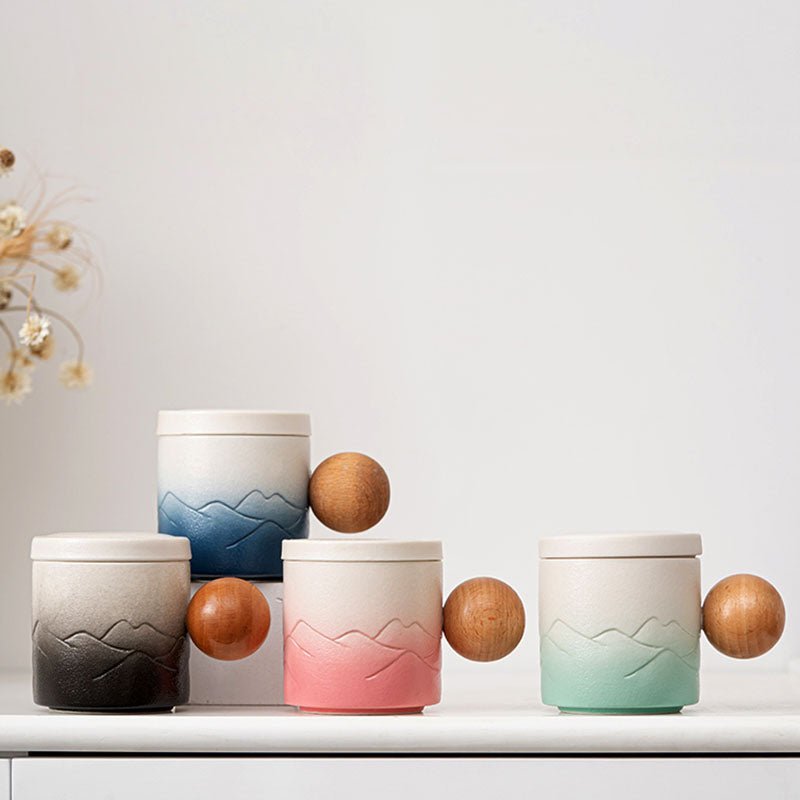
Coffee Mugs Unique Shape Capacity Guide: 400, 440, 480 ml
Compare our current 400, 440, and 480 ml unique-shape mugs by serving size, refill routine, handle style, desk space, and gifting fit. Includes the practical limitations of each design.
Read more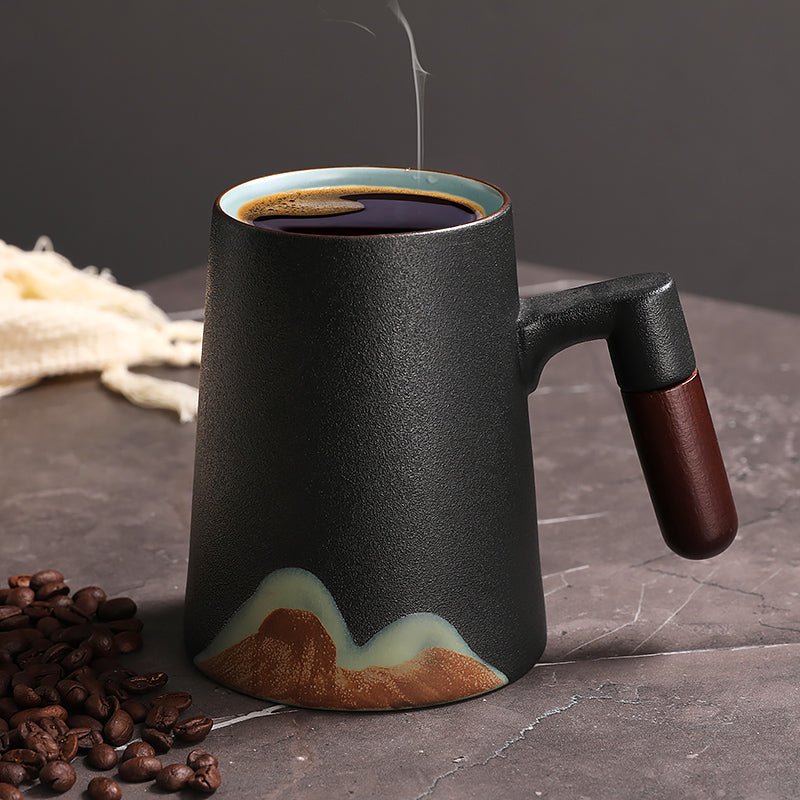
Mocha Mug Shape and Handle Guide: Compare 400-480 ml Options
Compare three current mocha mug options by capacity, visible silhouette, handle form, listed dimensions, and everyday fit. This guide covers the practical trade-offs between 400 ml, 440 ml, and 480...
Read more
Los kommentaar
This site is protected by hCaptcha and the hCaptcha Privacy Policy and Terms of Service apply.