
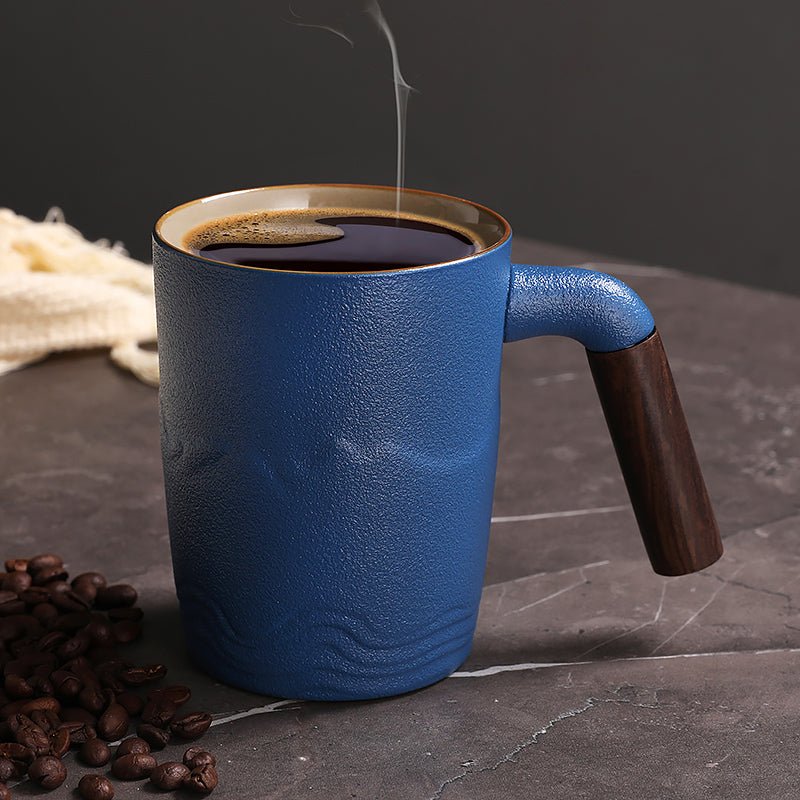
Traditional Mexican Coffee Mugs: What to Look for Before You Buy
Reading time: about 8 minutes
A traditional Mexican coffee mug feels different the moment you pick it up. The weight, the glaze, the rim, even the way it sits on a kitchen counter all tell you something about how it will behave in daily use. We see shoppers make the same mistake over and over: they buy for the pattern first, then realize the mug is too big for drip coffee, too porous for a busy sink, or too delicate for an office desk.
That is why we look at these mugs as working pieces, not just decoration. A good one should serve coffee well, rinse clean without fuss, and still keep the handmade character that draws people to it in the first place. If you want a deeper buy-side guide on clay versions, our article on Mexican Clay Coffee Mugs: How to Choose the Right One is a useful companion read.
What actually makes a mug feel traditional?
There is not one single mold for traditional Mexican coffee mugs. In practice, shoppers usually mean a mug with a handmade look, earthy color, painted detail, or a clay body that feels closer to a workshop piece than a factory cup. Some are fully glazed ceramic. Others lean rustic, with more texture at the base and a slightly irregular lip.
From a buyer's point of view, the details that matter most are not decorative. They are practical:
- Body material: clay, terracotta, ceramic, or stoneware each behave differently with heat and washing.
- Glaze coverage: a fully glazed interior is easier to clean and less likely to hold coffee aroma.
- Rim shape: a smooth, even lip makes a bigger difference than most people expect on the first sip.
- Base stability: a flat, balanced foot matters on a crowded counter or a wobbly desk.
If you are comparing style and daily use together, our guide to Mexican Coffee Mugs: How to Choose Style, Size, and Everyday Use breaks that decision down in a practical way.
Which material works best for everyday coffee?
The best material depends on how you actually drink coffee. A mug that looks perfect in a shelf photo may be annoying in a shared kitchen if it needs special handling. In our experience, buyers usually fall into one of four groups: they want the warm feel of clay, the easiest cleanup, the most heat retention, or the least risk of damage from a rushed morning routine.
| Material | What it feels like | Care and trade-off | Best fit |
|---|---|---|---|
| Unglazed clay or barro-style | Earthy, textured, often heavier | Can be porous and more sensitive to thermal shock; usually hand wash only | Serving coffee at home, display shelves, slow mornings |
| Fully glazed ceramic | Smoother, easier to wipe clean | Better for regular washing; still check for chips and crazing | Everyday use, office desks, gift mugs |
| Stoneware | Dense and sturdy with good heat retention | Usually more forgiving, but a thick mug can feel heavy in hand | People who want durability and a solid feel |
The main limitation is simple: if you want a mug for fast cleanup, microwave convenience, and repeated dishwasher cycles, unglazed clay is rarely the easiest pick. That does not make it a bad choice. It just means the romance of the material comes with real maintenance.
What should you inspect before buying a handmade mug?
This is where shoppers save themselves the most regret. A mug can look beautiful in photos and still be awkward in hand. When we inspect handmade drinkware in our store, we look for the same things a customer would notice after the unboxing is over and the mug is actually in use.
A quick checklist helps:
- Rim finish: run your eye around the lip. Chips, rough spots, or an uneven edge will show up every time you drink from it.
- Handle clearance: make sure your fingers fit comfortably without touching the hot body of the mug.
- Foot ring: the mug should sit flat without rocking on a table or drying rack.
- Glaze quality: look for pinholes, sticky spots, or visible crazing if you want easier cleaning.
- Weight balance: a mug that feels top-heavy is more likely to tip on a desk or bedside table.
Some flaws are cosmetic and part of the handmade appeal. Others are not. A hairline crack, a sharp rim, or a handle that feels underbuilt are reasons to pass. If you want a more detailed pre-purchase checklist, see Mexican Clay Coffee Mugs: What to Check Before You Buy.
One trade-off worth stating plainly: the most characterful mugs are often the least uniform. If you want perfect symmetry for stacking, identical sizing, and a smooth factory finish, traditional handmade styles may not be your best match.
How do size and shape change the way the mug feels?
Size affects more than volume. It changes aroma, heat, and the balance of the mug in your hand. A wider mug cools faster because more surface area is exposed. A taller mug usually feels more contained and often works better for drip coffee or a milk-heavy drink. For most buyers, the sweet spot is usually in the 8 to 12 oz range, but the right choice depends on what you pour into it.
- 8 oz: good for espresso-based drinks, short coffee, or a smaller serving that stays hot longer.
- 10 oz: a practical everyday size for black coffee or a modest splash of milk.
- 11 oz: a flexible middle ground for desk use, gift giving, and standard home brewing.
- 12 oz: better if you like a fuller pour, extra room for cream, or a longer morning drink.
Shape matters too. A rounded bowl-style mug can feel cozy, but it may be too open for a mug warmer or a long commute from the kitchen to the couch. A straighter wall is usually easier to grip and easier to store. If size is the main decision point, our size guides for 10 oz coffee mugs, 11 ounce coffee mugs, and 12 ounce coffee mugs can help you match capacity to daily use.
Which options fit a real kitchen better than a display shelf?
Some shoppers want a mug that looks traditional and handmade. Others want the feeling of a considered, attractive cup without the maintenance that comes with porous clay. That is where we usually steer people toward simpler, easy-care mugs from our store, especially for offices, gift bundles, and homes where the dishwasher runs often.
If that sounds like your setup, you can browse our full range in the all products collection. For a few concrete examples, our The Crane Coffee Tea Mug, Landscape Coffee Tea Mug, and The Gradient Coffee Tea Mug offer a cleaner everyday path if you want visual interest without the care demands of traditional clay.
We say that carefully: those are not substitutes for a true barro mug. They are the better choice if you want something that moves easily from kitchen counter to office desk, survives a packed gift box, and does not need special handling after every wash.
In our experience, this is the real decision point for many shoppers:
- Choose traditional clay or glazed handmade ceramics if the tactile feel and artisan look are the priority.
- Choose a modern mug if you want easier cleanup, more predictable sizing, and less concern about chips or porous surfaces.
- Choose based on the room it will live in, not just the photo that caught your eye.
How should you care for traditional Mexican coffee mugs?
Care depends on the body and the glaze, so do not assume every mug should be treated the same way. A fully glazed ceramic mug can often handle regular washing, but a rustic clay piece may need much gentler treatment. If the seller gives specific care instructions, follow those first.
- Wash by hand if unsure: mild soap and a soft sponge are safer than an aggressive scrubber.
- Dry completely: especially important for porous clay or mugs with an unglazed base.
- Avoid sudden temperature shifts: moving a cold mug straight to boiling liquid can stress the body and create cracks.
- Check for glaze wear: if the interior starts to show crazing or dull spots, pay attention to whether the mug is still food-safe for your use case.
- Do not force microwave use: if there is metallic detailing, a crackled glaze, or no clear care guidance, keep it out of the microwave.
The main limitation here is honest and practical: the more traditional the mug looks, the more likely it is to ask for a little extra attention. If you want the beauty of the style but not the maintenance, a modern glazed mug is often the better buy.
Frequently asked questions
Are traditional Mexican coffee mugs dishwasher safe?
Some fully glazed ceramic mugs are dishwasher safe, but many handmade clay or rustic pieces are better washed by hand. If the mug has an unglazed base, visible crazing, or no care label, hand washing is the safer choice.
What size is best for daily coffee?
For most buyers, 10 oz to 11 oz is the most useful daily range. Choose 8 oz if you drink short coffee or espresso-based drinks, and 12 oz if you like room for milk, cream, or a larger pour.
Can I use a traditional Mexican coffee mug for tea?
Yes, if the mug is fully glazed and comfortable to hold. If the mug is porous or has a strong coffee history, it may hold aroma more than you want, so it is less ideal for delicate tea.
What defects should make me skip a mug?
Skip a mug with a sharp rim, a wobbling base, a hairline crack, or a handle that feels too thin for the mug's weight. Those issues affect daily use more than decorative imperfections do.
Are handmade mugs a good gift?
They can be a strong gift if the person values character, color, and a handmade feel. They are not the best choice for someone who only wants stackable, low-maintenance mugs that can go straight into the dishwasher every day.
If you are ready to compare options, start with the features that matter most: full glaze, comfortable handle, stable base, and a size that fits the coffee you actually drink. Then browse the all products collection and choose the mug that matches your routine, not just the pattern.
Read more
Route 66 Coffee Mug: What to Check Before You Buy
A practical guide to choosing a route 66 coffee mug, with notes on size, handle comfort, print quality, and when a different everyday mug is the better buy.
Подробнее
TWA Coffee Mug: What Buyers Should Check Before They Buy
A TWA coffee mug can mean a vintage airline souvenir or a modern retro-style cup. We break down what to inspect, when to skip a listing, and which of our mugs fit the same look for daily use.
Подробнее
Оставить комментарий
Этот веб-сайт защищается hCaptcha. Применяются Политика конфиденциальности и Условия использования hCaptcha.