
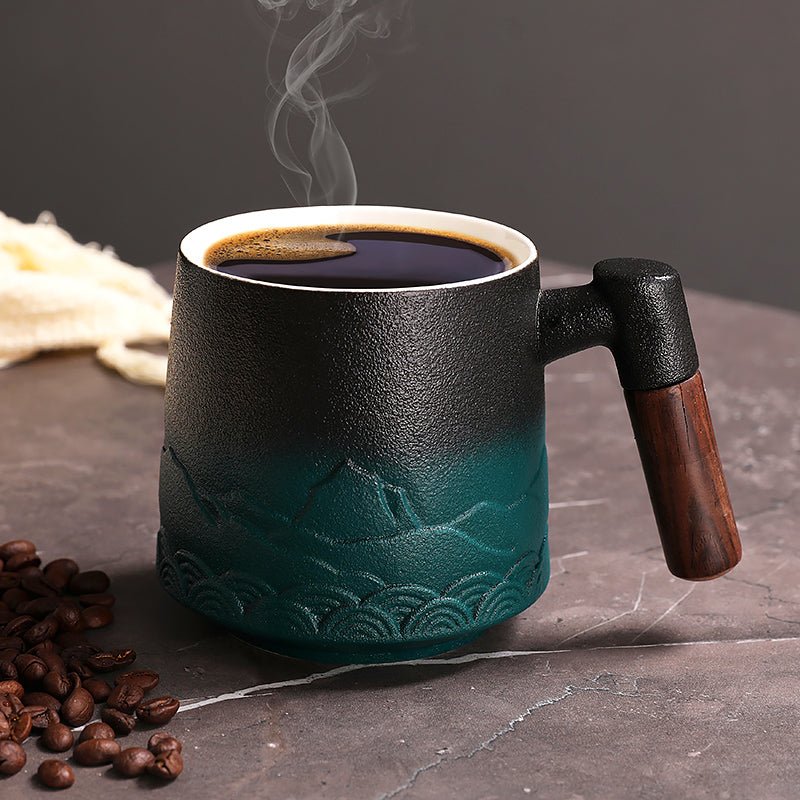
Titanium Coffee Mug Buying Guide: What to Check Before You Buy
Reading time: about 9 minutes
A titanium coffee mug feels different the first time you pick it up. It is light enough to carry all day, but it still feels like gear, not a throwaway cup from a break room. That is exactly why people compare it against stainless steel, ceramic, and enamel before buying.
In our store, we see two very different shoppers asking about this category. One wants a mug that can move from kitchen counter to campsite without adding weight. The other wants a durable cup that will not chip like ceramic or hold onto yesterday's coffee smell. A titanium coffee mug can fit both needs, but only if you buy the right style for the way you actually drink.
If you are still comparing everyday cup sizes and shapes, our guide to a 12 ounce coffee mug is useful for understanding capacity and hand feel before you narrow down materials.
What is a titanium coffee mug really good for?
A titanium coffee mug is best for people who care about low weight, durability, and taste neutrality. Titanium does not rust the way plain steel can, and it does not absorb flavors the way some porous materials do. That makes it a strong pick for hikers, commuters, office drawers, and travel kits where every ounce and every dent matters.
The trade-off is heat behavior. Titanium transfers heat quickly, so a fresh pour can make the mug body warm fast unless the mug uses a double-wall design or a sleeve. That matters on a desk and even more on a trail. If you like to cup your hands around a mug, a bare titanium wall may feel too hot sooner than ceramic.
We also see buyers underestimate the sound and feel. Titanium is light, so it can feel less substantial than stoneware. Some people like that. Others want the heavier, calmer feel of a classic ceramic mug for office use or gift giving.
- Best for: travel, camping, ultralight packing, and minimalist desk setups.
- Less ideal for: people who want a heavy, cozy mug in the hand.
- Not the best fit for: users who leave coffee sitting for a long time and want maximum heat retention without a lid.
What should you check before buying one?
The difference between a mug you keep and one you regret usually comes down to a few practical details. We look at the same checkpoints every time: wall thickness, capacity, handle comfort, and whether the finish is actually pleasant to drink from.
| What to check | Why it matters | What can go wrong |
|---|---|---|
| Wall construction | Single-wall mugs are lighter; double-wall mugs keep drinks hotter longer and stay cooler outside. | A thin single-wall mug can feel hot quickly. |
| Capacity | Choose a size that matches your pour-over, espresso, or drip routine. | A mug that is too small forces overflow; too large can make coffee cool too fast. |
| Handle shape | Comfort matters more than people expect, especially with hot drinks. | A cramped handle makes the mug unpleasant even if the material is excellent. |
| Finish | Brushed or polished titanium changes grip, cleaning, and appearance. | A poor finish can show fingerprints or pick up scuffs easily. |
| Lid compatibility | A lid helps with commute use and heat retention. | If the opening is not standard, finding a lid later can be annoying. |
One detail shoppers often miss is rim comfort. A rolled or carefully finished rim feels better on the lips and usually looks more refined. Another is the base. A mug that is too narrow can tip on a crowded desk, and a mug with a rough base can scratch a table or tray if it is moved often.
If you are shopping by everyday size rather than material first, our 11 oz coffee mug size and fit guide and 10 oz coffee mug guide are good references for understanding how much drink you actually want in hand.
How does titanium compare with ceramic and stainless steel?
If you are narrowing down materials, it helps to compare them by daily behavior instead of marketing claims. Titanium is not automatically the best cup. It is simply the best fit for a specific kind of use.
- Titanium vs ceramic: Ceramic usually feels warmer and more familiar in the hand. Titanium wins on weight and toughness, but ceramic often wins for desk comfort and heat feel.
- Titanium vs stainless steel: Stainless steel can be more common and sometimes less expensive, but titanium tends to feel lighter and more premium in the hand. Steel can also pick up dents more visibly depending on finish.
- Titanium vs enamel: Enamel has a classic camp look, but it can chip. Titanium is tougher for rough packing and repeated use.
For buyers who want a mug that will live mostly at home, ceramic is still the more relaxed choice. If you want a mug that can be dropped into a pack, carried in a side pocket, and cleaned without worry, titanium starts to make more sense. That said, titanium is not the best answer for every coffee drinker. If you want a heavy mug that stays parked on a kitchen counter and never leaves the house, you may be paying for durability you do not need.
For shoppers who are still comparing everyday options, our collection of mugs is a good place to compare shapes, capacities, and styles before settling on a material.
What does a titanium coffee mug need for daily care?
Care is straightforward, but titanium mugs still have a few habits worth respecting. Most plain titanium mugs can be washed by hand with mild soap and a soft sponge. If the mug has a polished finish, avoid abrasive pads that can leave visible scuffs. If it has a lid, clean the gasket or drinking edge separately so coffee oils do not build up.
We recommend checking for three common wear points: the rim, the handle weld or attachment point, and the base. Those areas take the most abuse when a mug is tossed into a bag, set down on rough surfaces, or run through repeated dishwasher cycles. A mug that still looks good after real use is usually the one with cleaner edges and a better finish from the start.
There are a few limitations to be honest about. Titanium mugs are not the best choice if you want to microwave coffee. Metal cannot go in the microwave, and a titanium cup makes that an easy deal-breaker for office use. They are also not ideal if you want your drink to stay hot for a very long time without a lid. For that, an insulated tumbler is usually a better buy.
Which buyer should choose titanium, and which should choose something else?
We usually sort titanium buyers into three groups. Each one has a different reason for buying, and each one should watch for a different downside.
- The commuter: Wants a cup that fits in a bag and survives bumps. Titanium works well if the mug has a lid and a shape that is easy to hold while moving.
- The camper or hiker: Wants low weight and high durability. Titanium is often the safest pick here, especially if every item in the kit gets packed and unpacked often.
- The home coffee drinker: Wants a pleasant, comfortable cup for the kitchen table. Titanium can work, but ceramic may be the more satisfying daily choice.
If your real goal is gift giving, presentation matters more than people expect. Titanium has a clean technical look, but some recipients prefer a mug with more visual warmth. In that case, a ceramic piece with a familiar silhouette may be easier to give and easier to appreciate out of the box. We see this a lot with office gifts and housewarming orders.
If you are comparing mug silhouettes for a gift or daily desk use, our Round Coffee Tea Mug, Landscape Tall Coffee Tea Mug, and Elk and Moon Coffee Tea Mug are useful alternatives to review alongside titanium. They are not the same material, but they help you compare comfort, shape, and visual style before you decide.
How do you choose the right size and shape?
Size sounds simple until you use the mug for real coffee. A short, wide mug feels different from a tall mug with the same capacity. The first is easier to stir and cools a little faster. The second often feels better for a pour-over or a longer work session because it takes up less desk space.
Here is the practical way we suggest choosing:
- If you drink espresso-based drinks or smaller pours, look for a compact cup that does not waste space.
- If you make drip coffee or tea in one serving, a mid-size mug is easier to live with every day.
- If you want a camp mug for soup, instant drinks, or longer use, prioritize capacity and grip over sleekness.
The shape also affects cleaning. A wider opening is easier to rinse and wipe dry. A narrow opening can hold aroma well, but it may be harder to scrub if you use milk or sweeteners. That is one of those small details that does not show up in a product photo but matters after the first week of use.
Our experience is that the best titanium coffee mug is not the one with the most technical language in the listing. It is the one whose wall construction, handle comfort, and capacity match the way you actually drink coffee every day.
Frequently asked questions
Is a titanium coffee mug safe for hot drinks?
Yes, a titanium coffee mug is suitable for hot drinks as long as it is made for beverage use and finished properly. The bigger issue is comfort, not safety: titanium can transfer heat quickly, so the outside may feel hot without insulation or a lid.
Does titanium change the taste of coffee?
Plain titanium is generally valued because it does not hold onto flavors the way some materials can. If a mug has coatings, liners, or residue from manufacturing or cleaning, that can affect taste, so wash it before first use and keep it clean.
Can I put a titanium coffee mug in the dishwasher?
Some can go in the dishwasher, but hand washing is the safer choice if you want the finish to stay cleaner for longer. Dishwashers can also be rough on lids, seals, and polished surfaces, especially over repeated cycles.
Is a titanium coffee mug better than stainless steel?
It depends on the use. Titanium is usually lighter and resists corrosion very well, while stainless steel can be a practical alternative if you care more about cost or a heavier feel. For pure packability, titanium often wins.
What size titanium coffee mug should I buy?
Choose the size based on what you actually pour, not on the number printed in the listing. If you want a single serving of drip coffee, a mid-size mug is usually enough; if you want room for milk or tea, pick a little larger. Our 10 oz, 11 oz, and 12 oz mug guides linked above can help you judge fit before you commit.
If you want the most practical next step, compare one titanium option against one everyday mug shape on our site, then decide whether the real priority is weight, comfort, or presentation. Start with the mug collection at our mug collection, then compare it against the specific product style you would actually use at home, at work, or on the trail.
Read more
Copper Coffee Mugs: What to Buy for Daily Use and Gifting
A good copper coffee mug is about more than the finish. We break down lining, care, size, and the trade-offs that matter for daily coffee, office use, and gift buying.
Подробнее
Fine Bone China Coffee Mugs: What Buyers Should Check Before Ordering
Fine bone china coffee mugs feel lighter, look cleaner, and suit buyers who want a more refined daily cup. We explain what to check for fit, care, and durability before you choose one.
Подробнее
Оставить комментарий
Этот веб-сайт защищается hCaptcha. Применяются Политика конфиденциальности и Условия использования hCaptcha.