
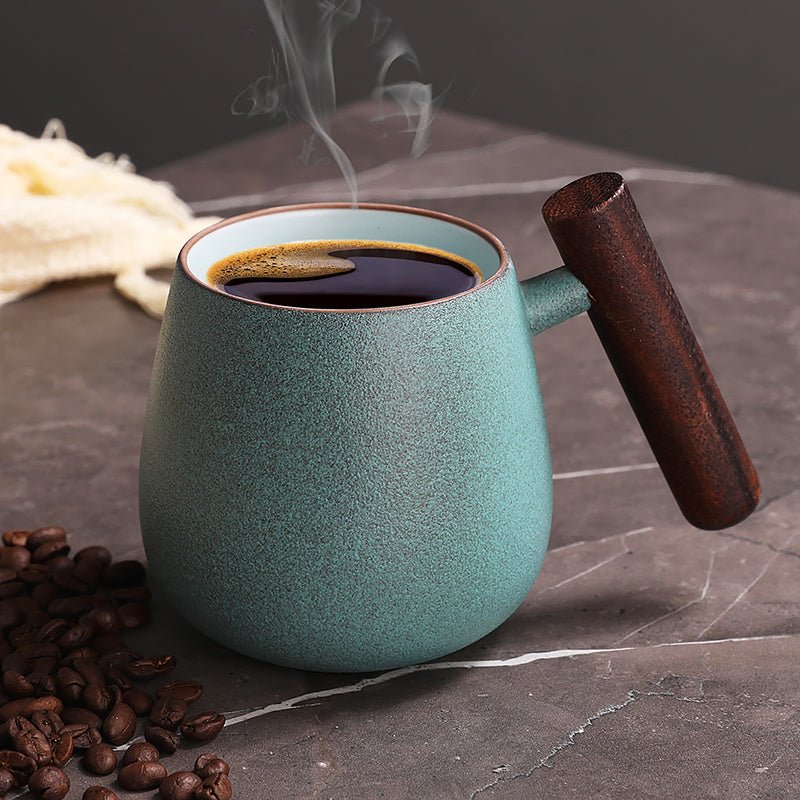
Standard Coffee Mug Dimensions: What Buyers Should Check
Reading time: about 9 minutes
A mug can look right on a product page and still fail in a real kitchen. We see it all the time: the cup fits the coffee, but the handle pinches fingers, the base is too wide for a machine tray, or the mug is too tall for a cabinet shelf.
That is why standard coffee mug dimensions should be checked as a set, not as one number. In our store, we treat size as a mix of height, rim diameter, base width, handle clearance, and usable capacity. That is what decides whether a mug feels comfortable at a desk, stacks cleanly in a cupboard, and survives daily dishwasher use without becoming annoying.
If you are comparing shapes, our full mug collection is a practical place to start. For a few examples of different profiles, take a look at the Mountain Sea Coffee Tea Mug, the Spittoon Coffee Tea Mug, and the Planet Coffee Tea Mug.
What counts as standard coffee mug dimensions?
There is no single universal mug size that every brand follows. In practice, a standard everyday coffee mug usually falls in a familiar range: about 8 to 12 ounces for smaller drinking mugs, and often 11 to 16 ounces for the fuller everyday style most shoppers expect.
The physical measurements matter just as much as capacity. A common mug is roughly 3 to 4 inches tall, with a mouth opening around 3 to 3.5 inches across and a base that may be a little narrower for stability. That range works well on a kitchen counter, under a drip machine, and in most cabinet shelves, but it is not ideal for every use case.
We separate “standard” from “comfortable.” A mug can hold a standard amount of coffee and still be awkward if the handle opening is too tight or the cup is too wide to grip securely. That is the kind of detail buyers usually notice only after the first wash cycle or the first office refill.
Which measurements matter most before you buy?
If you only check one thing, do not make it capacity alone. We look at five measurements before we consider a mug a good everyday fit.
- Height: This affects cabinet clearance, espresso machine compatibility, and how easy the mug is to store upside down on a drying rack.
- Rim diameter: A wider opening cools coffee faster and can feel more open for tea, while a narrower opening helps hold heat a little longer.
- Base width: A wider base can feel more stable on a desk, but it may not fit a car cup holder or some machine trays.
- Handle opening: This is the difference between a mug that feels comfortable with two fingers and one that presses against knuckles.
- Usable capacity: This is not always the same as the printed capacity. Some mugs need headroom to prevent spills when filled near the rim.
In our experience, handle clearance is one of the most overlooked measurements. A thick ceramic wall with a small handle can feel clumsy even if the mug looks generous from the outside. That matters for office use, where people carry a mug between desk, sink, and meeting room all day.
For a related breakdown of what shoppers often miss, our guide on Standard Coffee Mug Dimensions: What Buyers Should Check goes deeper into the same practical checks.
How do standard mug dimensions affect everyday use?
The same mug behaves differently depending on where it lives. On a kitchen counter, a 10- to 12-ounce mug may feel perfect for a drip coffee refill. On a crowded office desk, that same mug can be too wide if you also need room for a laptop, notebook, and phone.
A taller mug usually keeps drinks hotter a bit longer because there is less surface area exposed at the top. A wider mug cools faster and is easier to dip a tea bag into or stir cocoa without splashing. Neither shape is universally better. It depends on the drink and the routine.
We also think about washing and drying. A mug with a straight-sided body dries more predictably in a dishwasher cycle. A mug with a deep curve near the base can hold water after washing if it is placed upside down too early. That is a small annoyance, but buyers notice it quickly.
For shoppers who want a simple capacity-first explanation, our article on How Many Ounces Is a Standard Coffee Mug? A Buyer’s Guide pairs well with this one.
What size is best for coffee, tea, or hot chocolate?
The right dimensions shift with the drink. A mug that works for black coffee may not be the best choice for a cappuccino or a large mug of cocoa.
| Drink | Practical mug shape | Why it works |
|---|---|---|
| Drip coffee | Medium height, 11 to 14 ounces | Room for a standard pour with enough space to add milk or cream. |
| Tea | Slightly wider opening, 8 to 12 ounces | Easy to steep, stir, and cool a little faster without feeling oversized. |
| Hot chocolate | Wider body, 12 to 16 ounces | Better for marshmallows, whipped cream, and larger servings. |
| Espresso-style drinks | Smaller cup or demitasse | A standard mug is usually too large and too open for concentrated drinks. |
That last line matters. A standard coffee mug is not the right tool for every drink. If you mostly drink espresso, cortados, or very small servings, an everyday mug can feel oversized and waste heat. If you regularly pour a full travel tumbler’s worth of coffee, a standard mug may feel too small and you will refill constantly.
What material and shape details should buyers check?
Dimensions are only half the story. Material and construction change how those dimensions feel in hand.
- Ceramic: The most common everyday choice. It usually feels stable and substantial, but it can chip if knocked against a sink edge.
- Stoneware: Often slightly heavier and more robust in feel. It suits daily kitchen use, though the extra weight can matter if the mug is large.
- Glaze finish: A smooth glaze is easier to clean, but overly glossy handles can feel slick if the mug is wet.
- Rim shape: A rolled or rounded rim tends to feel more comfortable than a sharp one, especially on daily refills.
We are careful with shape because small defects show up fast in real use. A mug that is slightly out of round can wobble on a flat table. A handle with an uneven join can feel rough at the fingers. A glazed foot ring that is left too sharp can scratch a shelf or a saucer. These are not headline issues, but they are the details that separate a mug you keep from a mug you relegate to the back of the cabinet.
If you want to compare styles by silhouette rather than by just ounces, our Coffee Mug Dimensions: Sizes, Fit, and What to Check Before Buying and Standard Coffee Mug Size: How to Choose the Right Everyday Mug are useful follow-ups.
How do you measure a mug before ordering online?
We recommend measuring the space the mug has to live in, not just the mug itself. That means checking the shelf height in the cabinet, the width of any machine tray, and the depth of the cupboard door clearance if the mug has a wide handle.
- Measure the shelf or tray height where the mug will sit.
- Check the widest point of the mug, including the handle if it matters for storage.
- Compare the mug opening to the drinks you actually make.
- Think about cleaning: if you use a dishwasher, look for a shape that will not trap rinse water.
- Decide if you want a compact mug for daily coffee or a larger one for slow weekend sipping.
One practical note from our own handling: a mug that feels great in the hand can still be a poor fit if the handle angle forces your wrist to twist while drinking. That is especially noticeable if you sip at a desk for long stretches. Comfort is not just about size. It is about geometry.
Which standard mug dimensions are not a good fit?
Some buyers actually need a different style. A standard mug is not the best choice if any of these sound familiar:
- You need a cup that fits a narrow car cup holder.
- You want a vessel for espresso-based drinks with a compact presentation.
- You prefer a very large serving that stays open enough for whipped toppings or add-ins.
- You store mugs in a shallow cabinet where height is limited.
- You need a lighter cup for mobility, such as a home office setup where you carry it frequently.
That is why we do not treat “standard” as a one-size-fits-all answer. It is a useful baseline, not a final verdict. A shopper choosing a gift mug, for example, may care more about how the mug sits on a desk and how the handle feels in the hand than about a precise ounce count.
For shoppers who want a broader browse before choosing, the all products collection makes it easier to compare different mug profiles side by side.
Frequently asked questions
What are standard coffee mug dimensions in inches?
Most everyday coffee mugs fall around 3 to 4 inches tall, with a rim diameter near 3 to 3.5 inches and a base that is often a little narrower. That is a practical range, not a fixed rule. Handle size and wall thickness can make two mugs with the same outer measurements feel very different.
How many ounces is a standard coffee mug?
Many standard mugs land in the 11 to 16 ounce range, though smaller everyday mugs are common too. The printed capacity does not always equal comfortable fill capacity, because you still need room at the top to avoid spills. If you drink a full cup with milk or cream, the usable size matters more than the label number.
Are standard coffee mug dimensions the same for ceramic and stoneware mugs?
Not necessarily. Ceramic and stoneware mugs can share similar capacities, but stoneware often feels heavier and may have thicker walls. That changes how the mug balances in the hand and how much space it takes on a shelf.
What mug size works best for a coffee machine tray?
Check the tray height and width first, then compare it with the mug’s full height and base diameter. A mug that is fine on the counter may be too tall for a compact machine or too wide for a narrow drip station. This is one of the most common fit problems we see.
Do larger mugs keep coffee hot longer?
Not always. A taller mug can sometimes hold heat better than a wide, open mug because there is less exposed surface area at the top. But the starting temperature, wall thickness, and how long you leave the lid off matter too.
What should you check next before buying?
If you are comparing mugs right now, use this short checklist:
- Confirm the mug height against your shelf or machine.
- Check the rim diameter and base width, not just the ounce count.
- Look closely at the handle opening and grip comfort.
- Decide whether you want a compact everyday mug or a larger, slower-sipping shape.
- Choose a material and glaze that can handle your actual routine, including dishwasher use if that matters to you.
If you want to keep comparing styles, start with our collection of mugs and then open the product pages that match your cabinet space and drinking habits. The right mug is the one that fits your kitchen, your hand, and the way you actually drink coffee.
Read more
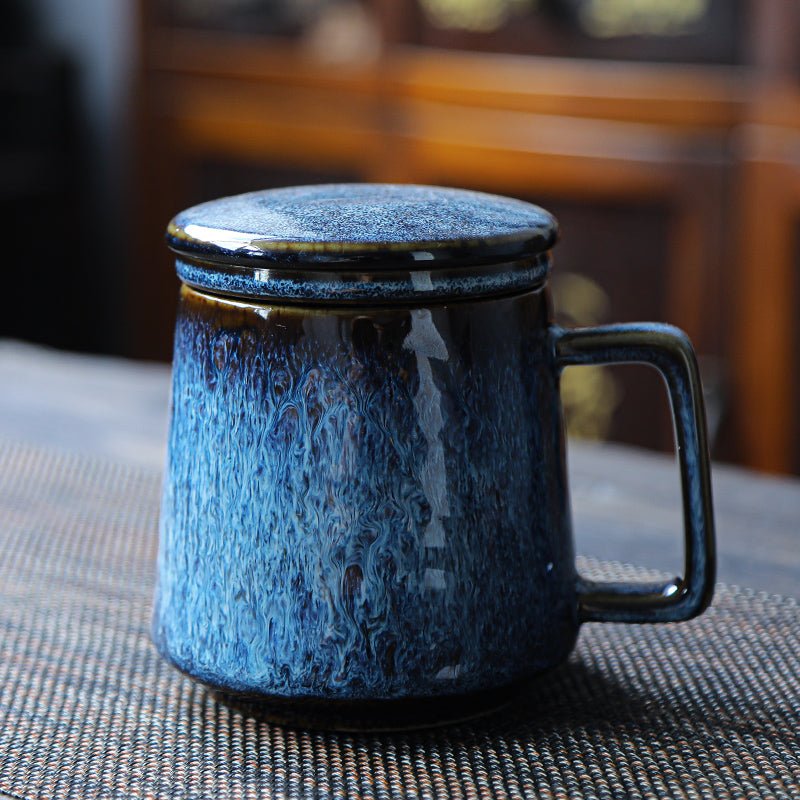
Coffee Mug 24 oz: What to Look For Before You Buy
A 24 oz mug solves real desk-and-kitchen problems only if the shape, handle, and finish fit your routine. Here’s what we check in our store before we recommend one.
Подробнее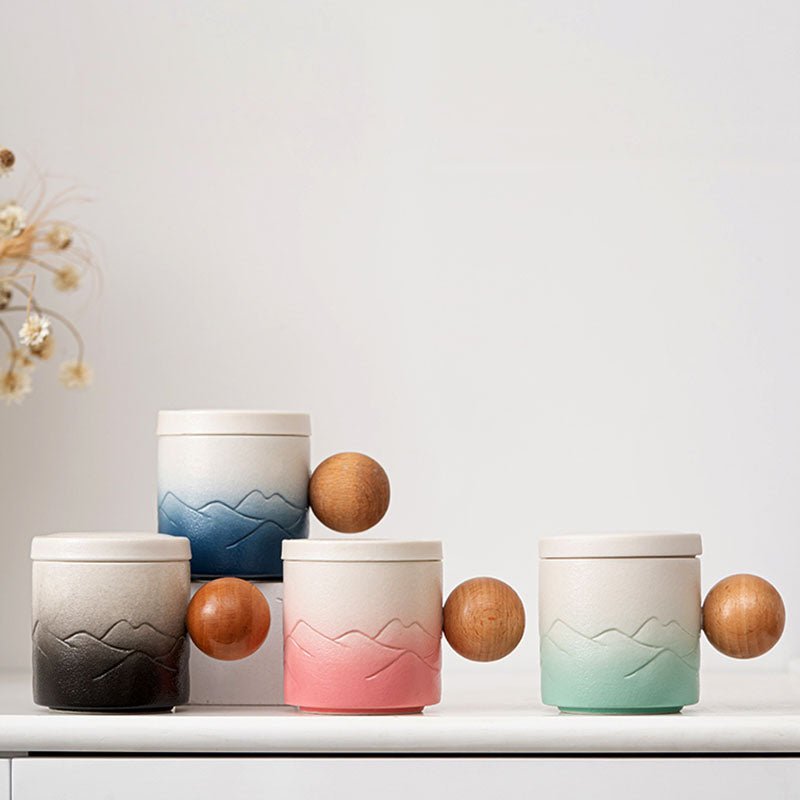
Coffee Mug Set 6: What to Check Before You Buy for Daily Use
A coffee mug set 6 should feel comfortable, wash cleanly, and hold up to daily kitchen use without one weak piece ruining the set. This guide covers the details we check in-store before we recommen...
Подробнее
Оставить комментарий
Этот веб-сайт защищается hCaptcha. Применяются Политика конфиденциальности и Условия использования hCaptcha.