
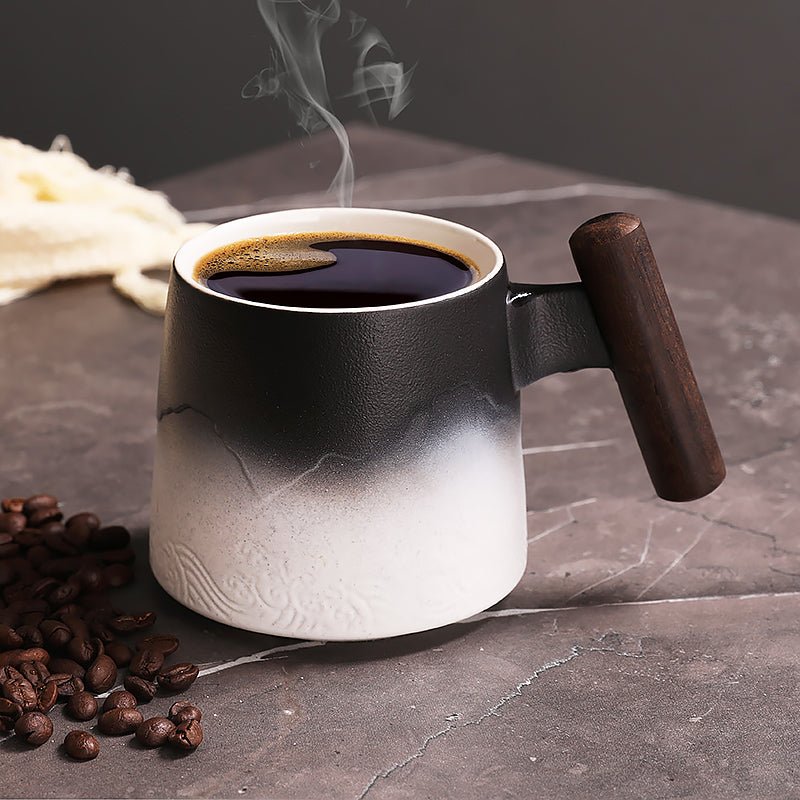
Promotional Coffee Mugs: How to Choose Ones People Actually Keep Using
Reading time: about 9 minutes
A mug can look great in a product photo and still disappoint the second it hits a breakroom sink. We see that all the time with promotional coffee mugs: the difference between a mug people keep and one they re-gift is usually in the details you can feel right away — weight, rim shape, handle comfort, and whether the print survives real washing.
At CoffeifyMug, we think of promotional coffee mugs as a practical brand touchpoint, not just a logo surface. They sit on office desks, get pulled from kitchen cabinets, travel into gift bags, and spend a lot of time in the dishwasher. That means the right choice has to balance branding, everyday usability, and durability. If you’re comparing options, our products page is the fastest place to see what we currently carry, and our all collection is useful if you want to compare the full range side by side.
What makes promotional coffee mugs worth buying instead of cheaper giveaway items?
Promotional coffee mugs work because they stay in the customer’s line of sight. A pen disappears into a drawer. A tote gets used on some days and forgotten on others. A mug sits near the coffee maker, on a desk, or in the office kitchen, which gives your brand repeated exposure without feeling forced.
That only happens if the mug is pleasant to use. In our experience, shoppers keep the mugs that feel balanced, have a comfortable handle, and don’t feel too thin or too top-heavy when filled. A mug that chips easily or shows print wear after a few dishwasher cycles is not a good promotional buy, even if the upfront order looked attractive.
Here’s the trade-off we always point out: promotional mugs are excellent for repeat visibility, but they are not ideal for ultra-light mailing or one-time event handouts if you need something featherweight. If your main concern is compact shipping or very low-cost inserts, another promo item may fit better. If your goal is a branded item people will actually use, a mug is usually stronger.
Which mug size works best for your audience?
Size affects both the experience and the impression. Too small, and the mug feels like a sample cup. Too large, and it can feel bulky on a crowded desk or in a small cabinet. For most buyers, size choice should match how the mug will be used, not just what looks good in a photo.
If you’re still deciding, our size-focused guides can help you compare the common options: 12 oz Coffee Mugs: What to Check Before You Buy, 16 oz Coffee Mugs: What to Check Before You Buy, and 20 Ounce Coffee Mugs: What Buyers Should Check Before Ordering.
| Size | Best for | Buyer watch-out |
|---|---|---|
| 12 oz | Standard coffee drinkers, office use, compact desk setups | Can feel small for people who pour large home brews |
| 16 oz | Most everyday use, latte drinkers, flexible gifting | Takes more cabinet space than a classic diner-style mug |
| 20 oz | People who want a larger pour, long desk sessions, tea drinkers | Can feel heavy once filled and may be too large for some cup holders or shelves |
If you want a broader comparison beyond just size, our buyer’s guide to large capacity coffee mugs is a good next read, especially if your audience drinks more than one beverage type.
Which material is the safest choice for everyday use?
For promotional coffee mugs, ceramic is still the most common choice for a reason. It feels familiar, holds heat reasonably well for everyday office or home use, and gives a clean surface for branding. It also tends to photograph well, which matters if you’re ordering for a store, team gift, or client package.
That said, not every ceramic mug is the same. We look closely at a few practical details before recommending one:
- Wall thickness: thinner mugs can feel lighter, but they may also feel less substantial and cool down faster.
- Rim finish: a smooth, even rim makes the mug more pleasant for daily sipping.
- Glaze quality: an uneven glaze can show pooling, pinholes, or small surface flaws.
- Handle space: a mug that looks good but pinches two fingers is not a good office mug.
For branding, we also think about print placement. A logo that sits too close to the handle can be harder to read from across a desk. A print that is too large can wrap awkwardly around the curve. Subtle, centered artwork often ages better than a crowded design.
One limitation worth calling out: ceramic promotional mugs are not the best fit if you need ultra-light travel drinkware. If your buyers commute or carry coffee in a bag, insulated tumblers or travel mugs may make more sense. A desk mug and a travel mug solve different problems.
What details should you check before you place a bulk order?
Bulk orders are where small mistakes get expensive. A promotional mug can look fine in a listing photo but still miss the mark once it’s in hand. In our store, we always urge buyers to check the same handful of details before ordering a larger run.
- Check the usable fill amount. A mug may be listed by its nominal size, but the actual comfortable pour line is what matters in daily use.
- Inspect the handle shape. Two mugs with the same capacity can feel completely different if one handle is narrow or sharply angled.
- Review care instructions. If the mug is hand wash only, that may be a problem for office kitchens and busy households.
- Look at the print zone. You want enough flat or calm visual space for your logo, slogan, or simple artwork.
- Ask how it will pack for shipping. Chips often happen on the rim and handle during transit, so packaging matters.
We also recommend thinking about the actual use environment. A client gift mug should feel a little more polished. An internal staff mug can be more straightforward. A trade show mug needs to survive being handed out, carried home, and washed repeatedly. Same category, different job.
How do promotional coffee mugs perform in real offices and gift settings?
We handle a lot of mug buying decisions that come down to two places: the office desk and the gift unboxing. Those are very different tests.
On a desk, the mug gets judged by comfort and stability. Does it sit flat? Does the handle allow a secure grip when it’s full? Does it look good next to a keyboard, notebook, or espresso machine? A mug with a wide base and balanced weight usually performs better here than a tall, narrow cup that feels easy to tip.
In a gift setting, presentation matters more than people expect. If the mug arrives with visible scuffs, a rough rim, or a print that looks slightly off-center, the whole gift feels cheaper. That’s one reason we favor designs that look finished from multiple angles, not just front-on in a product photo.
There are also situations where promotional coffee mugs are not the best choice. If your recipients mostly drink iced beverages, a mug may not be the right daily tool. If your audience includes commuters, a lidded travel mug is usually more useful. If you need something for hot soup or oversized café drinks, then a larger-capacity option may make more sense than a standard mug.
What should you expect from care and long-term use?
Care is where promotional items either earn their place or fade out. A mug that requires babying does not stay in rotation for long. Most shoppers want something simple: wash, dry, repeat.
Here’s what tends to matter most over time:
- Dishwasher exposure: repeated cycles are where weak prints, dull glazes, or rough edges become obvious.
- Staining: dark coffee, tea, and cocoa can leave marks if the glaze is porous or worn.
- Chipping: rim and handle chips usually come from sink contact or crowded cabinet storage.
- Stacking and storage: some mugs nest better than others, but stacking too aggressively can lead to scratches or chips.
We prefer mugs that are straightforward to care for because that’s what real customers want. A promotional mug should be easy to rinse after one cup and easy to trust in a shared office kitchen. If the care instructions are too fussy, usage drops fast.
For buyers comparing styles with more personality, our article on Amusing Coffee Mugs: How to Choose One That Gets Used is a useful contrast. It’s a different buying mindset, but the same rule holds: the mug has to earn a place on the counter.
How do promotional coffee mugs compare with other branded mug styles?
Promotional coffee mugs are usually chosen for utility first and branding second. That makes them different from decorative mugs or highly stylized gift mugs. A more artisanal shape can be attractive, but if it reduces comfort or makes printing awkward, it may not serve a promotional purpose well.
If your shoppers care about style, there are other angles to compare. Our piece on Anthropologie Coffee Mugs: How to Compare Style, Size, and Everyday Use shows how design-forward mugs can influence perceived value, while our article on American Made Coffee Mugs: How to Compare Materials, Sizes, and Everyday Use helps shoppers think through build quality and everyday handling.
For buyers comparing sources and styles more broadly, we also have a guide to Amazon Coffee Mugs: How to Compare Materials, Sizes, and Everyday Use. That can be helpful if you are deciding whether to prioritize convenience, style, or consistency.
Our rule of thumb: if the mug is meant to carry a logo, start with the user’s daily routine first. The best promotional mug is the one that feels natural in the hand, fits the drink they actually pour, and survives normal washing without looking tired.
Frequently asked questions
What size promotional coffee mugs do most offices choose?
Most offices lean toward 12 oz or 16 oz because those sizes fit standard coffee habits and work well on desks without feeling oversized. If your team drinks larger pours or tea throughout the day, 20 oz can make sense, but it takes up more space in cabinets and on dish racks.
Are promotional coffee mugs dishwasher safe?
Many are, but you should always confirm the care instructions for the specific mug you’re buying. Dishwasher-safe mugs are easier for offices and households, while hand-wash-only mugs can be fine for gifts but are less practical for everyday use.
Which material is best for promotional mugs?
Ceramic is usually the most practical choice because it feels solid, prints cleanly, and works well for desk or home use. If your buyers need something for commuting or outdoor use, a different material such as insulated stainless steel may be a better fit than a standard mug.
Do promotional mugs make good client gifts?
Yes, if the design is clean and the mug feels well made. For client gifts, we usually recommend keeping the branding tasteful and choosing a size that feels useful rather than oversized or novelty-driven.
What should I avoid when ordering promotional coffee mugs?
Avoid mugs with awkward handles, rough rims, or unclear care instructions. Also avoid artwork that crowds the print area or wraps too tightly around the curve, because it can look cluttered and be harder to read from a distance.
If you’re comparing options now, start with the mug size that matches your audience, then move to material, care, and print area. From there, browse our current products or the full collection and pick the mug that feels right in hand, not just in the photo.
Read more
Coffee Mug of Glass: What to Check Before You Buy
A coffee mug of glass can look clean on the counter and make it easy to see your drink, but the right pick depends on thickness, heat handling, and daily cleanup. This guide covers the trade-offs w...
Подробнее
How to Personalize a Coffee Mug That Still Works for Daily Use
A personalized mug should do more than look nice on a gift table. Here’s how to choose a mug style, decoration method, and size that still feels good in hand and holds up to real daily use.
Подробнее
Оставить комментарий
Этот веб-сайт защищается hCaptcha. Применяются Политика конфиденциальности и Условия использования hCaptcha.