
Luxury Coffee Mugs: How to Choose the Right One for Daily Use
Reading time: about 8 minutes
A mug that lands crooked on a desk, feels cramped around the handle, or chips at the rim after a few dishwasher cycles stops feeling luxury fast. In our store, we see the same pattern repeatedly: shoppers want something that looks polished on the counter, but they keep it only if it feels balanced during an ordinary Tuesday morning.
If you want the first-pass checklist before comparing styles, our Luxury Coffee Mugs: What to Look For Before You Buy guide covers the basics we use when we evaluate a new mug for the shop floor or for gift-ready packaging.
What actually makes a mug feel luxury instead of just decorative?
Luxury is mostly about the way a mug behaves in your hand and on the table. A glossy surface can look premium, but if the rim feels sharp, the handle is too tight, or the base rocks on a counter, the experience falls apart quickly. The best pieces feel steady, finished, and pleasant to use without asking you to think about them.
A mug can look beautiful on a shelf and still feel awkward at 7 a.m. if the handle is cramped or the base is uneven.
When we inspect mugs for store use or for customer recommendations, we look for a few concrete details:
- Handle clearance that gives two fingers room without pressing the knuckles against the body of the mug.
- A smooth drinking rim with no rough glaze line, chip, or obvious seam where the finish changes.
- A flat, stable base that sits cleanly on a countertop, desk, or tray without a wobble.
- Even wall thickness so the mug does not feel heavy at the top or oddly light in the hand.
- A finish that still looks clean after use, especially if the mug will spend time beside a laptop, notebook, or office keyboard.
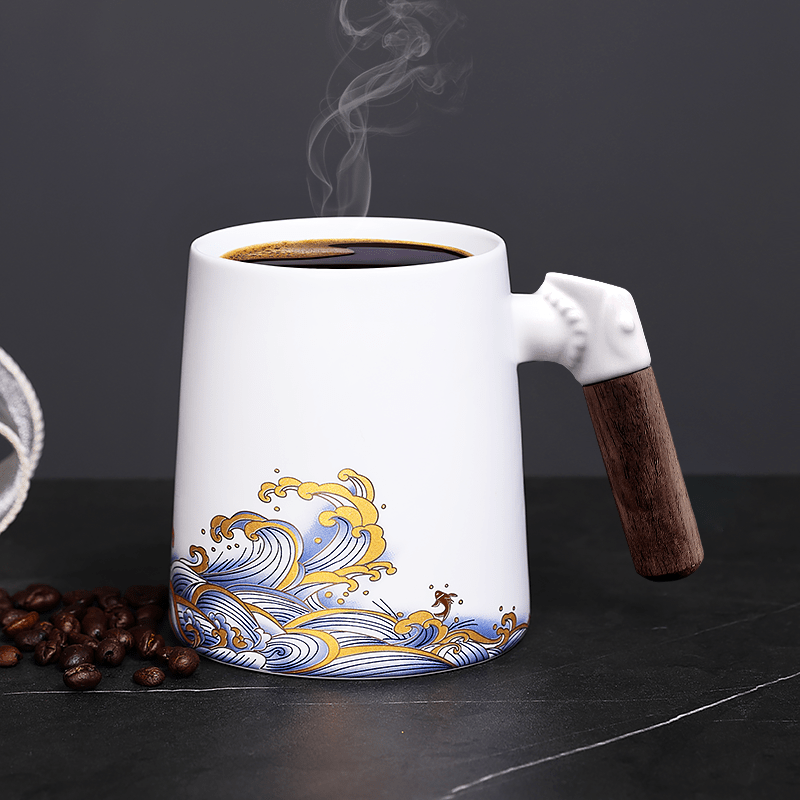
That is why some shoppers choose a design-forward everyday piece like our Morning Night Coffee Tea Mug. It works well when the buyer wants a mug that reads as personal and giftable, but still feels easy to use every day.
Which material gives the best balance of beauty and daily use?
Material changes more than appearance. It affects weight, heat retention, how the mug feels against your lips, and how likely it is to show wear over time. For most buyers, the real question is not which material is the fanciest. It is which one feels right on a desk, beside a kettle, or in a kitchen cabinet that gets opened ten times a day.
Here is the practical version we use when comparing common mug materials:
| Material | What it feels like | Best for | Trade-off |
|---|---|---|---|
| Ceramic | Balanced, familiar, and usually comfortable in the hand | Daily coffee, tea, and gift purchases | Can chip at the rim or handle if it is stacked carelessly |
| Porcelain | Cleaner, lighter, and often more refined visually | Formal settings and lighter drinkers | Can feel less substantial and may be less forgiving if handled roughly |
| Stoneware | Heavier and more grounded with a sturdy feel | People who want a solid mug and a warmer look | Added weight is not ideal for users who prefer a lighter cup |
For many buyers, ceramic lands in the sweet spot. It is substantial without being bulky, and it usually handles everyday routines well if you treat it like real kitchenware instead of a display object. Porcelain can look more delicate and elegant, but it is not always the best fit if you want a mug that will live on a crowded office desk or move in and out of a dishwasher rack every day. Stoneware has presence, but that weight is a trade-off if you prefer a lighter mug for long sessions at your desk.
If you want to compare more options side by side, browse our all mugs collection first. That makes it easier to compare finish, shape, and visual style before narrowing the field.
How do you choose the right size for coffee, tea, or desk use?
Size matters more than most buyers expect. A mug that is too small forces refills. A mug that is too large can cool too slowly or feel awkward for people with smaller hands. We usually tell shoppers to think about what they actually drink, how long they sit with it, and how much weight they want on the handle.
For day-to-day use, the sizing logic is straightforward:
- 12 oz works well for a standard coffee pour, smaller servings of tea, and compact cabinets.
- 14 oz gives a little more room for milk, foam, or a longer sitting session without becoming oversized.
- 16 oz suits people who want fewer refills and do not mind a heavier mug in the hand.
If you are comparing those capacities in more detail, our size guides for 14 Ounce Coffee Mugs: Size, Fit, and Buying Guide and 16 oz Coffee Mugs: How to Choose the Right Mug for Daily Use are the quickest way to narrow down what actually fits your routine.
A useful rule: if you drink slowly and work at a desk, a slightly larger mug can be better. If you want a mug that disappears neatly into a cabinet and feels effortless in the hand, smaller often wins. That is why capacity should be matched to habit, not just to appearance.
Which designs make the best gifts?
Gift buyers usually want two things at once. The mug needs to feel personal, and it also needs to be easy to live with after the wrapping paper is gone. That means the design should be clear from a few feet away, the handle should be comfortable, and the piece should not look so fragile that the recipient feels nervous using it.
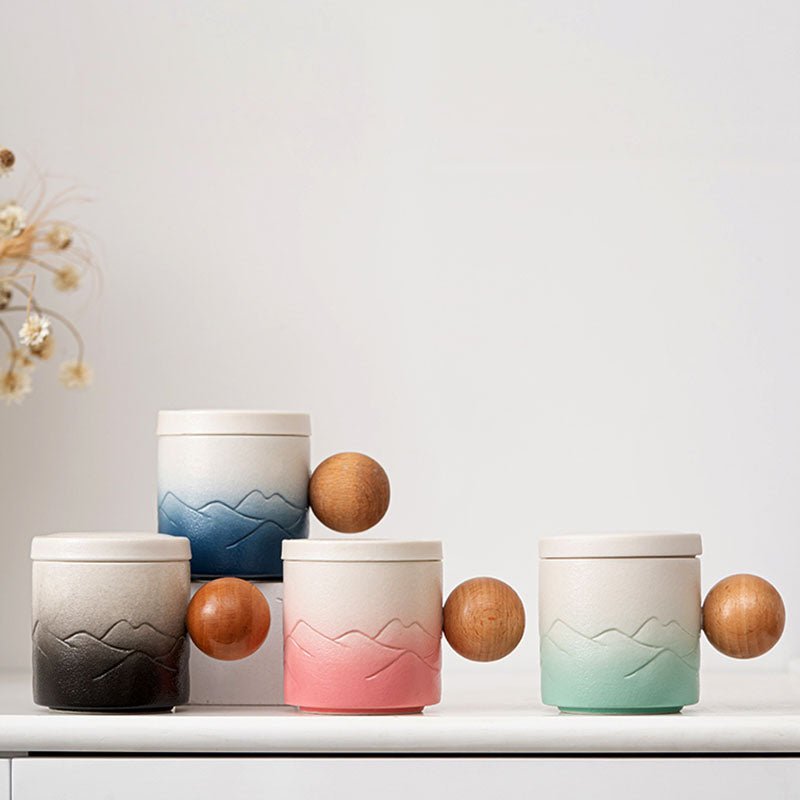
For a giftable look with a simple, readable theme, our Morning Night Coffee Tea Mug works well when you want something that feels thoughtful without being loud. If the buyer wants a nature-inspired design, the Mountain Coffee Tea Mug gives a calmer, outdoorsy feel. The Great Mountain Coffee Tea Mug is a stronger visual choice when you want the landscape motif to be the center of attention.
We see these three use cases most often:
- Desk gift: pick the mug that looks good beside a keyboard and not just on a shelf.
- Home coffee setup: choose a finish that matches the rest of the kitchen instead of competing with it.
- Low-risk present: go with a design that feels useful first and decorative second.
Luxury coffee mugs are not the best choice for someone who throws drinkware into a tote bag, takes it camping, or prefers ultra-light cups. In those cases, durability and portability matter more than presentation. A premium-looking mug is most convincing when it lives on a counter, office desk, or breakfast table.
What should you inspect before you buy?
This is the part that separates a mug you will keep from one that gets pushed to the back of the cupboard. A good product photo helps, but it will not tell you everything. We recommend checking the same details we look for in-store and during unboxing.
- Rim condition: look for clean edges, no tiny chips, and no rough spots where your lips will touch.
- Handle join: the connection between handle and body should look solid and even, not pinched or cracked-looking.
- Base shape: the mug should sit flat, not wobble on a smooth counter or desk surface.
- Glaze quality: a few subtle variations can be normal, but obvious pinholes, streaks, or uneven patches can change the feel of the piece.
- Care fit: if you plan to run it through a dishwasher often, avoid delicate surface details unless the listing clearly supports that routine.
We also tell buyers to think about what the mug is not good for. A refined mug is usually not the right choice for rough stacking, hot-cold temperature shock, or constant travel. If you pour in boiling water, then immediately move the mug under cold rinse water, you are asking a glazed cup to do more than it should. Let it cool naturally. That simple habit reduces stress on the surface and helps preserve the look you paid for.
The short version: luxury is not only about visual appeal. It is also about how well the mug survives real use on a kitchen counter, office desk, or breakfast table.
Frequently asked questions
Are luxury coffee mugs dishwasher safe?
Some are, but not all finishes age the same way in a dishwasher. If a mug has delicate decoration, metallic accents, or an especially fine glaze, hand washing is the safer option. For daily use, we suggest checking the listing and then using the gentlest care that still fits your routine.
What size luxury coffee mug is best for everyday use?
For most people, 12 oz is the most flexible starting point, 14 oz gives a little more room, and 16 oz works best if you want fewer refills. The right size depends on how long you sit with the drink and whether you add milk or foam. If you prefer a mug that feels easy to hold and store, smaller usually wins.
What makes a mug feel premium in the hand?
Three things matter most: a comfortable handle, a smooth rim, and a stable base. Weight also matters, but only up to a point. A mug should feel balanced, not heavy for the sake of being heavy.
Are luxury mugs good gifts?
Yes, if the design is easy to understand and the mug is practical enough for daily use. The best gift mugs look polished out of the box but still feel comfortable on a regular morning. If the recipient likes coffee, tea, or desk accessories, a well-chosen mug is a safe and useful gift.
What should I avoid if I want a mug that lasts?
Avoid rough stacking, hard impacts on the rim, and repeated temperature shock. If you are comparing options, inspect the photos for rim chips, wobbly bases, and uneven handle joins. Those are the defects that usually show up first in real use.
If you are deciding now, compare your top three by size, handle comfort, and base stability, then open our all mugs collection to narrow the finish and style that fits your desk, kitchen, or gift list best.
Read more
Plain White Coffee Mugs: What Buyers Should Check First
Plain white coffee mugs look simple, but rim finish, handle comfort, glaze quality, and care instructions decide whether they earn a permanent spot in the kitchen or office. This guide breaks down ...
Подробнее
Hand Thrown Coffee Mugs: Buying Guide for Fit and Finish
Hand thrown coffee mugs vary in balance, rim feel, and care needs. We break down handle styles, finish checks, size trade-offs, and the cases where a different mug style is the smarter buy.
Подробнее
Оставить комментарий
Этот веб-сайт защищается hCaptcha. Применяются Политика конфиденциальности и Условия использования hCaptcha.