
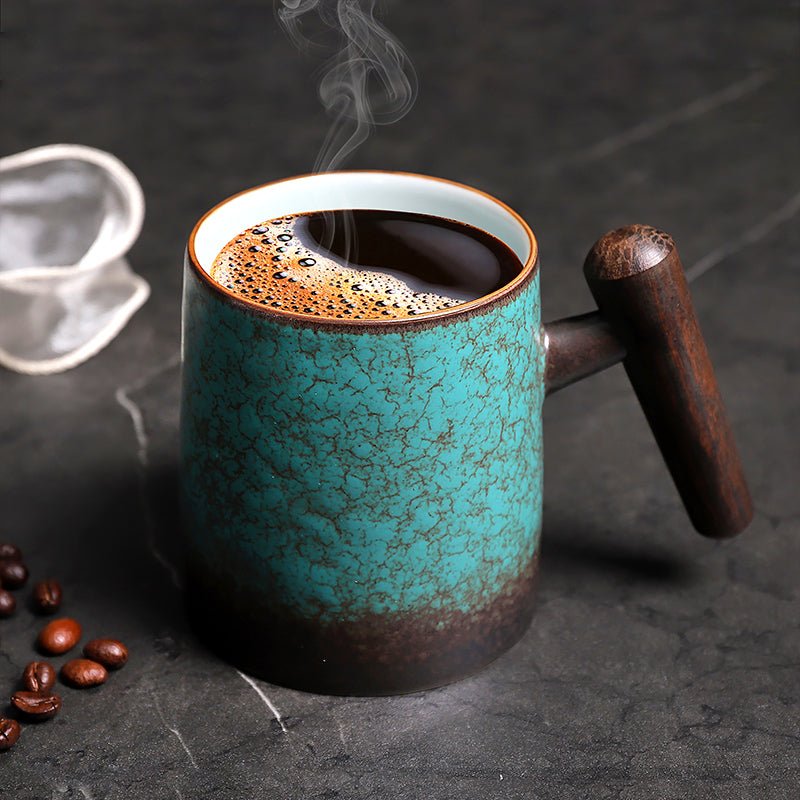
The lungo coffee cup daily use guide: 170, 200, or 270 ml?
Reading time: about 9 minutes
A cup that looks roomy on a product page can feel cramped the first morning you add milk and carry it from the kitchen counter to your desk. This lungo coffee cup daily use guide starts with that everyday problem: the finished drink and the empty space you want below the rim matter more than the drink name alone.
In our experience helping shoppers compare cups, the most common mismatch is choosing from a familiar label without measuring the drink actually prepared at home. Recipes, water amounts, milk, ice, and personal preferences vary. We therefore keep this comparison to the catalog facts we can stand behind: the Retro is listed at 170 ml, the Pleated at 200 ml, and the Emerald at 270 ml.
Those capacities do not establish exterior dimensions, material, equipment clearance, comfortable fill level, or dishwasher and microwave suitability. Check those details on the live product page or packaging before ordering. Here, we compare listed capacity and the nominal headroom each option gives your own measured pour.
What changes at 170 ml, 200 ml, and 270 ml?
The three options form a useful progression, but none is automatically the correct lungo cup. Start with the situation that resembles your routine, then read the limitation in the final column.
| Cup | Listed capacity | Daily situation | Why it fits | Where it is not the best fit |
|---|---|---|---|---|
| Retro Coffee & Tea Cup | 170 ml | Your measured finished drink stays below 170 ml and leaves the rim margin you prefer. | It is the lowest listed-capacity option, making it the closest match for a deliberately smaller routine. | It leaves little nominal headroom as the finished drink approaches 170 ml. It is a weak choice for uncertain or frequently changing additions. |
| Pleated Coffee & Tea Cup | 200 ml | Your normal preparation feels too close to the 170 ml limit but does not require the 270 ml option. | It provides 30 ml more listed capacity than the Retro while remaining 70 ml below the Emerald. | It can still be too close for a preparation that regularly approaches or exceeds 200 ml after additions. |
| Emerald Coffee & Tea Mug | 270 ml | You want the largest nominal allowance for a variable pour, milk, water, or ice. | It has 70 ml more listed capacity than the Pleated and 100 ml more than the Retro. | It may be more capacity than needed for a consistently small drink. Its capacity also does not prove that its exterior dimensions suit a tight shelf or work area. |
If your measured routine does not align with any of these three capacities, browse our unique coffee mugs collection instead of forcing a close fit. A different cup style is more useful than a nominal lungo label that does not suit the way you drink coffee.
Lungo coffee cup daily use guide: how much headroom do you need?
Headroom is the unused capacity above your finished drink. It matters while stirring, adding milk, and carrying a cup across a kitchen or office, but there is no universal margin that suits every person. Someone who fills a cup at the counter and drinks it there may accept less space than someone walking past a keyboard or climbing stairs.
- Prepare your usual drink completely. Include the water, milk, or other additions you use on an ordinary morning.
- Measure the finished volume. Use a heat-safe graduated vessel marked in milliliters. Do not estimate from an unmarked current cup.
- Record the largest routine version. Measure the hurried office pour or weekend variation as well as the smaller default.
- Subtract the measured drink from each listed capacity. The result is nominal headroom for comparison, not a promised comfortable fill line.
- Choose the margin that matches how you move and use the cup. Reject any option that leaves no allowance for your normal handling.
Simple comparison: listed capacity minus measured finished volume equals nominal headroom.
For example, if a finished drink measures 160 ml, the label arithmetic gives 10 ml of nominal headroom in the 170 ml Retro, 40 ml in the 200 ml Pleated, and 110 ml in the 270 ml Emerald. That is a hypothetical calculation, not a standard lungo volume or a guarantee of usable space. Cup shape and the manufacturer's capacity method can affect where the liquid appears relative to the rim, so use the figures to narrow the shortlist rather than predict an exact fill line.
Which capacity makes sense on a crowded desk or counter?
Capacity answers how much a cup is listed to hold. It does not answer how much room the cup occupies. On an office desk beside a keyboard, overall width, base contact, handle projection, and the space required to pick up the cup can matter as much as headroom. In a kitchen cabinet, overall height and the number of cups stored side by side become separate constraints.
- For a fixed, smaller measured pour: consider the 170 ml Retro because it is the lowest listed-capacity match. Do not infer that it has the smallest exterior footprint without checking current dimensions.
- For a middle-volume routine: consider the 200 ml Pleated when 170 ml leaves too little nominal margin and 270 ml is more capacity than you intend to use.
- For fewer top-ups or a variable finished volume: consider the 270 ml Emerald because it has the highest listed capacity of the three. Confirm its external measurements against your available space.
- For a finished drink above 270 ml: move to a larger-capacity category. Our 12 oz ceramic coffee mugs daily-use guide covers the practical trade-offs of that separate size class.
Before checkout, measure the shelf opening, desk area, or storage slot and compare it with any dimensions published on the live listing. Capacity alone cannot provide an equipment-fit or storage-fit guarantee.
What should you verify before dishwasher cycles and reheating?
Our team does not treat a cup's appearance as proof of its material or care limits. A product name and capacity also cannot confirm dishwasher or microwave suitability. Verify the current product instructions or packaging for the exact item you receive.
- Confirm the material and care symbols. Look for explicit dishwasher, microwave, and temperature guidance rather than assuming compatibility from the surface finish.
- Inspect before first use. Check the drinking rim for chips, the interior surface for rough or raised spots, and any handle joins for a visible hairline crack. Set the empty cup on a flat, dry counter to check for unexpected rocking.
- Follow the stated washing method. If dishwasher use is explicitly permitted, position the cup so its rim and handle cannot knock against nearby pieces during the cycle.
- Avoid unapproved abrasives and temperature changes. Use only cleaning tools and temperature ranges allowed by the product instructions; do not test an unverified cup in a high-heat cycle or microwave.
- Recheck after washing. Stop using a cup for drinks if a chip, crack, loose handle, or other damage appears.
This may feel more cautious than a blanket dishwasher-safe claim, but it is the useful answer when care specifications have not been included in the verified comparison data. The live instructions for the purchased product take priority.
How do milk, ice, tea, and refill habits change the choice?
The word lungo does not tell us your finished volume. Some shoppers drink the prepared coffee as poured; others add milk, extra water, or ice. Each addition occupies part of the listed capacity, so measure the complete drink rather than only its coffee component.
- Consistent drink below 170 ml: the Retro can be the most direct capacity match if your calculation still leaves enough headroom for carrying and stirring.
- Routine addition that pushes beyond your 170 ml comfort point: the Pleated gives 30 ml more listed capacity. Choose it only if the measured total remains below 200 ml with your preferred margin.
- Large or changeable additions: the Emerald supplies the greatest nominal allowance of these three at 270 ml. That makes it the logical comparison candidate, not a promise of iced-drink or temperature performance.
- Drink still crowded at 270 ml: choose a larger style. Do not reduce your practical headroom simply to stay within this product group.
The same volume arithmetic can be applied to tea, but this article does not claim drink-specific brewing or heat-retention performance for any cup. If your normal order is actually milk-forward and you are comparing adjacent cup sizes, our flat white cup daily-use comparison gives that routine its own treatment.
Which listed capacity is a defensible gift?
A recipient often discovers a size mismatch only after the gift is unboxed and they make their normal drink. In our store, we advise gift shoppers to find one concrete clue first: the capacity of a cup the recipient already reaches for regularly.
- Choose 170 ml when you know the recipient uses a smaller measured serving and prefers limited unused capacity.
- Choose 200 ml when their finished drink sits between the practical limits of the other options. It is the middle listed capacity, but that does not make it a universal gift size.
- Choose 270 ml when the recipient regularly adds volume or values the largest nominal headroom in this comparison. It is not automatically suitable for their shelf, hand, or care routine.
If you cannot check their current cup, ask about drink additions, storage space, and dishwasher habits before choosing. The coffee mug gift idea daily-use guide covers the other practical checks that reduce guesswork.
Frequently asked questions
How much headroom should I leave in a 170 ml lungo cup?
There is no universal headroom figure. This lungo coffee cup daily use guide recommends measuring your complete drink, subtracting that volume from 170 ml, and deciding if the remainder suits stirring, additions, and carrying. If the finished drink approaches 170 ml, compare the 200 ml option instead.
Is a 200 ml cup the safest middle choice for a lungo?
It is the middle listed capacity in this three-cup comparison, not a universally safe choice. It fits when your measured drink needs more nominal room than 170 ml provides but remains comfortably below 200 ml. A larger or smaller routine should lead you to the corresponding capacity.
Can the Retro, Pleated, and Emerald cups go in a dishwasher or microwave?
Capacity does not establish dishwasher or microwave compatibility, and this guide does not make that guarantee. Check the current product page, care label, or packaging for the exact cup before using either appliance. Contact our store if the instructions are unclear.
Is the 270 ml Emerald automatically best for an iced lungo?
No. Its 270 ml listing gives the greatest nominal capacity for liquid and ice among these three, but it does not establish cold-drink suitability or thermal performance. Measure the complete preparation and confirm the product's temperature and care guidance first.
Your 60-second checkout check
- Measure your complete everyday drink in milliliters.
- Subtract it from 170 ml, 200 ml, and 270 ml.
- Reject any result that leaves too little headroom for your normal handling.
- Verify live dimensions, material, and care instructions separately.
- Choose Retro for a known smaller fit, Pleated for the measured middle, or Emerald for the greatest listed allowance.
Keep those five answers beside you while browsing the CoffeifyMug unique coffee mugs collection. The best next step is the cup whose listed capacity leaves useful room for your actual routine without relying on an unverified fit or care assumption.
Read more
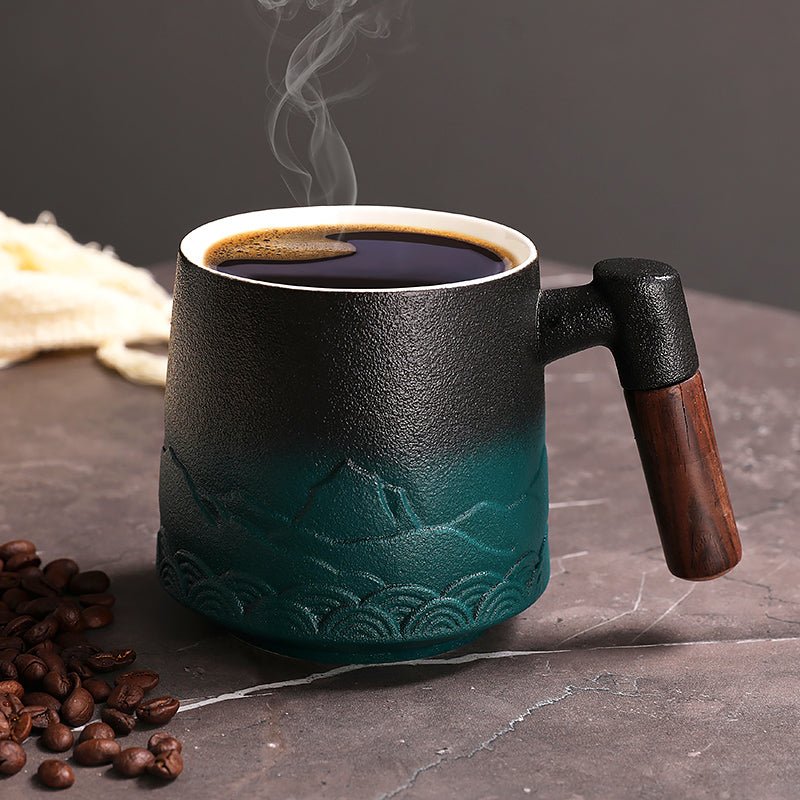
Coffee Mug Gift Ideas for Him Daily Use Guide: 3 Practical Fits
Match the mug to his real routine, from quick kitchen coffee to an office desk or evening tea. Compare three design directions, size questions, care habits, and situations where another mug style m...
Подробнее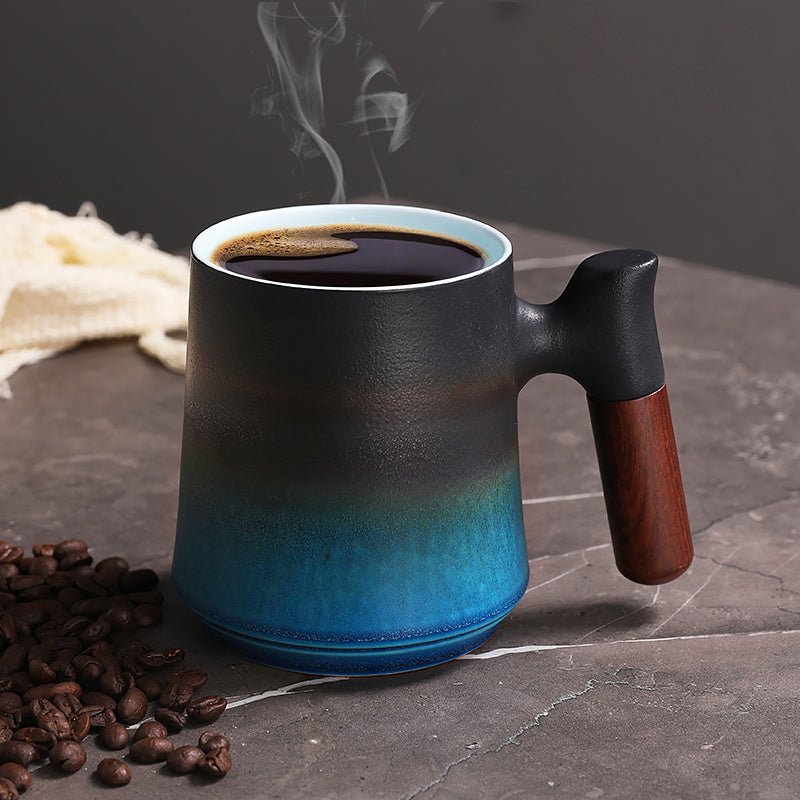
Black Tea Mug Daily Use Guide: Practical Trade-Offs Before You Buy
Compare CoffeifyMug's 390 ml Round mug with the 400 ml Gradient and Flow options. This guide covers handle fit, kitchen and office use, care checks, limitations, and the situations each mug suits b...
Подробнее
Оставить комментарий
Этот веб-сайт защищается hCaptcha. Применяются Политика конфиденциальности и Условия использования hCaptcha.