
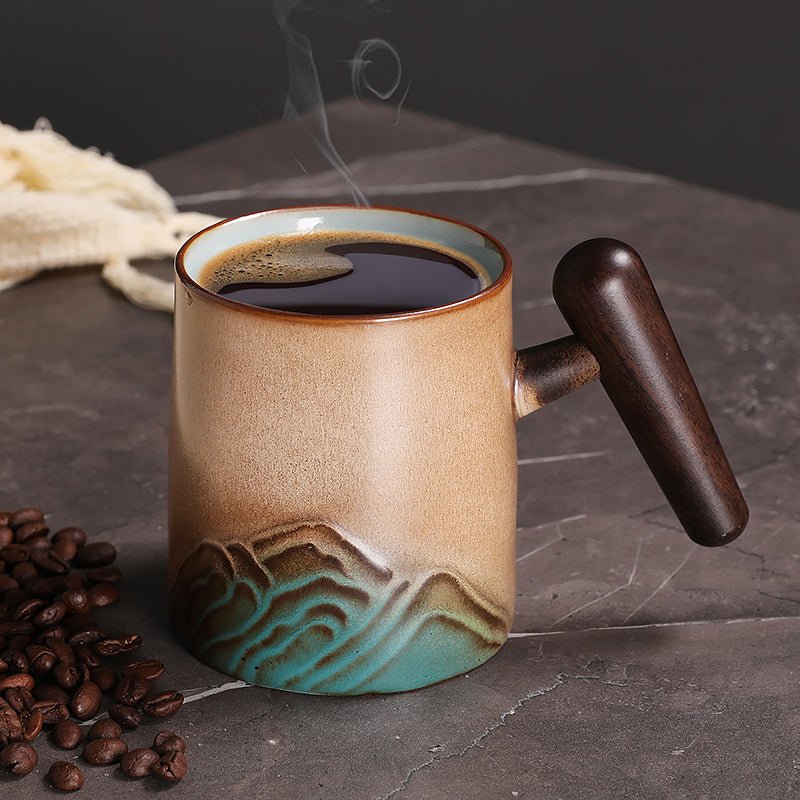
Large Mugs: How to Choose the Right Size, Material, and Shape
Reading time: about 10 minutes
We see the same complaint over and over: a mug that looked generous online turns out to be a tight 12-ounce cup that barely leaves room for cream, or a tall shape that feels heavy the moment it’s filled. That mismatch is exactly why large mugs deserve a closer look before you buy.
In our store, we handle mugs every day, and the difference between a good oversized mug and a frustrating one is usually in the details people skip. Handle clearance. Wall thickness. Rim shape. Dishwasher behavior after repeated cycles. Those small things matter more than the label.
If you want a broader buying framework, our buyer’s guide to large capacity coffee mugs and our piece on big mugs coffee for daily use cover the day-to-day basics well. Here, we’re focusing on what actually changes the experience when you drink from large mugs at home, at work, or as a gift.
What size counts as a large mug?
There is no single industry standard, which is why shoppers get mixed messages. In practical terms, large mugs usually start around 14 ounces and go up from there, with 16-ounce and 20-ounce formats being the most common everyday picks. Some oversized styles go even larger, but bigger is not automatically better.
Size affects more than capacity. A 20-ounce mug can be excellent for someone who pours a full travel-style coffee at home, but it can feel awkward for a user who prefers a smaller hand feel or only drinks half a cup at a time. A 16-ounce mug often lands in the sweet spot because it handles a real coffee pour without becoming a bulky piece of tableware.
We like to think about it this way:
- 14-16 oz: Best for most daily coffee drinkers who want room for milk or creamer.
- 18-20 oz: Better for long desk sessions, tea drinkers, and people who dislike refilling.
- Over 20 oz: Useful for very large pours, but not ideal if you want a lighter mug or a compact cupboard footprint.
That trade-off matters in real kitchens. The mug that looks right on a product page can take up more shelf space than expected, especially if the body is wide rather than tall. If you are comparing size-specific options, our guides on 12 oz coffee mugs, 16 oz coffee mugs, and 20 ounce coffee mugs can help you narrow the range.
Which material works best for large mugs?
Material changes the whole feel of the mug. It changes weight, heat retention, durability, and even how the mug sounds when you set it on a counter. In our experience, shoppers often focus on volume first and then realize the material is what makes the mug easy or annoying to live with.
Ceramic is the most familiar choice. It usually feels balanced in the hand, holds heat reasonably well, and offers the broadest range of glaze finishes. A good ceramic large mug should have a smooth interior glaze, an even rim, and a handle that feels stable with a full pour. The limitation is weight: a thick ceramic 20-ounce mug can feel heavy once filled.
Porcelain tends to feel a little lighter and more refined. It can be a strong choice for a desk mug or a gift because it often has a cleaner profile and a thinner drinking rim. The trade-off is that thinner walls can feel more delicate, especially if the mug gets handled roughly in a busy kitchen or stacked tightly in a cabinet.
Stoneware usually feels sturdy and casual. It often has more visual texture and a substantial hand feel, which many shoppers like for larger capacities. The drawback is that stoneware can be heavier than expected, and if the glaze or clay body is inconsistent, you may notice a rougher foot ring or more surface variation.
Here is the practical breakdown we use when guiding customers:
| Material | Best for | Main trade-off |
|---|---|---|
| Ceramic | Everyday coffee and flexible styles | Can get heavy in larger sizes |
| Porcelain | Cleaner look, lighter feel, gifting | May feel less rugged for rough use |
| Stoneware | Durable, substantial daily mugs | Heavier and sometimes bulkier |
If you are comparing styles across materials and finishes, our all products collection is the easiest place to browse the full range in one place.
How do handle shape and mug balance change daily use?
Handle design is one of the easiest things to overlook and one of the fastest ways to tell if a mug will be comfortable. A large mug can hold a good amount of liquid and still be unpleasant if the handle opening is too tight for your fingers or the mug feels top-heavy when full.
We check three things first:
- Finger clearance: A handle should allow a comfortable grip without pressing your knuckles against the mug body.
- Balance when lifted: A filled large mug should not pitch forward awkwardly.
- Grip angle: The handle should feel natural whether you lift from a kitchen counter or a cramped office desk.
This matters even more with larger capacities. A tall, narrow mug can be stable but feel awkward to sip from. A wide mug can be easy to drink from but take up too much room in a dish rack or under a coffee machine. There is no perfect shape for everyone. There is only the shape that fits your actual routine.
One thing we tell shoppers bluntly: if you often carry your mug across the house while it’s full, choose a style with a generous, rounded handle and a lower center of gravity. If the mug will mostly stay on a desk, a slightly larger body may be fine, even if it is not the easiest one-handed carry.
What should you check before buying large mugs online?
Product photos can hide a lot. A mug may look broad and sturdy, but the real issues show up in the specs and close-up details. We recommend checking these points before you place an order:
- Actual ounce capacity: Confirm the usable fill amount, not just the model name.
- Dimensions: Height and diameter matter for cabinets, dishwashers, and coffee machines.
- Rim thickness: Thicker rims feel sturdy; thinner rims feel lighter and more refined.
- Handle opening: A narrow handle can be uncomfortable with larger mugs.
- Finish and glaze: Smooth interior glazing is easier to clean and less likely to hold stains.
- Care instructions: Dishwasher-safe is helpful, but the finish still matters after repeated cycles.
We also look for common defect modes that can show up in oversized mugs: uneven bases that wobble on the table, glaze pooling near the foot, handle seams that feel rough, and lips that chip sooner than they should if the mug is stacked carelessly. Those aren’t things shoppers always ask about, but they affect how long the mug stays pleasant to use.
Our rule in the store is simple: if a large mug only looks good in a still photo but feels awkward in the hand, it is not a good buy for daily use.
Are large mugs a good fit for coffee, tea, or hot chocolate?
Yes, but not every drink benefits equally from more capacity. A large mug is ideal for drip coffee, café au lait, tea that you sip over time, and hot chocolate you want to keep warm without immediately refilling. It is also a practical choice for people who add milk, foam, or flavor syrups and need extra room in the cup.
Large mugs are not always the best fit for espresso drinks. If you want a compact cappuccino cup or a small mug that helps you control portion size, a 12-ounce option may work better. That is why we keep recommending size comparisons instead of treating “big” as automatically superior.
For gifts, large mugs are popular because they feel useful right away. They are easy to pair with coffee beans, tea sachets, cocoa mix, or a kitchen towel. But if the recipient prefers a lighter mug or drinks from a smaller cup, a large format may sit unused in the cabinet. That is the kind of trade-off we want shoppers to think through before buying.
How do you care for large mugs so they last?
Care depends on the material, but a few habits help almost every mug. We have seen more damage from storage and stacking than from normal drinking. A chipped rim often starts with a tight cabinet fit, not with the first sip.
Use this simple routine:
- Rinse soon after use if you drink coffee or tea daily, especially with darker roasts or strong tea.
- Use a soft sponge on the interior glaze to avoid dulling the finish.
- Do not stack heavy mugs too tightly unless the shape was designed for it.
- If the mug is dishwasher-safe, leave a little space around it so the handle does not knock into other items.
- Let it cool before washing if it has just held very hot liquid, especially with ceramic or stoneware.
Dishwasher-safe does not mean damage-proof. Repeated high-heat cycles can eventually make some glazes look duller, and printed decoration can wear differently than solid-color finishes. If you are buying for long-term daily use, a simpler glazed mug often ages more gracefully than one with a delicate exterior treatment.
Which large mug is best for your routine?
The best choice depends on how you actually use it, not how it looks on a shelf. We suggest matching the mug to the job.
- For desk work: Choose a 14-16 oz mug with a stable base and comfortable handle.
- For slow sipping: A 16-20 oz mug with a good rim and balanced weight makes sense.
- For gifting: Pick a clean shape and neutral finish unless you know the recipient’s style well.
- For cabinet efficiency: Measure your shelf height before ordering a tall oversized mug.
- For maximum comfort: Prioritize handle clearance and balanced weight over sheer capacity.
We often steer shoppers toward the middle of the range because it solves the most common pain points without becoming cumbersome. That is also why our full collection is worth browsing if you want to compare shapes side by side before deciding.
If you want a deeper product-by-product comparison, the article large coffee mugs: how to choose the right size, shape, and material breaks down the main style differences in more detail.
Frequently asked questions
What size is considered a large mug?
Most shoppers think of 14 ounces and up as a large mug, with 16 and 20 ounces being the most common everyday sizes. The best size depends on how much coffee or tea you usually pour and whether you want room for milk or creamer.
Are large mugs too heavy for daily use?
They can be if the walls are thick or the mug is made from a heavy stoneware body. A well-balanced 16-ounce mug is often easier to live with than an oversized 20-ounce mug that feels dense when full.
Do large mugs fit under most coffee machines?
Not always. Tall mugs can be too high for some drip machines and single-serve brewers, so check the mug height before buying. If you brew directly into the cup, a shorter wide mug is usually safer.
Are large mugs dishwasher-safe?
Many are, but dishwasher-safe does not mean every finish will age the same way. Solid glazes generally hold up better than delicate printed decoration, and we still recommend spacing mugs so handles do not collide in the rack.
What is the best large mug for gifts?
A balanced ceramic or porcelain mug with a comfortable handle is usually the safest gift choice. It feels substantial without being too specialized, and it works for coffee, tea, or hot chocolate.
If you want to compare styles before you buy, start with our all products collection and use the checklist above: size, handle comfort, material, and care. That is the fastest way to find large mugs that will actually get used every morning instead of staying at the back of the cabinet.
More from our blog
Read more

700ml Cup Buying Guide: Size, Materials, and Daily Use
A 700ml cup gives you room for a large coffee, iced drinks, or a long desk session without constant refills. Here’s how to judge the size, material, and lid style before you buy.
Подробнее
Dreamy Coffee Mug: What to Check Before You Buy
A dreamy coffee mug should feel good in the hand, hold heat well enough for your routine, and survive real kitchen use. Here’s how we judge shape, size, finish, and care before adding one to our sh...
Подробнее
Оставить комментарий
Этот веб-сайт защищается hCaptcha. Применяются Политика конфиденциальности и Условия использования hCaptcha.