
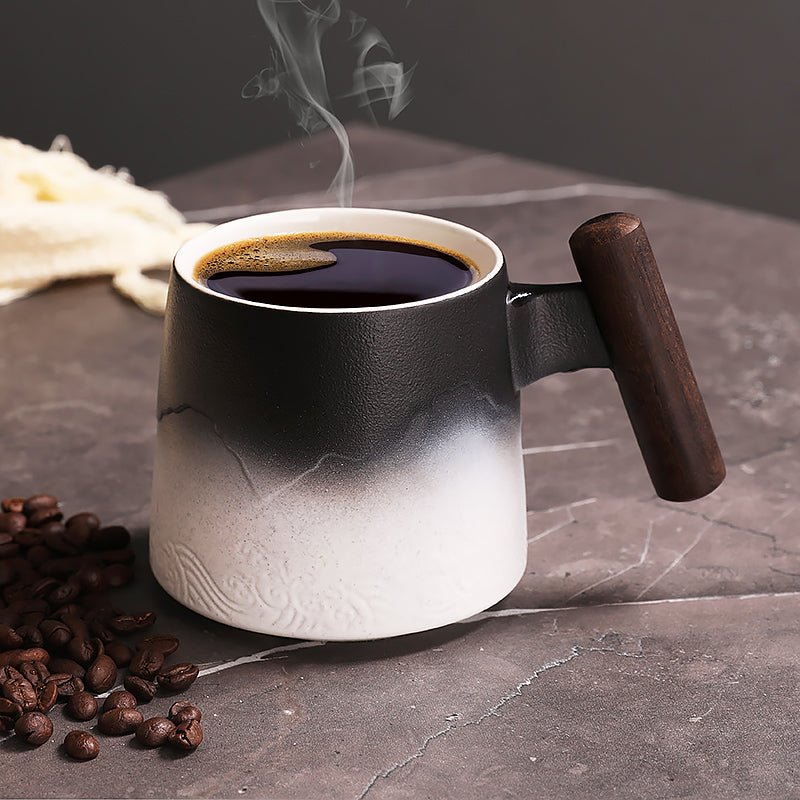
How Many Oz Is a Coffee Mug? Common Sizes and What Fits Best
Reading time: about 10 minutes
A mug that looks “normal” on a shelf can feel very different once you pour in coffee. We see this all the time in our store: one customer wants a mug that holds a full drip-coffee pour with room for cream, while another wants a smaller cup that keeps espresso-style drinks from cooling too fast.
If you are asking how many oz is a coffee mug, the short answer is that most coffee mugs fall somewhere between 8 oz and 16 oz. A few run smaller, and plenty go larger. The right size depends on how you actually drink coffee, not just on the number printed on a product page.
For shoppers comparing options, the useful question is not only “how many ounces does it hold?” It is also “how much do I really pour, how much room do I want at the top, and will this mug fit my daily routine?”
How many oz is a coffee mug in real life?
Most standard coffee mugs are sized around 10 oz, 12 oz, 14 oz, 16 oz, and sometimes 20 oz or 24 oz. The exact number can vary because mug makers measure capacity differently. Some list a mug’s brim-full volume; others treat the usable serving size as the “oz” figure.
That difference matters. A mug sold as 16 oz may not feel like a full 16 oz serving once you leave space for milk, foam, or a safe grip. In our experience, buyers often discover that a “16 oz mug” is a comfortable pour size for about 12 to 14 oz of coffee with room to spare.
Here is the practical way we think about common mug sizes:
- 8 oz: smaller, classic cup feel; good for black coffee or espresso-based drinks with less volume.
- 10 to 12 oz: the everyday sweet spot for many kitchens and offices.
- 14 to 16 oz: better for people who like larger pours, lattes, or extra milk.
- 20 to 24 oz: best for oversized servings, long work sessions, or soup-and-coffee utility use.
If you want to compare sizes side by side, our full collection is the easiest place to start. If you already know you want a specific size, we also cover deeper size-specific checks in guides like 8 oz Coffee Mug: What to Check Before You Buy and 12 oz Coffee Mugs: What to Check Before You Buy.
What size coffee mug works best for your drink?
The best mug size depends on the drink, not just the label. A 12 oz mug may be ideal for drip coffee, but it can feel cramped for a latte. A 20 oz mug sounds generous, but for some people it is simply too large for a morning desk setup.
| Drink style | Usually works well with | Why it fits |
|---|---|---|
| Black drip coffee | 8 oz to 12 oz | Enough room for a normal pour without making the mug bulky |
| Coffee with cream or milk | 12 oz to 16 oz | Leaves space so the mug does not feel overfilled |
| Latte or cappuccino-style drinks | 12 oz to 16 oz | Handles more volume and foam better than a small cup |
| Large desk coffee or all-morning sipping | 16 oz to 20 oz | Fewer refills, but more weight and more cooling if left sitting |
| Extra-large pours | 20 oz to 24 oz | Best for heavy drinkers, not for compact kitchen storage |
We often tell customers to think about their first three sips. If you like coffee strong and hot, a smaller mug can be better because there is less exposed surface area. If you like to linger over a long meeting, a larger mug may be the better fit.
For a deeper look at bigger formats, see our guides on 16 Ounce Coffee Mug Buyer’s Guide: Size, Material, and Fit, 20 oz Coffee Mug: What to Check Before You Buy, and 24 oz Coffee Mug: What to Check Before You Buy.
Why does a 12 oz mug sometimes feel smaller than expected?
This is one of the most common surprises shoppers have. A mug’s advertised capacity is not always the amount you comfortably drink. Thick walls, a tapered shape, a wide mouth, and a curved interior can all change how much liquid the mug actually seems to hold.
We also see confusion between brim capacity and usable fill. A mug filled to the very top is rarely a practical serving. You need some headroom to prevent spills, especially if you are walking from the kitchen to a desk or pouring in milk after brewing.
Three details matter more than many buyers expect:
- Wall thickness: thicker ceramic often feels sturdy and holds heat well, but it can reduce the interior volume a little.
- Handle clearance: a mug with a large handle may be easier to hold, but it can take up more cabinet space and cup-holder space.
- Mouth width: a wide opening cools coffee faster than a narrower top, even if the mug holds the same ounces.
If you want a mug for daily use at home, the 12 oz and 16 oz ranges are usually the most practical. If you are comparing smaller options for espresso, tea, or a compact desk setup, our 8 oz guide is the better starting point.
What should you check besides ounces before buying a coffee mug?
Capacity matters, but it is not the whole decision. We handle enough mugs to know that the same ounce rating can still produce very different user experiences. Material, finish, handle shape, and care instructions all affect whether a mug feels good in real life.
Here is the checklist we recommend before you buy:
- Material: ceramic is the most common for everyday coffee mugs because it feels substantial and keeps coffee reasonably warm. Stoneware often feels heavier and more rustic, while porcelain can look more refined and usually feels a bit lighter.
- Finish: a glossy glaze is easier to wipe clean, while a matte finish can show utensil marks or fingerprints more easily depending on the surface.
- Care: check whether the mug is dishwasher safe and microwave safe if those matter to your routine. A mug that looks great on a shelf may not be practical if it needs hand-washing every day.
- Handle fit: a comfortable handle matters more than people expect. A nice mug can become annoying if two fingers fit awkwardly or if the handle gets hot after microwaving.
- Stability: a mug with a narrow base or very tall profile can feel less stable on a cluttered desk.
Our team sees a lot of gift buyers focus only on the design and forget daily use. That is where problems start. A beautiful mug that stains easily, chips at the rim, or does not fit under a coffee machine is not a good buy for most people.
Our experience: the mugs customers keep reaching for are usually the ones that balance size, grip, and easy care. The fancy-looking one is not always the one that gets used every morning.
Is a bigger coffee mug always better?
No. Bigger is only better if it matches how you drink coffee.
A 20 oz or 24 oz mug can be useful for people who want fewer refills, but there are trade-offs. Bigger mugs can feel heavy when full, take up more shelf space, and cool faster if they sit on a desk for a long meeting. They are also not the best choice for small espresso drinks or for anyone who prefers a tighter, warmer sip.
On the other hand, a smaller mug is not always ideal either. If you routinely pour 14 oz of coffee plus cream into an 8 oz mug, you will end up with spills or an overfilled cup. That is why many shoppers settle on 12 oz or 16 oz as the most practical middle ground.
If you are still deciding between medium and large options, our 16 oz Coffee Mugs: What to Check Before You Buy guide and our 16 Ounce Coffee Mug Buyer’s Guide: Size, Material, and Fit are useful side-by-side reads.
How do mug size and shape affect heat, spills, and cleanup?
Shape changes the way a mug behaves. A wide mug gives coffee more surface area, so it can cool faster. A taller mug often keeps heat a little better, but it can be less stable and more awkward to store under low cabinets or office shelves.
There are also a few common defect modes buyers should watch for. We look for hairline glaze issues near the rim, uneven bottoms that make the mug rock on a flat counter, and handles that feel loose or poorly attached. These are the kinds of details that turn a pretty mug into a frustrating one.
Cleanup is part of the size decision too. A larger mug usually means more interior surface to wash. If you drink coffee with syrups or milk every day, a smooth glazed interior is easier to rinse quickly than a textured or heavily ridged design.
For office use, we usually recommend avoiding oversized mugs if you share a dishwasher or have limited desk space. For home kitchens with open shelving and a roomy sink, larger mugs can be more forgiving. The best choice depends on the environment as much as the beverage.
How many oz should you buy for home, office, or gifting?
Different settings call for different sizes. We see real buying patterns here all the time, especially around gifts and work-from-home setups.
- Home morning routine: 12 oz or 16 oz usually works best.
- Office desk use: 14 oz to 16 oz is often the most practical. It holds enough coffee without becoming clumsy on a crowded desk.
- Gifting: 12 oz is the safest middle-ground choice unless you know the person drinks very large pours.
- Tea or smaller coffee servings: 8 oz to 10 oz may be more comfortable.
- Heavy coffee drinkers: 20 oz or larger can reduce refill trips, but only if the weight still feels manageable.
If you are buying for someone else and do not know their exact routine, avoid going too large unless you are sure. A big mug is not universally better as a gift. People who prefer a classic cup size may reach for a smaller mug more often.
Frequently asked questions
How many oz is a standard coffee mug?
A standard coffee mug is usually 8 oz to 12 oz, though many modern mugs are 14 oz or 16 oz. The exact size depends on the brand and whether the maker is listing brim-full capacity or a practical serving size.
Is a 12 oz mug enough for coffee?
For many people, yes. A 12 oz mug is a good fit for a regular drip coffee with a little room for cream or milk. If you like very large pours or drink multiple add-ins, you may prefer a 16 oz mug instead.
What size mug is best for latte drinks?
Most latte drinkers do well with a 12 oz to 16 oz mug. That range usually gives enough room for espresso, steamed milk, and foam without feeling crowded. Smaller mugs can work for short drinks, but they get tight fast.
Why do some mugs say 16 oz but feel smaller?
Because the labeled ounce count does not always equal a comfortable fill line. Wall thickness, mug shape, and the room needed to avoid spills all affect the usable amount. A mug can be technically 16 oz and still feel right for only 12 to 14 oz in daily use.
What mug size should I buy if I do not know the person’s preference?
Choose 12 oz if you want the safest general-purpose option. It works for many coffee drinkers, fits easily in most kitchens, and is less likely to feel oversized than 20 oz or 24 oz mugs. If you want to compare options before choosing, browse our products page or the full collection.
What should you do next if you are still deciding?
If you are trying to answer how many oz is a coffee mug for your own routine, start with the size you actually pour most days. Measure your usual coffee once. Then compare that number against the mug’s advertised capacity and leave room for milk, foam, and a comfortable margin at the top.
If you want the simplest path, use this quick checklist:
- Pick 8 oz to 12 oz for smaller, more traditional cups.
- Pick 12 oz to 16 oz for everyday home or office use.
- Pick 20 oz+ only if you truly want a large, heavier mug.
- Check the mug material, care instructions, and handle comfort before buying.
- Make sure the size matches your coffee machine, cabinet space, and daily pouring habit.
From there, the easiest next step is to compare actual sizes in our full mug collection, or open the size-specific guide that matches your target capacity before you buy.
More from our blog
Read more
Best Insulated Coffee Mug with Handle: What Buyers Should Check
A practical buyer’s guide to choosing the best insulated coffee mug with handle, with the details that matter on a desk, in the kitchen, and on the move. We cover lid fit, insulation, size, materia...
Подробнее
Ralphs Coffee Mug Buyer’s Guide: What to Check Before You Buy
A practical guide to choosing a ralphs coffee mug that fits your shelf, your routine, and your expectations for size, finish, and care. We cover the trade-offs that matter before you buy.
Подробнее
Оставить комментарий
Этот веб-сайт защищается hCaptcha. Применяются Политика конфиденциальности и Условия использования hCaptcha.