
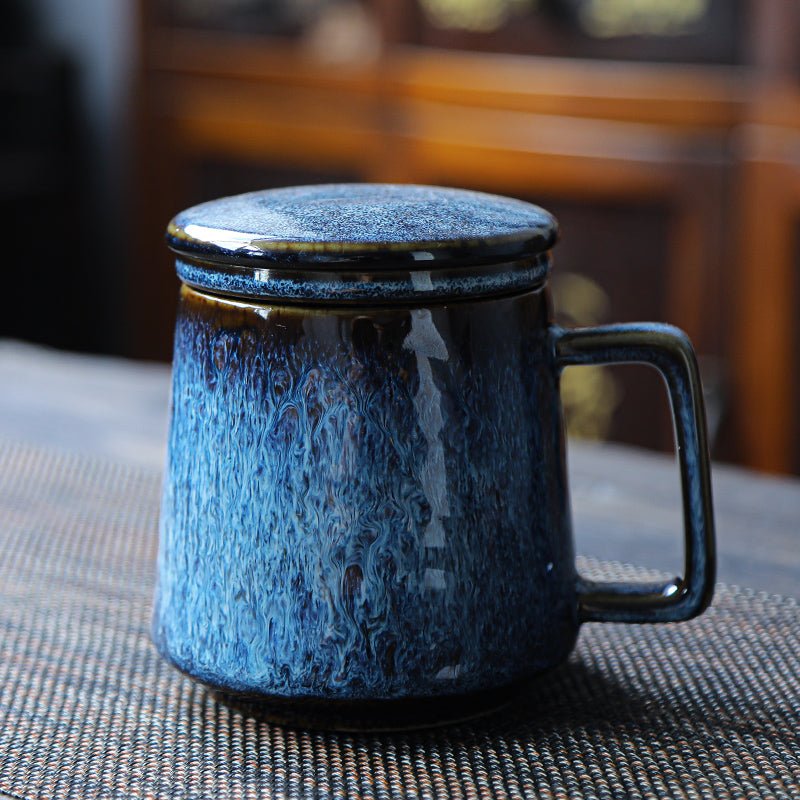
Dandelion Coffee Mug for Small Coffee Setup: What to Compare
Reading time: about 10 minutes
A mug can sit neatly beside a compact brewer and still fail the space test when its handle clips the cabinet door or crowds a keyboard. The search for a dandelion coffee mug for small coffee setup should therefore begin with the space around the mug, not just the design on its surface.
In our store, we separate verified catalog facts from details that need to be checked on the current product page. The Gradient and The Flow each have a listed capacity of 400 ml, while The Rock is listed at 480 ml. Capacity is useful, but it does not establish exterior width, shelf height, material, or handle comfort. We would not assume that a 400 ml mug has a smaller footprint than a 480 ml mug without those measurements.
Will a dandelion coffee mug for small coffee setup actually fit?
Start with the mug's entire storage envelope. That means its overall height, widest body diameter, base diameter, and maximum width from the far side of the body to the outside edge of the handle. Handle projection is the measurement buyers most often overlook. It can determine whether two mugs sit side by side, even when both bodies fit easily.
- Measure the usable shelf height. Measure to the underside of the shelf above, accounting for any front lip or cabinet hinge that reduces clearance.
- Record usable depth. A mug that fits the shelf board can still prevent the cabinet door from closing if the handle faces forward.
- Measure one complete mug slot. Use the mug's maximum outside width, including the handle, rather than its base diameter.
- Check the counter landing area. Include the space needed to set down and pick up the mug without moving the brewer, kettle, spoon holder, or other daily items.
- Check the drying location. A handle may extend into an adjacent rack slot or touch another piece during a dishwasher cycle, if the mug is approved for dishwasher use.
Leave a practical margin instead of matching a product dimension exactly to your available space. Fingers need room to reach the handle, and cabinet doors, shelf lips, and nearby appliances rarely line up with a simple rectangular measurement.
400 ml or 480 ml: which capacity earns its shelf space?
For a dandelion coffee mug for small coffee setup, listed capacity should be compared with the amount you normally pour. Listed capacity is not necessarily the same as a comfortable working fill; most people need some headroom below the rim for carrying the mug. Use your preferred fill level in an existing mug as the reference rather than choosing the largest number automatically.
| Current choice | Listed capacity | Reader situation | Trade-off to check |
|---|---|---|---|
| The Gradient Coffee Tea Mug | 400 ml | Your normal serving fits within 400 ml and you prefer The Gradient's current product presentation. | Compare its listed exterior dimensions and handle opening with your available slot. |
| The Flow Coffee Tea Mug | 400 ml | You want the same listed capacity as The Gradient but prefer The Flow after comparing the current photos and details. | Capacity alone does not show whether its handle or body occupies less space. |
| The Rock Coffee Tea Mug | 480 ml | You want 80 ml more listed capacity than either 400 ml option. | Confirm its exterior footprint and loaded handling before treating it as the best compact choice. |
The extra 80 ml offered by The Rock is meaningful if capacity is your priority. It is less useful if your usual serving already fits comfortably in 400 ml or if the mug must occupy a particularly narrow shelf slot. Because capacity and outside dimensions are different measurements, the current listing should settle the footprint question.
If none of these three immediately matches your space, compare the current shapes in our unique coffee mug collection. Shoppers moving from an ounce-based mug can also use our 12 oz mug comparison for small coffee setups to think through their normal serving before choosing 400 ml or 480 ml.
How much handle clearance does a compact setup need?
Handle comfort is personal, so we do not label one shape universally comfortable from capacity alone. The useful measurements are the handle aperture, which is the open space inside the handle, and handle projection, which is how far the handle extends beyond the mug body. Product photos can show the general grip style, but an inside handle measurement is more useful for shoppers with large hands or a strong preference for a full-finger grip.
- Full-hand grip: Check the handle's internal height and width, plus clearance between your knuckles and the mug body.
- Two-finger or pinch grip: Pay attention to the upper attachment point and how the mug balances at your intended fill level.
- Office desk use: Make sure the handle can face your preferred side without extending over a keyboard, mouse area, or desk edge.
- Cabinet storage: Check the complete outside width with the handle turned into its normal stored position.
A useful home test is to fill a similarly sized mug to your normal working level and hold it in the grip you actually use. This will not reproduce the candidate mug's exact balance, but it clarifies whether you prefer a compact two-finger hold or more knuckle clearance.
If tea is the alternative hot drink you use most often, the same capacity and handle questions still apply. The product names identify all three as coffee and tea mugs, but your serving size and grip should guide the choice. Our loose leaf tea mug space comparison covers the additional room that tea accessories can require without making claims about the drink itself.
Which footprint measurements prevent cabinet and counter surprises?
A base diameter is not a complete footprint. The widest part of the body may sit above the base, and the handle can extend much farther. On a counter, also account for any coaster or drip tray that the mug must sit on. Under a brewer, compare the mug's overall height with the actual dispensing clearance, including any fixed spout or removable tray.
Base width creates a real trade-off. A broader base can resist tipping more readily on a desk, but it also uses more counter and rack space. A narrow base may fit between nearby objects yet leave less contact area on the surface. These are shape principles, not verified descriptions of The Gradient, The Flow, or The Rock. Check the current product images and dimensions before applying them to a specific model.
Storage adds another constraint: do not assume a mug is stackable. Rim shape, handle attachment points, and surface decoration can make stacking unstable or put pressure on finished surfaces. If wide-bottom stability is central to your decision, compare those trade-offs in our wide-bottom mug guide for compact setups.
We use four real locations for a final fit check: the cabinet slot, the counter beside the brewer, the usual drinking surface, and the drying rack. A mug has to work in all four places. A choice that fits the counter but monopolizes the rack is not truly compact for a household that washes several pieces together.
What should you confirm about material, finish, and care?
The verified facts used in this comparison establish the three listed capacities. They do not establish that all three mugs share the same material, decoration process, dishwasher status, or microwave status. Do not infer those details from a photograph or from a separate article about ceramic mugs. Confirm them on the current product page or care information before ordering.
- Material: Look for an explicit material description. Material affects weight, surface feel, and the care instructions you must follow.
- Dishwasher and microwave directions: Treat each as a separate question. Approval for one does not automatically establish approval for the other.
- Decoration method: If the listing identifies a surface-applied print, relief, glaze, or another finish, follow the cleaning directions for that treatment and avoid assuming every dandelion design is maintained the same way.
- Stacking guidance: Store mugs separately unless the shape and care directions support stacking. Handles and rims create concentrated contact points.
- Routine inspection: Check the rim, handle joints, and base after washing. Rim chips, hairline cracking around handle attachments, base abrasion, and decoration wear are useful defect modes to watch for in mugs generally; this is not a claim that these products have those issues.
If a product is approved for dishwasher use, load it so the handle and rim do not knock against adjacent pieces during the cycle. If hand washing is directed, use a nonabrasive sponge and avoid aggressive scrubbing over decoration. Let the mug dry fully before putting it into a closed cabinet. These steps are especially relevant in a small setup where mugs are stored close together and finish-to-finish contact is common.
Which CoffeifyMug choice matches your setup?
Capacity gives us a defensible starting point, while the current product page supplies the visual and physical details needed to finish the decision.
- You have limited shelf space and 400 ml meets your serving need: Compare The Gradient and The Flow. Their listed capacities are equal, so choose between them only after checking current exterior dimensions, handle geometry, finish, and care details.
- You prioritize more capacity: Start with The Rock because its listed 480 ml capacity is 80 ml higher than the other two choices. It is not automatically the smallest or easiest to hold, so verify those points separately.
- You need a comfortable full-hand grip: Do not choose by capacity or decoration alone. Compare handle aperture and projection in the listings, and request clarification if an essential measurement is missing.
- You are buying for an office desk: Map the full outside width beside the keyboard and check the mug's working weight with a similarly sized mug you already own.
- You are giving the mug as a gift: Confirm the recipient's cabinet space, normal serving size, grip preference, and care routine. A larger mug is not a better gift if it cannot fit the recipient's shelf or preferred dishwasher rack.
The Gradient and The Flow are the direct 400 ml comparison. The Rock is the capacity-led alternative. Our broader collection is the next step when a different shape matters more than staying within these three dandelion choices.
Frequently asked questions
Which dandelion coffee mug for small coffee setup has the largest listed capacity?
The Rock has the largest verified listed capacity at 480 ml. The Gradient and The Flow are each listed at 400 ml. That makes The Rock the capacity choice, but it does not prove that it has the smallest footprint or most comfortable handle.
Is 400 ml too large for a compact coffee station?
Not necessarily. Compact fit depends on overall height, body width, base diameter, and handle projection rather than capacity alone. Compare those exterior measurements with your shelf, brewer clearance, and drying rack before deciding.
Can I use these mugs for tea as well as coffee?
The current product names describe The Gradient, The Flow, and The Rock as coffee and tea mugs. Choose 400 ml or 480 ml according to the serving volume you want, then confirm the current material and care details on the product page. The alternative drink does not remove the need to check handle comfort at your intended fill level.
Are The Gradient, The Flow, and The Rock dishwasher or microwave safe?
Those care claims are not established by the verified capacity facts in this comparison. Check each current product page and follow its specific care directions; do not assume the three models have identical instructions.
Use this five-point check before you order
- Write down the maximum shelf height, depth, and complete width available for one mug.
- Choose between a 400 ml and 480 ml listed capacity using your normal working fill, not an occasional oversized serving.
- Compare the inside handle opening and total handle projection with your preferred grip.
- Verify material, finish, dishwasher guidance, microwave guidance, and stacking directions on the current listing.
- Test the planned location beside your brewer, on your desk, and in your drying area with an existing mug of similar size.
With those five answers recorded, return to the CoffeifyMug unique mug collection and compare The Gradient, The Flow, and The Rock against your actual limits. Pick the 400 ml option that best matches your measured shape and grip needs, or move to The Rock when the extra 80 ml is worth the space confirmed by its current listing.
Read more
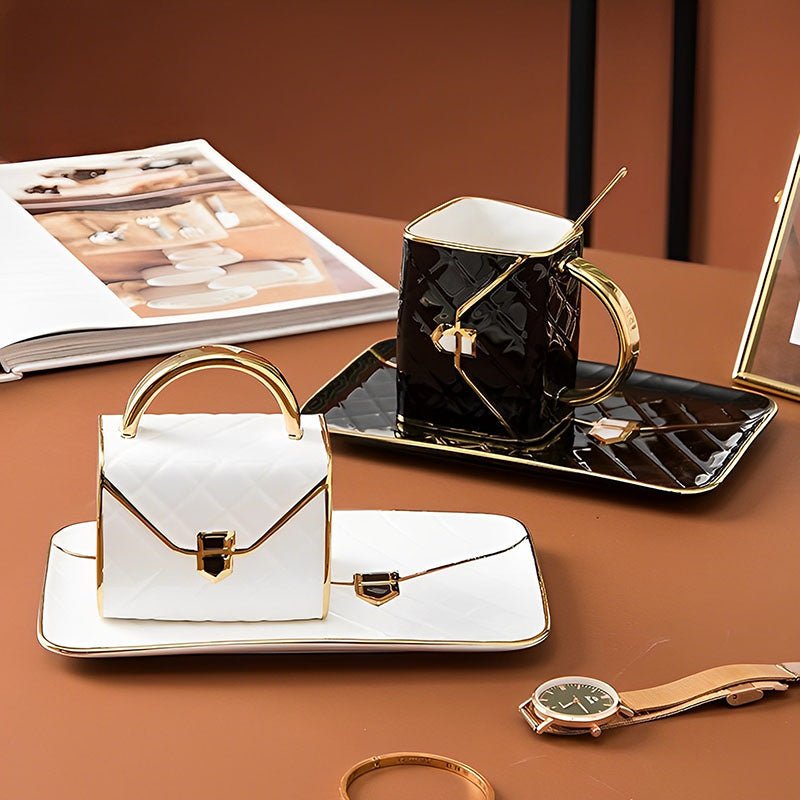
Unique Design Coffee Mugs for Small Coffee Setup: Buyer Checks
Compare unique mugs by the room they occupy, the drink sizes you actually make, handling comfort, and care demands. Use these practical checks to choose a design-led mug that still works on a compa...
Подробнее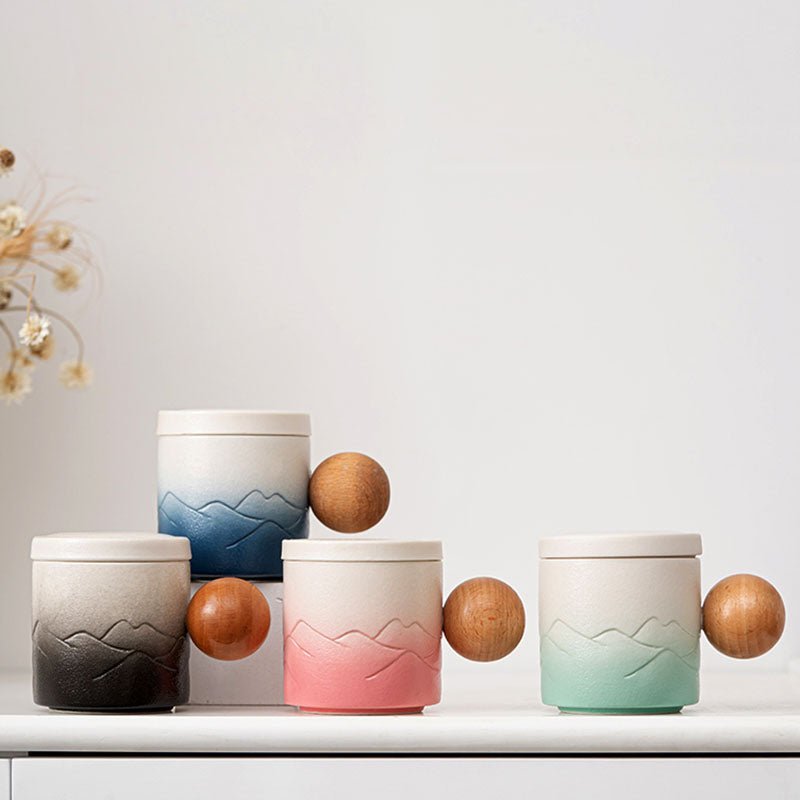
Cacao Cup Shape and Handle Guide: 250, 390, or 400 ml
Compare CoffeifyMug's current 250, 390, and 400 ml cup options using listed capacity, the 250 ml model's 11.2 cm diameter, visible opening, handle form, and practical care checks.
Подробнее
Оставить комментарий
Этот веб-сайт защищается hCaptcha. Применяются Политика конфиденциальности и Условия использования hCaptcha.