
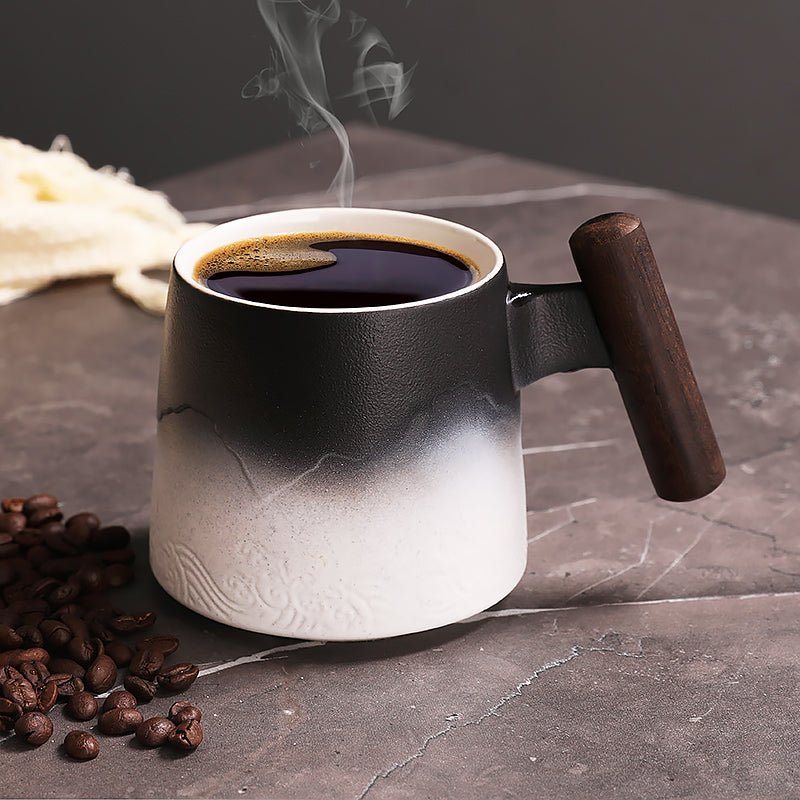
Coffee Mug Stand Buying Guide: Fit, Materials, and Best Uses
Reading time: about 10 minutes
What problem should a coffee mug stand actually solve?
A coffee mug stand should do one simple thing well: give your mugs a place that is easy to reach, stable, and not in the way. In our store, we see buyers choose one after they get tired of stacking mugs inside a cabinet, knocking handles together, or leaving their favorite cups on the counter because the cabinet feels too crowded.
That sounds basic, but the use case matters. A stand that works on a wide kitchen counter may feel awkward on a narrow office desk. A decorative rack that looks good in a gift unboxing can still fail if the base flexes when a heavier stoneware mug is hanging from one side. We look at coffee mug stands the same way customers use them in real homes: next to a drip machine, beside a kettle, under a cabinet, or on a work surface where every inch counts.
If your mugs live in a mix of sizes, it also helps to think about the cup itself. Our size guides for 10 oz Coffee Mug: Size, Fit, and What to Check Before You Buy, 12 Ounce Coffee Mug Buying Guide: Size, Fit, and Best Uses, and 16 Ounce Coffee Mug Buyer’s Guide: Size, Material, and Fit are useful because mug size affects handle shape, overall height, and how much clearance you need around the stand.
Which material is best for a coffee mug stand?
The material changes how the stand feels, how long it lasts, and how much care it needs. We usually narrow it down to three common builds: metal, wood or bamboo, and mixed-material designs. Each one has a place, and each one has a limitation.
| Material | What it does well | What to watch for |
|---|---|---|
| Metal | Usually the most rigid; good for heavier mugs and daily use | Can chip at contact points; finish quality matters |
| Wood or bamboo | Warm look that fits open shelving and softer kitchen styles | Can mark or swell if it stays damp; needs dry wiping |
| Mixed materials | Can combine a stable frame with a better-looking base or hooks | More joints can mean more points to loosen over time |
Powder-coated steel is a practical choice when you want a stand that feels planted and does not wobble every time a mug is removed. The coating matters because bare or thinly coated metal can scratch and show wear where mugs rub against hooks or arms. Wood and bamboo are better if the stand sits in a visible spot and you want it to feel less industrial, but they are not the best choice if the area gets frequent splashes from a sink or espresso setup. In that case, a metal frame with a wipeable finish is usually easier to live with.
One trade-off that gets missed: a lighter stand is easier to move, but it can tip if the mugs are large or loaded unevenly. A heavier base usually solves that, though it takes up more visual and physical space. If you use larger mugs often, it is worth reading a broader sizing guide like 14 oz Coffee Mug: What Buyers Should Check Before They Buy before you choose a stand that only looks good with smaller cups.
How many mugs should it hold and where will it sit?
Capacity is not just a number. It changes the footprint, the balance, and how easy the stand is to use every day. A compact stand can be ideal for two daily mugs on an apartment counter. A larger one makes more sense for families, shared office kitchens, or anyone who rotates between coffee, tea, and cocoa cups.
Before buying, measure three things:
- The counter or shelf width you can give the stand.
- The vertical clearance under cabinets or shelves, especially if your mugs are tall.
- The depth of the footprint so the stand does not block a grinder, kettle, or toaster.
We also tell customers to think about the mugs they actually use, not the ones they keep for display. A slender 10 oz cup often behaves differently from a chunky 16 oz stoneware mug with a wide handle. If your current set skews larger, the spacing and arm length on the stand matter more than the decorative shape. For that reason, buyers comparing everyday mug sizes often start with the 11 oz and 12 oz guides before they commit to a storage solution.
One real-world issue is cabinet clearance. A stand placed under upper cabinets can look fine in photos, then feel cramped once you add a mug with a tall handle. Leave room for your hand to slide the mug on and off without scraping the underside of the cabinet. If the stand will live by a sink, also leave enough space so a wet towel can dry without draping over the whole setup.
What details separate a good stand from a frustrating one?
Small details are where most stands succeed or fail. The difference is usually not the broad style. It is the hardware, the base, and the finish.
- Hook or arm spacing: Mugs need room to hang without knocking together. Crowded arms look neat in the box and annoying on day three.
- Base stability: A broad, weighted, or low-profile base is safer for larger mugs than a narrow decorative pedestal.
- Surface protection: Felt feet, rubber pads, or a padded base help protect stone, laminate, and painted counters.
- Finish quality: Smooth edges and even coating matter because mug handles and glaze will eventually rub the contact points.
- Cleaning method: Most stands should be wiped clean rather than soaked, especially if wood, bamboo, or mixed materials are involved.
Common defect modes are predictable. We watch for wobble at the joint, finish wear where the hooks meet the frame, and bases that collect fingerprints or water marks too easily. If the stand has a rotating or multi-arm design, check that the movement feels controlled rather than loose. A loose arm assembly becomes annoying quickly because every mug removal shifts the balance.
Our experience is that buyers are happiest when the stand matches the mug weight they already own. Lightweight decorative mugs and chunky stoneware do not stress the same parts of a rack.
If you want a wider product comparison after you decide on the storage style, our collection of mugs and accessories is the best place to compare items side by side with the stand in mind.
Which setup works best for kitchens, offices, and gifting?
A coffee mug stand is not just a storage piece. It plays a different role depending on the room.
- Kitchen counter: Best for daily-use mugs near the coffee maker. Prioritize stability, easy wipe-down surfaces, and a footprint that leaves room for prep.
- Office desk or shared break area: Better for a compact stand that keeps personal mugs separated. A narrow base and clean profile usually work best here.
- Open shelf or hutch: Choose a stand with a finish that looks intentional from the side and back, not only from the front.
- Gift setup: If the stand is part of a mug gift, the unboxing should feel tidy and ready to use, not like a piece that needs assembly and adjustment before the recipient can enjoy it.
The limitation is worth stating plainly. A coffee mug stand is not the right answer if you want hidden storage, maximum dust protection, or a solution for oversized travel tumblers. If your kitchen already has deep drawers or a closed cabinet with adjustable shelves, a stand may be less efficient than simple shelf organization. And if your mugs are used once a week rather than every day, the counter space might be better reserved for something else.
That is why we advise buying for routine, not for the idealized photo. If the stand will hold your weekday mug beside the drip machine, build around that use. If it will hold a few display pieces, choose appearance first and accept that function may be secondary.
How do we compare options before we add them to our store?
At CoffeifyMug, we look at the same practical issues customers do: fit, finish, and whether the product makes daily use easier instead of adding another thing to clean around. Before we bring a coffee mug stand into our store, we ask whether it solves a genuine storage problem and whether it fits the kinds of mugs people actually buy from us.
Our comparison process is straightforward:
- Check the base footprint against a real counter space, not just a product photo.
- Compare the stand against the mug sizes customers already own, especially 10 oz, 12 oz, and 16 oz pieces.
- Look for a finish that will still look good after repeated handling and regular dusting.
- Make sure the design can handle the everyday mix of glazed ceramic, stoneware, and lighter cups without tipping or crowding.
If you are still deciding which mug size you want to store, the size guides for 11 oz Coffee Mug: Size, Fit, and What to Check Before You Buy and 12 oz Coffee Mug: Size, Fit, and What to Check Before Buying can help you avoid a mismatch between the stand and the mug.
For shoppers who want to start comparing actual pieces, the simplest next step is to browse our products page and check the mug dimensions against the stand space you have available. That is usually faster and more reliable than guessing from photos alone.
Frequently asked questions
What size coffee mug stand do I need for 12 oz mugs?
Most 12 oz mugs fit well on a stand if the arms or hooks leave enough room for the handle and the mug does not bump its neighbor. The real check is height and clearance under any cabinet or shelf above the stand. If your 12 oz mugs have chunky handles or a tall profile, measure them before you buy.
Are coffee mug stands stable on laminate or stone counters?
They can be, as long as the base is flat and the stand has protective feet or pads. We recommend checking for rubberized contact points or a broad base if the stand will sit on a smooth surface. That matters more if you plan to remove mugs one-handed while the stand is already loaded.
Is a wood coffee mug stand better than metal?
Not automatically. Wood or bamboo can look warmer in an open kitchen, but metal usually handles weight and daily handling better. If the stand sits near a sink or sees frequent moisture, metal with a good finish is often the safer long-term choice.
Can I use a coffee mug stand for travel mugs or tumblers?
Usually not well. Travel mugs and tumblers are often taller, heavier, and shaped differently from standard ceramic coffee mugs. A stand designed for handled mugs is usually the wrong fit unless the product specifically says it supports tumblers.
How do I clean a coffee mug stand?
Use a dry or lightly damp cloth for most stands, then dry the surface right away. Avoid soaking wood, bamboo, or mixed-material stands. If the base sits near a coffee maker, wipe it regularly so oils, dust, and water spots do not build up.
What should you check before you buy?
Use this short checklist before you choose a coffee mug stand:
- Measure the counter width, depth, and cabinet clearance.
- Match the stand to the mug sizes you actually use every day.
- Pick a material that fits your cleaning habits and the humidity near your sink or coffee setup.
- Check whether the base has enough weight and surface protection for your counter.
- Decide whether you want the stand to disappear into the kitchen or act as a visible part of the coffee station.
If the answer to those points is still unclear, start with the mug sizes you own now, then compare them against the storage space available in your kitchen or office. From there, browse our full collection and product pages to find a setup that fits the way you actually make coffee each day.
More from our blog
Read more
Car Coffee Mug Buying Guide: Fit, Materials, and Real Trade-Offs
A practical guide to choosing a car coffee mug that actually fits your cup holder, your commute, and your cleaning routine. We cover materials, lid types, and the trade-offs that matter before you ...
Подробнее
Coffee Mug Walmart: What to Check Before You Buy
A practical buyer's guide to choosing a coffee mug Walmart shoppers often compare on size, material, and care. We break down the details that matter in real kitchens, offices, and gift orders.
Подробнее
Оставить комментарий
Этот веб-сайт защищается hCaptcha. Применяются Политика конфиденциальности и Условия использования hCaptcha.