
Coffee Mug Size Guide: How to Choose the Right Fit Before Buying
Reading time: about 9 minutes
Why does coffee mug size matter more than most buyers expect?
A mug that looks right on a product page can feel wrong the first morning you use it. A narrow 12 oz cup may be perfect for black coffee at a desk, but it can feel cramped once you add milk. A larger mug sounds practical until it hogs cabinet space, bumps into the espresso machine, or cools too slowly because you never finish it.
We see the same mistake in our store often: shoppers choose by the number alone and ignore the shape, handle room, and wall thickness. In practice, coffee mug size is about more than capacity. It is about how the mug sits in your hand, how much coffee you actually pour, and whether it belongs on your shelf or lives in the back of the cabinet.
That is why we look at mugs the way real buyers use them: on a kitchen counter, under a coffee maker, at an office desk, and after a few dishwasher cycles. The right size should feel natural on day one and still make sense after a week of daily use.
What coffee mug sizes do buyers actually compare?
Most shoppers are choosing between a few common ranges. The number on the listing matters, but the usable feel matters just as much. A mug with thick walls or a wide base can feel smaller or larger than the spec suggests.
| Size range | Usually fits | How it feels in daily use | Main trade-off |
|---|---|---|---|
| 6 to 8 oz | Espresso drinks, short pours, small tea servings | Compact, quick to heat, easy to store | Not much room for milk or foam |
| 10 to 12 oz | Standard drip coffee, tea, most everyday use | Balanced and familiar on a desk or kitchen counter | Can feel tight for larger lattes |
| 14 to 16 oz | Milk-heavy drinks, long mornings, bigger pours | More forgiving and more generous in the hand | Takes more cabinet space and weighs more when full |
| 18 oz and up | Oversized coffee, hot chocolate, soup, long sipping sessions | Substantial and roomy | Not ideal for small hands, shallow shelves, or quick coffee breaks |
If you want a simple benchmark before you buy, our related guides Average Coffee Mug Size: What Buyers Should Expect and Coffee Mug Oz Guide: How to Choose the Right Size Before You Buy cover the ranges most shoppers compare first.
For buyers with limited shelf space, our article Best Ceramic Mug Size for a Small Coffee Corner is useful because footprint can matter as much as capacity.
Which coffee mug size fits your drink and routine?
The best coffee mug size depends on what actually goes in the cup. A 12 oz mug is often the safest all-rounder, but there are real cases where smaller or larger makes more sense.
- Black drip coffee: 10 to 12 oz is usually enough if you like a normal pour and do not want the coffee to sit cooling for long.
- Latte or cappuccino: 12 to 16 oz works better because milk and foam need room. A mug that is too small can look crowded fast.
- Tea: 10 to 14 oz is a comfortable range for everyday steeping. If you sip slowly, a slightly larger mug keeps you from refilling as often.
- Hot chocolate: 14 oz and up is often more comfortable, especially if you want whipped cream or marshmallows without overflow.
- Espresso-based drinks: Smaller cups make sense if you want the drink to stay concentrated instead of spreading out in a huge mug.
There is a trade-off here. Bigger is not always better. A large mug can be useful for long mornings, but it is a poor choice if you drink one short cup and move on. It also is not the best fit for travel, commuting, or a coffee station where you have little vertical clearance.
For anyone comparing multiple styles in one place, start with our all mugs collection and compare the footprint, rim shape, and handle clearance side by side.
How do shape and handle change the way a mug feels?
Two mugs can have the same capacity and feel completely different. A tall mug usually takes up less shelf width, but it can feel top-heavy if the base is narrow. A wider mug can sit more confidently on a desk, yet it may crowd a coffee maker tray or take up too much cabinet room.
Handle design is where many mugs win or lose everyday comfort. We check for a handle opening that lets two fingers pass through without forcing your knuckles against the body of the mug. That matters more than people expect, especially when the mug is full and the ceramic has warmed up. A handle that looks decorative but feels tight is fine for display; it is not great for daily use.
In our experience, the most common comfort issues are not dramatic. They are small things: a handle that is slightly too close to the mug wall, a rim that feels too thin on the lips, or a base that sits a little unevenly on a flat counter. Those details show up immediately in real use, not in product photography.
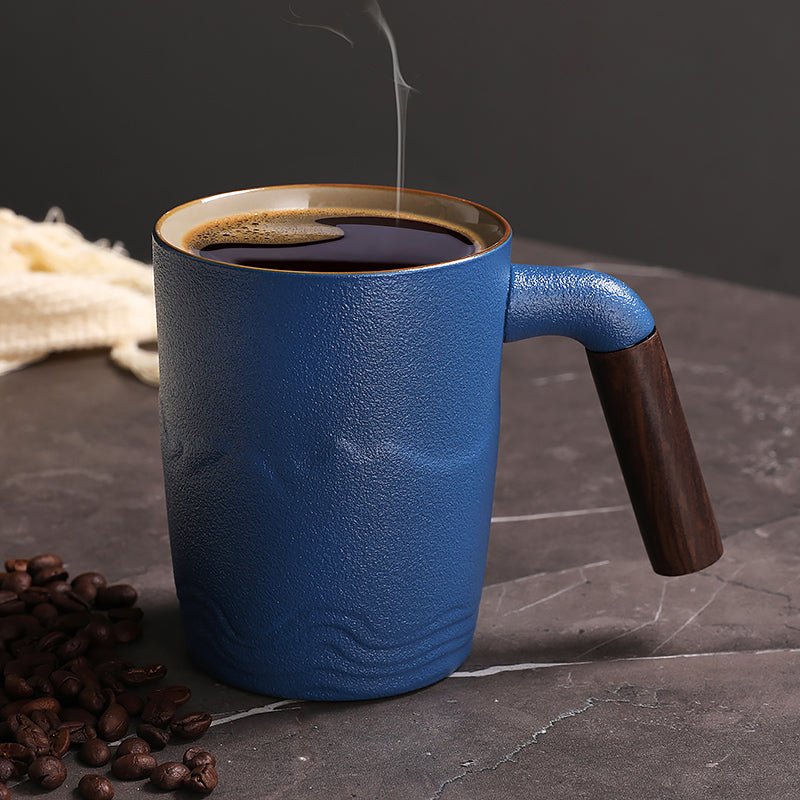
If you prefer a more substantial profile, take a look at the Great Mountain Coffee Tea Mug and the Emerald Coffee Tea Mug. If you want a slimmer silhouette that makes a smaller footprint on the shelf, the Landscape Tall Coffee Tea Mug is the kind of shape worth comparing.
Those examples matter because size is not just volume. A mug with a broader belly can feel easier to stir. A taller one can be easier to tuck into a narrow cabinet. If you have a low espresso machine shelf, a tall mug may simply not clear it, even if the ounce count looks right.
What should you check before buying a mug online?
We recommend checking a few practical details before you click buy. These are the things that affect real-world use far more than a lifestyle photo does.
- Capacity and dimensions: Check the ounce size, but also look for the overall width and height. A 12 oz mug can still feel bulky if it is wide at the rim.
- Handle clearance: Make sure the handle is large enough for your grip. If the opening is too tight, the mug feels awkward when full and hotter to carry.
- Base stability: A mug should sit flat without wobble. This matters on a cluttered office desk, a crowded breakfast tray, or a slightly uneven counter.
- Rim finish: The rim should feel smooth and even. Rough glaze, tiny bumps, or an uneven lip are the first things people notice when drinking directly from ceramic.
- Care instructions: If the mug is dishwasher safe, it still helps to keep it from banging against other pieces. Repeated contact is where many chips start, especially around the rim and handle join.
Material matters too. Ceramic and stoneware mugs are common because they feel solid and hold heat well, but they are heavier than thin travel cups. A heavier mug can feel reassuring at home and less ideal for anyone who wants the lightest possible hand feel. Thin porcelain can feel elegant, but it may not give you the same sturdy desk presence.
Our team usually checks for three failure points first: chips at the rim, hairline cracks where the handle meets the body, and a base that does not sit fully flat. Those are the problems that turn a good-looking mug into a frustrating one.
If a mug is meant for daily dishwashing, we still prefer a design that can take normal loading and unloading without the handle bumping metal racks or neighboring cups. That is the kind of small stress that shows up over time.
Which coffee mug size works best for gifts, offices, and small kitchens?
Buying for yourself is easier. Buying for a gift or a shared space takes a little more judgment.
For gifts, a moderate coffee mug size is usually the safest choice. A 10 to 12 oz mug tends to fit most routines without feeling overly specialized. It is large enough for daily coffee, tea, or cocoa, but not so large that it seems awkward on a normal shelf. That is why gift unboxings often go better with a balanced shape than a huge novelty cup.
For offices, think about the actual desk. A mug that is too wide can compete with a keyboard, mouse, and notebook. A taller mug may fit better on a small workstation, but only if it clears the underside of the cabinet or shelf above it. If people move between meetings, a stable base matters more than a decorative silhouette.
For small kitchens, footprint wins. The best mug is often the one that stacks or lines up cleanly in the cabinet and does not force you to reorganize everything around it. If your shelves are shallow, or your mug area already holds a kettle, filters, and spoons, a slimmer profile usually makes daily life easier.
That is also where the difference between useful and pretty becomes obvious. A mug can photograph beautifully and still be a poor fit if it is too tall for the coffee station or too heavy for someone who wants a quick refill. We would rather you choose the mug that works every morning than the one that only looks good on arrival day.
Frequently asked questions
What is the most common coffee mug size for everyday use?
Most everyday buyers land in the 10 to 12 oz range because it handles drip coffee, tea, and smaller milk drinks without taking over the cabinet. It is also the easiest size to adapt if you do not know the recipient's exact routine. If you like very large pours, move up; if you drink short shots or small servings, move down.
Is a 12 oz mug big enough for a latte?
It can be, but it depends on how much milk and foam you use. A 12 oz mug works for some latte styles, yet a 14 to 16 oz mug is more comfortable if you pour generously or like room to stir. If your drink usually sits right at the brim, size up.
Are larger mugs harder to use in a small kitchen?
Yes, because they take more shelf width and can be harder to fit under cabinets or coffee machines. A larger mug also feels heavier when full, which matters if you store it high up or use it every day. In a tight kitchen, a slimmer mug with a stable base is often the smarter buy.
What should I check if I want a mug for the office?
Check the base stability, handle room, and overall footprint first. On a desk, a mug should not crowd your keyboard or slide around when you set it down. If you keep a mug by your monitor or laptop, avoid an oversized shape that is easy to knock over.
Is a ceramic mug good for daily use?
Yes, ceramic is a strong everyday choice because it feels solid, holds heat reasonably well, and works for coffee, tea, and hot chocolate. The main trade-off is weight and chip risk if the mug is knocked against hard surfaces. If you want the easiest carry or the toughest travel setup, a travel cup is a better fit.
If you want to compare shapes before buying, start with the size and footprint that match your routine, then browse our all mugs collection and check the product pages for handle comfort, height, and overall silhouette. That is the fastest way to avoid ending up with a mug that looks right but lives unused at the back of the cabinet.
Read more
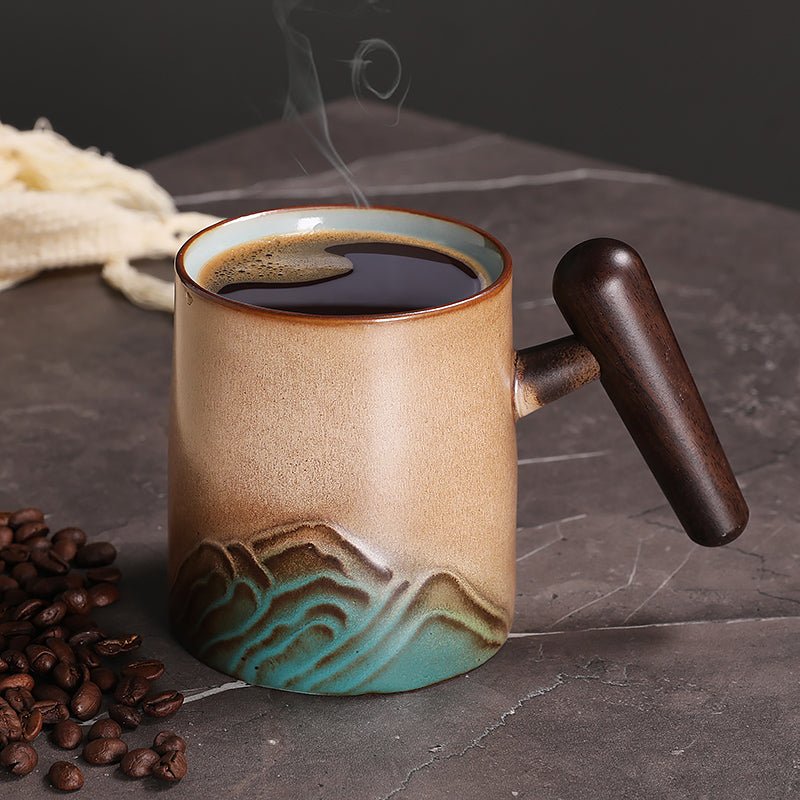
Large Coffe Mugs: How to Choose the Right Everyday Mug
A practical guide to large coffe mugs for everyday coffee, tea, and desk use. We cover size, shape, material trade-offs, and which styles make sense for different routines.
Подробнее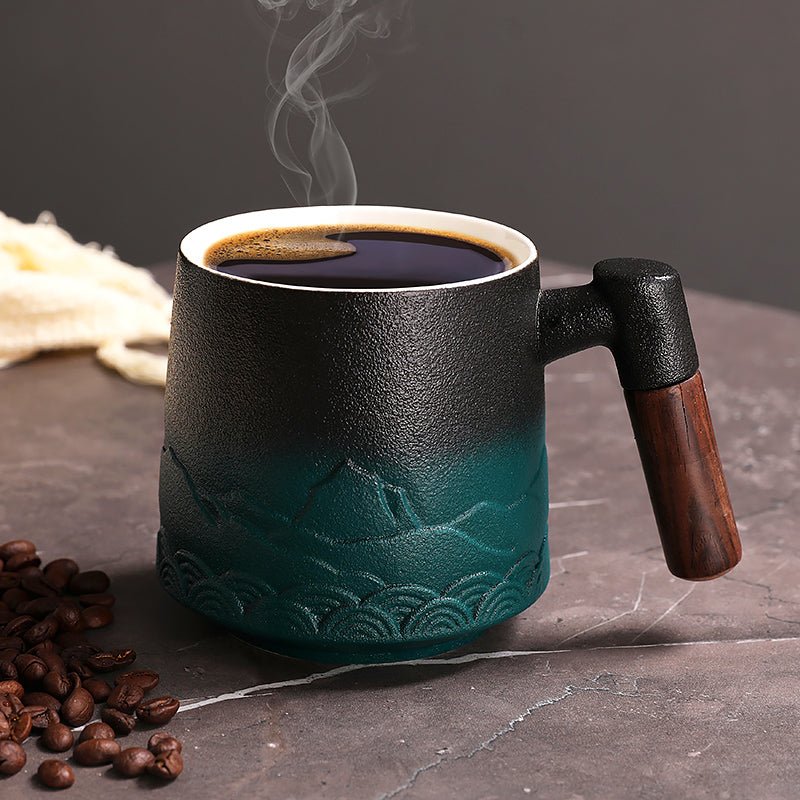
Longaberger Coffee Mugs: How to Choose the Right Style
A practical guide to longaberger coffee mugs, with buying checks, shape comparisons, and the mug details we inspect before shipping.
Подробнее
Оставить комментарий
Этот веб-сайт защищается hCaptcha. Применяются Политика конфиденциальности и Условия использования hCaptcha.