
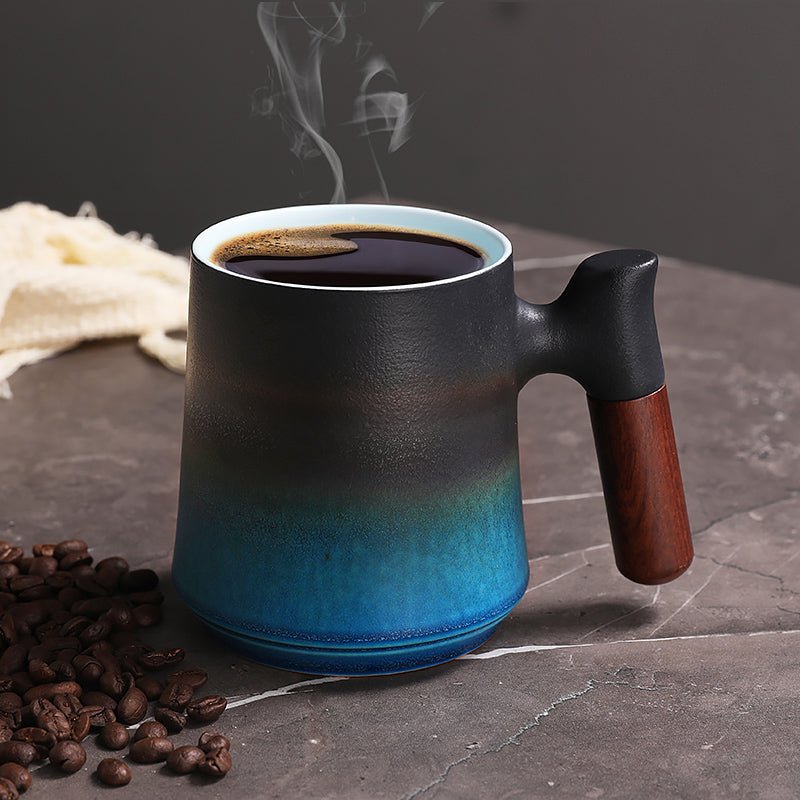
Coffee Mug Hooks: What Fits, What Holds Up, and What to Buy
Reading time: about 8 minutes
A mug can look perfect on the shelf and still be annoying on a hook. The handle catches too shallow, the cup swings into the cabinet door, or the rack sits low enough to crowd the coffee maker. That is the difference between a setup people use every day and one that ends up storing dish towels instead.
We see this a lot in our store. Shoppers want coffee mug hooks for a cleaner countertop, but the best result depends on three things: the mug handle, the hook depth, and the space under the cabinet. If you are building a full coffee station, start with our collection of mugs and compare shapes before you choose the hook layout. For a real-world example of a handle-friendly mug, look at the Mountain Sea II Coffee Tea Mug with Wooden Handle.
What do coffee mug hooks need to fit correctly?
The first check is simple: the hook has to sit far enough forward for the mug handle to rest naturally, not at an angle. If the hook is too shallow, the mug tips and rubs the cabinet edge. If it hangs too low, it starts competing with your kettle, espresso machine, or under-cabinet lighting.
In practice, fit comes down to the mug handle shape, the thickness of the cabinet bottom, and how much clearance you have below the rail. A slim porcelain mug is easier to hang than a wide stoneware mug with a chunky handle. Gift mugs can be a mixed bag too. A seasonal piece like the Christmas Coffee Tea Mug may work well if the handle is balanced, but decorative shapes can be awkward if the handle opening is tight.
If you want a more technical fit check, our related guides Coffee Mug Hooks Under Cabinet: Fit, Materials, and Buyer's Guide and Coffee Mug Hooks: What to Check Before You Buy go deeper on cabinet clearance and hardware choices.
Which hook materials and mounting styles hold up best?
We usually narrow it to three practical options: stainless steel, powder-coated steel, and adhesive-backed hooks. Each has a place. None is perfect for every kitchen.
| Hook type | Best use | What to watch for |
|---|---|---|
| Stainless steel | Busy kitchens, steam, frequent washing | Can still show fingerprints and water spots |
| Powder-coated steel | Dry kitchens and display-friendly setups | Finish can chip where mugs swing or scrape |
| Adhesive hooks | Rental spaces or light-duty use | Needs a smooth, clean, grease-free surface |
Screwed-in rails are still the most forgiving option if you use the rack every morning. Adhesive systems can work, but only on a flat cabinet bottom that has been degreased and fully dried. Steam from a kettle, backsplash grease, and dust can all shorten adhesive life. That is why we do not recommend adhesive hooks for a heavy mug lineup or a cabinet that sees a lot of moisture.
If your kitchen gets warm and humid, stainless steel is the safer long-term choice. If you want the rack to blend in visually, powder-coated finishes can look cleaner, but they need a little more care at the hook tip and mounting points. For shoppers comparing styles across our store, the full mug collection is a good way to check whether the cups you own are lightweight enough for the setup you have in mind.
Which mugs actually hang cleanly on hooks?
Not every mug belongs on a hook. That is the honest answer. A mug with a narrow handle opening, a very thick wall, or an oversized body can feel unstable even if the hook itself is fine. The easiest mugs to hang are usually standard ceramic cups with a handle that lets the hook settle near the center of gravity.
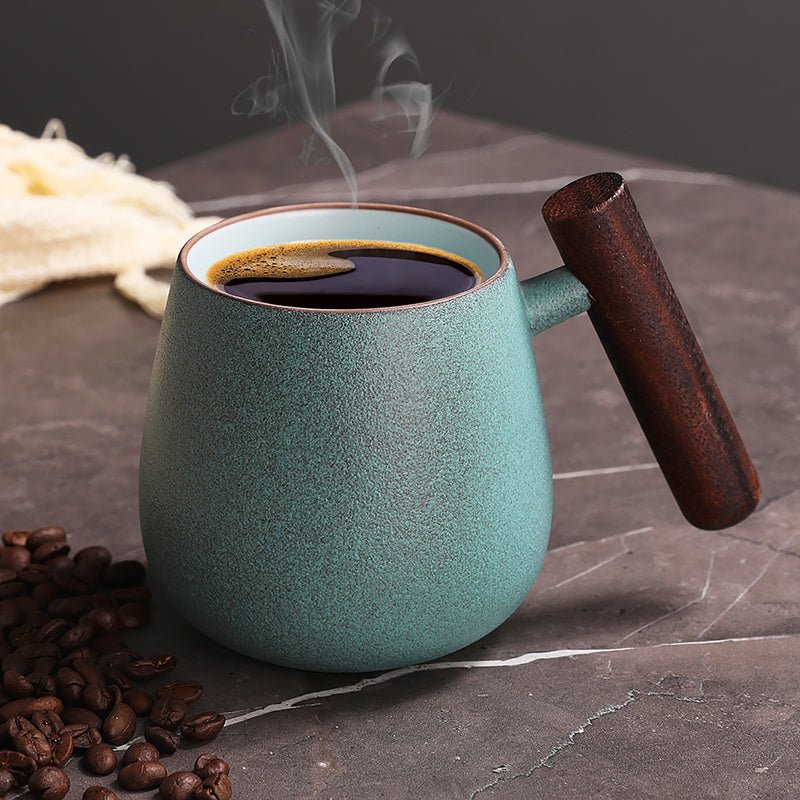
In our experience, the best candidates are everyday mugs that are comfortable to lift and not too top-heavy. A piece like the Green Waves Coffee Tea Mug is the sort of mug shoppers often choose for display and daily use because the shape is straightforward. A mug with a wooden handle, such as the Mountain Sea II Coffee Tea Mug with Wooden Handle, can also be a good fit if the hook surface is smooth enough not to mark the handle.
These are the cases where coffee mug hooks are not a great choice:
- Very large travel mugs with bulky lids and thick handles.
- Heavy stoneware mugs that pull forward and swing when removed.
- Mugs with delicate painted handles that may chip if they rub a metal hook.
- Cabinets with short lips where the hook rail sits too close to the edge.
If you are buying as a gift, remember that the mug and the storage plan should match. A decorative mug can look great in the box and still be a poor hook candidate if the handle is too narrow or the cup is too tall for the available clearance.
Where should you place coffee mug hooks in a kitchen or office?
The best location is usually the one that keeps the mug within arm's reach of the coffee maker without blocking the workflow. Under a cabinet next to an espresso machine works well because the mugs stay dry and easy to grab. Over a desk in an office kitchen, a hook rail can keep the countertop open for a kettle, sugar bowl, or small milk frother.
We usually recommend checking three things before mounting:
- Measure the distance from the cabinet bottom to the counter so the mug does not crowd the appliance below.
- Check the cabinet edge for crown molding or trim that could prevent a flush mount.
- Test whether the mug can swing slightly without hitting a wall, backsplash, or cabinet door.
That last point matters more than people expect. A mug that clears the hook while hanging still may collide when you pull it off with one hand. This is one reason we tell shoppers to treat the hook setup as a system, not just a hardware purchase. The mug shape, handle position, and mounting height all need to work together.
What problems should you watch for before buying?
The common failure modes are usually small, not dramatic. A hook that is slightly too narrow, a finish that chips after a week of daily use, or adhesive that loosens after steam exposure can turn a neat setup into a nuisance.
Look for these warning signs before you buy:
- Sharp welds or unfinished hook tips that can mark ceramic handles.
- Hook spacing that is too tight for wider mug handles.
- Mounting hardware that does not match the cabinet material.
- Coatings that look decorative but thin enough to wear through where cups rub.
- Adhesive instructions that do not require cleaning and drying the surface first.
Care matters too. A simple wipe with mild soap and a dry cloth keeps the rail from building up kitchen grease. If the rack sits near a coffee grinder or stovetop, check it once in a while for dust and steam residue. The mugs themselves can go through dishwasher cycles if they are dishwasher-safe, but the hook hardware usually needs hand care. Do not soak it. Do not leave water pooled around the mounting points.
If you want a broader buying checklist, the article Coffee Mug Hooks Under Cabinet: What to Check Before You Buy is a useful follow-up before you commit to a specific rail.
How do you compare options before you click buy?
Use this short checklist if you want to avoid the usual mismatch:
- Confirm the mug handle opening can clear the hook without forcing it.
- Choose stainless steel if the area sees steam, splashes, or frequent cleaning.
- Pick a screw-mounted rail if the mugs are heavy or used daily.
- Use adhesive only on a smooth, dry surface and only for lighter loads.
- Leave enough gap so the mug does not touch the cabinet door or the counter appliance below.
We keep coming back to the same point because it is the one shoppers regret skipping: measure first, then choose the mug. A hook can be the right hardware and still be the wrong setup if the cup is too broad, too tall, or too heavy for the space. That is why we suggest comparing your current mugs against the shapes in our store before you choose the mounting style.
Frequently asked questions
Will coffee mug hooks hold standard ceramic mugs?
Yes, most standard ceramic mugs work well as long as the handle fits the hook and the mug is not overly top-heavy. The safest matches are mugs with balanced handles and a body shape that hangs close to vertical. Very wide or very heavy mugs are more likely to swing.
Are adhesive coffee mug hooks strong enough for daily use?
They can be, but only for light-duty setups on a clean, flat surface. Steam, grease, and repeated mug movement can weaken adhesive over time. For daily use in a kitchen, a screw-mounted rail is usually the more dependable choice.
How much space do I need under the cabinet for coffee mug hooks?
You need enough room for the mug to hang freely without hitting the counter, appliance, or cabinet door. The exact clearance depends on the mug height and the hook depth, so it is better to measure your tallest mug before buying. If the cabinet area is tight, choose a shallower hook layout.
Do coffee mug hooks scratch mug handles?
They can if the hook tip is rough, the finish chips, or the mug swings hard when removed. Smooth hardware and careful spacing reduce that risk. Wooden handles need extra care because metal-on-wood contact can still leave marks over time.
What kind of mug is easiest to hang on a hook?
A medium-weight ceramic mug with a comfortable, open handle is the easiest. The mug should hang without tilting far forward and should clear nearby cabinets or appliances. Handle shape matters as much as body size.
If you are comparing options right now, start with the mug shape you already use every day, then check the hook depth and mounting style against it. From there, browse the full collection and pick the cups that will actually hang cleanly in the space you have.
Read more
Mikasa Coffee Mugs: What to Check Before You Buy
A practical buyer guide to Mikasa coffee mugs, with the details that affect daily use: material, size, handle comfort, care, and where they fit compared with similar mugs.
Подробнее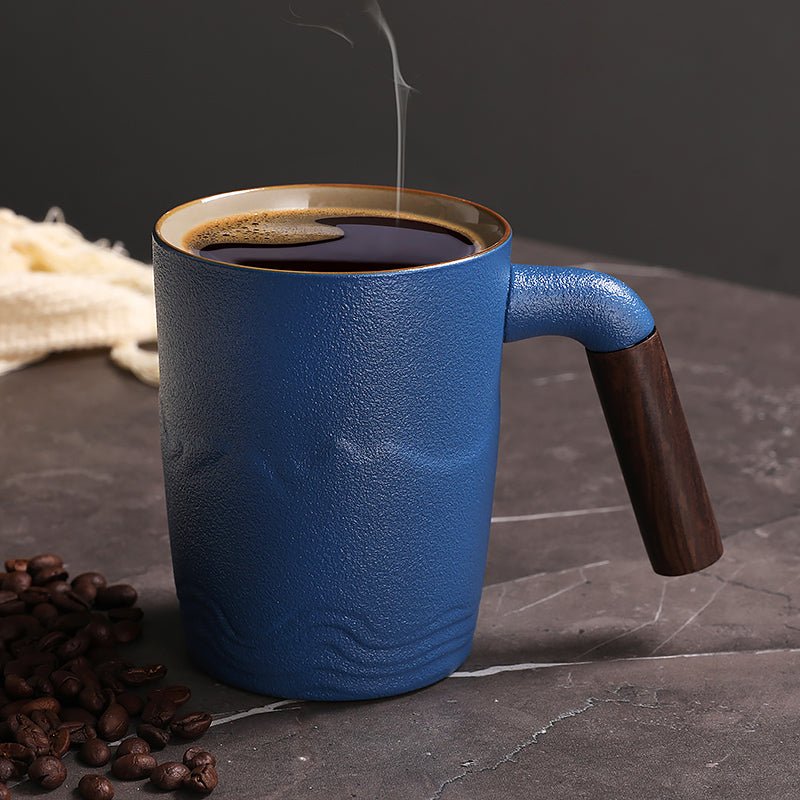
Coffee Mugs Used on the Show Psych: How to Pick One You'll Actually Use
People searching for coffee mugs used on the show Psych usually want the same quirky feel without buying a mug that sits unused. We break down shape, size, finish, and which CoffeifyMug options fit...
Подробнее
Оставить комментарий
Этот веб-сайт защищается hCaptcha. Применяются Политика конфиденциальности и Условия использования hCaptcha.