
Ceramic vs Porcelain Coffee Mugs Daily Use Guide: Trade-Offs
Reading time: about 9 minutes
A mug can feel fine for the first sip and irritating by the third refill: the handle presses a knuckle, the body becomes tiring once full, or the rim knocks against a dishwasher rack. This ceramic vs porcelain coffee mugs daily use guide focuses on those daily-use moments. In our store, we separate the material label from the parts shoppers actually live with: clay body, wall thickness, rim, handle clearance, foot ring, glaze, and care directions. Porcelain is a ceramic, so the practical comparison is usually porcelain versus the stoneware or earthenware that many retail listings call ceramic.
Ceramic vs porcelain coffee mugs daily use guide for the 7 a.m. rush
General material guidance: Porcelain commonly uses a refined, kaolin-rich body fired until it becomes dense and vitrified. That allows relatively thin walls and crisp rims, although a particular porcelain mug can still be thick. Stoneware and earthenware are also ceramics. In retail, the unqualified word ceramic often points to these broader bodies, which are frequently thicker and heavier, but the individual listing must settle the question.
| Daily-use variable | Typical porcelain tendency | Typical broader ceramic tendency | What to verify |
|---|---|---|---|
| Hand feel | Can be thinner and lighter for its external size | Often feels thicker and more substantial | Empty weight, wall profile, and handle dimensions |
| Sipping edge | A crisp, relatively fine rim is common | A rounded or thicker rim is common | Close product photos and stated dimensions |
| Temperature | A thin wall warms quickly and may transfer heat to the hand sooner | A heavier wall absorbs more heat at first and can provide more thermal mass once warm | Wall thickness, beverage volume, and whether you prewarm the mug |
| Damage points | A dense body can still chip at a thin rim | Extra thickness does not prevent chips at the rim, foot, or handle joint | Rim condition, handle attachment, and care instructions |
| Appearance | Often smooth, bright, and refined | Offers a wide range of glazes, textures, and visual weight | The current product photos and variant details |
These are tendencies, not promises. Wall thickness and mass can affect daily comfort more than the material name. A thick porcelain mug may feel heavier than a slim stoneware cup, and neither material is immune to impact or thermal shock.
Which material feels better from breakfast to the office?
The answer changes with the way you drink. We see fewer poor matches when shoppers picture one normal day instead of choosing from material reputation alone.
- Quick black coffee before work: A lighter porcelain mug can feel easy to lift and quick to rinse. A thin body may also feel hot near the bowl, so handle comfort still matters.
- A drink that sits beside a keyboard: A thicker ceramic body may feel stable and substantial. It can absorb noticeable heat from the first pour, so warming the mug with warm water can help if its care directions allow it.
- Tea with smaller sips: Some drinkers prefer a finer porcelain rim because it feels precise at the lip. Others prefer the softer feel of a rounded ceramic rim.
- Latte, cocoa, or a larger serving: Capacity, loaded weight, and handle clearance become more important than the material label. A large mug that is comfortable empty may feel very different after filling.
- Iced coffee: Neither material provides vacuum insulation. Avoid abrupt temperature changes, such as moving a very cold mug directly to a boiling-hot fill, because both ceramic and porcelain can crack from thermal shock.
For a drink that stays on the desk for an hour, shape and volume deserve equal attention. A lid or insulated tumbler will usually control temperature and spills better than either open-mug material.
Which CoffeifyMug style fits a real daily routine?
Product-specific guidance: A design name does not prove material, capacity, or dishwasher compatibility. The current product page remains the source of truth for those details, so our recommendations below stay tied to the visible style and intended coffee-or-tea use.
A familiar shape for switching between coffee and tea
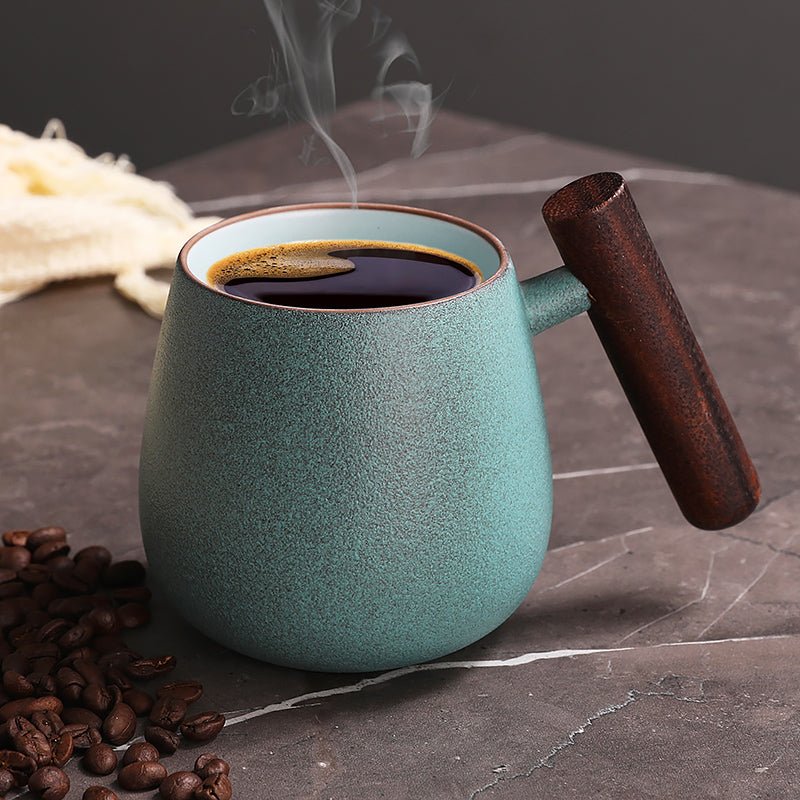
If your routine is drip coffee at breakfast and tea later, and you prefer a familiar curved silhouette, start with the Round Coffee Tea Mug. The round styling is the reason to consider it. It is not automatically the best fit for someone who needs a confirmed porcelain body, a particular brewer clearance, or an exact usable capacity without first checking the current page details.
A textured option for an open shelf or gift
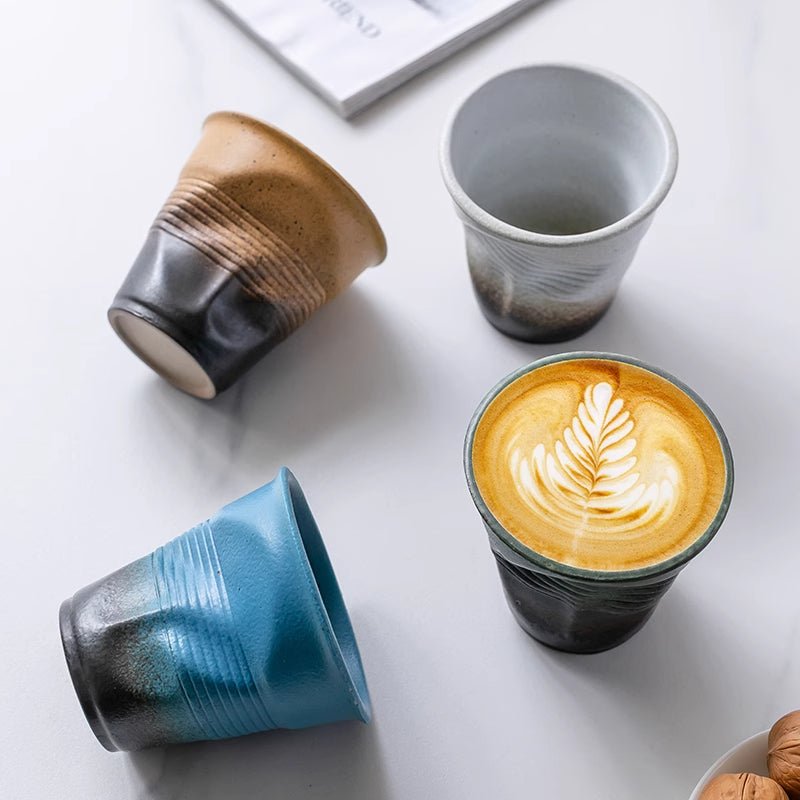
If surface detail is part of the buying decision, the Pleated Coffee Tea Cup gives you a clearly defined design direction. That can suit a gift unboxing or a kitchen where the cup remains visible between uses. It is not the natural choice for a shopper who wants a completely plain exterior, and any textured profile deserves a closer look if quick wipe-down care or tight stacking is essential.
A decorative mug for a personal desk
The Landscape Coffee Tea Mug makes more sense for a shopper who wants visual character rather than an anonymous shared-kitchen cup. It can be a useful starting point for a personal desk or a decorative gift. A neutral, matching cupboard set may call for a simpler style, and shoppers should still confirm material and care information on the product page.
If you have not settled on round, textured, or illustrated styling, compare the broader unique coffee mugs collection. Open two or three likely options side by side, then compare their listed material, dimensions, care, and variants instead of deciding from the first photograph.
Rim thickness, loaded weight, and handle clearance
Online shoppers cannot perform the usual hand test, so dimensions and close product photographs have to do more work. Capacity alone is not enough. Check these five details before ordering:
- Usable capacity: A brim measurement is not the same as a comfortable fill with room to walk from the counter to a desk. If 12 oz is your target, use our 12 oz ceramic coffee mug daily-use comparison to think through serving size and headspace.
- Loaded weight: Add the drink to the empty mug in your mental comparison. This matters for larger servings, wrist sensitivity, and repeated refills.
- Handle opening: Look for inner height and width, not just an oversized-looking handle in a styled image. Our guide to ceramic coffee mugs with large handles covers the grip trade-offs in more detail.
- Height and mouth diameter: Height affects clearance under some coffee makers, while mouth diameter affects cleaning access, cabinet space, and dish-rack placement.
- Rim and foot profile: A fine rim can feel elegant but needs care around other dishes. A stable foot should sit flat without an irritating rock on a hard desk.
What happens after repeated dishwasher and microwave use?
Material names do not establish appliance safety. Follow the care statement on the current product page, especially if a mug has decals, specialty finishes, or metallic-looking decoration. A porcelain mug is not automatically microwave-safe, and a thick ceramic mug is not automatically dishwasher-safe.
- Inspect on arrival: Run a fingertip carefully around the drinking rim, look at the handle joints under side light, and set the mug on a flat counter. Sharp chips, visible cracks, or an unstable base should be addressed before regular use.
- Load with clearance: If dishwasher use is permitted, place the mug where its rim and handle cannot strike plates or rack posts during the cycle. Repeated hard contact is a common route to rim and handle damage.
- Avoid thermal shock: Do not take a very cold mug and immediately add boiling liquid, or place a very hot mug onto a cold or wet surface. Let temperature changes happen gradually.
- Watch the glaze: Crazing appears as a network of fine lines in the glaze, while a chip exposes the body beneath it. A sharp chipped drinking rim should not remain in daily rotation.
- Clean without grinding: Start with dish soap and a nonabrasive sponge. Aggressive scouring can mark some finishes, so check the care directions before using stain-removal powders or abrasive pads.
Glaze quality and decoration affect care as much as the clay beneath them. Our ceramic glazed coffee mugs daily-use guide explains what to inspect around the rim, interior, and foot ring.
Porcelain or ceramic for gifts, shared kitchens, and busy desks?
For a formal tea drinker or someone who prefers a light, crisp rim, confirmed porcelain may be the stronger gift direction. A decorative ceramic style can feel more personal for a casual coffee drinker, especially when texture or artwork is part of the choice. Neither route is ideal for a recipient who routinely drops cups or needs a mug for commuting.
In a shared office, prioritize a stable base, comfortable handle, recognizable design, and care instructions compatible with the office kitchen. At home, cabinet height and dishwasher layout may matter more. For a car, train, or crowded walk to work, choose a lidded travel vessel instead; an open ceramic or porcelain mug is not spillproof or insulated.
A 60-second comparison before you place the order
Use this ceramic vs porcelain coffee mugs daily use guide to eliminate poor fits, then confirm the live listing. The final check is short:
- Confirm the exact material instead of inferring it from color or design.
- Compare usable capacity, mug height, and mouth diameter with your brewer and cabinet.
- Check empty weight and handle opening against the way you grip a full mug.
- Read the dishwasher and microwave directions rather than assuming.
- Choose a rim and exterior finish that match your cleaning habits.
- Pick the visual style only after the daily-use requirements are covered.
Frequently asked questions
Is porcelain better than ceramic for everyday coffee?
Porcelain is not automatically better. It often suits shoppers who want a lighter body, smooth surface, and finer rim, while a thicker stoneware-style ceramic mug may suit someone who prefers more visual and physical weight. The better daily mug is the one with the right handle, capacity, dimensions, and approved care method.
Does porcelain keep coffee hotter than a ceramic mug?
Not by material name alone. Wall thickness, mug mass, beverage volume, starting temperature, opening size, and use of a lid all affect heat loss. A heavier ceramic mug may absorb more heat at first, while a thin porcelain mug may warm faster but also transfer heat more quickly through its walls.
Can ceramic and porcelain coffee mugs go in the dishwasher and microwave?
Some can, but the product's care instructions must confirm it. Glazes, decals, metallic decoration, and construction details can change what is safe even when the underlying body is ceramic or porcelain. Check both appliances separately because approval for one does not imply approval for the other.
How should I use this ceramic vs porcelain coffee mugs daily use guide before ordering?
Start with your most common drink, normal serving size, preferred grip, and cleaning routine. Use the material comparison to narrow the feel you want, then verify the selected product's material, dimensions, and care on its current page. Do not let a porcelain or ceramic label override a poor handle or capacity match.
Where should I compare CoffeifyMug styles if I still cannot decide?
Open the CoffeifyMug unique mug selection and shortlist one familiar shape plus one more decorative option. Compare the live material, size, care, and variant information for both before ordering.
Read more
Coffee Mug Wedding Gift Daily Use Guide: Practical Trade-Offs
Choose a wedding coffee mug for the couple's real drink routine, shelf space, care habits, and gift format. Compare tall, crane, and pleated styles without assuming capacity or dishwasher suitability.
Подробнее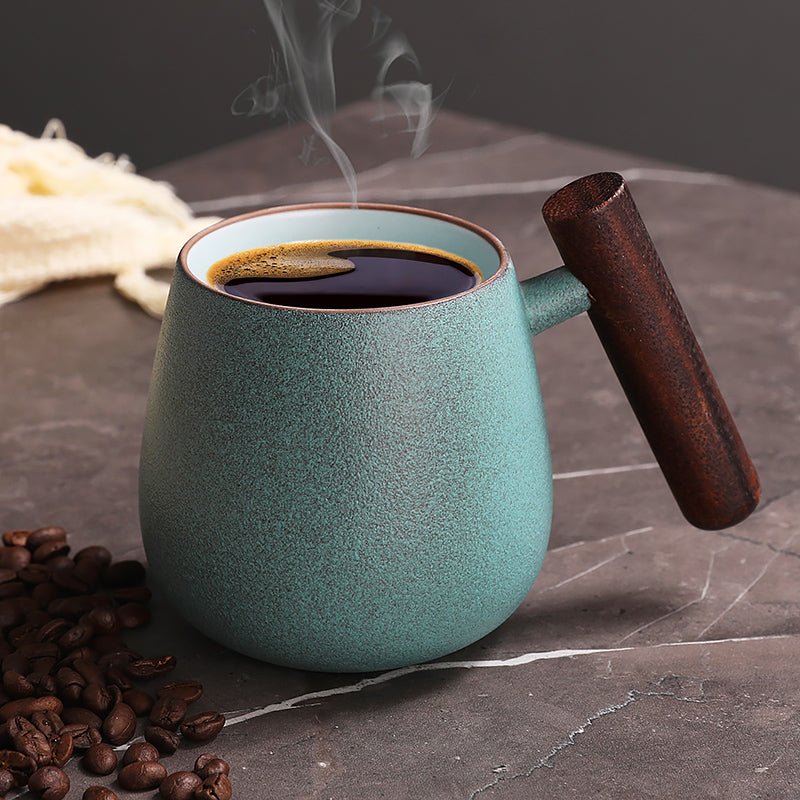
Ceramic Wide Bottom Coffee Mugs Daily Use Guide: Trade-Offs
See how a wide ceramic base affects desk space, cabinet fit, washing, and everyday handling. We compare three CoffeifyMug shapes and explain when another mug style is the better buy.
Подробнее
Оставить комментарий
Этот веб-сайт защищается hCaptcha. Применяются Политика конфиденциальности и Условия использования hCaptcha.