
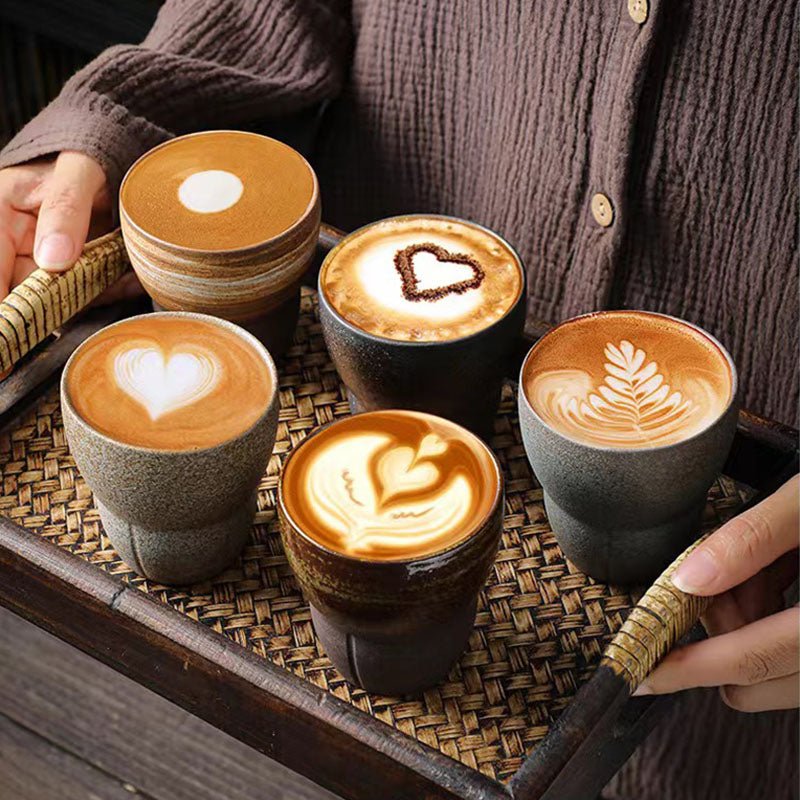
Cappuccino Coffee Mug Capacity Guide: 170, 200, and 270 ml
Reading time: about 8 minutes
The second trip from an office desk to the kitchen is usually where a too-small cup makes itself known. At the other end, a 150 ml drink can leave much more unused capacity than expected. The practical question behind this cappuccino coffee mug capacity guide is measurable: does your routine fit 170 ml, 200 ml, or 270 ml, and how often are you willing to refill?
Those are the three verified listing capacities we compare here. A coffee cup for cappuccino still needs to match your own beverage volume, so we do not treat any of these products as designed, tested, or certified specifically for cappuccino.
The cappuccino coffee mug capacity guide: what changes from 170 to 270 ml?
In our store, we find this comparison is clearest when the shopper starts with a measured pour rather than a familiar size label such as small or regular. The three current choices cover a 100 ml span, but the steps between them are uneven: 30 ml from Retro to Pleated, then 70 ml from Pleated to Emerald.
| Reader routine | Why the capacity may fit | Current listing |
|---|---|---|
| The usual pour sits comfortably below 170 ml, and another kitchen trip is not a problem | This is the smallest listed capacity and the closest match for a deliberately smaller serving | Retro Coffee Tea Cup, 170 ml |
| The usual pour is above 170 ml but comfortably below 200 ml | It adds 30 ml over Retro without moving to the 270 ml option | Pleated Coffee Tea Cup, 200 ml |
| The planned pour is above 200 ml but comfortably below 270 ml | It provides the largest listed volume and can support a larger amount per round | Emerald Coffee Tea Mug, 270 ml |
A listed capacity is a comparison point, not an instruction to fill a cup to the rim. Any space you prefer to leave at the top reduces the amount you will actually pour, so a drink equal to the listing figure is not an automatic fit.
For current availability and product details beyond these three capacity figures, review the unique coffee mugs collection before ordering.
Does 170 ml fit a smaller, repeat-pour routine?
The 170 ml Retro Coffee Tea Cup is the direct starting point for a shopper who deliberately makes a smaller drink and stays near the kitchen. If your measured serving is 150 ml, the listed capacity exceeds that amount by 20 ml on paper. At 180 ml, however, the listing is already 10 ml short before accounting for any space you prefer above the drink.
That makes Retro a poor fit for someone who regularly pours more than 170 ml or wants to minimize trips away from an office desk. Choose it when the situation is a smaller measured serving, the reason is its lowest listed capacity, and the next step is confirming the live Retro listing.
When is the 200 ml midpoint actually useful?
The 200 ml Pleated Coffee Tea Cup fits a narrow but useful middle routine. For a planned 185 ml pour, its listed figure is 15 ml above the beverage amount. Retro is 15 ml below that same amount, while Emerald provides 85 ml more listed capacity than the planned pour.
The trade-off is that Pleated adds only 30 ml over Retro, so it should not be treated as a dramatically larger option. It is most relevant when your measured drink repeatedly falls between 170 ml and 200 ml. It is not the best capacity match if you stay well below 170 ml or regularly need more than 200 ml.
Who gets a practical benefit from 270 ml?
The 270 ml Emerald Coffee Tea Mug is the current fit for a planned drink above 200 ml. A 240 ml serving, for example, is 30 ml below its listed capacity, while both smaller listings fall short on paper. Emerald offers 70 ml more than Pleated and 100 ml more than Retro.
This option can reduce refills only if you actually pour more into each round. It is not automatically better for a 150 ml routine, and its capacity does not establish its exterior dimensions, weight, or desk footprint. Open the Emerald listing first when your situation is a larger measured serving and your reason for changing cups is the additional listed volume.
How do two or three fills change the daily total?
Capacity affects refill patterns only when the amount poured per round changes. The table below shows simple multiples of each listing figure so you can see the difference without assuming a recommended serving size.
| Current option | 1 x listed capacity | 2 x listed capacity | 3 x listed capacity |
|---|---|---|---|
| Retro | 170 ml | 340 ml | 510 ml |
| Pleated | 200 ml | 400 ml | 600 ml |
| Emerald | 270 ml | 540 ml | 810 ml |
These totals are arithmetic comparisons, not recommended consumption amounts or promises of usable beverage volume. For a hypothetical 500 ml routine, the listed-capacity math reaches that total with three Retro rounds, three Pleated rounds, or two Emerald rounds. Leaving space at the top can increase the actual number of rounds.
There is another useful check: if you pour exactly 160 ml into every cup, all three create the same refill frequency. A larger listing reduces kitchen trips only when it leads you to increase the amount poured each time.
Is 200 ml the safest default for a gift or an unknown routine?
Not automatically. The midpoint is useful only if the recipient's real serving falls in that range. A capacity mismatch becomes apparent as soon as the recipient makes the drink they prepare every day, even if the cup otherwise suits the occasion.
- Fill the recipient's current cup with cool water to their normal beverage level, not to the rim.
- Transfer the water to a graduated measuring jug and read the milliliters at eye level.
- Compare that measured pour with 170 ml, 200 ml, and 270 ml while preserving the space the recipient normally leaves at the top.
If the measured amount is above 170 ml but below 200 ml, Pleated has a clear capacity reason to be the first listing you inspect. If you cannot measure the current cup, ask whether the recipient prefers a smaller serving, a larger single pour, or frequent refills. Do not assume the middle capacity is universally safer.
What can capacity not tell you about everyday cup fit?
We keep these limits explicit because a capacity number cannot answer every buying question. This comparison does not establish the following details:
- Exterior size: Listed milliliters do not confirm height, diameter, handle clearance, cabinet fit, or clearance under a coffee machine.
- Material: Do not infer ceramic construction or another material from a capacity figure, product name, or image alone.
- Care: Capacity does not establish microwave or dishwasher safety. Check the current listing for any available care information.
- Beverage performance: We are not using these figures to claim heat retention, foam performance, or a particular coffee-to-milk ratio.
- Specialized use: None of the capacity facts proves that a product was designed, tested, or certified for cappuccino or professional barista use.
For a wider volume framework, read our coffee mug sizes guide for daily use. If material is also part of your search, our separate cappuccino coffee mug guide to ceramic cup sizes addresses that broader category question. This capacity comparison does not assign a material to Retro, Pleated, or Emerald from volume data alone.
Which current listing should you open first?
- Measured pour comfortably below 170 ml: Start with the Retro 170 ml listing because it is the smallest current capacity and best matches a deliberately smaller routine.
- Measured pour above 170 ml but below 200 ml: Start with the Pleated 200 ml listing because its extra 30 ml resolves the specific capacity gap between the two smaller choices.
- Measured pour above 200 ml but below 270 ml: Start with the Emerald 270 ml listing because it is the only current option whose listed capacity reaches that range.
- Measured pour above 270 ml: None of these three is a fit based on listed capacity. Review the current mug collection and verify each listing rather than forcing a smaller option into the routine.
If your measured beverage lands exactly on 170 ml, 200 ml, or 270 ml, pause before selecting that matching figure. Any preferred space above the drink may make the next listed capacity more practical.
Frequently asked questions
What capacity is best for a cappuccino coffee mug?
There is no universal best capacity because personal recipes and preferred fill levels differ. Measure the total beverage you actually pour, preserve your usual space at the top, and then compare that figure with the current 170 ml, 200 ml, and 270 ml listings.
How much larger is the Pleated cup than the Retro cup?
Pleated is listed at 200 ml and Retro at 170 ml, so the difference is 30 ml. That is a modest step and is most useful when your normal serving falls just above the Retro listing rather than far beyond it.
Will the 270 ml Emerald mug mean fewer refills?
Only if you pour more per round. If you place the same 160 ml amount in Retro, Pleated, and Emerald, the refill count stays the same; the larger capacity creates a refill advantage only when your actual serving increases.
What does the cappuccino coffee mug capacity guide verify?
It verifies the listed 170 ml Retro, 200 ml Pleated, and 270 ml Emerald capacities and compares the refill arithmetic created by those values. It does not verify cappuccino-specific design, material, exterior dimensions, heat retention, foam behavior, or care safety.
What should I check immediately before buying?
Write down your usual pour in milliliters, the space you leave above it, and the number of refills you accept during a normal kitchen or office routine. Use those three checks to choose a capacity band, then open the CoffeifyMug collection and confirm the live product details before placing the order.
More from our blog
Read more
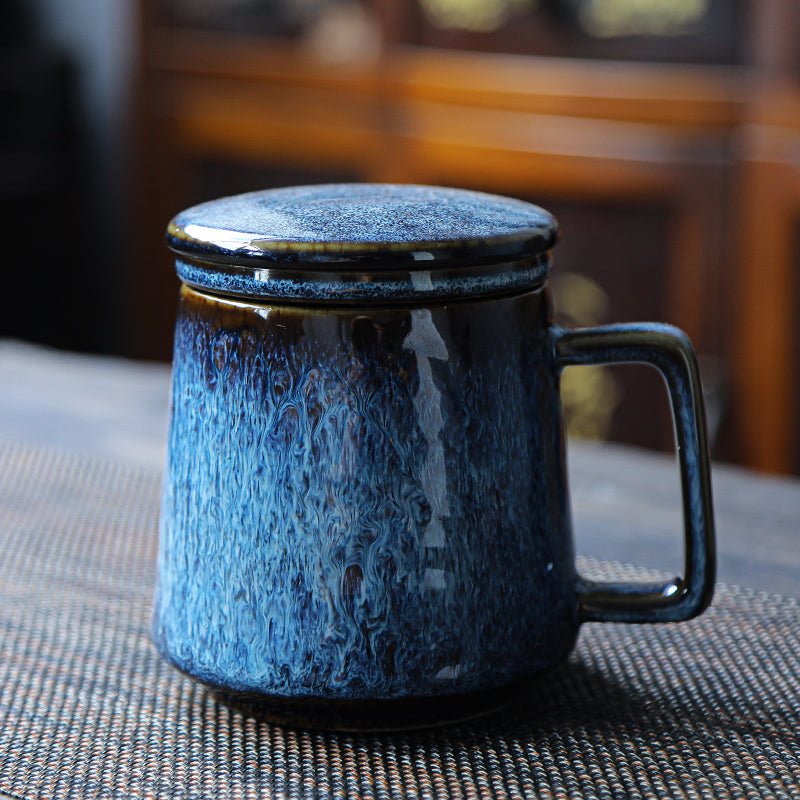
Thick ceramic coffee mugs capacity guide: Daily fit
Compare The Flow, The Rock, and Spittoon by listed capacity, common coffee-machine pours, refill frequency, and practical headroom for milk, foam, or carrying a full mug to your desk.
Подробнее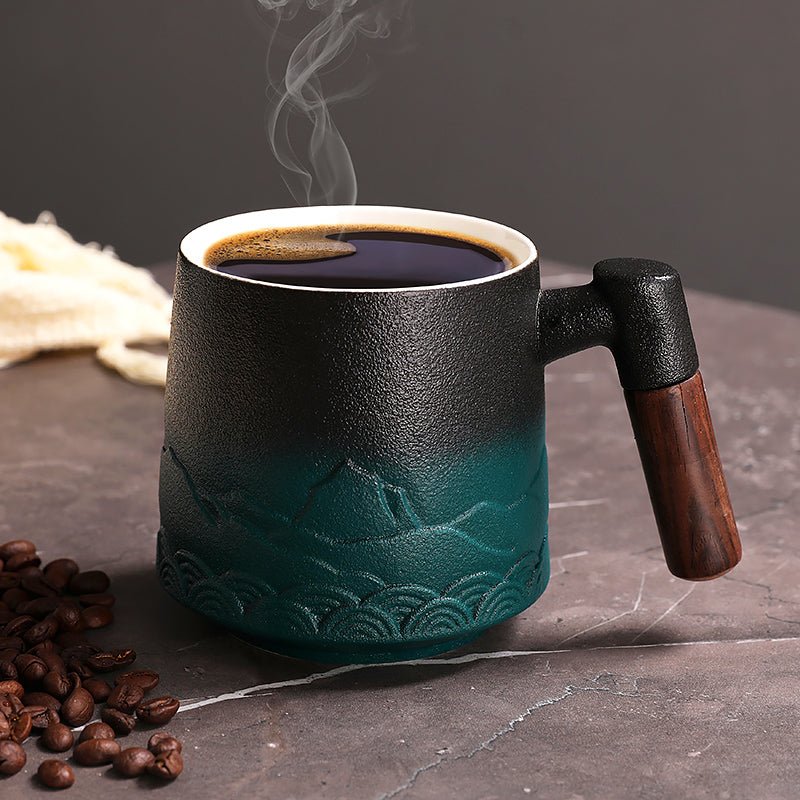
Coffee Mug Gift Idea Capacity Guide: 400, 440, or 480 ml?
Compare three current mug capacities by refill habits, desk use, drink add-ins, and gift fit. This guide also explains what listed capacity does not tell you about usable fill level or care.
Подробнее
Оставить комментарий
Этот веб-сайт защищается hCaptcha. Применяются Политика конфиденциальности и Условия использования hCaptcha.