
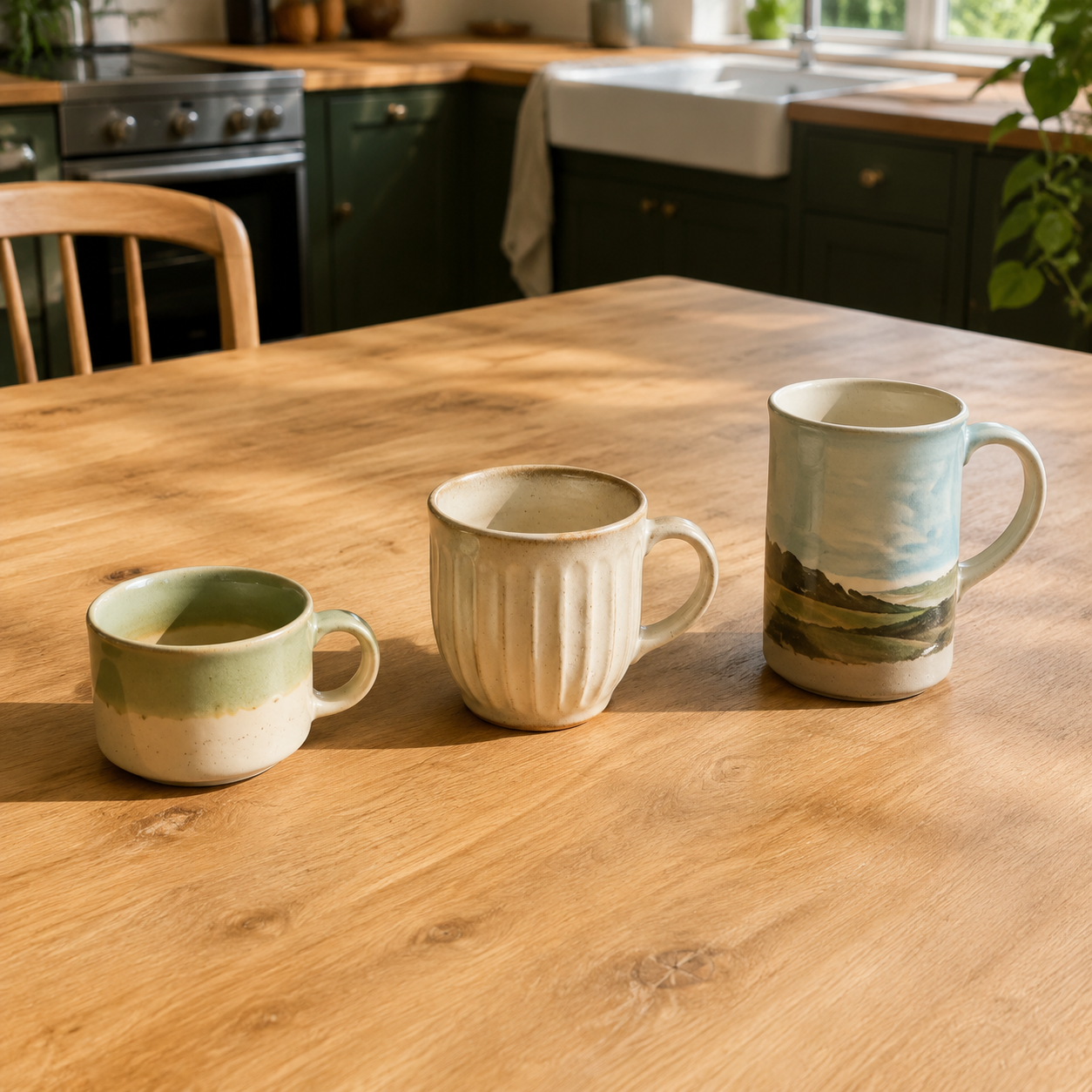
Breakfast Coffee Cup Buying Guide: Capacity, Shape, and Table Fit
Reading time: about 9 minutes
The first sign that a cup is wrong for breakfast usually appears before the first sip. Its handle crowds the plate, the body blocks a view across a small table, or the coffee is gone before the toast is ready. A breakfast coffee cup needs to suit more than a favorite roast: it has to match your normal pour, your willingness to refill, and the usable space around a place setting. In our store, shoppers often begin by comparing the look of a cup, then realize the more useful comparison is 170 ml versus 200 ml versus 350 ml.
Those listed capacities create three genuinely different routines. They do not, however, tell you everything about a cup's width, rim opening, material, or dishwasher guidance. Treat capacity as the starting point, then check the current product listing for the measurements and care details that affect your kitchen.
How much coffee should your first breakfast pour hold?
A listed capacity is the cup's full internal volume, not necessarily the amount you will enjoy drinking. Filling any cup to the rim leaves little room to carry it, add milk, or avoid a splash on the way from counter to table. For a breakfast drink, most buyers should think about the drink they actually make rather than the maximum amount a vessel can contain.
A smaller cup supports a deliberate first serving and a fresh refill. A larger cup reduces trips back to the kitchen, which can be useful on a busy workday, but it also means committing to a longer drink. If you take coffee black and prefer it hot, a smaller serving can make sense because you finish it sooner. If your breakfast cup includes milk or you sip while answering email, more headroom is useful.
We also recommend separating two questions that are often treated as one: “How much do I drink?” and “How much table space can I spare?” A cup can have a modest capacity with a wide body, while a taller shape can carry more volume without automatically taking a broader base footprint.
170 ml, 200 ml, or 350 ml for a breakfast table?
The capacity gap between the Retro and Pleated options is only 30 ml. The step from 200 ml to the Landscape Tall option is 150 ml, and the gap between the smallest and largest listed options is 180 ml. That makes the first comparison a close choice and the last one a change in routine.
| Listed option | Reader situation | Why it fits | Table-fit trade-off and next step |
|---|---|---|---|
| Retro, 170 ml | You like a compact coffee beside breakfast and do not mind a refill. | The smaller listed volume suits a focused first cup, especially for black coffee or a short coffee-and-milk drink. | Its 170 ml capacity is not designed for a large, lingering pour. Check the current dimensions, then see the 170 ml Retro Coffee Tea Cup. |
| Pleated, 200 ml | You want a moderate cup without moving into large-mug territory. | The additional 30 ml over the Retro can be enough for a little more coffee or milk while retaining a conventional cup-sized serving. | It is still not the best match for buyers who regularly want one very large breakfast drink. Compare the 200 ml Pleated Coffee Tea Cup. |
| Landscape Tall, 350 ml | You prefer one generous pour and fewer mid-breakfast refills. | At 350 ml, it gives substantially more room for a larger coffee, tea, or a milkier drink. | A tall 350 ml cup may need more vertical clearance in a cabinet or dishwasher rack. Review the 350 ml Landscape Tall Coffee Tea Mug for its current dimensions. |
If your choice is driven mainly by visual character after capacity is settled, browse the wider unique coffee mugs collection. It is a better next step than trying to force a 170 ml cup to do the work of a 350 ml mug, or the reverse.
How much table space does a breakfast coffee cup need?
Footprint means the space a cup occupies on the table, including the practical reach of its handle. Capacity is measured in milliliters; footprint is determined by the base diameter, widest body point, and handle projection. Do not assume that a higher-capacity cup has a wider base, and do not assume that a smaller-capacity cup will automatically sit tighter against a plate.
Before ordering, use your own breakfast setup as the test surface. A narrow apartment table, a tray, and a desk used for coffee all make handle clearance more important than a large family table does.
- Place your usual plate where it sits at breakfast, then measure the clear space beside it rather than the full width of the table.
- Allow room for the handle to point outward without crossing into another person's place setting or catching a sleeve.
- Check the height between your cabinet shelf and the shelf above it if you are considering the tall 350 ml format.
- For an office desk, leave a stable landing area away from a keyboard, charging cable, and the edge of the work surface.
The word “Tall” in Landscape Tall describes an important shape cue, but it does not replace a measurement. Read the current product dimensions before making a decision based on shelf fit or a cramped breakfast nook. For a broader look at how cup and mug forms affect daily use, our coffee cup and mug buying guide explains where a traditional cup stops being the more practical choice.
Does cup shape change the breakfast drinking experience?
Yes, although the effect is more practical than decorative. The rim opening affects how a drink meets your mouth and how quickly the surface is exposed to air. Body height affects cabinet clearance and the visual line across a breakfast table. The handle's position and opening determine whether you can pick up the cup comfortably with dry hands while clearing a plate with the other.
A compact 170 ml choice is often easier to place beside a bowl or small plate because its intended serving is modest, but it is not good for buyers who routinely add a large amount of milk or want a single oversized drink. The 200 ml Pleated option sits in the middle: it is a sensible choice for a regular breakfast cup, but it will still require a refill for a long morning. The 350 ml Landscape Tall mug gives room for a larger serving, but it is less suitable for someone who dislikes holding a full, taller cup or tends to leave coffee sitting until it cools.
For drinks built around a larger coffee-and-milk proportion, compare your breakfast needs with the points in our cafe au lait mug buying guide. That comparison can prevent a common mistake: choosing a visually appealing compact cup, then finding there is no comfortable headroom for the drink you make every morning.
What should you inspect before the first wash?
Capacity and silhouette cannot make up for a rough drinking edge or an unstable base. The first inspection is simple and takes less time than dealing with a return after a few uses. Set the empty cup on a flat counter and check that it sits without rocking. Run a clean fingertip carefully around the rim and look inside under good light for an area that feels rough, a visible pinhole, or an irregularity where the handle joins the body.
Material is also a care decision, not something to guess from a product photo. Many coffee cups in this category use glazed ceramic, but buyers should rely on the material and care information on the current item page rather than assume every cup has the same dishwasher or microwave suitability. For any glazed ceramic cup, sudden temperature changes are a known risk: avoid moving a chilled cup directly under boiling water, and let a hot cup cool before rinsing it in very cold water.
- Wash the first time with mild dish soap and a non-abrasive sponge.
- If the product listing confirms dishwasher suitability, position the cup so it cannot knock against heavier items during the cycle.
- Do not use a cup with a sharp rim chip, a developing crack at the handle junction, or a damaged base that scratches the table.
- Keep the original packaging until you have checked the cup after unboxing, especially when it is intended as a gift.
For buyers moving from tiny coffee servings into a breakfast-sized option, our ceramic espresso cup guide provides a useful contrast. An espresso-sized format is purpose-built for a much smaller serving and is not a substitute for a breakfast cup merely because both hold coffee.
Which CoffeifyMug option suits your normal breakfast routine?
Use the decision in the same order you would use the cup. First, decide if you want one serving or a refill. Next, check the clear space beside your plate and the available shelf height. Finally, choose the design that you will enjoy reaching for every day.
- Choose the Retro 170 ml option if your breakfast coffee is intentionally small, you value a compact serving, and a refill is part of your routine.
- Choose the Pleated 200 ml option if you want a middle ground with 30 ml more listed capacity than the Retro without committing to a large mug format.
- Choose the Landscape Tall 350 ml option if a generous first pour matters more than compact storage and you have checked its height against your cabinet or rack.
For gifting, think about the recipient's real habits rather than the occasion alone. A compact cup can feel considered for someone who enjoys a short morning coffee; a 350 ml mug is more useful for a person who carries one drink through breakfast and the first part of the workday. A gift unboxing should reveal something that fits their routine, not a cup that looks right but sits unused.
Frequently asked questions
Is a 170 ml cup too small for breakfast coffee?
Not if you prefer a short, fresh serving and are comfortable refilling. The 170 ml Retro option is a poor fit for someone who normally adds a substantial amount of milk or expects one cup to last through a long breakfast. Remember that practical fill volume is lower than total capacity when you leave room below the rim.
Is a 350 ml tall mug practical on a small breakfast table?
It can be, but capacity does not prove a small footprint. Check the current product dimensions, handle reach, and cabinet clearance before choosing the Landscape Tall 350 ml mug. Its larger listed volume is useful for fewer refills, while a compact setup may favor a smaller format.
How can I check a cup's footprint before ordering?
Use the listed width or diameter together with handle clearance, not capacity alone. Compare those measurements against the empty space beside your normal plate or on your desk. Also check height if the cup will be stored under a low shelf or placed in a dishwasher rack.
What breakfast coffee cup capacity works if I add milk?
A 200 ml or 350 ml option generally gives more flexibility than a 170 ml cup because milk uses part of the available volume. The better choice depends on how much coffee you pour before adding milk and whether you prefer one large drink or a smaller refill. Do not fill any cup to the rim just to reach its listed capacity.
For a final check, write down your usual pour, the amount of room beside your breakfast plate, and the height of the storage space at home. Match a short, refill-friendly routine to 170 ml, a moderate routine to 200 ml, or a larger one-pour routine to 350 ml, then return to the CoffeifyMug unique coffee mugs collection to choose the shape that belongs in that space.
Read more
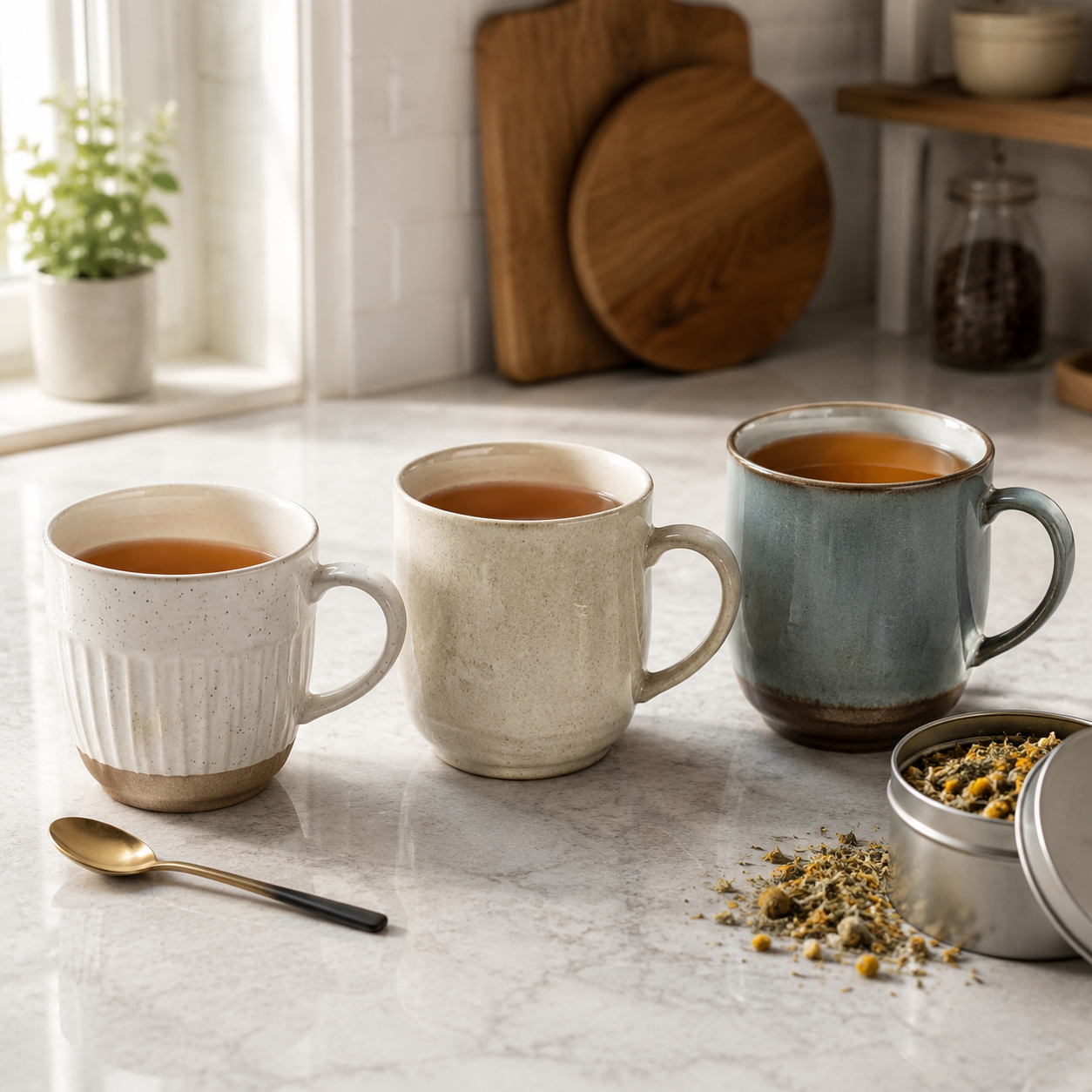
Herbal Tea Mug Buying Guide: Capacity and Handle Comfort
Compare 400 ml, 440 ml, and 480 ml CoffeifyMug options for an herbal tea routine. This guide focuses on realistic serving size, handle comfort, and the trade-offs that matter on a kitchen counter o...
Подробнее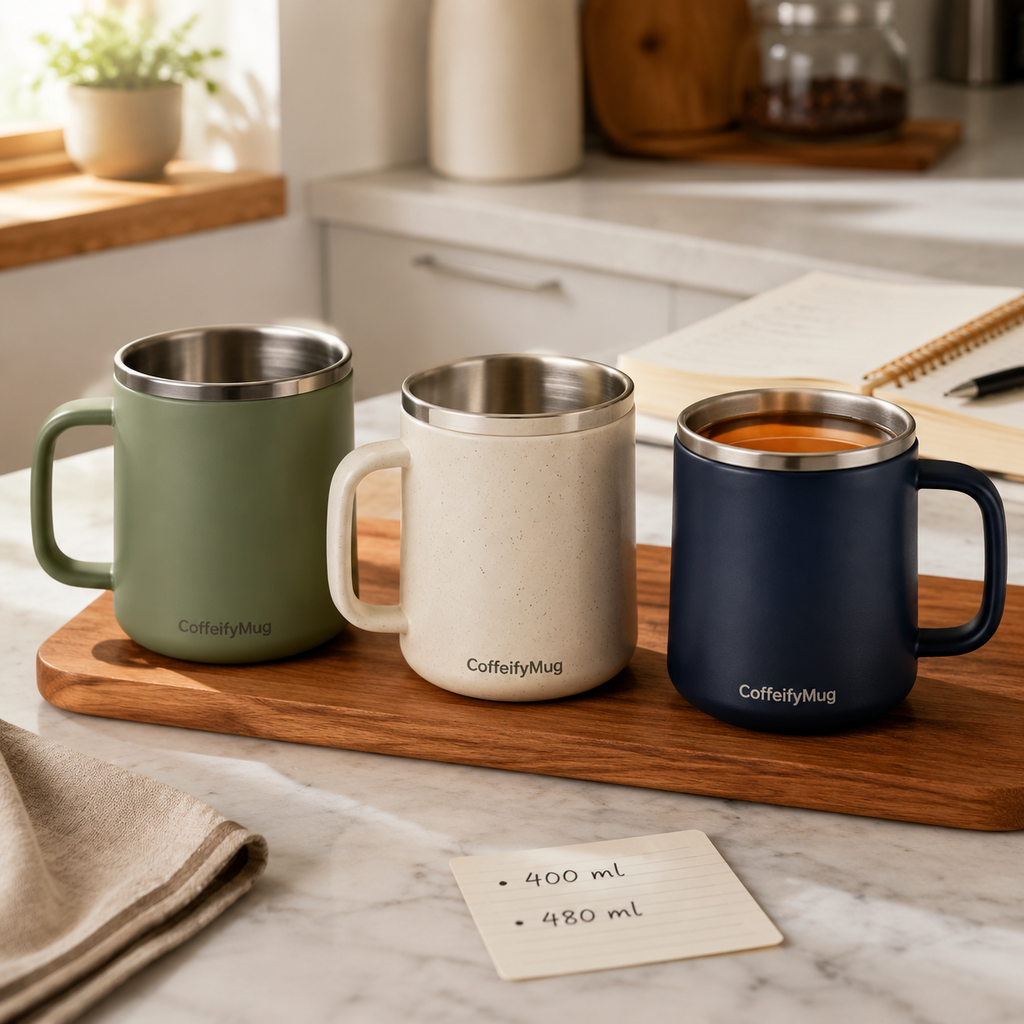
Dandelion Coffee Mug Buying Guide: Capacity and Comfort
Compare 400 ml and 480 ml dandelion coffee mug options for desk, kitchen, and gift use. This guide explains practical capacity differences, handle checks, care questions, and which CoffeifyMug styl...
Подробнее
Оставить комментарий
Этот веб-сайт защищается hCaptcha. Применяются Политика конфиденциальности и Условия использования hCaptcha.