
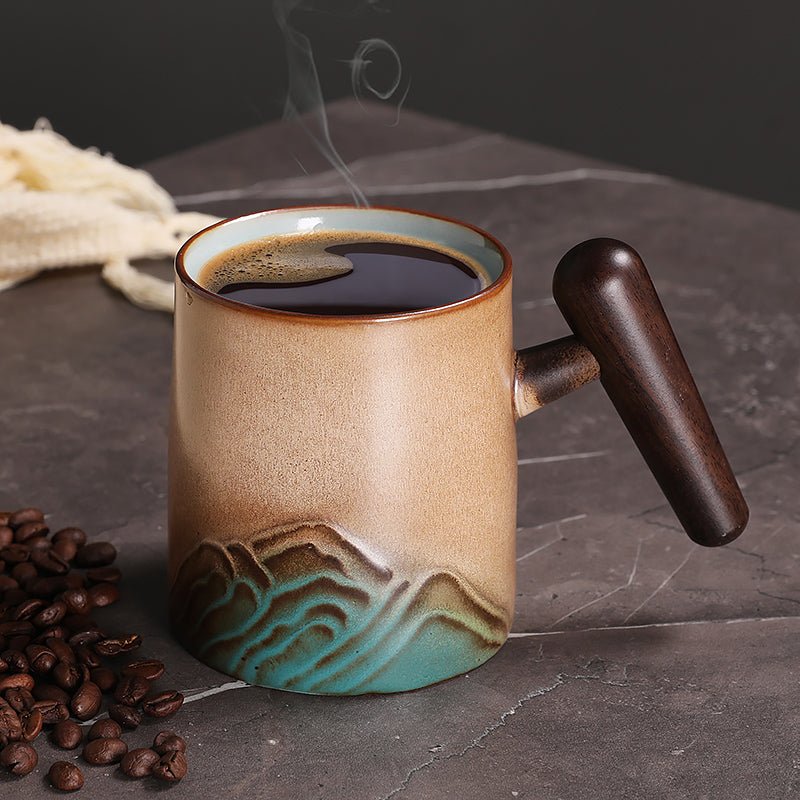
Big Mug of Coffee: How to Choose the Right Large Mug for Daily Use
Reading time: about 8 minutes
Why does a big mug of coffee work for some routines and not others?
At our store, the shoppers who reach for a big mug of coffee usually want one thing: fewer interruptions. A larger mug makes sense on a desk, beside a laptop, or for a slow Saturday refill that you would rather skip. The trade-off is simple. More capacity usually means more weight, a wider footprint, and a handle that needs to feel right in the hand instead of just looking generous on a shelf.
We see this most with drip coffee drinkers, tea drinkers who refill once, and gift buyers who want something practical rather than decorative. If you are still comparing formats, our full mug collection is the fastest way to see different shapes side by side, and the Rock Coffee & Tea Mug is a straightforward example of the kind of everyday mug shoppers ask us about most.
A big mug only feels worth it if it matches the way you actually drink. If you finish one pour quickly and want a warm, heavy mug that stays planted on the desk, larger works. If you sip slowly over an hour, want a lighter hand feel, or need something that fits a narrow machine tray, the same mug can become awkward fast.
What should you check before buying a big mug of coffee?
The first mistake we see is choosing by looks alone. A mug can photograph well and still be annoying to use every morning. Before you buy, check the parts that affect real daily use: capacity, handle clearance, rim feel, base stability, and care instructions.
| What to check | What good looks like | Why it matters |
|---|---|---|
| Capacity | Usually around 14 to 18 oz for everyday large mugs, larger if you truly finish it | Keeps the mug big enough to matter without turning it into a bulky bowl |
| Handle clearance | Room for two fingers without scraping the cup wall | Makes a hot mug easier to carry with confidence |
| Rim thickness | Comfortable on the lips, not razor-thin | Improves drinking feel and reduces that cheap, sharp edge many buyers dislike |
| Base width | Stable enough to sit flat on a desk or counter | Reduces tipping, especially near keyboards, notebooks, and crowded kitchen counters |
| Care | Dishwasher-friendly if you plan to use it daily, microwave-friendly if you reheat | Saves time and avoids surprises after the first few uses |
We also tell shoppers to look for a smooth glaze and a clean foot ring. A rough foot ring can scratch a table. A thin glaze edge near the handle or rim can chip sooner if the mug gets stacked tightly in a cabinet. These are small things until you start using the mug every day.
- For office use: prioritize a stable base and a handle that clears your fingers cleanly.
- For home use: prioritize comfort, dishwasher convenience, and a shape you enjoy lifting repeatedly.
- For gifting: pick a neutral shape and color so the mug fits more kitchens and desk setups.
If you want a deeper buying checklist, our guides on what to check before you buy a large mug and size, comfort, and daily use cover the details we see shoppers miss most.
Which materials and shapes hold up best in daily use?
The material matters because a big mug already asks for more from your hand and cabinet space. Stoneware usually feels heavier and sturdier. Porcelain tends to look cleaner and feel lighter. Standard ceramic sits somewhere in the middle and is often the easiest category to live with if you want one mug for both coffee and tea.
We do not treat any one material as automatically best. The right choice depends on how you use the mug. If you like a substantial, grounded feel on a kitchen counter, stoneware is often appealing. If you want something easier to lift at a desk or on a meeting table, a lighter body may be better. If you reheat frequently, confirm the finish and care instructions before assuming every mug handles repeated microwave use the same way.
Shape matters just as much. A wide opening lets coffee cool faster, which some people like and some do not. A slightly narrower opening holds heat longer and feels more focused in the hand. Tall, narrow mugs can feel efficient but they sometimes become top-heavy. Shorter, wider mugs usually feel calmer and more stable, especially near a laptop or stack of papers.
These are the defect modes we ask buyers to watch for when they inspect a mug in person or unbox it at home:
- Hairline glaze crazing: tiny surface lines that may be cosmetic or may deserve a closer look depending on severity.
- Rough handle seams: a grip issue that becomes obvious after a few hot pours.
- Uneven foot rings: the mug rocks on a flat surface or feels unstable when set down.
- Chip-prone rim edges: especially noticeable if mugs are stacked tightly in a cupboard.
A big mug should feel like a tool you want to reach for every morning, not a shelf piece you have to work around.
When is a big mug of coffee the wrong choice?
A large mug is not the best fit for every setup. That is part of buying honestly. If you mainly drink espresso, a big mug can make the coffee feel lost. If you use a machine with a low cup clearance, a tall mug may not fit. If you need a mug that lives in a car cup holder, many large mugs are simply too wide or too heavy for that job.
There are also comfort limits. Some people dislike the weight of a full large mug, especially with thick-walled ceramic. Others want a smaller handle or a slimmer profile because larger mugs can feel clumsy in smaller hands. We hear this often from shoppers who buy one big mug for the idea of it, then switch back to a medium size because daily use matters more than capacity.
A big mug is usually not the best pick if you:
- Drink coffee in short, fast rounds and do not want it cooling in a larger vessel.
- Need a mug to fit under an espresso machine or inside a tight coffee station.
- Prefer lightweight drinkware that is easy to move with one hand.
- Want something travel-friendly for the car, train, or commute.
That does not make large mugs a bad choice. It just means the use case has to be honest. If you want help deciding between sizes, the article Big Coffee Cups: How to Choose the Right Large Mug for Daily Use is a useful companion because it compares the practical trade-offs in plain language.
Which big mug fits work, home, or gifting?
We often think about the buyer's setting first, because the same mug can feel right in one place and wrong in another. A big mug for the office should prioritize balance and a handle that clears your fingers even when the mug is full. A mug for home can lean into warmth, thickness, and a more relaxed feel in the hand. A gift mug should be easy to understand at a glance and comfortable enough that the recipient uses it instead of putting it aside.
- Work desk: choose a stable, medium-weight mug with a comfortable handle and a base that does not crowd the keyboard area.
- Home counter: choose a mug you like holding for several minutes, especially if you brew multiple times a day.
- Gift box: choose a neutral shape that works for both coffee and tea, so the mug does not feel overly specific.
- Tea use: a big mug can be useful, but a shape that holds heat a little longer usually feels better than an extra-wide opening.
For shoppers who want to compare a few large-mug directions before buying, it helps to read more than one angle. Our guides on size, comfort, and daily use and choosing the right large mug for daily use are useful if you want a second opinion before you commit.
We also pay attention to unboxing behavior, because the first five minutes matter. A mug that feels good in the box but awkward on the desk usually gets retired. A mug that feels balanced as soon as you wrap your hand around the handle tends to stay in rotation longer.
Frequently asked questions
How many ounces should a big mug of coffee be?
For most daily coffee drinkers, a big mug usually lands around 14 to 18 oz. That range gives you more room than a standard mug without becoming so large that it feels unwieldy. If you rarely finish a full mug before the coffee gets cold, a smaller size may actually fit your routine better.
Is a big mug of coffee good for iced coffee?
Yes, if you want space for ice and milk or cream. A larger mug can work well for iced coffee at home, especially when you are not trying to fit into a travel lid or cup holder. If you move around a lot, a tumbler may be a better fit than a mug.
What material is best for an everyday large mug?
There is no single best material for everyone. Stoneware feels sturdy and substantial, porcelain feels lighter and more refined, and standard ceramic often gives a practical middle ground. The better question is how the mug feels after repeated use, dishwasher cycles, and cabinet stacking.
Can I put a big mug of coffee in the dishwasher?
Many large mugs are dishwasher-safe, but you should still check the care guidance for the specific mug before buying. We recommend looking for a glaze and finish that are meant for repeat daily washing, because that is where cheaper mugs tend to show wear first. If the handle or rim feels rough after a few washes, that is a sign the mug may not be ideal for long-term use.
What is the biggest downside of a big mug of coffee?
The main downside is that it can be more cumbersome than it looks. A larger mug can be heavier when full, take up more cabinet space, and cool faster if the opening is wide. That is fine if you value capacity, but it is not the best choice if you want a compact, travel-friendly cup.
If you want to compare options before you buy, start with our mug collection, then match each mug against your real routine: desk space, hand comfort, care, and how much coffee you actually drink in one sitting. If you want a simple baseline, begin with the Rock Coffee & Tea Mug and compare it against the rest of the collection from there.
Read more
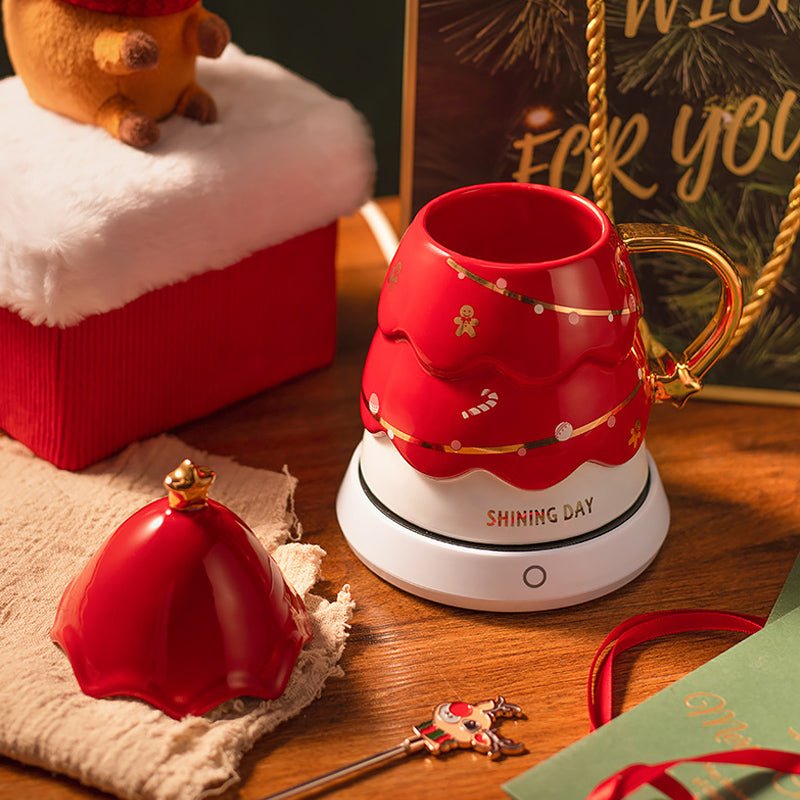
Coffee Mug Christmas Gift Ideas That People Actually Use
Coffee mug Christmas gift ideas that focus on real use, not just festive looks. We cover size, material, care, and the small details that decide whether a mug stays in the cabinet or becomes a dail...
Подробнее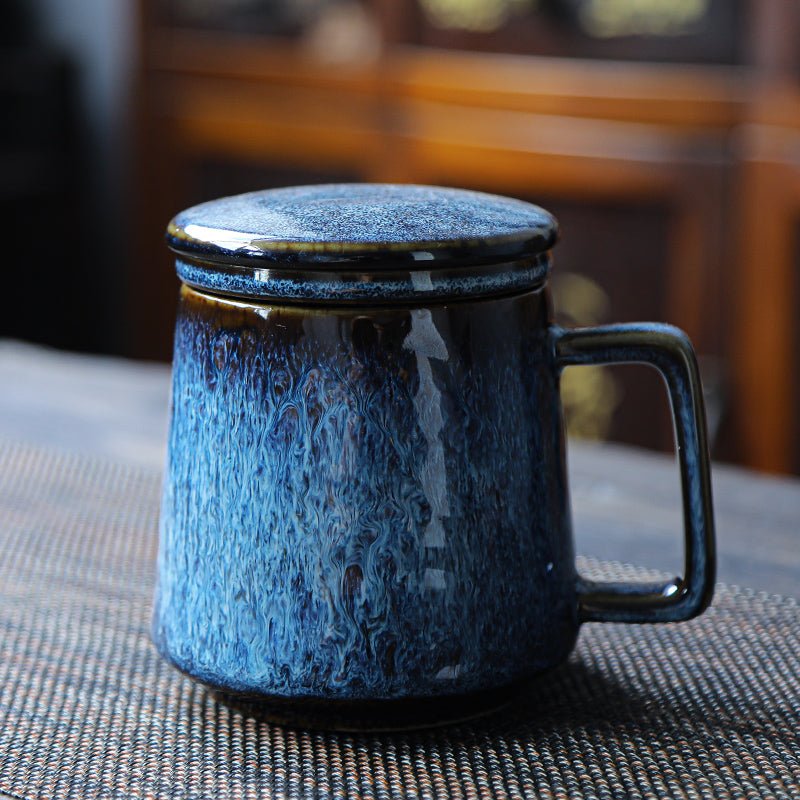
Sunflower Coffee Mug Buying Guide for Size, Style, and Care
A practical look at what separates a good sunflower coffee mug from one that only looks good online. We cover size, handle feel, finish quality, and the trade-offs that matter before you buy.
Подробнее
Оставить комментарий
Этот веб-сайт защищается hCaptcha. Применяются Политика конфиденциальности и Условия использования hCaptcha.