

Vintage Pottery Coffee Mugs for Small Coffee Setup
Reading time: about 9 minutes
A mug that looks compact from the front can still take up too much room once its handle, flared rim, and saucer are inside a narrow cabinet. We see this most often in apartment kitchens, office coffee corners, and single-shelf setups where every few inches matter. Buyers comparing vintage pottery coffee mugs for small coffee setup should therefore look beyond the pattern and check the mug's complete footprint, practical drinking capacity, and care requirements.
Style still matters, especially when the mug stays visible beside the brewer. A focused option such as the Retro Coffee & Tea Cup is a sensible first comparison for shoppers who specifically want a retro direction. Buyers who have not settled on one design can compare the wider unique coffee mugs collection before committing shelf space to a particular shape or theme.
How should you size vintage pottery coffee mugs for small coffee setup?
Start with the space, not the stated drink capacity. Capacity tells you how much liquid a mug may hold, but it does not reveal the amount of shelf or counter area the mug occupies. A rounded pottery body, thick handle, or projecting foot can make two mugs with similar capacities fit very differently.
We use four measurements when assessing a mug for a tight setup:
- Maximum body diameter: Measure the widest point, which may be the rim rather than the base.
- Total width including the handle: This is the figure that determines how many mugs can sit side by side without turning every handle inward.
- Overall height: Compare it with the shelf opening and leave enough hand clearance to lift the mug without scraping the shelf above.
- Base or foot-ring diameter: A narrow foot may fit a compact coaster, but the wider upper body can still collide with nearby equipment.
For an open coffee shelf, also check the depth from the front edge to the wall. A mug that must be stored with its handle pointing forward can protrude beyond a shallow shelf. On a crowded counter, rotate the handle into the position you naturally use and make sure it does not block the grinder switch, pod drawer, kettle base, or espresso machine controls.
Shelf width and handle clearance: which shape wastes less space?
Straight-sided mugs are generally easier to arrange in a row because their widest point remains predictable. Bell-shaped, barrel-shaped, and heavily flared pottery forms can create unused gaps between mugs. That extra space is not automatically a problem; it may be a reasonable trade-off for a shape you enjoy handling. It becomes frustrating when three mugs were expected to fit and only two can be stored comfortably.
Handle geometry deserves equal attention. A large loop gives more room for multiple fingers, which can be useful with a heavier pottery mug. A compact handle reduces the total footprint but may only suit a one- or two-finger grip. We recommend checking product photographs for the gap between the handle and body, not just the outside handle dimensions.
Stacking can help, but do not assume a pottery mug is stackable because the base appears narrower than the rim. Reliable stacking requires the foot to sit securely inside the mug below without pressing against a fragile glazed rim. Unless a product page explicitly presents a design as stackable, plan to store each mug separately.
Usable capacity versus stated capacity
A listed capacity may represent a fill close to the rim. In daily use, you need headroom for carrying the drink, adding milk, or stirring without spilling. This distinction is especially noticeable on an office desk or a small counter where there is little room to set down a sloshing mug safely.
| Drinking habit | Capacity question to ask | Small-space trade-off |
|---|---|---|
| Short coffee or concentrated brew | Will the cup hold the finished drink without leaving excessive empty volume? | A smaller cup saves shelf space but may not suit milk-heavy drinks. |
| Standard brewed coffee | Is the listed capacity measured to the rim or at a comfortable fill level? | A moderate mug is easier to store and less cumbersome beside a compact brewer. |
| Coffee with milk or creamer | Is there enough headroom after the coffee is poured? | A wider or taller mug needs more storage room but reduces spill risk while stirring. |
| Tea | Does the opening leave room for an infuser, tea bag, or spoon? | A broad rim can be convenient for steeping but increases the mug's maximum diameter. |
If 12 ounces is your normal target, our comparison of 12 oz ceramic coffee mugs for a small coffee setup explains the storage and serving questions for that size in more detail. Shoppers concerned about tipping near a keyboard or narrow counter edge can also review the trade-offs covered in our guide to ceramic wide-bottom coffee mugs.
Which current style fits your small coffee station?
Product names and styling can help narrow the shortlist, but they do not replace checking the current listing for dimensions, capacity, included pieces, materials, and care instructions. Availability and variants can change, so the linked product page should be treated as the source of truth before purchase.
- For a compact station built around an obvious retro accent: Start with the Retro Coffee & Tea Cup. It fits the buyer who wants one visually distinct cup rather than a cabinet full of mismatched pieces. Confirm its current measurements against your shelf before ordering.
- For a visible shelf with a mountain-and-sea theme: Consider the Mountain & Sea Coffee & Tea Mug. This is the relevant next step when the named theme suits a coffee corner that doubles as part of the room's decor. Check the listing for current specifications rather than assuming it matches another mug with a similar silhouette.
- For a buyer who prefers the Great Mountain design direction: Compare the Great Mountain Coffee & Tea Mug. It makes more sense as a deliberate display-and-use piece than as a purely space-minimizing utility cup.
- For buyers still deciding between shape and artwork: Browse the unique coffee mugs collection and compare complete footprints, not just front-facing photographs.
These options are not necessarily right for someone who needs identical, tightly stackable mugs for a shared office cupboard. A plain commercial stackable cup may use the available space more efficiently. Vintage-style pottery is usually the stronger choice when tactile character and visible design justify giving each mug a little more room.
Which pottery details can become everyday annoyances?
Pottery has natural visual and tactile variation, but buyers should distinguish character from damage. In our experience selling mugs, the areas worth inspecting first are the rim, handle joins, glazed interior, and unglazed foot ring. These are the contact points that affect daily use.
- Rim chips: A chipped drinking edge is not simply cosmetic. Avoid using a mug if the damaged area feels sharp or exposes a rough body beneath the glaze.
- Crazing: Fine lines within a glaze can be intentional on some finishes or can develop with use. Do not assume a crackled appearance has the same care profile as a smooth glaze; follow the product's stated instructions.
- Glaze pinholes: Small surface marks may occur in pottery finishes, but the interior drinking surface should be checked carefully for rough or difficult-to-clean areas.
- Handle joins: Look where the handle connects to the cup body. Visible cracks, movement, or a sharp ridge are more concerning than minor color variation.
- Foot-ring finish: An exposed pottery foot can feel rough against a polished desk or shelf. A coaster or mug mat may be useful, but it adds to the effective counter footprint.
A thick pottery wall can feel substantial and may retain warmth differently from a thin cup, yet it also adds weight and reduces interior volume relative to the outside dimensions. If that trade-off matters, the checks in our article about thick ceramic coffee mugs for small setups can help you compare the mug's external bulk with its usable capacity.
Dishwasher, microwave, and daily care checks
Do not treat all pottery or ceramic mugs as automatically dishwasher-safe or microwave-safe. Glaze composition, decorative finishes, applied details, and construction vary. Check each current product page and any packaging or care label for separate dishwasher and microwave guidance.
If the listing does not clearly state compatibility, the cautious routine is straightforward:
- Hand-wash with a soft sponge and standard dish soap.
- Avoid abrasive pads that can dull or mark decorative surfaces.
- Do not expose the mug to sudden temperature changes, such as moving it directly from a cold room into very hot water.
- Dry the base before returning the mug to a wood shelf, desk, or enclosed cabinet.
- Inspect the rim and handle joins periodically, particularly after a knock or drop.
Dishwasher cycles also affect space planning. A broad handmade-style form may occupy more rack width than a straight-sided mug, while a deep foot ring can retain rinse water. If easy machine washing is essential, confirm the care statement first and compare the mug's shape with your dishwasher rack spacing.
Frequently asked questions
Are vintage pottery coffee mugs for small coffee setup usually stackable?
No. Some shapes may nest loosely, but that does not mean their rims and foot rings are designed to support stacked storage. Unless the current listing specifically describes the mug as stackable, allow separate shelf space for each piece.
Is a 12 oz pottery mug too large for a compact coffee station?
Not necessarily. The deciding factors are total width including the handle, maximum body diameter, and the amount of usable headroom you need above the drink. A 12 oz mug with a straight body may occupy less shelf space than a lower-capacity mug with a wide bowl and projecting handle.
Can vintage-style pottery mugs go in the dishwasher and microwave?
Only follow the care instructions stated for the specific product. Pottery, glaze, and decorative treatments vary, so the material category alone does not establish dishwasher or microwave compatibility. If guidance is absent, hand-washing and avoiding microwave use is the more cautious approach.
How much shelf clearance should I leave above a pottery mug?
Leave enough space to lift and tilt the mug without striking the shelf above. Measure the actual opening, compare it with the product's listed height, and account for your fingers around the handle. A mug that technically fits but cannot be removed cleanly will become irritating in daily use.
Are vintage pottery mugs actual antiques?
Not automatically. Terms such as vintage, retro, and vintage-style commonly describe an aesthetic rather than the verified age of an item. Use the product listing for factual information about the mug being sold and do not infer antique provenance from styling alone.
A five-minute checklist before you order
- Measure shelf width, depth, and vertical clearance.
- Compare the mug's maximum diameter and total width including its handle.
- Check whether capacity is stated and leave room below the rim for carrying and stirring.
- Verify what is included, especially if product photography shows more than one piece.
- Read the current dishwasher and microwave guidance separately.
- Decide whether you need stackability, a wide stable base, or a smaller visual footprint.
- Choose a product theme you will still want on display when counter space is limited.
Take those measurements to the unique coffee mugs collection, open the styles that match your space, and compare their current listing details side by side. For a small setup, the right mug is the one that fits your shelf, your normal drink, and your care routine without requiring daily rearrangement.
Read more

Small Ceramic Coffee Cup for Small Coffee Setup: Buying Checks
Compare the measurements that affect cabinet, counter, and desk fit, then weigh usable capacity, handle clearance, glaze care, and current CoffeifyMug styles.
Czytaj dalej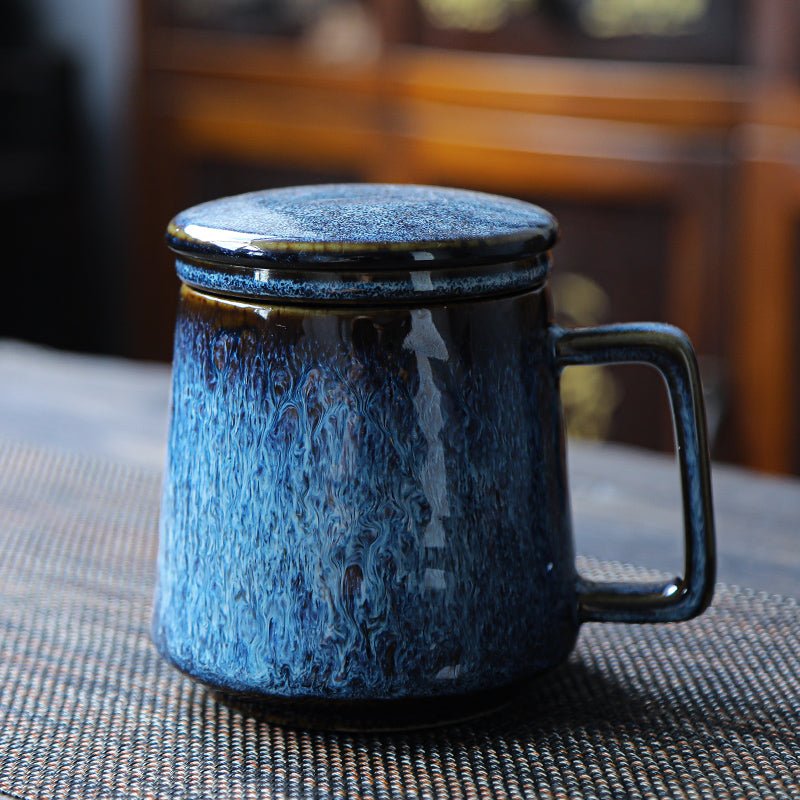
Large Decorative Coffee Mugs for Desk Use: Fit Guide
Compare large decorative mugs by usable capacity, base footprint, handle clearance, care needs, and working-desk fit. We also explain which CoffeifyMug designs deserve a closer look for specific de...
Czytaj dalej
Zostaw komentarz
Ta strona jest chroniona przez hCaptcha i obowiązują na niej Polityka prywatności i Warunki korzystania z usługi serwisu hCaptcha.