
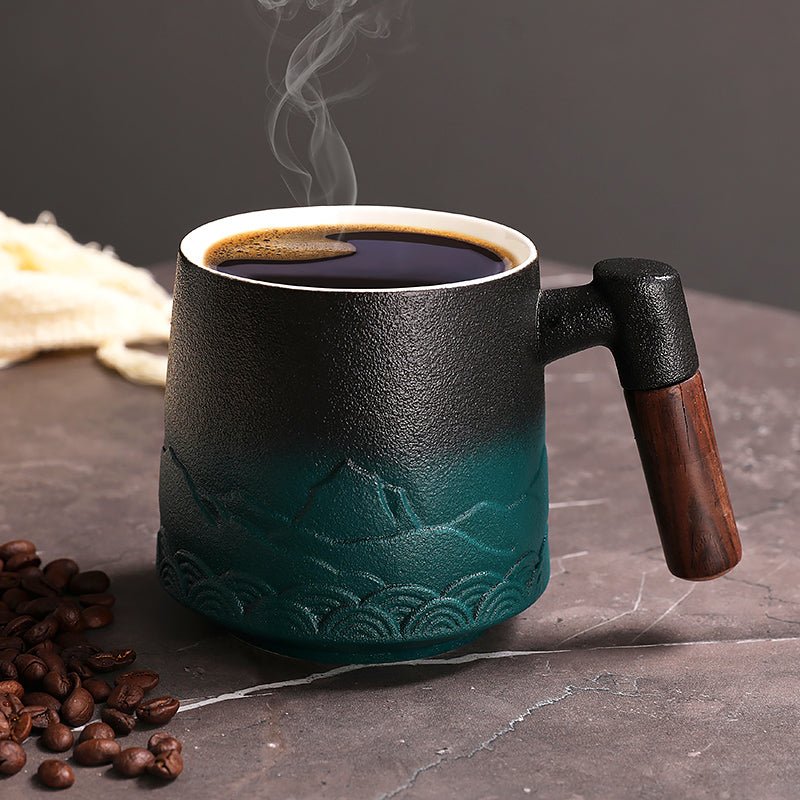
Unique Pottery Coffee Mugs for Small Coffee Setup: Compare First
Reading time: about 10 minutes
A mug that looks compact from the front can still take up too much room once its handle points outward, especially on a narrow shelf beside a brewer. That is the practical problem behind shopping for unique pottery coffee mugs for small coffee setup: the decoration draws attention first, but the widest point, usable capacity, foot profile, and care requirements determine whether the mug earns its place.
In our store, we recommend starting with the actual space and then comparing designs. You can review the current unique coffee mug collection, but do not choose from the collection grid alone. Open each product page, inspect every image, and confirm the listed specifications and care information before ordering.
How much room do unique pottery coffee mugs for small coffee setup need?
Measure the mug space as a three-dimensional opening. Shelf width is only one part of the fit. A pottery mug can have a compact body but a long handle, a flared lip, or a wide base that changes how many will sit together.
- Measure usable shelf width. Exclude brackets, raised shelf edges, and anything that blocks a handle from turning sideways.
- Measure depth at the narrowest point. Cabinet frames and backsplash trim can reduce the depth that appears available from the front.
- Measure vertical clearance. Include the space needed to lift a mug over a shelf lip instead of matching the mug height exactly.
- Check the widest body point. The rim, belly, and foot may have different diameters. Use the largest one for side-by-side planning.
- Add handle projection. Decide whether handles will face forward, alternate left and right, or turn sideways. Each arrangement uses a different footprint.
For example, do not divide a 320 mm shelf by the mug's nominal diameter and assume the result will fit. Handles, irregular profiles, and a little finger room can reduce the usable count. We prefer leaving enough clearance to remove one mug without knocking its neighbor. That matters more with decorated pottery because repeated rim-to-rim contact is a common route to small chips.
Counter placement needs a separate check. Set an existing mug on the drip tray, under the brewer outlet, and in the spot where you normally add milk or sugar. Note any conflict with cabinet doors, a kettle handle, or the machine's water tank. A beautiful mug is a poor small-space choice if it must be moved every time the reservoir needs filling.
Capacity versus footprint: which trade-off suits your drink?
Capacity should follow the drink you actually make, not the largest serving you might use occasionally. Bigger mugs usually require more storage volume, and a wider opening can occupy more counter space even when the mug is not especially tall.
- Short coffee and concentrated drinks: A smaller vessel saves space and helps avoid an oversized-looking serving, but it leaves less room for milk, foam, or stirring.
- Everyday brewed coffee: A middle capacity is often easier to store than a large café-style mug while still leaving practical headspace.
- Milk drinks: Allow room for the finished espresso-and-milk volume rather than choosing from the espresso volume alone.
- Tea: Consider room for an infuser and the ability to remove it without spilling. A very narrow opening may be inconvenient.
- Iced drinks: Ice displaces liquid quickly. A mug that works for hot coffee may feel too small once cubes and milk are added.
Brim capacity and comfortable working capacity are not the same measurement. Filling to the rim leaves no room to carry the mug, stir, or add milk. If a product page lists capacity, compare that figure with the volume you pour into your current mug, then account for headspace.
Shoppers who already know that a mid-sized serving is their priority can use our 12 oz ceramic mug comparison for small coffee setups to examine that capacity in more detail. It is a better route than buying a distinctive shape first and discovering that the drink volume is wrong.
Which current design matches the way your mug will be displayed?
These three current choices serve different visual situations. Their names and product imagery can help you narrow the style, but the name alone does not establish material, dimensions, capacity, microwave suitability, or dishwasher care. Treat the product page as the source for those details.
| Reader situation | Product to inspect | Why it fits the brief | Confirm before buying |
|---|---|---|---|
| A compact station with straight lines, simple storage, or a geometric visual theme | Rhombus Coffee Tea Mug | The Rhombus name provides a clear geometric direction, making it the logical first page to inspect for this style preference. | Listed dimensions, capacity, material, handle projection, and care instructions |
| An open shelf or office desk where a scenic motif will remain visible | Mountain & Sea Coffee Tea Mug | The named mountain-and-sea theme suits a shopper choosing the mug as a visible decorative object as well as a drinking vessel. | How the design appears from both sides, plus listed size, material, and care details |
| A one-mug station or gift where the mug is intended to be the strongest visual element | Golden Waves Kio Coffee Tea Mug | The named waves design makes this the relevant statement-style option to compare against quieter pieces. | Actual finish information, listed dimensions and capacity, and any microwave or dishwasher guidance |
That last verification is especially important with decorative finishes. A gold-colored appearance does not prove that a mug contains metallic decoration, and a product name does not establish microwave safety. Follow only the care and use guidance stated on the individual page or packaging.
If all three pass your measurements, choose according to placement. The Rhombus option is the first comparison for a geometric brief. Mountain & Sea makes more sense where a scenic design can face the room rather than a cabinet wall. Golden Waves Kio is the more direct page to inspect when one decorative mug will anchor the setup. None is automatically the right choice for a tightly packed shelf until its listed specifications have been checked against your measurements.
Which pottery construction details affect daily use?
Pottery is a broad category. Stoneware, porcelain, and earthenware bodies can differ in weight, wall thickness, surface character, and resistance to everyday knocks. Do not assign a material to a specific mug from photography; use the material stated on its product page.
We check several physical details when handling mugs because they affect use long after the first unboxing:
- Rim profile: Look for an even edge with no rough spot where the mouth meets the glaze. A thick rim can feel substantial but may not suit someone who prefers a fine drinking edge.
- Handle clearance: The opening should suit the number of fingers you use, while the attachment points should not create an uncomfortable pressure point.
- Foot ring: An unglazed or rough foot can mark a delicate shelf or desk. Check it on arrival and use a coaster if the contact surface feels abrasive.
- Glaze coverage: Inspect the drinking surface and interior for chips, sharp raised areas, or unexpected bare patches. Natural visual variation is different from damage that makes the drinking edge uncomfortable.
- Wall and base thickness: A thicker build can feel reassuring and may retain heat differently, but it also adds weight and consumes more external space for the same usable volume.
Common problems to inspect during unboxing include a chipped rim, a hairline crack near a handle joint, a base that rocks on a flat counter, and glaze crazing that appears as fine lines. Do not use a mug with a sharp chip or visible structural crack. Photograph shipping damage before discarding the packaging and contact the store using the current support process.
Buyers who prioritize stability can compare these points with our guide to ceramic wide-bottom mugs for small setups. A broad base may feel steadier on a desk, but it also uses more shelf width. For shoppers concerned about weight and heat retention, the thick ceramic mug buying checks explain why heavier construction is not automatically better in a compact station.
Will the mug's care routine work in a small kitchen?
Care instructions affect space because hand-washed mugs need somewhere to sit while drying. In a kitchen with a narrow drainboard, a mug that cannot go in the dishwasher may create more daily friction than its shelf footprint suggests.
Check the individual product page or included instructions for dishwasher and microwave guidance. Do not infer either from a ceramic-looking body. Decoration, applied finishes, or mixed materials can change the permitted care routine.
- Before first use, inspect the rim, handle joints, interior, and base under good light.
- Wash according to the stated instructions, using a non-scratching tool on decorated surfaces.
- Let the mug cool before exposing it to a large temperature change. Avoid moving a hot mug directly onto a very cold or wet surface.
- Dry the base before placing it on a wood shelf, inside a cabinet, or on an office desk.
- Recheck the handle and rim if the mug is knocked or dropped. A fine crack near the handle joint is a reason to stop using it.
A highly decorative mug is not the best fit for every buyer. Someone who needs identical stackable cups, guaranteed fleet-style replacement, or the simplest possible commercial dishwasher routine may be better served by a plain, standardized shape with explicitly stated care compatibility. Likewise, a large mug is not ideal for a shallow shelf just because it reduces refills.
How many distinctive mugs should a compact station hold?
Start with the number used between wash cycles. A household that washes up each evening may need fewer mugs than one that runs a dishwasher every second day. Add a guest mug only if guest use is common enough to justify permanent shelf space.
For a one-person office desk, one primary mug and one spare can be more practical than a coordinated set. The primary mug can carry the stronger design, while the spare can prioritize easy care. On an open kitchen shelf, two different designs may look intentional if their heights and visual weight are balanced. A crowded row of individually distinctive mugs can make a small setup harder to scan and harder to clean.
Our practical rule is simple: every mug should have a measured storage position, a drink it serves well, and a care routine the buyer will actually follow.
This is where the full collection is useful. Compare shapes and designs side by side, then open the individual pages for specifications. Do not treat a collection image as proof that several mugs will nest, stack, or share the same dimensions.
Frequently asked questions
What should I measure before buying unique pottery coffee mugs for small coffee setup?
Measure usable shelf width, depth, and vertical clearance, then check the space beside and under your brewer. Compare those measurements with the mug's widest body point, total height, base, and handle projection as listed or shown on the product page.
Are pottery coffee mugs safe in the dishwasher and microwave?
That depends on the material, glaze, decoration, and manufacturer's instructions for the specific mug. Use only the care guidance on the product page or packaging; appearance and product names are not reliable evidence of dishwasher or microwave suitability.
Is a wide-bottom mug better for a small coffee station?
A wide base can provide useful stability on a desk or crowded counter, but it consumes more shelf width and may reduce how many mugs fit side by side. Measure the base and widest point rather than assuming a shorter mug has a smaller footprint.
How can I tell if a decorative mug is too large for my daily coffee?
Measure the liquid you normally pour, including milk, and compare it with the product's stated capacity while leaving comfortable headspace. If the mug adds substantial unused volume, a smaller vessel will usually store more easily and feel better matched to the drink.
Should I buy a matching set or one statement mug?
One statement mug is often the better fit for a one-person desk or very narrow coffee station. Choose a set only after confirming that every mug has a storage position and that the combined handle and body widths fit without contact.
A final shelf-to-cart check
Before adding a mug to your cart, confirm these points: usable shelf dimensions, handle orientation, working drink capacity, stated material, care instructions, and the return or damage-reporting process shown by the store. Then match the visual role to the product: geometric for the Rhombus page, scenic for Mountain & Sea, or statement-focused for Golden Waves Kio.
Use the CoffeifyMug unique coffee mug collection as the comparison starting point. Keep your shelf measurements beside you, open the individual product pages, and buy only after the listed size, capacity, material, and care details suit the space you use every day.
Read more
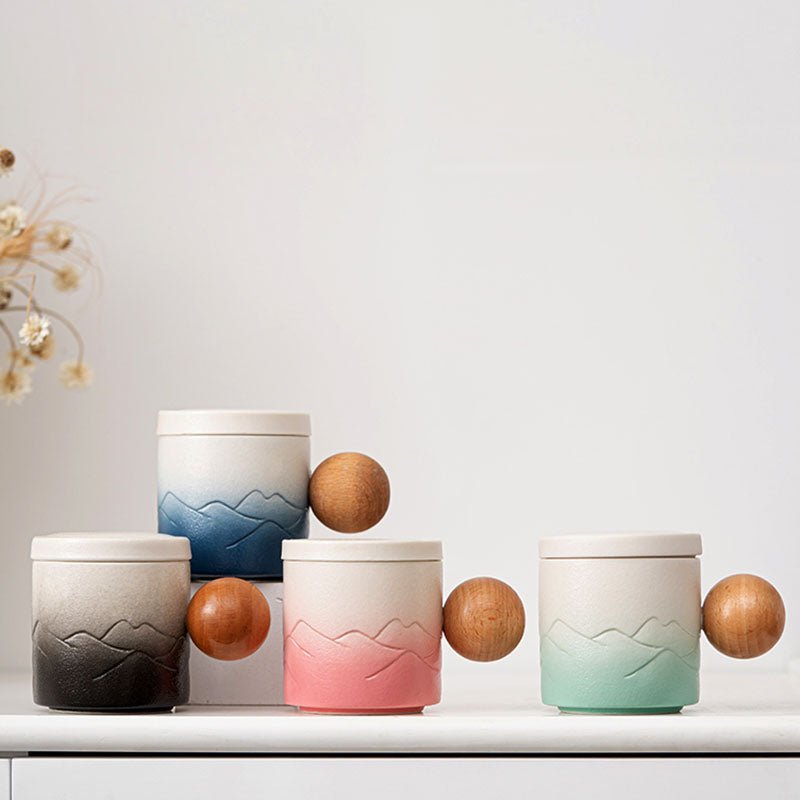
Matcha Latte Mug for Small Coffee Setup: Compare Before Buying
Compare three matcha latte mug sizes for limited counters, shelves, and desk setups. See how listed capacity, the Ball Handle mug's 11.2 cm diameter, and visible opening shape affect the practical ...
Czytaj dalej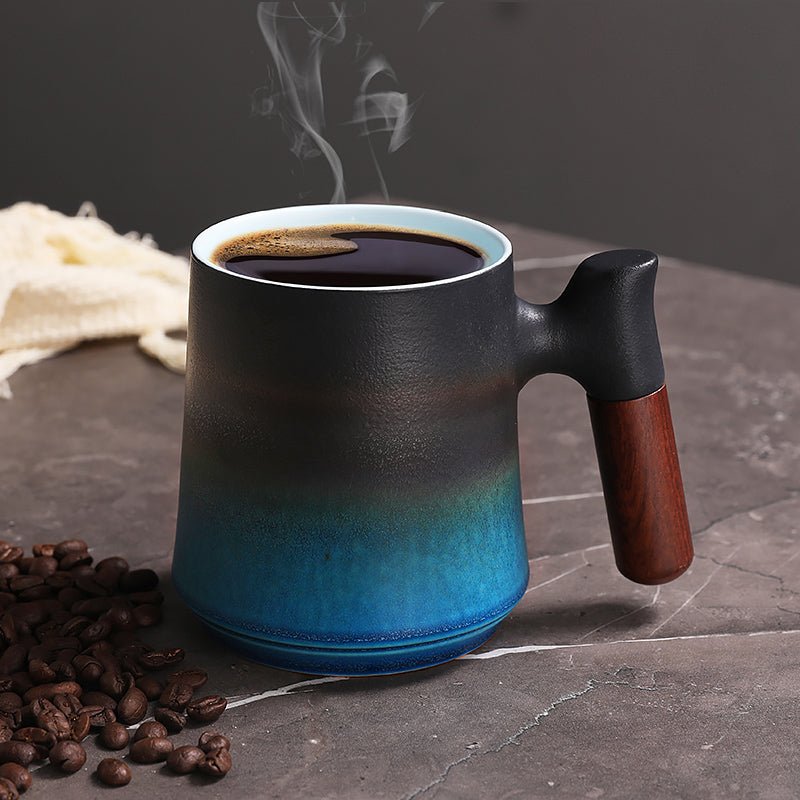
Apple Cider Mug for Small Coffee Setups: Compare Fit First
Compare apple cider mug capacities, handles, ceramic fit, and counter space before choosing a mug for a compact coffee station. See how CoffeifyMug's 400 ml and 480 ml options suit different daily ...
Czytaj dalej
Zostaw komentarz
Ta strona jest chroniona przez hCaptcha i obowiązują na niej Polityka prywatności i Warunki korzystania z usługi serwisu hCaptcha.