
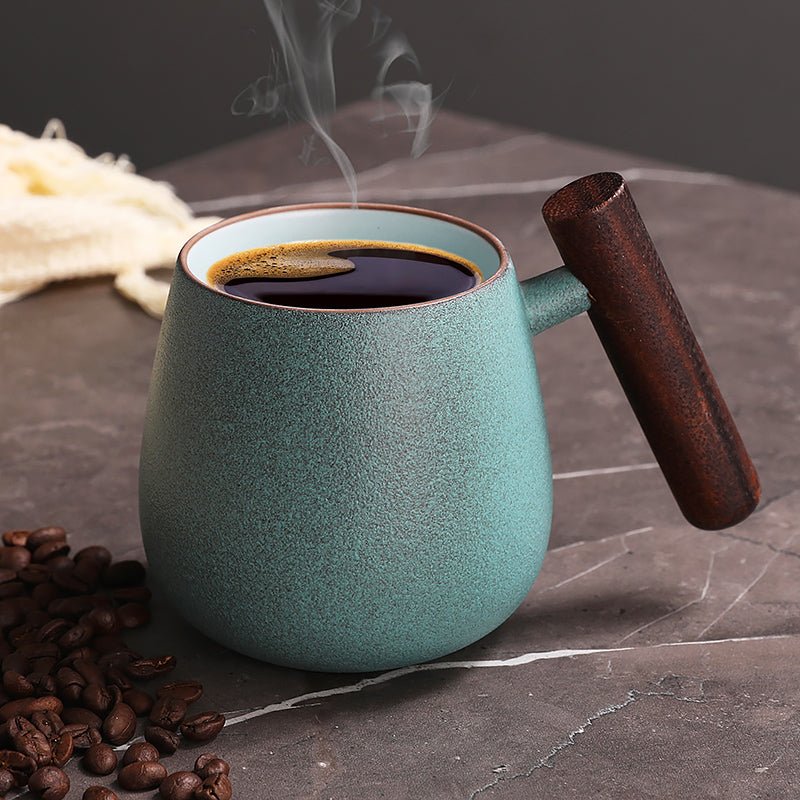
Standard Coffee Mug Dimensions: What Buyers Should Check
Reading time: about 8 minutes
A mug that looks right in a product photo can still feel wrong on a kitchen shelf. We see this most often when someone wants an everyday cup for drip coffee, but the mug is too wide for the hand, too tall for the cabinet, or too shallow to hold a proper pour without cooling too fast.
In our store, we treat standard coffee mug dimensions as a practical range, not a fixed rule. Most buyers are comparing a mug's height, rim diameter, and capacity at the same time, because those three numbers decide whether the cup feels comfortable at a desk, under a machine, or in a dishwasher rack.
What counts as standard coffee mug dimensions?
There is no single industry size that every mug has to meet. For everyday use, a standard mug is usually somewhere in the 8 to 12 oz range, with a height around 3.25 to 4.25 inches and a rim diameter roughly 3.1 to 3.75 inches.
That range is useful because it covers the mugs shoppers actually use for regular drip coffee, tea, and hot chocolate. It is also the range where the mug still feels familiar in the hand and does not start acting like a small bowl or a travel cup.
| Dimension | Common everyday range | What to check |
|---|---|---|
| Capacity | 8 to 12 oz | Enough room for a standard pour without feeling oversized |
| Height | 3.25 to 4.25 in | Clears shelves and many brewer spouts |
| Rim diameter | 3.1 to 3.75 in | Affects sip comfort and how quickly the drink cools |
| Handle opening | Room for 2 fingers | Should feel stable without squeezing your knuckles |
| Base width | Slightly smaller than the rim | Helps the mug sit steady on a desk or tray |
These are the numbers we use as a buyer's checkpoint, not a rigid rulebook. A mug can sit outside one of these ranges and still work well, but once the shape gets much taller, wider, or heavier, it stops behaving like a standard everyday mug.
How do height, diameter, and capacity change the way a mug feels?
Capacity is the number most shoppers notice first, but it does not tell the whole story. A 10 oz mug with thick walls and a narrow body can feel very different from a 10 oz mug with a wide mouth and a taller profile.
- Height: A taller mug usually feels more insulated in the hand, but it can fail under low cabinets or some coffee machine spouts.
- Diameter: A wider mug is easier to sip from and stir, though it loses heat faster and takes more shelf space.
- Wall thickness: Thicker ceramic or stoneware can hold warmth longer, but it adds weight and can feel bulky for small hands.
- Handle size: The handle should allow a comfortable two-finger grip without pressing knuckles against the cup body.
That is why a mug that is standard on paper can still feel wrong in daily use. A coffee drinker who keeps a mug at a keyboard often wants a shorter footprint and a stable base. Someone serving tea at the table may prefer a slightly taller silhouette that keeps the cup looking neat next to a saucer.
Which materials and build details matter for daily use?
Most standard mugs are ceramic, stoneware, or porcelain. Ceramic and stoneware usually feel heavier and more substantial, which many buyers like for desk use and gifting. Porcelain tends to look cleaner and lighter in the hand, but it can feel a little less forgiving if the mug gets knocked around in a crowded sink.
We pay close attention to a few details that generic listings often skip:
- Glaze quality: A smooth, even glaze helps resist staining from coffee oils and tea tannins.
- Rim finish: A rounded rim is more comfortable than a sharp lip during everyday sipping.
- Handle join: The connection between handle and body is a common stress point and a common shipping defect zone.
- Microwave and dishwasher care: Unadorned ceramic is often easier to care for, but metallic accents, decals, or delicate prints may need hand washing.
We also look for things that are not always obvious in photos: hairline glaze cracks, pinholes in the finish, or a slightly warped foot ring that makes a mug wobble on a flat table. Those issues do not always change the capacity, but they do affect how the mug feels and how long it will stay pleasant to use.
Which standard mug size fits common drinking habits?
The right mug size depends on how the mug will actually be used. Here is the simplest way we break it down for shoppers:
- 8 oz to 9 oz: Best for smaller servings, strong black coffee, or tea drinkers who do not want a lot of cooling surface area.
- 10 oz to 11 oz: The most balanced everyday choice for drip coffee, especially if you like a little room for milk or cream.
- 12 oz: Better for people who want more volume without stepping into oversized mug territory.
- Above 12 oz: Useful for large pours, but it starts drifting away from what most buyers think of as a standard mug.
If you want to compare shapes rather than just ounce numbers, our collection of coffee mugs makes it easier to judge proportions side by side. For a couple of examples with different silhouettes, the Mountain Sea Coffee Tea Mug and the Planet Coffee Tea Mug show how a mug can stay within an everyday size while still feeling very different in the hand.
A standard mug is not the best fit for everyone. If you want a latte bowl, a huge desk cup, or a cup that slides under a compact espresso machine, a taller or smaller format may serve you better. A mug that is technically standard can still be the wrong shape for the drink you make most often.
For a second pass on sizing, our article on Standard Coffee Mug Dimensions: What Buyers Should Check and the guide on How Many Ounces Is a Standard Coffee Mug? A Buyer's Guide are useful if you want to compare capacity against real-world use.
What problems show up when the dimensions are off?
Most returns and regrets we see are not about the pattern or color. They are about fit.
- Too tall: The mug looks fine on a counter, then hits a shelf or coffee maker.
- Too wide: It cools too quickly and takes up more space than expected in a dishwasher rack.
- Too small: The first pour fills it too high, which is awkward for cream or foam.
- Handle too tight: A handle that only fits one finger feels unstable with a hot drink.
- Base too narrow or uneven: The mug can wobble on a desk, tray, or kitchen counter.
That is also why we recommend checking size before design. If you are comparing giftable everyday pieces, the guide on Coffee Mug Dimensions: Sizes, Fit, and What to Check Before Buying can help you verify the practical details without overthinking the search.
Our experience is simple: shoppers are happiest when the mug feels normal in the hand, clears the machine, and still leaves enough room for coffee and cream. A dramatic shape can be appealing, but a mug that does not fit your shelf or grip will spend less time in daily rotation.
Frequently asked questions
How tall is a standard coffee mug?
Most standard coffee mugs sit around 3.25 to 4.25 inches tall. That range works well for everyday coffee because it is compact enough for cabinets but still deep enough for a normal pour. If you need to fit under a coffee maker spout, measure the vertical clearance first.
Is 11 oz a standard coffee mug size?
Yes, 11 oz is one of the most common everyday sizes buyers expect to see. It gives enough room for a typical drip coffee pour with a little space left for milk or sugar. It is a safer pick than a larger novelty mug if you want something that still feels standard.
What is the best material for a daily coffee mug?
For most buyers, ceramic or stoneware is the easiest daily-use choice because both are sturdy, familiar, and comfortable to hold. Porcelain is a good option if you want a lighter, cleaner look. If you plan to use the mug in a busy office kitchen or a crowded sink, avoid finishes that chip easily or have delicate metallic details.
Will a standard coffee mug fit under a pod machine or drip brewer?
Sometimes, but not always. Standard height can still be too tall for a low-profile machine, especially if the machine has a short spout or a raised drip tray. Measure from the drip tray to the brew head and compare that number against the mug height before you order.
Should I choose a wider mug or a taller mug?
Choose a wider mug if you care more about easy sipping and a relaxed feel. Choose a taller mug if you want a smaller countertop footprint and a little more heat retention. Wide mugs are less likely to feel crowded for larger hands, while taller mugs tend to store better on tight shelves.
Before you buy, compare four things: capacity, height, rim width, and handle clearance. If you want to compare real product shapes next, start with our full mug collection and then open the product page that matches your daily pour best.
Read more
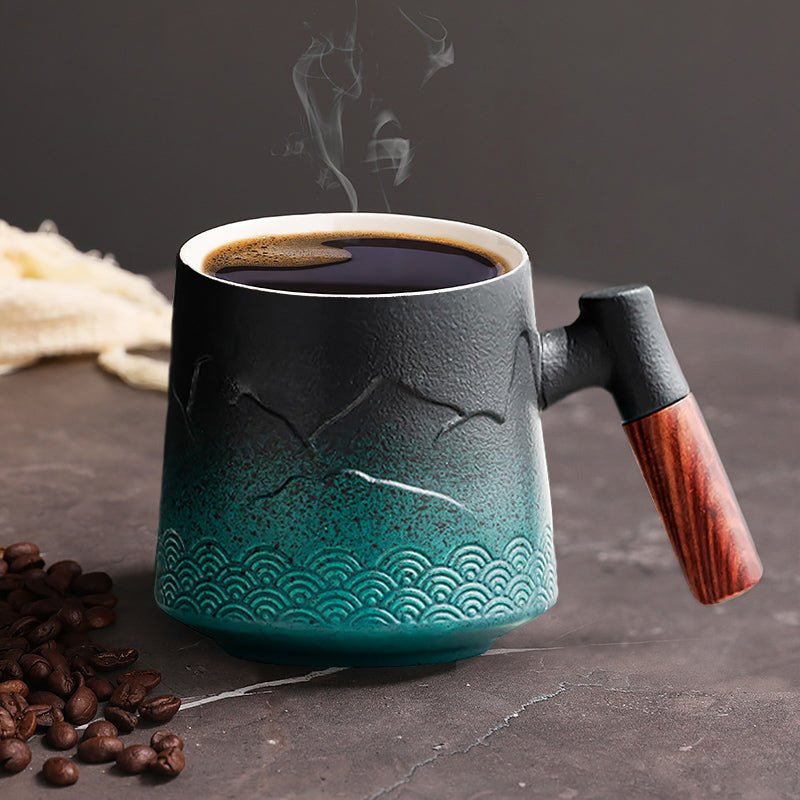
Mug Wood: What to Check Before You Buy a Wooden-Handle Mug
Mug wood buyers usually care about comfort, grip, and daily care more than decoration. We break down what to check, what to avoid, and which styles fit real coffee routines.
Czytaj dalej
Jesus and Coffee Mug Buying Guide: Print, Size, and Gift Value
A practical guide to choosing a jesus and coffee mug for daily use or gifting, with real trade-offs on size, print quality, handle comfort, and care. We compare three store options and point you to...
Czytaj dalej
Zostaw komentarz
Ta strona jest chroniona przez hCaptcha i obowiązują na niej Polityka prywatności i Warunki korzystania z usługi serwisu hCaptcha.