

Retro Coffee Mugs: What to Check Before You Buy
Reading time: about 9 minutes
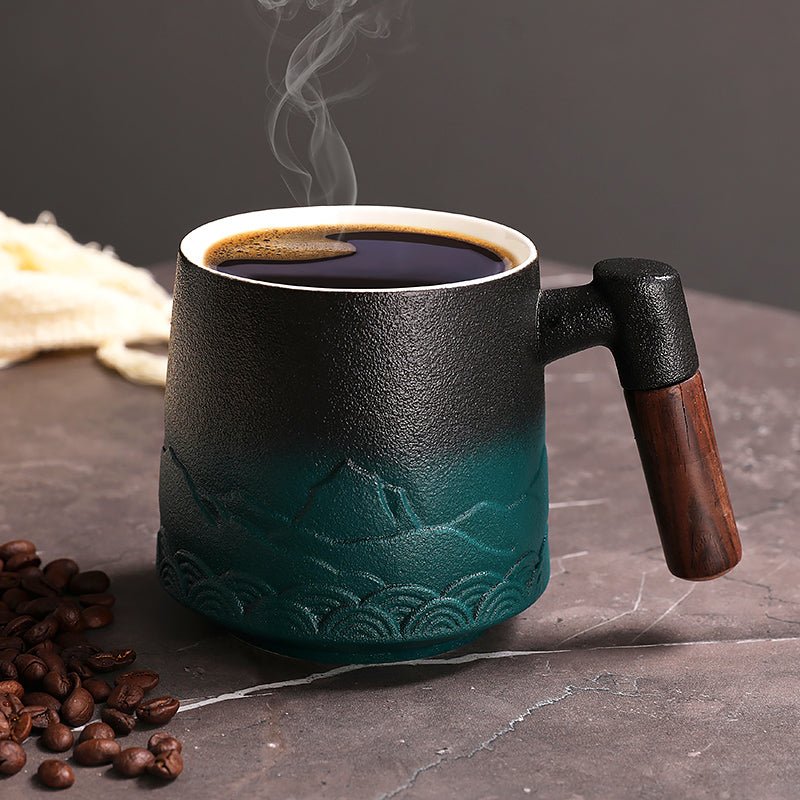
A retro mug usually gets noticed before the coffee does. It sits on the counter, gets used on a busy desk, and ends up in gift photos. If you are comparing options, start with our retro coffee tea cup and then scan the full retro coffee mugs collection to see which shape, glaze, and handle feel right in the hand.
In our store, we see the same buying pattern over and over: people want the vintage look, but they still need a mug that pours cleanly, cleans up easily, and does not feel awkward with a full morning coffee. That is where the details matter.
What makes retro coffee mugs worth buying?
The best retro coffee mugs do more than imitate a color palette. A good one has a comfortable handle, a stable base, and a rim that does not feel too thick or oddly sharp when you sip. It should also look intentional on the counter instead of fragile or overly decorative.
We usually tell shoppers to judge three things first: how it feels in the hand, how it behaves after a few dishwasher cycles, and whether the shape matches the drinks they actually make. A mug can look perfect in a product photo and still be the wrong pick if the handle opening is too tight or the body is too narrow for milk-heavy drinks.
- Good signs: even glaze, a steady foot ring, a handle that fits two fingers comfortably, and a rim that is smooth all the way around.
- Watch for: uneven bases, thin handles with sharp edges, visible glaze pinholes near the rim, and overly tall shapes that feel top-heavy.
- Trade-off: heavier retro mugs often feel solid and hold heat well, but they are less ideal if you want a light cup for long office use.
If you want a broader buying framework, our guide on Coffee Mugs Retro: How to Choose the Right Style, Size, and Material covers the same decision from a style-first angle.
Which material is best for daily use?
Material changes the feel more than most shoppers expect. Two mugs can look similar online and feel very different at the table. The most common retro styles are ceramic and stoneware, with some lighter porcelain pieces in the mix.
| Material | What it feels like | Best for | Trade-off |
|---|---|---|---|
| Ceramic | Balanced weight, familiar feel, usually easy to live with | Everyday coffee, mixed household use, gifting | Lower-quality ceramic can show glaze wear or tiny chips sooner at the rim |
| Stoneware | Heavier, denser, and more substantial in the hand | Slow sipping, office desks, mugs that should feel sturdy | Can feel bulky if you prefer a lighter cup or drink several refills a day |
| Porcelain | Thinner walls, lighter weight, cleaner sip | Tea, espresso drinks, a more refined retro look | Feels less rugged; not always the best choice if you stack mugs hard in a crowded cabinet |
We also look at the finish. A glossy interior glaze is easier to keep clean after coffee and milk, while a matte exterior can be attractive but may show utensil marks or surface wear more quickly. If a mug has metallic trim, gold accents, or foil detailing, assume hand washing unless the listing clearly says otherwise.
The practical question is not just what looks retro. It is what survives your routine. If you use the dishwasher most days, choose a mug with a fully glazed interior, a smooth lip, and no decorative elements that could soften or fade in heat. If you mainly want a shelf piece or a light-use guest mug, you can afford to prioritize style more heavily.
How much capacity do you actually need?
Size affects the whole experience. A mug that reads as charming in photos may be too small for a full pour or too bulky for a quick morning cup. For buyers trying to decide between compact and larger everyday formats, our size-specific guides to 10 oz Coffee Mugs: How to Choose the Right One for Daily Use, 12 oz Coffee Mugs: How to Choose the Right Mug for Daily Use, and 14 Ounce Coffee Mugs: Fit, Materials, and Buying Tips are worth comparing before you choose.
Here is the simple version we use when helping shoppers:
- 8 to 10 oz: best for smaller coffee pours, black coffee, tea, or a mug that should stay compact on a desk.
- 12 oz: the most flexible middle ground for a standard home coffee routine.
- 14 oz and up: better if you add milk, use a lot of foam, or dislike topping off your drink.
Retro mugs can lose points if the outer shape looks larger than the actual usable volume. Thick walls, a wide foot, or a curved interior can make a mug feel smaller than the number on the listing. If you often make cappuccinos or lattes, that matters. If you mostly drink a straightforward drip coffee, a more compact mug may be the better fit and will feel less heavy in the hand.
One mistake we see often: buyers choose a larger mug for the aesthetic, then discover it is awkward for smaller pours and cools down slowly because the drink spreads into a wider shape. That is not a deal-breaker, but it is a mismatch if you want a fast, simple cup every morning.
What should you inspect in product photos before ordering?
Online photos can hide the details that matter most. When we inspect mugs for our own assortment, we pay attention to the same things a careful shopper should check on a listing page.
- Handle clearance: Make sure your fingers can fit without scraping the body of the mug.
- Rim thickness: A very thick rim can feel clunky; an overly thin one can feel delicate or sharp.
- Base stability: The mug should sit flat without wobbling on a kitchen counter or office desk.
- Interior finish: A smooth, glazed interior resists coffee stains better than a rough or porous surface.
- Decoration placement: Check whether the print, decal, or stripe is centered and consistent all the way around.
There are also a few defect modes worth watching for in any ceramic mug: hairline cracks near the handle join, tiny chips on the rim, and uneven glazing where the foot ring meets the base. None of these are what you want on a new purchase, and they become more noticeable after repeated washing.
If you want another angle on these same choices, Coffee Mugs Retro: Style, Size, and Material Buying Guide is a useful companion piece.
How should you care for retro coffee mugs?
Care is where buyer expectations and real life often split. A mug that looks durable on a shelf may still need a little attention if you want it to keep its finish. Most retro coffee mugs are easy to use every day, but they are not all equal once they hit the sink or dishwasher.
- Dishwasher use: Good for plain glazed ceramic and stoneware, but check for metallic accents, decals, or painted trims first.
- Microwave use: Fine for most plain mugs, but never assume it is safe if the mug has metal, foil, or unknown decoration.
- Drying and stacking: Let the mug cool before rinsing or stacking; quick temperature swings can stress glaze over time.
- Daily handling: Avoid banging the rim on sinks and counters, since chips usually start at the edge or around the handle join.
Retro mugs are not the right choice if you want travel insulation, a spill-proof lid, or a cup that can bounce around in a bag. They are desktop and countertop mugs. That sounds obvious, but it matters when people shop for style first and function second. If your routine includes commuting, a travel mug is the better tool.
For homes that actually use the dishwasher several times a week, we usually recommend plain glazed finishes over highly detailed decorative surfaces. They clean faster, show fewer wear points, and tend to age more gracefully.
Which retro mug is best for gifts, desks, and kitchen displays?
Different buyers want different things from retro coffee mugs. A mug for a gift box does not need to solve the same problem as a mug for your own work desk, and neither one is identical to the mug you keep in front of the espresso machine.
- Gift buyers: choose a shape that looks polished out of the box, with a balanced handle and a finish that reads clean in photos.
- Office use: prioritize a stable base and a size that will not crowd a desk, keyboard, or notebook.
- Kitchen display: focus on color consistency, silhouette, and whether the mug looks good when stacked or hung.
- Daily home use: focus on comfort, washability, and whether the capacity matches the drinks you make most often.
Our buyers often use retro coffee mugs as small, practical gifts because they are easy to match with coffee beans, filters, or a simple breakfast set. But if the recipient prefers oversized lattes, a tiny vintage-style cup can miss the mark. That is why size comes before style in our decision process.
If you want to compare by use case rather than by photo, start with the full collection and narrow it down by capacity and finish. It is usually faster than guessing from a single image.
Frequently asked questions
Are retro coffee mugs dishwasher safe?
Many plain ceramic and stoneware retro mugs are dishwasher safe, but not all decorated mugs are. If the mug has metallic trim, hand-painted details, or an unclear care label, hand washing is the safer choice. We treat the glaze and decoration as the deciding factor, not just the shape.
What size retro coffee mug is best for daily use?
For most people, 12 oz is the easiest daily-use size because it handles standard coffee without feeling oversized. If you drink smaller pours or want a lighter mug, 8 to 10 oz works well. If you add a lot of milk or want a fuller pour, 14 oz is usually the better fit.
Are retro coffee mugs good for lattes and cappuccinos?
Yes, as long as the capacity and shape fit the drink. A wider 12 oz or 14 oz mug can work better for milk-based drinks because there is room for foam and stirring. Very narrow mugs are usually less comfortable for that use.
Do retro coffee mugs chip easily?
Any ceramic mug can chip if it gets knocked against a sink, another mug, or a hard counter edge. The rim and handle are the usual weak points. A well-made mug with an even glaze and a stable base will generally hold up better in normal kitchen use.
What should I check before buying retro coffee mugs online?
Check the handle opening, the listed capacity, the care instructions, and any close-up photos of the rim and base. Those details tell you more than the styled hero shot. If the listing is vague about materials or washing instructions, treat that as a warning sign.
If you want the quickest next step, compare the mug size, handle shape, and care notes side by side before you buy. Then start with the retro coffee mugs collection and narrow it to the mug that fits your drink, your sink, and your shelf.
Read more
Coffee Mugs 8oz: Size, Fit, Comparisons, and Best Picks
coffee mugs 8oz are a smart fit for espresso, tea, and compact desks. We compare what fits, what to check before you buy, and which styles in our store make sense for daily use or gifting.
Czytaj dalej
Retro Coffee Mugs: Style, Size, and Material Buying Guide
Retro coffee mugs need to look good on the counter and still feel right in daily use. This guide breaks down style, size, material, care, and the small details that matter before you buy.
Czytaj dalej
Zostaw komentarz
Ta strona jest chroniona przez hCaptcha i obowiązują na niej Polityka prywatności i Warunki korzystania z usługi serwisu hCaptcha.