
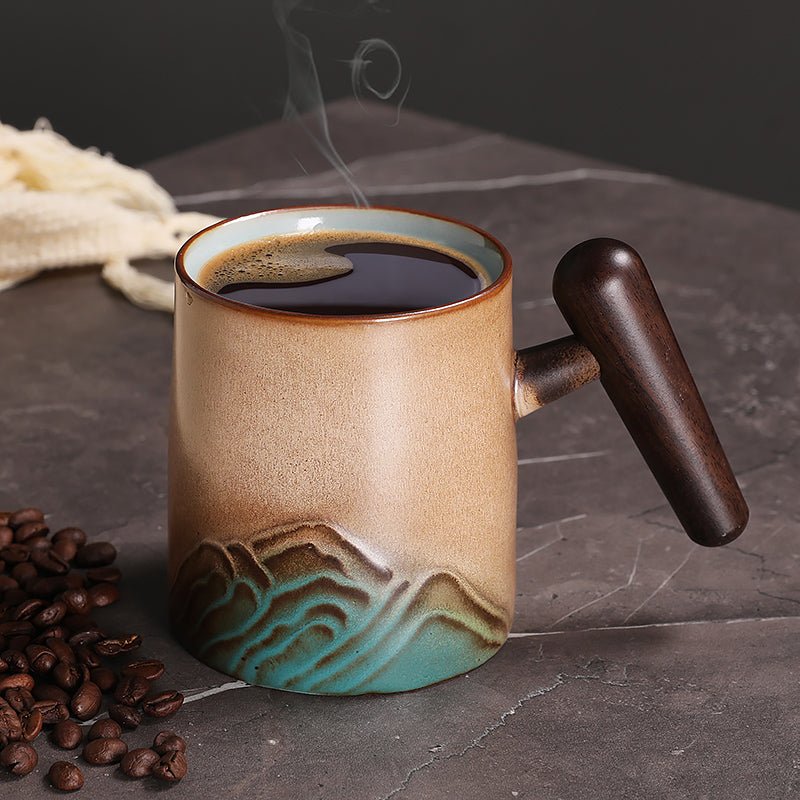
Pottery Coffee Mug Buyer Guide: What to Check Before You Buy
Reading time: about 9 minutes
A pottery coffee mug looks simple on the shelf. The differences show up the first week you use it: whether the handle pinches your fingers, whether the base feels stable on a desk, and whether the glaze still looks clean after repeated dishwasher cycles.
That is the part shoppers usually want help with. We handle mugs like these every day in our store, and the best choice is rarely the one with the flashiest look. It is the one that matches how you actually drink coffee, how much liquid you pour, and how often the mug moves between the sink, the office, and the gift box.
If you want to browse our current selection first, start with our full collection. For a few specific styles, see The Flow Coffee Tea Mug, Mountain Sea Coffee Tea Mug, and Spittoon Coffee Tea Mug.
What makes a pottery coffee mug different from a regular ceramic mug?
Most shoppers use pottery coffee mug and ceramic mug as if they mean the same thing. In practice, the buying experience is a little different. A pottery mug usually puts more weight on texture, glaze character, and the handmade feel of the piece, while a plain mass-market mug often prioritizes uniformity.
For a buyer, that difference matters in three places:
- Hand feel: pottery mugs often have thicker walls or a more substantial grip, which some people love and others find too heavy for long office use.
- Finish: the glaze may show gentle variation, brush marks, speckling, or darker edges. That is part of the appeal, but it also means two mugs of the same style may not look identical.
- Daily handling: a mug with a well-shaped handle and a stable foot ring is easier to live with than a prettier mug that feels awkward when full.
That is why we always recommend looking at the mug as a tool first and a gift second. If you want a broader read on size and fit before choosing, our posts on 10 oz coffee mug sizing and 12 ounce coffee mug sizing are useful comparisons.
Which details matter most before you buy one?
We look at the same checklist every time a pottery coffee mug comes into our store. Style matters, but it should not hide practical issues.
- Capacity: check the usable fill level, not just the marketing size. A mug that is comfortable at 10 oz may feel small if you routinely pour 12 oz with milk.
- Rim shape: a thinner, smoother rim usually feels better on the lips than a chunky one. That is easy to miss in product photos.
- Handle clearance: make sure your fingers can fit without touching the mug body when it is hot. This is a common complaint on sculptural pottery mugs.
- Base stability: a wide, flat foot ring helps the mug sit securely on a desk or countertop.
- Glaze consistency: look for a finish that is even where it needs to be, while accepting that handmade pottery often has small variations by design.
For buyers comparing common everyday sizes, our guides on 11 oz coffee mug fit and 12 ounce coffee mug uses are worth a look. They help if you are deciding between a smaller daily cup and a larger breakfast mug.
How do our pottery-style mugs compare in daily use?
We do not think there is one correct pottery coffee mug for everyone. The right pick depends on how the mug will be used: espresso-adjacent drinks, office coffee, tea, or a gift that needs to look special out of the box.
| Mug | Best for | What to notice | Trade-off |
|---|---|---|---|
| The Flow Coffee Tea Mug | People who want a softer, more relaxed everyday mug | Balanced shape and a look that works on a kitchen counter or a desk | Not the most minimal option if you want a very plain, utility-first cup |
| Mountain Sea Coffee Tea Mug | Gift buyers and shoppers who want visual character | More decorative presence, which makes it stand out in unboxing photos and shelf displays | Less suited to someone who wants a strictly understated mug |
| Spittoon Coffee Tea Mug | Buyers who like a sturdy, grounded feel | Feels like the kind of mug people keep reaching for because it is simple to use | Not the best fit if you want a very delicate or slim silhouette |
If you are choosing between styles, think about where the mug will live. A desk mug needs to sit flat and drink easily between meetings. A kitchen mug may need to stack or fit under a cabinet. A gift mug needs presentation value first and long-term practicality second.
What should you expect from pottery in real life?
Pottery is not a flaw-free, identical-every-time material. That is part of the reason people buy it. It also means you should buy with realistic expectations.
In our experience, the common things shoppers notice are:
- Small glaze shifts: color can look slightly different from one mug to another, especially around edges and curves.
- Minor surface texture: some pottery finishes feel silky, while others have a little tooth to the surface. That affects grip and the way the mug feels in hand.
- Weight: pottery mugs often feel more substantial than thin lightweight mugs. Some people enjoy that; others do not want the extra heft before breakfast.
Common defect modes to watch for are usually practical, not dramatic: uneven glaze pooling, a handle that feels too narrow, a base that does not sit flat, or a rim that feels rough when you drink. Those are the details that affect daily use more than the artwork on the side.
That is also why pottery coffee mug buyers should avoid choosing on looks alone. A mug can be beautiful and still annoying to use if the handle is cramped or the lip is uncomfortable.
Is a pottery coffee mug a good gift?
Yes, but only if the recipient actually uses mugs like this. A pottery coffee mug makes sense for someone who enjoys a tactile object on the desk, likes handmade details, or keeps coffee and tea gear visible in the kitchen. It is less useful for someone who only wants an ultra-light travel cup or a stackable cafeteria-style mug.
For gifting, we usually tell shoppers to focus on three things:
- Visual tone: choose a mug that matches the recipient's kitchen or office style.
- Grip comfort: if you are not sure about hand size, avoid mugs with especially tight handles.
- Use case: if the person mainly drinks big lattes, a smaller mug may look nice but feel limiting.
If you want more context on buyer checklists for stoneware styles, our article on stoneware mug buyer checkpoints is a good companion read. For a more design-focused comparison, see this stoneware pottery cup breakdown.
How should you care for a pottery coffee mug?
Care depends on the exact mug, so always check the product page and any included care notes. That said, the basics are consistent for most pottery drinkware.
- Rinse the mug soon after use if you are drinking coffee with dark roast oils or tea with strong tannins.
- Wash with a non-abrasive sponge so the glaze stays visually clean.
- Avoid sudden temperature shock, such as going from very hot liquid to a cold wet sink, if the mug is not specifically designed for that kind of use.
- Inspect the handle and rim periodically for chips, especially if you stack mugs tightly or store them near heavier cookware.
In a real kitchen, most mug wear does not come from one big mistake. It comes from repeated small impacts in the sink, the dishwasher, or the cupboard. A pottery coffee mug with a good finish should stand up to normal daily rotation, but it is still a handled object, not a travel tumbler.
If your routine is rough and your mug gets knocked around constantly, a simpler, thicker utility mug may suit you better than a decorative pottery piece.
Which pottery coffee mug should you choose if you want the least compromise?
If you want the most balanced purchase, choose the mug whose shape matches your routine first. We suggest thinking through the following before clicking buy:
- Morning use: do you want a mug that feels substantial with first coffee, or light enough to carry while moving around the house?
- Drink type: do you usually pour straight coffee, cappuccinos, or tea?
- Storage: will it sit on a shelf, a mug tree, or a crowded office desk?
- Gift versus personal use: is the mug mainly for you, or does presentation matter more?
If you want a visually distinctive mug, start with Mountain Sea Coffee Tea Mug. If you want a straightforward daily cup, The Flow Coffee Tea Mug is the more versatile first look. If you want a mug with a firmer, grounded personality, Spittoon Coffee Tea Mug is the one to compare closely.
Frequently asked questions
Is a pottery coffee mug better than a regular ceramic mug?
It depends on what you value. A pottery coffee mug usually gives you more character, glaze variation, and a more handcrafted feel, while a standard ceramic mug may be more uniform and predictable. If you care about tactile feel and presentation, pottery is often the better buy.
Are pottery coffee mugs heavy to hold?
Many are heavier than thin mass-produced mugs, especially if they have thicker walls or a fuller base. That can feel solid and stable, but it is not ideal if you want a very light cup for all-day use. If hand fatigue matters, choose a mug with a balanced handle and moderate weight.
What size pottery coffee mug should I buy for daily coffee?
For most people, the best choice is the size that matches the drink they actually pour every day. Smaller options work well for black coffee or tea, while larger mugs suit milk drinks and longer sipping sessions. If you are unsure, compare 10 oz, 11 oz, and 12 oz guides before deciding.
Can I put a pottery coffee mug in the dishwasher?
Many pottery mugs are built for normal kitchen use, but you should always follow the care guidance on the product page. Dishwasher safety can vary by glaze, finish, and construction. If you want the safest long-term appearance, gentle hand washing is usually the lowest-risk option.
What should I inspect when a pottery coffee mug arrives?
Check the rim for chips, the handle for comfort, and the base to make sure it sits flat. Also look at the glaze where the handle meets the body, since that is a common place for visual irregularities. If you are gifting it, open the box before wrapping so you can catch any issue early.
If you want to keep comparing before you buy, start with our full mug collection and narrow it by shape, feel, and the way you actually drink coffee at home or at work.
Read more
Coffee Mug Set of 8: What to Check Before You Buy
A coffee mug set of 8 should fit the way your kitchen actually works: daily brewing, quick dishwasher runs, and enough consistency for guests. Here’s how we help shoppers compare size, shape, mater...
Czytaj dalej
Drawn Coffee Mug Buying Guide for Everyday Use and Gift Giving
A drawn coffee mug should look good in a gift box and still hold up on a real kitchen counter. This guide covers the details we check before we stock one: size, handle feel, artwork quality, and care.
Czytaj dalej
Zostaw komentarz
Ta strona jest chroniona przez hCaptcha i obowiązują na niej Polityka prywatności i Warunki korzystania z usługi serwisu hCaptcha.