
Pictures of Coffee Mugs: What Buyers Should Look For Before Ordering
Reading time: about 10 minutes
A mug can look perfect in photos and still feel awkward in your hand. We see that a lot with gift orders: the picture looks sharp, the color looks right, then the buyer opens the box and notices the mug is narrower than expected, the handle is tight, or the print looks different outside the studio lighting.
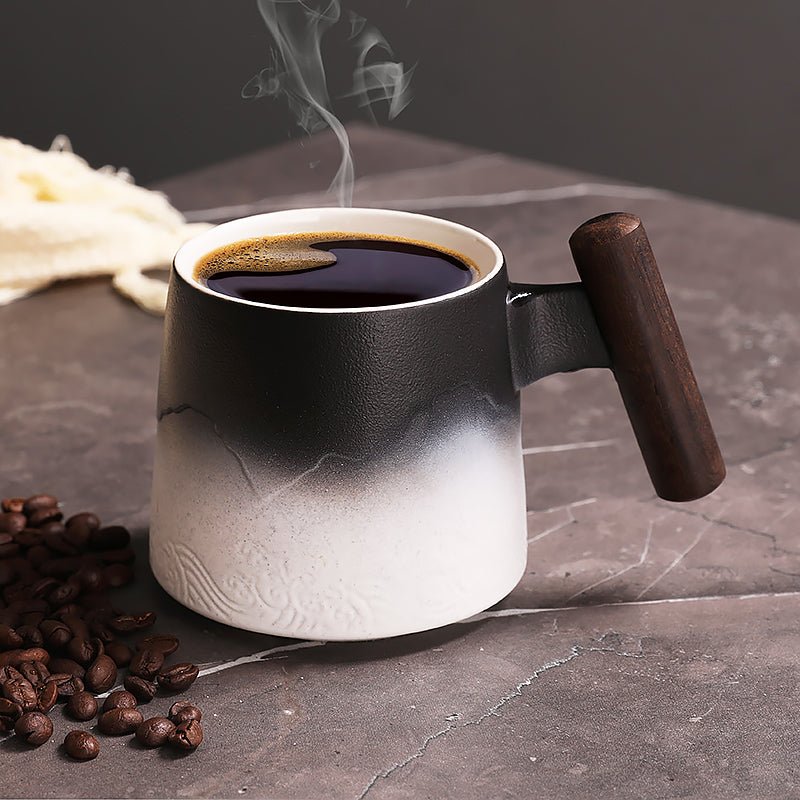
That is why pictures of coffee mugs deserve a closer read than most shoppers give them. In our store, we look at the angle, the finish, the rim, the handle shape, and the scale against real objects, because those details affect daily use far more than a polished hero shot.
If you are comparing options, start with our full coffee mug collection and then use the checks below to separate a mug that only photographs well from one that actually fits your routine. If you are shopping for a custom gift, our guide on Personalized Coffee Mugs with Pictures: How to Choose the Right One covers the art side in more detail.
What do pictures of coffee mugs usually leave out?
Photos are useful, but they rarely show the parts that matter most after the mug reaches your kitchen counter or office desk. A front-facing product photo can hide a lot of practical detail.
Here is what we check in our own product review process:
- Handle clearance: A mug can look roomy in a photo and still squeeze two fingers instead of three.
- Rim thickness: A thicker rim feels sturdier, but some buyers prefer a thinner lip for a cleaner sip.
- Base width: A wide base sits better on a desk; a narrow base may look elegant but tip easier on a cluttered surface.
- Print placement: A centered design can shift slightly depending on where the handle sits, especially on photo mugs.
- Glaze finish: Glossy ceramic reflects light differently than matte, so the same color can look lighter or darker in real life.
Pictures also do not show how the mug behaves after dishwasher cycles. We have seen print edges soften on lower-quality items, and we have seen fine details disappear when a mug is placed too close to the heating element during drying. If care matters to you, choose a mug with clear washing guidance and not just a nice picture.
How do you tell if a mug looks good in real life or only on screen?
The best way is to treat the photo like a clue, not proof. Good product images show scale, material, and finish from more than one angle. Weak images rely on one perfect view and a lot of styling.
We look for these signs when evaluating pictures of coffee mugs:
- At least one scale reference such as a hand, saucer, or coffee machine nearby.
- A true side profile so you can judge height and wall thickness.
- A close-up of the print if the mug uses graphics, names, or photos.
- A shot of the inside to check glaze consistency and interior color.
- A realistic setting like a breakfast table or desk, not only a studio cutout.
We also pay attention to color accuracy. White mugs often photograph cooler than they look in person, and black or navy mugs can lose detail in shadowy product images. If the mug will be part of a desk setup, the lighting in the photo matters almost as much as the mug itself.
If your main concern is capacity rather than artwork, pair the photo review with our size guides for 12 oz Coffee Mugs: What to Check Before You Buy, 16 oz Coffee Mugs: What to Check Before You Buy, and 20 Ounce Coffee Mugs: What Buyers Should Check Before Ordering.
Which mug details matter most for gifts?
Gift mugs live or die on first impression. The box gets opened, the recipient lifts the mug once, and the decision is made fast. A good photo should help you predict that moment.
For gift buying, we focus on four details:
- Personalization clarity: Names, dates, and photo placements should be easy to read without crowding the surface.
- Shape familiarity: A standard cylindrical mug feels safe as a gift. A tall, narrow shape feels modern but may not suit everyone.
- Interior and handle color: Small color accents can make the mug feel more finished, but they should not overpower the main design.
- Use case: A decorative mug is fine for a desk display, but it may not be the best pick for someone who drinks big coffee refills all morning.
One limitation to keep in mind: a photo-heavy mug is not the right choice if you want a very plain everyday cup. Large images, collage layouts, or bright custom graphics can feel busy after a few weeks of use. If the recipient prefers something understated, a simple ceramic mug with one clean detail usually ages better.
For shoppers choosing a personalized route, our article on Personalized Coffee Mugs with Pictures: How to Choose the Right One explains how to match photo placement to the mug shape so the finished piece does not look cramped.
What material and finish should you expect from the photos?
Most coffee mugs in ecommerce are ceramic, but not all ceramic looks or feels the same. Some are heavier with a thicker wall. Others feel lighter and a bit more refined. Photos can hint at the difference if you know what to look for.
We pay attention to these material and finish cues:
| Detail | What to look for in photos | What it means in use |
|---|---|---|
| Ceramic wall thickness | Visible lip at the rim or a sturdy side profile | Usually feels more substantial and holds heat a bit longer |
| Gloss finish | Light reflections across the surface | Easier to wipe clean, but can show smudges more clearly |
| Matte finish | Soft, low-reflection surface | Looks modern, but may show wear or marks differently over time |
| Printed surface | Sharp edges, no pixelation in close-up images | Better sign that the artwork will stay readable from arm’s length |
There is a trade-off here. Heavier ceramic often feels better in the hand, but it is not always the best pick for a commuter office where people carry mugs between desk, sink, and break room. Lighter mugs are easier to manage, but they may not give the same solid feel when you wrap your hand around the handle.
We also recommend checking whether the mug is shown empty and full. A mug that looks perfectly balanced with foam art may feel awkward once filled with hot coffee to the normal drinking line.
How should you judge size from a photo?
Size is one of the easiest things to misread from pictures of coffee mugs. A wide angle lens can make a small mug look larger, while a tight crop can make a roomy mug feel compact. That is why measurements matter more than the styled image.
We tell buyers to look for the stated capacity and then compare it with the mug’s visual shape. Short, round mugs usually feel more traditional. Tall mugs can hold more liquid without needing as much diameter, but they may not fit under every coffee machine spout or office shelf.
If you are deciding between standard sizes, our size-specific articles can help: 8 Ounce Coffee Mugs: What Buyers Should Check Before Ordering and A buyer's guide to large capacity coffee mugs.
Here is the practical version:
- 8 oz: Better for small servings, espresso-based drinks, or a tidy desk setup.
- 12 oz: A common everyday size that feels balanced for most coffee drinkers.
- 16 oz: Useful for larger pours, longer mornings, or people who like extra room for milk.
- 20 oz: Good for oversized servings, but not ideal if you prefer a lighter mug or need compact storage.
What a photo cannot tell you is how that size feels after a full pour. A mug that looks manageable in a picture can be too heavy when filled, especially if the handle opening is narrow or the mug has a taller profile.
What flaws should you watch for in product photos?
Sharp photos can still hide common defects. We have seen buyers miss small issues because the overall image looked polished. That is why we inspect for the smaller signs.
- Uneven print edges: Sometimes visible near curved surfaces if the artwork wraps around the mug.
- Rough handle joins: The handle should look smooth where it meets the cup body.
- Color banding: This can appear on large photo prints or gradient designs.
- Gloss inconsistencies: Patchy shine may point to inconsistent finishing.
- Crop mistakes: Faces, names, or logos can be too close to the edge in customized designs.
These are the sorts of details that matter more after the mug has been washed a few times. A clean-looking product image does not guarantee perfect alignment, but a detailed close-up gives you a better chance of spotting risk before ordering.
Our rule in the store is simple: if the mug only looks good from one perfect angle, we treat that as a warning sign, not a selling point.
How do you compare coffee mug photos before you buy?
A quick side-by-side review is usually enough to narrow the field. We use the same process with shoppers who are choosing between two or three options for gifts, office use, or everyday kitchen shelves.
Try this checklist:
- Compare the handle shape first. That affects comfort more than decoration.
- Check the capacity listing against your actual drink routine.
- Look at the print location and ask whether it will still look centered when held.
- Review the finish under both bright and shadowed images.
- Read the care notes so you know whether hand washing is preferred or machine washing is fine.
We also suggest thinking about where the mug will live. A home kitchen gives you more flexibility. An office desk does not. In a shared break room, a mug with a strong personal photo or name may be easier to identify. In a gift setting, a mug with a cleaner design may be safer if you do not know the recipient’s taste very well.
If you want to see what is currently available across styles and sizes, browse our coffee mugs and related products and use the photos as a starting point, not the final decision.
Frequently asked questions
How can I tell if coffee mug photos are accurate?
Look for multiple angles, a clear scale reference, and close-ups of the print or glaze. If the listing only shows one stylized image, you do not have enough information to judge the actual shape or finish.
Are photo mugs safe for everyday dishwasher use?
That depends on the mug and the print method. We always recommend checking the care notes before buying, because some printed designs hold up better with gentle dishwasher cycles or hand washing. If you want the safest long-term option, choose a mug with simple care instructions and avoid harsh scrubbing on the printed area.
What mug size should I choose if I buy from photos only?
Use the capacity listing as your main guide, then compare it with how much coffee you actually drink. If you usually refill once, a 12 oz or 16 oz mug often feels practical. If you want a larger morning cup or a mug for soup and cocoa too, a 20 oz style may fit better.
Do glossy mugs or matte mugs photograph better?
Glossy mugs usually show color more vividly in photos, but they also reflect more light. Matte mugs can look more premium and modern, though texture and small marks may stand out differently. Pick based on how you want the mug to feel in hand, not just how it looks on screen.
What is the biggest mistake people make when buying from mug photos?
They judge the design and ignore scale. A beautiful mug can still be the wrong mug if the handle feels tight, the body is too tall for the shelf, or the printed artwork looks crowded when viewed at normal distance.
If you are ready to compare options seriously, start with the photos, then check size and use case, and then choose the style that fits your routine best. For more specific sizing guidance, our 8 oz, 12 oz, 16 oz, and large-capacity guides are the best next step before you order.
More from our blog
Read more
Coffee Mugs Walmart: What to Compare Before You Buy
A practical comparison guide for shoppers looking at coffee mugs walmart and trying to decide what actually matters: size, material, handle comfort, and daily cleanup. We break down the trade-offs ...
Czytaj dalej
YETI Coffee Mug 20 oz: What Buyers Should Check Before Ordering
A practical guide to buying a YETI coffee mug 20 oz, including fit, lid style, material, cleaning, and when a smaller or larger size makes more sense.
Czytaj dalej
Zostaw komentarz
Ta strona jest chroniona przez hCaptcha i obowiązują na niej Polityka prywatności i Warunki korzystania z usługi serwisu hCaptcha.