
Mug Shot Coffee: What to Buy, What Fits, and What Holds Up
Reading time: about 10 minutes
A mug that looks good on a product page can still feel awkward at your desk. We see that all the time: a shopper likes the finish, but the handle feels tight, the rim feels too thick, or the cup is a little small for a real morning pour.
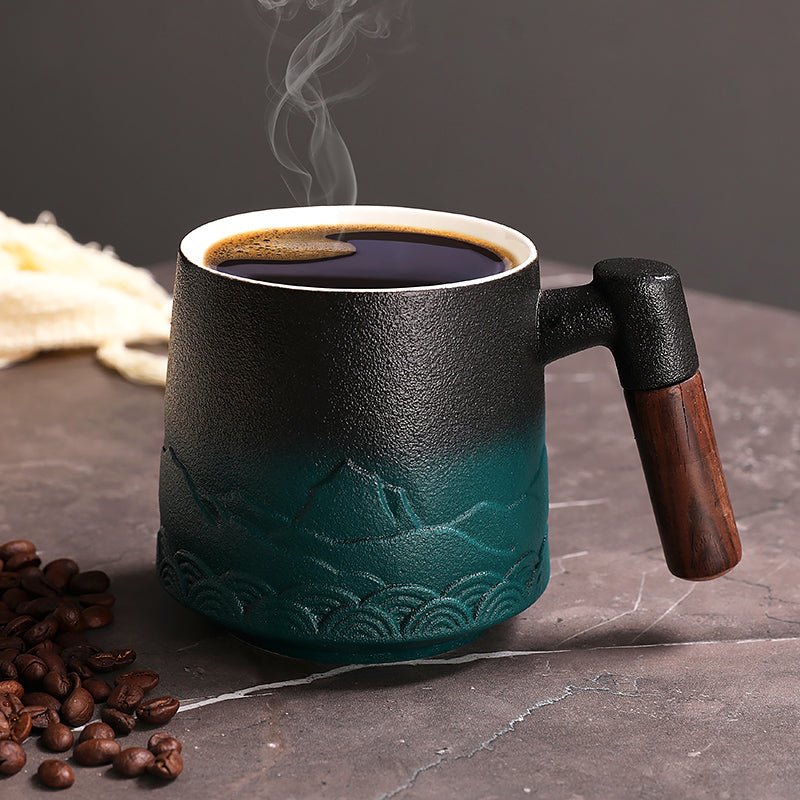
That’s why we take mug shot coffee seriously as a buying decision, not just a style search. In our store, we look at the same things customers do at home: how the mug feels in the hand, how it fits under a brewer, whether the finish stays clean after dishwasher cycles, and whether it’s a mug you actually reach for on a weekday.
If you want to compare current options first, start with our full mug collection. For a few easy-to-evaluate styles, the Landscape Coffee Tea Mug, The Gradient Coffee Tea Mug, and Retro Coffee Tea Cup are good places to compare shape, finish, and everyday feel.
What does mug shot coffee actually mean for buyers?
For shoppers, mug shot coffee usually points to a coffee mug style that looks photogenic, giftable, and easy to compare at a glance. But appearance is only half the story. The better question is whether the mug works for your routine: one short black coffee at home, a long office desk session, or a gift for someone who cares as much about form as function.
We think of it as the intersection of three things:
- Shape — wide, rounded, straight-sided, or tapered.
- Capacity — enough room for your usual pour, with or without milk.
- Finish — matte, gloss, gradient, or a more vintage look.
A mug can be beautiful and still be the wrong fit. A narrow handle may look sleek but can feel cramped for larger hands. A wide-mouth cup can cool coffee faster. A glossy exterior may show fingerprints more easily than a muted finish. Those are the small trade-offs we talk through in-store because they matter after the first photo is posted.
Which mug shape works best for daily coffee?
Shape affects comfort more than most buyers expect. A mug that feels balanced when empty can become annoying once it’s full, especially if you move from kitchen to office desk or carry it one-handed while juggling keys and a laptop.
In our experience, three shape cues matter most:
- Rim profile: A thinner rim usually feels nicer to sip from. A thicker rim can feel sturdier but sometimes less refined.
- Handle clearance: You want enough room for a finger or two without scraping the mug body.
- Base stability: A broader base helps on crowded desks, especially around keyboards and charging cables.
The Landscape Coffee Tea Mug is a smart option if you like a more relaxed, easy-to-hold profile. The Gradient Coffee Tea Mug leans more visual and contemporary, which suits shoppers who want the mug to look as good on a shelf as it does in a photo. The Retro Coffee Tea Cup is the one we’d point to if you like a more nostalgic silhouette and want your mug to feel a little less uniform than standard office drinkware.
None of these styles is ideal if you want a travel mug that seals shut or a giant capacity cup for long desk sessions. If you need insulation or a lid, this category is not the right fit.
How do you choose the right size for coffee, tea, and milk drinks?
Size is where a lot of buyers overthink the purchase and still miss the practical details. A mug that holds enough liquid on paper may still be awkward if it leaves no room for foam, milk, or a splash of creamer.
We recommend checking three things before you buy:
| What to check | Why it matters | What can go wrong |
|---|---|---|
| Capacity | Determines whether the mug suits espresso-based drinks, drip coffee, or tea | Too small for lattes; too large for a short pour |
| Body width | Affects heat loss and hand feel | Wide mugs cool faster and can feel bulky |
| Handle size | Changes comfort, especially for larger hands | Tight handles can make a full mug feel awkward |
If you’re still narrowing down practical fit, our earlier sizing guides can help. We’ve covered buyer concerns in 10 oz Coffee Mug: Size, Fit, and What to Check Before You Buy and 11oz Coffee Mug Buying Guide for Size, Fit, and Daily Use. Those breakdowns are especially useful if you’re trying to choose between a lighter everyday mug and one that holds a little more without feeling oversized.
For mug shot coffee shoppers, the right size usually depends on the drink you make most often. Black coffee drinkers tend to prefer a cleaner, simpler cup. Milk-forward drinkers often need extra room. Tea drinkers may care more about comfort and shape than strict capacity.
What materials and finishes hold up best in real use?
Most everyday coffee mugs in this category are ceramic, and that’s a good thing for heat retention, drinking comfort, and shelf appeal. Ceramic also gives designers room to play with glaze, color, and shape without making the mug feel fragile in daily handling.
Still, ceramic finishes are not all the same. Here’s what we tell shoppers to look for:
- Glazed exterior: Easier to wipe clean and usually more forgiving on a kitchen counter.
- Matte or textured finish: Often looks premium, but can show wear differently over time.
- Gloss finish: Easy to spot-clean, though fingerprints and water marks may be more visible.
- Printed or banded design: Adds personality, but the graphic placement should look even and not fade after repeated washing.
We also pay attention to common defect modes because those are the things customers only notice after unboxing. Uneven glaze near the rim, a wobbly base, or a handle with rough seams can turn a good-looking mug into a return. A mug should feel smooth where your lip meets the rim and solid where it sits on the table.
For buyers comparing style-led ceramic mugs, The Gradient Coffee Tea Mug is a good example of how finish changes the whole read of the piece. The Retro Coffee Tea Cup gives a different visual tone if you want something less modern and more nostalgic.
What should you expect from care, cleaning, and daily handling?
A good mug should fit into ordinary life. That means it should survive kitchen sink use, office dishwasher cycles, and a quick rinse after a second cup. We like drinkware that doesn’t ask for special treatment every day.
Our practical care advice is simple:
- Rinse coffee residue soon after use so stains don’t set on lighter interiors.
- Use the dishwasher only if the product care details support it, and don’t let mugs bang against harder dishes.
- Avoid thermal shock: don’t move a very cold mug straight into boiling water.
- Check the handle and base after washing; those are the first places you’ll notice roughness or wear.
If you hand-wash, a soft sponge is enough for most ceramic mugs. Harsh scouring pads can dull the finish over time. In a shared office kitchen, we also recommend keeping the mug away from the edge of the sink or counter. Handles are the first point of impact when people are rushing.
That said, mug shot coffee styles are not always the best pick for heavy-duty outdoor use, long car commutes, or people who need a fully sealed lid. For that, a travel tumbler is the better category.
Which mug is best for a gift, a desk, or an everyday kitchen?
This is usually the real buying question behind the search. Buyers aren’t just asking for a coffee mug. They’re asking which style will feel right in a specific setting.
Here’s how we’d break it down:
- For gifting: Choose a design with a clear visual identity. The mug should look intentional out of the box and not feel like a generic backup cup.
- For office desks: Pick a stable base and a shape that won’t crowd a keyboard, notebook, or mouse pad.
- For home kitchens: Prioritize comfort and easy cleaning over novelty.
- For tea drinkers: A slightly wider opening can work well, especially if you like to see the steam and avoid cramped sipping.
We often point shoppers to the Landscape Coffee Tea Mug when they want something balanced and everyday-friendly. For a more design-forward gift, the Gradient Coffee Tea Mug usually stands out more quickly in photos and unboxing. The Retro Coffee Tea Cup is a better fit for someone who likes vintage cues and doesn’t want a mug that looks like everyone else’s office cup.
If you want to see the broader range before choosing one style, the full collection is the quickest way to compare options side by side.
What should you compare before you click buy?
We always recommend a short checklist before buying any mug shot coffee style. It keeps you from choosing on looks alone.
- Capacity — Does it suit your usual pour with room for milk or foam?
- Handle comfort — Can you get a secure grip without pinching?
- Rim feel — Does the drinking edge look comfortable and smooth?
- Base stability — Will it sit safely on a desk or narrow shelf?
- Finish — Do you want glossy, matte, colorful, or retro styling?
- Care expectations — Can it handle your normal washing routine?
That checklist is especially useful if you’re comparing two similar cups and can’t tell the difference from the product photo alone. A mug with a beautiful glaze but a cramped handle is a daily annoyance. A more modest-looking mug that feels right in hand is usually the one that gets used.
We’d rather help you buy one mug you’ll keep on the counter than three that look great in a cart and then sit in the cabinet.
Frequently asked questions
Is mug shot coffee just a style search or a specific mug type?
It’s mostly a style-and-shopping term shoppers use while comparing coffee mugs. For buyers, it usually means a mug that looks good, feels comfortable, and works for everyday coffee rather than a specialized brewing vessel.
Are ceramic mugs better than glass or stainless steel for mug shot coffee?
For most home and office use, ceramic is the most balanced choice. It feels better on the lips, usually looks better on a table, and is easier to choose for gifting. Glass can look nice but is less forgiving, and stainless steel is better for insulation than for a classic mug feel.
What size mug should I choose for daily coffee use?
If you drink standard drip coffee or tea, a mid-size mug is usually the safest pick. If you add milk or make larger pours, choose a little extra space so the mug doesn’t feel overfilled. Our size-focused posts on 10 oz, 11 oz, and 12 oz mugs are useful if you want to compare fit more carefully.
Do these mugs work well for both coffee and tea?
Yes, the styles in this category are generally fine for both. Tea drinkers may prefer a slightly wider cup for easier sipping and cooling, while coffee drinkers often care more about handle comfort and how the mug feels on a desk.
What is mug shot coffee not good for?
It’s not the right category if you need a sealed travel lid, maximum insulation, or a mug for rough outdoor use. It’s better for home kitchens, office desks, and giftable everyday drinkware where feel and appearance matter as much as function.
If you’re ready to compare by shape and finish, start with our mug collection, then narrow it down to the Landscape Coffee Tea Mug, The Gradient Coffee Tea Mug, or Retro Coffee Tea Cup based on the way you actually drink coffee every day.
More from our blog
Read more
Hairline Crack in Coffee Mug: What It Means and When to Replace It
A hairline crack in a coffee mug can be a cosmetic flaw or the first sign the mug is weakening. We explain how to inspect it, when to stop using it, and what to buy next.
Czytaj dalej
Fiesta Dinnerware Coffee Mugs: Sizes, Materials, and Best Picks
Compare fiesta dinnerware coffee mugs by size, shape, and everyday use so you can pick a mug that fits your coffee, storage space, and dishwashing routine. We also point you to practical options an...
Czytaj dalej
Zostaw komentarz
Ta strona jest chroniona przez hCaptcha i obowiązują na niej Polityka prywatności i Warunki korzystania z usługi serwisu hCaptcha.