
Modern Ceramic Coffee Mugs: Style, Fit, and Buying Checks
Reading time: about 9 minutes
A mug can look perfect in a product photo and still feel wrong the first morning it lands beside your coffee maker. The handle may feel tight, the rim may be thicker than expected, or the shape may take up more desk space than the buyer planned for. That is why we treat modern ceramic coffee mugs as both style pieces and daily tools in our store.
Shoppers usually start with appearance: clean lines, sculptural shapes, a modern finish, or something that looks giftable without feeling too formal. The better buying decision comes after that first reaction. You want to know how the mug will sit on a kitchen counter, how it feels during a slow coffee break, whether it suits tea as well as coffee, and what trade-offs come with a more distinctive shape.
Why modern ceramic coffee mugs feel different in daily use
Ceramic has a familiar weight and feel that many coffee drinkers prefer over thin metal or disposable cups. It does not make a mug automatically better, but it gives the drinker a grounded, home-kitchen experience. Buyers using a mug daily may prioritize grip and balance, while gift shoppers may weigh silhouette and presentation more heavily.
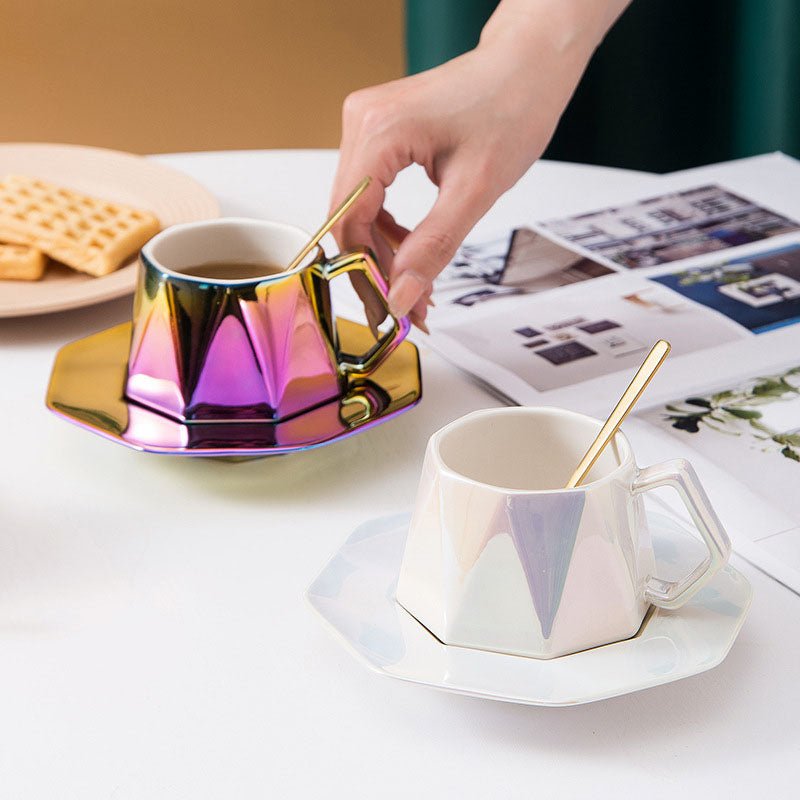
Modern ceramic coffee mugs often lean into shape. That can mean a faceted surface, a smooth gradient-style look, or a more sculptural profile. Those design choices affect more than the photo. A straighter wall can feel neat and architectural on a desk. A rounded body can feel softer in the hand. A raised or shaped base may look more intentional on an open shelf, but buyers should still consider stability and how much counter space the mug needs.
Here are the practical details we look at before recommending a ceramic mug style:
- Rim feel: A very thick rim can feel sturdy but less refined for sipping black coffee or tea.
- Handle clearance: Some decorative mugs look generous in photos but suit two-finger holds better than full-hand grips.
- Foot ring and base: The unglazed or raised bottom area should sit flat and not feel wobbly on a desk.
- Interior access: Narrower shapes can be harder to clean by hand, especially near the bottom curve.
- Surface finish: Glazed ceramic should be checked for obvious pinholes, rough spots, chips, or glaze pooling near the rim.
Those details are easy to overlook in photos, but they can affect comfort and maintenance in daily use.
Which mug shape works for kitchen counters, office desks, and gifts?
Use case should lead the choice. A mug that looks striking on a shelf may not be the best mug for a crowded office desk, and a mug that feels calm and simple for daily coffee may not have enough visual personality for a gift box.
| Buyer situation | Best direction | Trade-off to check |
|---|---|---|
| Daily kitchen coffee | A stable ceramic mug with a comfortable handle and easy-to-clean interior | Highly sculptural shapes may need more careful washing |
| Office desk use | A shape that sits securely near a keyboard, notebook, or monitor stand | Wide or irregular silhouettes can take up more space |
| Gift shopping | A visually distinct mug that feels more personal than a plain cylinder | Style preferences are subjective, so avoid overly specific designs if unsure |
| Tea and slower sipping | A ceramic mug with a rim and profile that feels comfortable over a longer drink | Capacity and heat feel should be checked on the product page |
If the buyer is comparing several looks at once, our unique coffee mugs collection is the most useful starting point because it lets shoppers compare different ceramic personalities side by side instead of choosing from one product photo in isolation.
What should buyers check before ordering a modern ceramic mug online?
Product photos help, but they do not answer every practical question. Before adding a mug to cart, we suggest slowing down on four points: capacity, hand feel, care instructions, and the role the mug needs to play.
- Check capacity on the product page. Do not assume every ceramic coffee mug holds the same amount. If you brew from a single-serve machine, pour-over setup, or espresso-based drink, compare the listed size with your usual drink.
- Look at the handle and body together. A mug with a dramatic body can still be comfortable, but the handle should match the visual weight of the piece.
- Read the care notes before buying. Ceramic may be common in kitchens, but care guidance can vary by glaze, finish, and design. Check the individual product page rather than assuming microwave or dishwasher use.
- Match the mug to the setting. A showier mug may be great for a home coffee bar or gift, while a simpler profile may make more sense in a shared office cabinet.
Capacity is one of the most common areas where shoppers second-guess themselves. If you already know you prefer a smaller daily pour, our guide to 12 oz ceramic coffee mugs gives a practical way to think about fit and routine. If you tend to drink larger coffees, compare your needs with the checks in our 16 ounce ceramic coffee mugs guide before choosing by looks alone.
Where do Rhombus, Gradient, and Planet ceramic styles make sense?
We use the following three products as style examples because they show different ways a ceramic mug can feel modern without pretending that one shape suits every buyer. The right choice depends on the person using it, the surface it will live on, and how much visual attention the mug should carry.
If the buyer likes geometric structure, the Rhombus Ceramic Coffee Mug is the direction we would point them toward. The reader situation is usually a desk, shelf, or coffee station where a standard round mug feels too plain. Why it fits: a rhombus-inspired look gives the mug a sharper, more architectural presence. The trade-off is that angular styling can feel more deliberate than casual, so it may not be the safest gift for someone who only likes plain drinkware.
If the buyer wants a softer visual transition, the Gradient Ceramic Coffee Mug makes sense as a modern ceramic example with a less rigid personality. The reader situation is often gifting, a home office, or a kitchen counter where the mug should look styled but not overly formal. Why it fits: a gradient-style presentation can add visual interest without relying on a novelty shape. The limitation is taste. Some buyers want strong contrast or a more sculptural profile, and a gradient direction may feel too subtle for them.
If the buyer wants something more playful and object-like, the Planet Ceramic Coffee Mug is the style to compare. The reader situation is a gift, a personal desk mug, or a coffee-and-tea routine where the mug is meant to feel a little more expressive. Why it fits: the planet theme gives the ceramic piece a clear identity. The trade-off is that themed drinkware is more personal, so it works best when the buyer knows the recipient will enjoy that visual cue.
What are modern ceramic mugs not good for?
A clear limitation helps shoppers avoid disappointment. Ceramic is not the best choice for every setting. If someone needs a travel mug for a commute, a sealed lid, or a cup that can be tossed into a bag, a standard ceramic mug is the wrong category. It belongs on a counter, table, shelf, or desk.
Modern ceramic mugs also may not suit buyers who want every piece in a cabinet to stack tightly. Sculptural profiles, shaped handles, and decorative forms can make a mug more interesting, but they can also make storage less efficient. If cabinet space is tight, check the product shape carefully and compare it with the mugs you already own.
There is also a care trade-off. Ceramic can be easy to live with, but decorative finishes and unusual forms deserve more attention than plain utility mugs. We never suggest assuming care details that are not stated on the product page. For broader safety and buying checks, our article on ceramic coffee mug safety covers the questions shoppers commonly ask before ordering.
How should ceramic mugs be checked after delivery?
The first inspection should happen before the mug goes into daily rotation. This is the same practical routine we would use with any ceramic drinkware that arrives by mail.
- Set the mug on a flat counter and check that it sits evenly.
- Run a finger carefully around the rim to feel for rough spots or chips.
- Look inside the mug under good light for visible cracks, pinholes, or glaze flaws.
- Check the handle join areas because stress points often show there first if a piece has been damaged.
- Read the product care instructions before using a dishwasher, microwave, or abrasive sponge.
For daily washing, avoid harsh scrubbing pads unless the product guidance says they are appropriate. A soft sponge is usually the better starting point for glazed ceramic surfaces. If coffee marks appear over time, clean gently rather than attacking the glaze. The goal is simple: keep the mug pleasant to use without treating decorative ceramic like heavy-duty camping gear.
Frequently asked questions
Are modern ceramic coffee mugs good for everyday coffee?
Yes, modern ceramic coffee mugs can be very good for everyday coffee if the shape, capacity, and handle suit your routine. We recommend checking the individual product page for size and care details before ordering. A more sculptural mug may feel special on a desk or counter, but it may not store as compactly as a plain mug.
Can I use a modern ceramic mug for tea as well as coffee?
Most shoppers use ceramic mugs for both coffee and tea, but the best fit depends on rim comfort, capacity, and how long you like to sip. A mug with a comfortable rim and stable base works well for slower tea breaks. Always check the product-specific details rather than assuming all ceramic mugs behave the same way.
Which ceramic mug style is safest for gifting?
For gifting, choose based on how well you know the recipient's taste. A geometric style like Rhombus suits someone who likes structured design, a gradient style suits someone who prefers a softer modern look, and a themed style like Planet works best for someone who enjoys expressive objects. If unsure, compare several options in the unique mug collection before choosing.
Are ceramic mugs a good choice for an office desk?
Ceramic mugs can work well at an office desk because they feel stable and comfortable for regular sipping. The main checks are footprint, handle comfort, and whether the shape feels secure near electronics or papers. If the desk is crowded, avoid oversized or unusually wide shapes.
What should I inspect when my ceramic mug arrives?
Check the rim, handle joins, inside glaze, and base before first use. Set it on a flat counter to make sure it does not wobble. If anything looks chipped, cracked, or rough where you drink from it, pause before putting it into daily use.
A practical next step before you buy
Before choosing, decide what job the mug needs to do. For a daily kitchen mug, prioritize comfort, capacity, and easy cleaning. For an office mug, prioritize a stable footprint and a handle that works during distracted use. For a gift, prioritize a style that matches the recipient rather than the loudest design.
Use this quick comparison before ordering:
- For structured modern style: compare the Rhombus Ceramic Coffee Mug.
- For softer visual interest: compare Gradient Ceramic Coffee Mug.
- For a more expressive gift: compare the Planet Ceramic Coffee Mug.
- For broader browsing: start with the unique coffee mugs collection and narrow by the setting where the mug will actually be used.
That last step matters. The best modern mug is not just the one that photographs well. It is the one that makes sense on the buyer's counter, desk, or gift table after the first impression has worn off.
Read more
Mama Bear Coffee Mug: What Buyers Should Check Before Ordering
A practical guide to choosing a mama bear coffee mug that feels good in hand, fits the drink size you actually use, and holds up after daily washing. We cover size, material, gift fit, and the trad...
Czytaj dalej
Star Wars Coffee Mugs: What Buyers Should Check Before Ordering
Star Wars coffee mugs look simple until you start comparing size, print quality, and care requirements. We break down what matters in real use so you can choose a mug that fits your desk, dishwashe...
Czytaj dalej
Zostaw komentarz
Ta strona jest chroniona przez hCaptcha i obowiązują na niej Polityka prywatności i Warunki korzystania z usługi serwisu hCaptcha.