
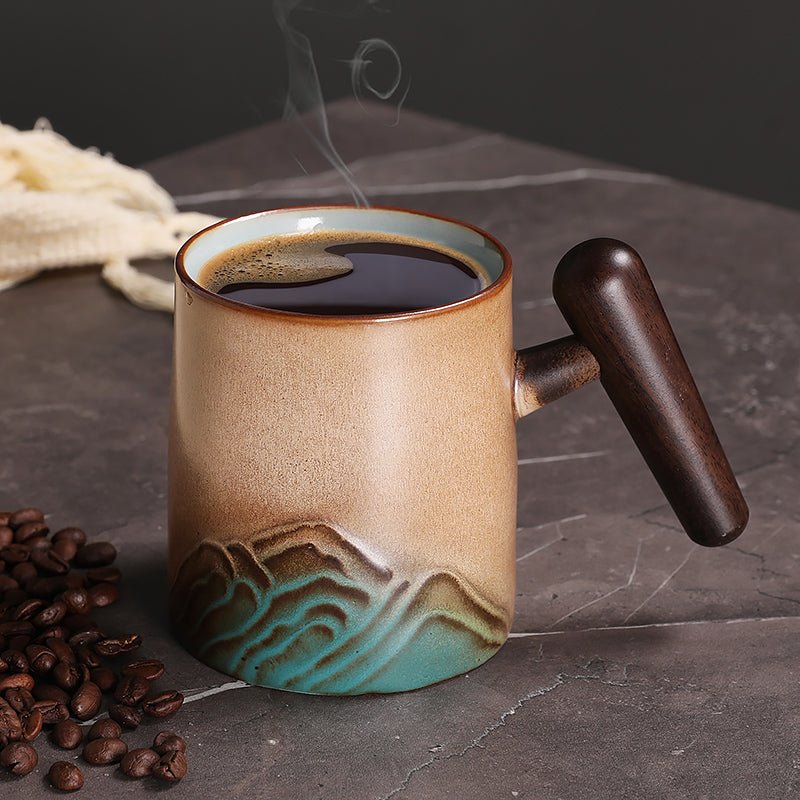
Large Coffee Cup Buying Guide for Daily Use
Reading time: about 8 minutes
A large coffee cup usually earns its place on the counter, not in a product photo: one mug for a full pour of drip coffee, another for tea that needs a little room for milk, and a third that stays at a desk long enough to pick up a ring from the keyboard. We stock this category because buyers ask for the same thing again and again: enough capacity to feel generous, but not so much bulk that the cup becomes awkward to hold or wash.
If you want to browse the current options first, start with our full collection. The mugs most often compared for this use are The Flow Coffee Tea Mug, White Golden Waves Tall Coffee Tea Mug, and Green Waves Coffee Tea Mug.
What does "large" actually mean for a coffee cup?
For daily buyers, large usually means 14 to 20 ounces. That is the range where a mug can hold a full pour of coffee without feeling like a refill is due in ten minutes.
If you drink black coffee, a 14 to 16 ounce cup may be enough. If you add milk, use a longer brew, or want space for foam or hot chocolate, 18 to 20 ounces is easier to live with. Bigger is not automatically better, though. The trade-off is weight, table space, and how comfortable the handle feels once the mug is full.
In our store, we see a lot of shoppers choose a large coffee cup for mornings at home and then regret it on a crowded office desk because the footprint takes up too much room. That is why the right size is the one you can lift comfortably with one hand and still set down next to a laptop, notebook, or pour-over setup.
Which shape works best on a desk or kitchen counter?
Shape matters as much as capacity. A tall mug feels slimmer in the hand and usually fits better on a narrow counter. A wider mug is easier to stir and cools a little faster, which some tea drinkers prefer. For a large coffee cup, we usually tell shoppers to look at three things:
- Handle clearance: You want enough room for three or four fingers without brushing the cup body.
- Base stability: A flat, even bottom matters more as the mug gets taller.
- Rim comfort: A thinner, smoother rim usually feels better on a large drink than a thick, heavy edge.
If your mug lives beside a keyboard or on a breakfast bar, a tall profile is often the safer pick. If you fill from a French press and like to stir in sugar, a slightly broader cup can be easier to use. Tall is not the right answer for every buyer, but it is often the best compromise when you want volume without a bowl-shaped footprint.
Which CoffeifyMug options make sense for different buyers?
The three mugs below are the ones we point buyers to when they want a large coffee cup that still looks at home on a kitchen shelf or office desk. If you want to compare the broader range first, our Big Coffee Cups: How to Choose the Right Large Mug for Daily Use breaks down the same decision from a wider angle.
| Product | Best fit | Trade-off |
|---|---|---|
| The Flow Coffee Tea Mug | Best if you want a clean everyday mug for coffee, tea, or a second pour without visual clutter. | The simple shape is easy to live with, but it is not the best pick if you want a decorative statement piece. |
| White Golden Waves Tall Coffee Tea Mug | Best if you want a taller silhouette that looks polished on a counter and leaves room for a larger drink. | The taller profile can feel less forgiving under short machine spouts or tight cabinets. |
| Green Waves Coffee Tea Mug | Best if you want a mug with more visual presence for a desk, gift box, or open shelf. | Decorative finishes need a closer look at care instructions, especially if you wash mugs often. |
That is the practical split we see most often: plain and dependable, tall and refined, or colorful and more noticeable. If you are still deciding between daily-use styles, the Large Coffee Cup Buying Guide: What to Check Before You Buy is the shortest path to a better comparison. For shoppers who already know they want a bigger everyday vessel, the Extra Large Coffee Cup Buying Guide for Daily Drinkers helps you judge whether you actually need the next size up.
A large coffee cup is not always the best choice for commuters. If you need one-handed drinking in a car, a travel mug with a lid is the better tool. An open mug is more comfortable for desks, kitchen counters, and slow pours, not cupholders.
What should you check before you buy a large coffee cup?
We look at the same checks every time we review a mug for the store, and the failures are usually predictable. Ceramic and stoneware mugs tend to hold heat well, but they can chip at the rim, craze after rough thermal changes, or feel awkward if the handle is too narrow for a full pour. A large coffee cup should pass the following test before you click buy:
- Capacity: Confirm the ounce size, not just the photos. A mug that looks generous can still be smaller than you expect.
- Handle fit: Make sure the handle gives you room for your fingers without pinching against the body.
- Footprint: Check the width if your coffee station is tight or if the mug needs to sit near a machine tray.
- Finish: Look for glaze pinholes, uneven color, or heavy decorative accents if you want easier cleaning.
- Care: Verify whether the mug is dishwasher-safe and microwave-safe before assuming it is.
The common defect modes on a large mug are usually boring, not dramatic: a wobble from an uneven foot ring, a chipped rim from one bad sink bump, or stress around the handle joint after repeated heavy use. That is why we pay close attention to the base and the handle when we bring mugs into the store. Those are the parts you feel every morning.
If you like a broader comparison of styles and everyday use cases, our A buyer's guide to large capacity coffee mugs is useful for the shoppers who want one article to cover the sizing basics and the comfort trade-offs.
How do you care for one so it lasts?
Large mugs do not usually fail in dramatic ways. They wear out slowly: a handle starts to feel rough, a glaze begins to look tired, or a chip appears after one hard knock against the sink. We tell customers to treat a big mug a little more carefully than a smaller one because there is more leverage on the handle and more weight when it is full.
- Use the dishwasher only if the product listing says it is safe.
- Hand wash decorated or metallic finishes to keep the surface cleaner longer.
- Let the mug cool before filling it with cold liquid, and do the reverse as well. Thermal shock is rough on ceramics.
- Do not stack heavy mugs inside each other if the lip is tight. That is a common cause of chips.
- Rinse coffee residue soon after use if you want to reduce staining on lighter interiors.
A large coffee cup is built for the counter, the desk, and the slow morning pour. It is not the right answer if you need a sealed lid, a non-slip sleeve, or something that can ride around in a car all day. That trade-off matters. Open mugs are better for comfort and presentation, while travel cups win on mobility.
Frequently asked questions
What size is considered a large coffee cup?
Most shoppers mean roughly 14 to 20 ounces when they say large coffee cup. Below that, the mug starts to feel closer to a standard everyday cup. Above that, you are getting into extra-large territory where the mug can feel bulky if you only drink a small amount at a time.
Is a tall mug better than a wide mug?
A tall mug is usually better if you want a smaller footprint on a desk or counter. A wide mug is easier to stir and can feel more open for tea or hot chocolate. The better choice depends on where you use it and how much room you want around the mug when it is full.
Can I use a large coffee cup for tea or hot chocolate?
Yes. A large coffee cup works well for tea, hot chocolate, and milk-based drinks because the extra space leaves room for stirring and toppings. If you prefer a small, concentrated drink, though, a standard mug may be the better fit.
Will a large coffee cup fit under my coffee machine?
Sometimes, but not always. Tall mugs can be awkward under low espresso machines or compact brewers, so measure the gap before you buy. If the spout height is tight, choose a shorter mug or a model designed for machine clearance.
How do I stop a large coffee cup from staining?
Rinse it soon after use, especially if you drink dark coffee every morning. Mild detergent and regular washing help with surface stains, while decorated or textured finishes may need hand washing to keep them looking cleaner. If a mug has a light interior, keeping coffee from sitting in it for hours makes the biggest difference.
What should you compare before you choose one?
If you want the shortest checklist possible, compare the mug against the way you actually drink coffee at home. We use this same checklist when we help shoppers choose between styles in our store.
- Capacity: Pick the ounce size that matches your usual pour.
- Shape: Tall for smaller footprints, wider for easier stirring.
- Handle: Make sure it feels comfortable when the mug is full.
- Care: Confirm dishwasher and microwave instructions before you buy.
- Use case: Desk, kitchen counter, gift, or travel are all different jobs.
If you want to see the current options again, start with the full collection and compare the three mugs above side by side. That is usually the fastest way to land on the large coffee cup that fits your routine instead of just your search terms.
Read more
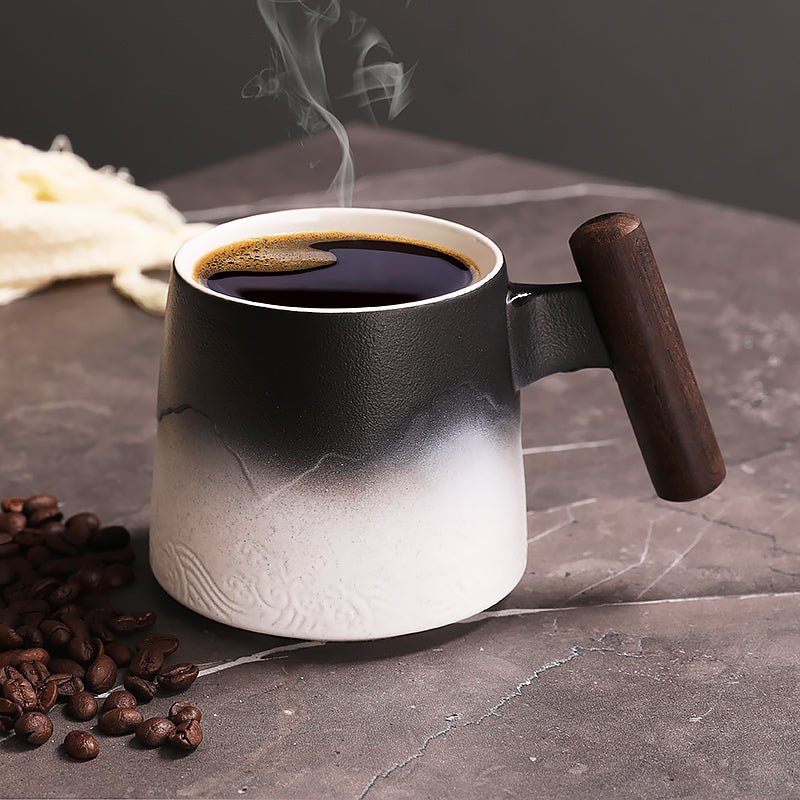
Camping Cup Buying Guide for Camp, Cabin, and Everyday Coffee
Pick a camping cup that fits how you actually drink outside, from car camping and cabin mornings to a mug that also works at home. We compare materials, sizes, and the trade-offs that matter before...
Czytaj dalej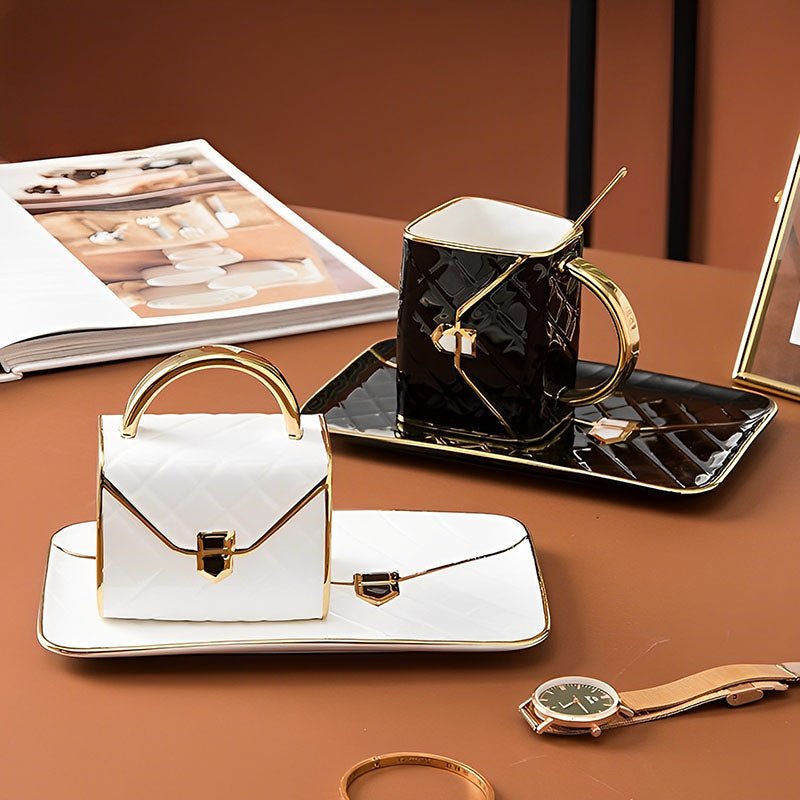
Coffee Mug With Teddy Bear: Size, Materials, and Gift Checks
A coffee mug with teddy bear usually gets bought as a gift, but the useful details are practical: handle comfort, surface finish, and how the mug will hold up after unboxing. We compare what to che...
Czytaj dalej
Zostaw komentarz
Ta strona jest chroniona przez hCaptcha i obowiązują na niej Polityka prywatności i Warunki korzystania z usługi serwisu hCaptcha.