
Japanese Coffee Mugs: How to Choose the Right One for Daily Use
Reading time: about 9 minutes
On a crowded kitchen counter, the mug that gets used every morning is usually the one that feels stable in the hand, pours cleanly, and does not crowd the coffee maker. That is where japanese coffee mugs earn their place: not by shouting for attention, but by getting the proportions and finish right.
We see a lot of shoppers looking for the same balance. They want something with a Japanese-inspired feel, but they also want a mug that works for drip coffee, tea, desk use, and the occasional gift. If that is the goal, start with our full mug collection and compare the silhouette against a few clean, tall options like the White Golden Waves Tall Coffee Tea Mug. The best choice is usually the one that fits your daily pour, not just your shelf.
What do buyers usually mean by Japanese coffee mugs?
People use the phrase in a few different ways, and that matters before you buy. Some shoppers mean mugs inspired by Japanese tableware: restrained patterns, soft glazes, tall shapes, and a calm overall look. Others mean mugs made in Japan, which is a different claim entirely and should be stated clearly on the product page.
In our store, we treat the style question separately from the origin question. A Japanese-inspired mug often has one or more of these traits:
- A clean silhouette with a taller body and a smaller visual footprint.
- Nature-led decoration such as waves, mountains, or seasonal motifs.
- Matte or semi-gloss glaze that feels less flashy than a glossy novelty mug.
- A handle and rim that are meant for steady daily use, not just display.
That restraint is the appeal. It sits well on a kitchen counter, beside a grinder, or next to a laptop on an office desk. It also makes these mugs easy to gift without worrying that the design is too loud for the recipient.
Which mug shape works best for daily coffee?
Shape affects the experience more than most shoppers expect. A tall mug keeps the profile slim and often feels better with pour-over coffee or tea. A wider mug can feel more open and is easier to stir, but it takes up more space and can cool faster.
If you are deciding by size, our size-focused guides can help you narrow it down. For compact daily use, the 10 oz Coffee Mugs: How to Choose the Right One for Daily Use is the right starting point. If you want a more standard everyday pour, the 12 Ounce Coffee Mugs: Fit, Shape, and Buying Tips is a better fit for most people. For larger servings, the 14 Ounce Coffee Mugs: Fit, Materials, and Buying Tips explains where bigger cups help and where they become awkward.
- Choose 10 oz if you drink smaller pours, black coffee, or tea and want less leftover cooling on the desk.
- Choose 12 oz if one mug should cover most routine coffees without feeling oversized.
- Choose 14 oz if you regularly add milk, drink long sessions at a desk, or want a mug that holds a fuller pour.
Japanese-inspired mugs usually work best in the 10 to 12 oz range for most daily routines. Larger versions can still look good, but they lose some of the proportion and elegance that shoppers are often looking for.
What details should you check before you buy?
This is where a lot of glossy product photos stop helping. We look at the practical details because they determine whether a mug stays in rotation or ends up on a back shelf.
| Detail | Why it matters | What can go wrong |
|---|---|---|
| Rim thickness | A smooth rim changes how the coffee feels on the first sip. | A rim that is too thick can feel heavy; one that is uneven can feel cheap. |
| Handle clearance | You want enough room for two or three fingers without knuckle squeeze. | A tight handle makes the mug annoying to use once the drink is hot. |
| Base stability | A flat, balanced base matters on office desks and crowded counters. | A mug that wobbles or rocks is a daily annoyance and can spill more easily. |
| Glaze quality | Good glaze gives the mug its feel and protects the surface. | Look for pinholes, rough spots, or pooling that makes the finish uneven. |
| Foot ring | The underside should sit cleanly and not feel sharp on a table. | A rough foot ring can scratch surfaces and suggests weaker finishing. |
| Care instructions | Dishwasher and microwave compatibility changes how the mug fits real life. | Ignoring care notes can lead to crazing, fading decoration, or thermal shock. |
Those are the small things that decide whether a mug feels well made in hand. We pay attention to them because a mug gets handled every day, often before the first cup of coffee has done its job.
Common defect modes to watch for are uneven glaze, a chipped rim, a rough base, and a handle that feels under-supported. None of those are dramatic on a product page, but all of them matter once the mug is in regular use.
Which CoffeifyMug styles fit the Japanese look best?
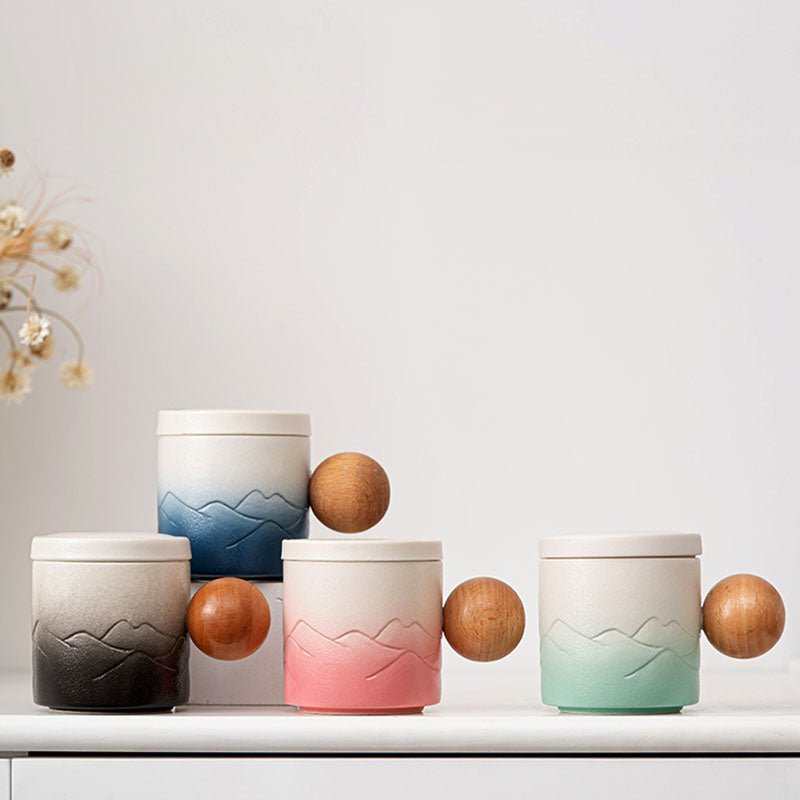
If you want the look without overthinking it, start with pieces that keep the silhouette clean. The Mountain Tall Coffee Tea Mug works well for shoppers who like a calm, landscape-driven feel. The vertical shape reads as understated, which is part of why it fits the Japanese-inspired table aesthetic so well.
The White Golden Waves Tall Coffee Tea Mug is a good match if you want something a little more decorative without losing that restrained look. The wave motif gives the mug visual movement, but it still feels clean enough for everyday use on a shelf, in an office, or beside a kettle.
Not every good gift has to follow the same style rules. If you are buying for someone who wants a seasonal present rather than a Japanese-inspired mug, our Christmas Coffee Tea Mug is the clearer choice for that use case. We would not call it the right pick for someone chasing a Japanese tableware look, and that is fine. The point is to match the mug to the person and the moment.
In our experience, shoppers usually break into two groups:
- People who want a mug that feels calm and timeless on a kitchen counter.
- People who want a mug with a stronger visual theme for gifting or seasonal use.
If you are in the first group, prioritize shape, glaze, and fit in the hand. If you are in the second group, style can carry more weight, as long as the mug still feels comfortable to hold.
What should you expect from care and daily use?
Most Japanese coffee mugs, especially ceramic ones, are built for routine use, but they do best with a little care. That does not mean fussy handling. It means avoiding the mistakes that shorten the life of the mug.
- Let the mug cool before running it under very cold water. Sudden temperature changes can stress ceramic.
- Check whether the decoration is dishwasher-safe before putting it through repeated cycles.
- Dry the foot ring after washing if you store mugs stacked or on wood surfaces.
- Avoid knocking the rim against sinks and hard counters. That is where small chips usually start.
Japanese-style mugs are not always the best choice for every situation. They are usually not ideal for car cup holders, because tall ceramic mugs and vehicle cup wells rarely match well. They are also not the right pick if you need a very wide opening for foam-heavy drinks or if you want a tiny cup for espresso shots. That is not a flaw. It is a matter of matching the vessel to the drink.
If you mostly drink coffee at a desk, the better mug is the one that is stable, easy to grip, and large enough without becoming bulky. If you mostly drink quick cups in the kitchen, a smaller and more refined mug can feel better than a giant one.
How do japanese coffee mugs compare with other everyday mugs?
The comparison is useful because not every shopper needs the same thing. A plain diner mug, a travel mug, and a Japanese-inspired ceramic mug each solve a different problem.
- Diner-style mugs are durable and familiar, but they are usually heavier and less refined in shape.
- Travel mugs keep coffee hot longer, but they do not give you the same drinking feel or table presence.
- Japanese coffee mugs sit in the middle: they are meant for daily use, but they also care about the look and feel of the ritual.
That makes them a strong choice for shoppers who want their mug to live on the counter, not just disappear into a cabinet. They are less ideal if your only priority is thermal retention or if you need something nearly indestructible for commuting.
We also see good results when people buy a pair instead of a single mug. One mug can stay at the office, and one can stay at home. That is often better than trying to make one cup do every job.
Frequently asked questions
Are japanese coffee mugs usually ceramic?
Most of the ones shoppers are looking for are ceramic, stoneware, or porcelain. Those materials are popular because they hold heat reasonably well and give the mug that smooth, finished feel people expect from this style. The exact material should always be listed on the product page.
Are taller Japanese-style mugs good for drip coffee?
Yes, especially if you drink a normal pour and want a slim mug that does not dominate the counter. Tall mugs are also comfortable for tea and black coffee. They are less ideal if you want a very wide surface for foam or toppings.
Can I put a Japanese coffee mug in the dishwasher?
Sometimes, but do not assume it. Decorative glazes, metallic accents, and certain printed designs can wear faster in repeated dishwasher cycles. Check the care instructions for the exact mug before you make that part of your routine.
What size is best for daily use?
For most people, 10 to 12 oz is the sweet spot. Smaller servings feel more controlled, while 12 oz gives enough room for a standard coffee without looking oversized. If you usually add a lot of milk, a larger mug may be more practical.
What should I avoid if I want a mug for a desk or office?
A mug with a narrow, unstable base or a handle that crowds your fingers is a bad fit for desk use. You also want to avoid a cup that is too heavy once filled, because that gets annoying fast during meetings or long work sessions. A calm shape with a stable footprint usually works best.
If you are ready to compare options, start with the full collection, then narrow by size using our 10 oz and 12 oz guides. Pick the mug that matches your pour, your grip, and the space where it will actually sit every day.
Read more
Coffee Mug Quotes: How to Pick a Mug People Actually Use
Coffee mug quotes matter, but size, handle feel, and print placement decide whether a mug becomes a daily favorite or a drawer piece. Here’s how we help shoppers choose with fewer surprises.
Czytaj dalej
Chicago Coffee Mug Buying Guide for Daily Use and Gifts
A Chicago coffee mug should do more than signal city pride. This guide breaks down size, material, handle style, and gift fit so you can choose one that works on a desk, in a kitchen, or as a pract...
Czytaj dalej
Zostaw komentarz
Ta strona jest chroniona przez hCaptcha i obowiązują na niej Polityka prywatności i Warunki korzystania z usługi serwisu hCaptcha.