
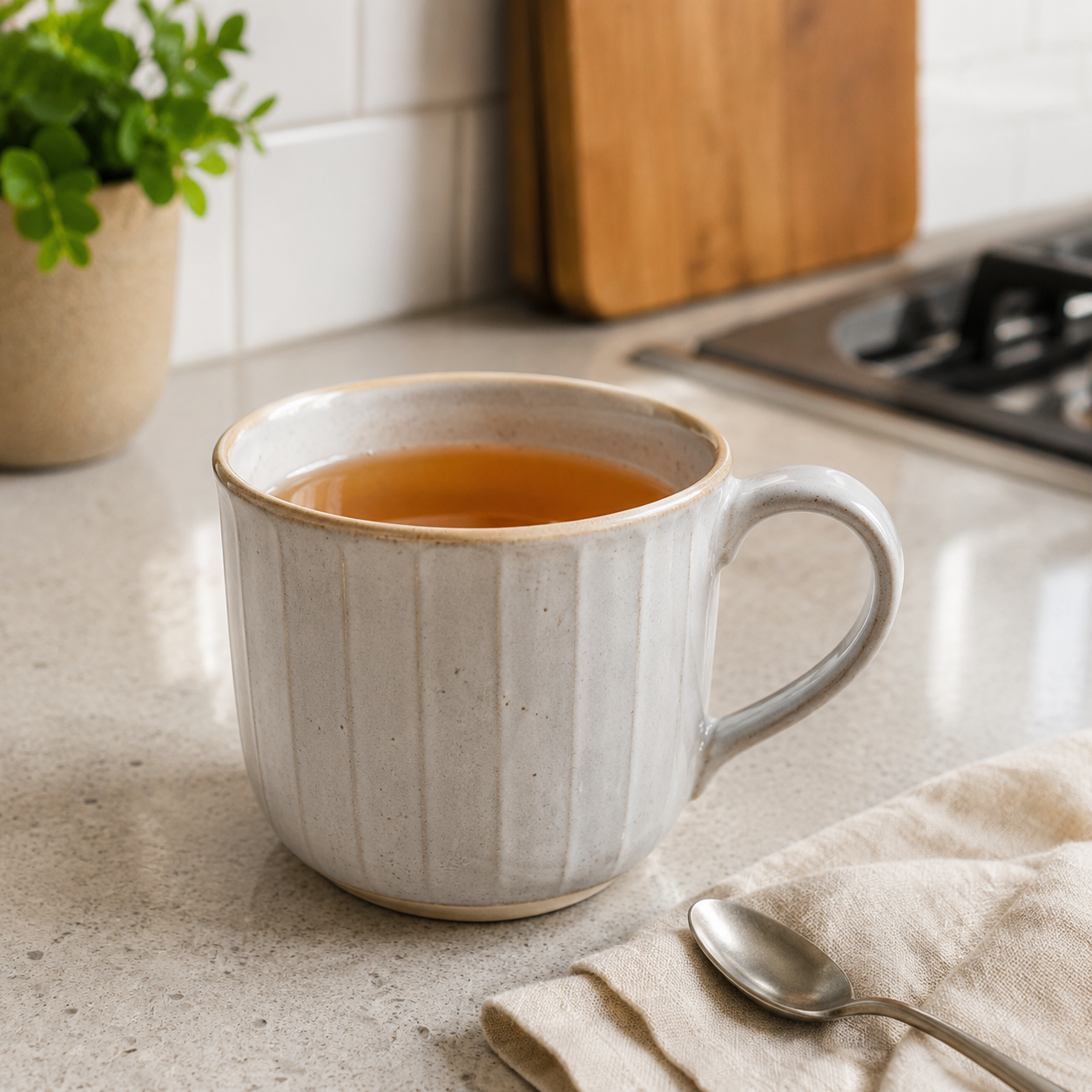
Hot Toddy Mug Buying Guide: Capacity, Handle, and Ceramic Options
Reading time: about 8 minutes
A mug can look roomy in a product photo and still feel crowded once a full recipe, spoon, and garnish are involved. The opposite problem is just as common: an oversized mug leaves a modest drink sitting low in the cup and becomes unnecessarily heavy to carry back to a desk. A useful hot toddy mug needs the right balance of capacity, handle clearance, and everyday ceramic practicality.
In our store, we handle mugs with different silhouettes and capacities, and those details affect daily use more than decorative labels do. This guide compares our verified 400 ml and 480 ml options without treating them as insulated vessels or specialized barware. They are everyday ceramic drinkware, so the right choice depends on how much you pour, how you grip a mug, and where you plan to use it.
What capacity works best for a hot toddy mug?
Capacity should be considered in two parts: the amount your recipe requires and the headroom you want below the rim. Filling a mug to its stated capacity may leave too little room for stirring or carrying. In practice, we usually suggest planning for roughly 30 to 60 ml of open space, with more headroom if you walk from the kitchen to another room.
Our Gradient coffee and tea mug holds 400 ml, approximately 13.5 US fluid ounces. That size suits a shopper preparing a moderate serving who still wants visible room under the rim. The Flow coffee and tea mug also holds 400 ml, so the buying decision between those two comes down to their pictured shape and handle profile rather than capacity.
For a larger recipe or more generous headroom, The Rock coffee and tea mug holds 480 ml, approximately 16.2 US fluid ounces. That extra 80 ml can be useful, but there is a trade-off: a larger volume of liquid weighs more and can make the mug feel less nimble when full.
If none of those capacities or silhouettes feels right, browse our collection of unique coffee mugs and compare the listed measurements against a mug you already enjoy using.
How much handle clearance do you actually need?
Handle comfort is personal. A compact loop can feel controlled in smaller hands and take up less room in a cupboard, while a larger opening gives broader fingers more space. The product photo should show whether your knuckles are likely to press against the warm ceramic body and whether you can use one, two, or three fingers inside the loop.
We recommend checking three handle details before ordering:
- Opening size: Compare the pictured opening with the grip on a mug you own. A small opening may require a one-finger grip, which is less comfortable for some people when the mug is full.
- Distance from the body: More clearance helps keep knuckles away from the cup, but it also increases the mug's total shelf and dishwasher-rack footprint.
- Attachment points: The upper and lower handle joins carry the load. After delivery, inspect those areas for hairline cracks before using the mug with a hot drink.
The practical check happens at your kitchen counter. Fill a new mug with cool water to your normal serving level, lift it, stir it, and carry it a short distance. This reveals an awkward grip or unbalanced feel without involving hot liquid. A handle that looks dramatic but twists the wrist under a full load is not a good everyday choice.
Which ceramic details matter for everyday use?
Ceramic is familiar, substantial, and suitable for a kitchen table or office desk, but it is not unbreakable and does not offer the sealed portability of a travel cup. If your drink will be carried in a vehicle or packed in a bag, an open ceramic mug is the wrong format. Choose a purpose-built travel vessel with a secure lid instead.
On any ceramic mug, examine the rim, handle joins, interior surface, and foot ring. Chips at the drinking rim are easy to feel and should not be ignored. Hairline cracking around a handle can worsen under load. Glaze pinholes are tiny pits, while crazing appears as a network of fine lines in the glazed surface; either condition deserves a closer look before regular use.
The base deserves attention too. Some ceramic mugs have an exposed foot ring that can hold moisture after washing or mark a delicate desk if grit becomes trapped underneath. Dry the base before placing the mug in a cupboard, and use a coaster on a surface that scratches easily.
For a broader explanation of rims, glaze, proportions, and listing details, our ceramic coffee mug buying guide covers the checks that apply beyond hot toddy use.
How do the 400 ml and 480 ml options compare?
| Mug | Verified capacity | Best-fit situation | Main trade-off |
|---|---|---|---|
| The Gradient | 400 ml, about 13.5 fl oz | A moderate serving with planned stirring space | Less spare volume than the 480 ml option |
| The Flow | 400 ml, about 13.5 fl oz | A moderate serving where pictured shape and handle are the deciding factors | Capacity alone does not distinguish it from The Gradient |
| The Rock | 480 ml, about 16.2 fl oz | A larger recipe or a shopper who prefers more room below the rim | More liquid means more weight when carried full |
The table gives you the starting point, not the entire answer. Two mugs with the same 400 ml capacity can feel different because capacity does not describe rim diameter, height, handle clearance, or how high you choose to fill the cup. Use the listing photos to compare those visual proportions and check any published dimensions before buying.
A true 20-ounce mug is larger again at about 591 ml. If that is the volume you need, do not assume a 480 ml mug is equivalent. Our guide to 20-ounce ceramic mugs explains the practical space and weight differences.
Which option fits a kitchen, office desk, or gift?
For a kitchen counter, first measure the cabinet shelf and consider the dishwasher rack if you use one. A protruding handle may matter more than a small difference in body capacity. If 400 ml covers your normal recipe, choose The Gradient or The Flow according to the pictured handle and exterior design you would rather use every day.
For an office desk, headroom matters because the drink may travel past a keyboard or paperwork. The Rock's 480 ml capacity gives a larger buffer when you intentionally stop below the rim, although it will also occupy more space and feel heavier with a generous pour. A coaster is useful on surfaces that are sensitive to moisture or abrasion.
For gift buying, avoid guessing solely from appearance. A recipient who uses compact cupboards or has smaller hands may prefer a 400 ml option. Someone who regularly makes larger drinks may appreciate 480 ml. Check the mug at unboxing for a smooth rim, a stable base, and intact handle joins before presenting it.
What care routine suits an everyday ceramic mug?
Start with the care directions on the specific product page. Ceramic construction alone does not confirm that every decoration or finish is suitable for a dishwasher or microwave. If compatibility is not stated, do not assume it.
- Let a very cold mug move toward room temperature before adding very hot liquid. Sudden temperature changes can stress ceramic.
- Use a non-abrasive sponge to protect the surface from unnecessary scratching.
- Check the rim and handle joins while drying. Stop using the mug if you find a sharp chip or a crack affecting the handle.
- Dry the foot ring before storage, especially after a dishwasher cycle or a long soak.
- Store mugs with enough clearance that their rims and handles do not knock together each time the cupboard opens.
Staining and residue are easier to address before they build up. Our ceramic mug care tips provide a fuller routine for switching between hot and iced drinks. No care routine makes ceramic impact-proof, so a mug used around crowded sinks or hard stone counters still needs careful handling.
Frequently asked questions
What size hot toddy mug should I buy?
Choose a capacity larger than the amount you normally prepare so you have room to stir and carry the mug. A 400 ml mug works for a moderate serving, while 480 ml gives an additional 80 ml of total capacity for a larger recipe or more headroom.
Is a 400 ml mug big enough for a hot toddy?
It can be, provided your complete recipe stays comfortably below 400 ml. Measure the liquid in your current mug or a measuring cup and allow roughly 30 to 60 ml below the rim rather than planning to fill the new mug completely.
Does a ceramic mug handle become hot?
A handle is separated from the main body, but its temperature can still change during use. Keep fingers away from the cup body, stir carefully, and check the handle before lifting. This everyday ceramic drinkware should not be treated as specialized heat-protective equipment.
Can I put these ceramic mugs in a dishwasher or microwave?
Follow the care information on the individual product listing because ceramic material by itself does not establish appliance compatibility. Decorations, finishes, and construction details can affect the correct care method.
Is a ceramic mug suitable for commuting?
An open ceramic mug is better suited to a stable kitchen counter, table, or desk. It is breakable and does not provide the sealed lid expected from a travel cup, so choose purpose-built lidded drinkware for a vehicle or bag.
A five-point check before you order
- Measure your complete usual serving, not just its main liquid component.
- Add deliberate headroom for stirring and carrying.
- Compare the handle opening with a mug that already fits your hand.
- Check total dimensions against your shelf, desk, and dishwasher rack.
- Choose 400 ml for a moderate serving or 480 ml for more volume and headroom.
Start with the capacity that matches your pour, then use handle shape and exterior style to break the tie. Compare The Gradient, The Flow, The Rock, and the wider unique mug collection before ordering; the best choice is the one that fits both your recipe and the way you actually carry, wash, and store a mug.
Read more
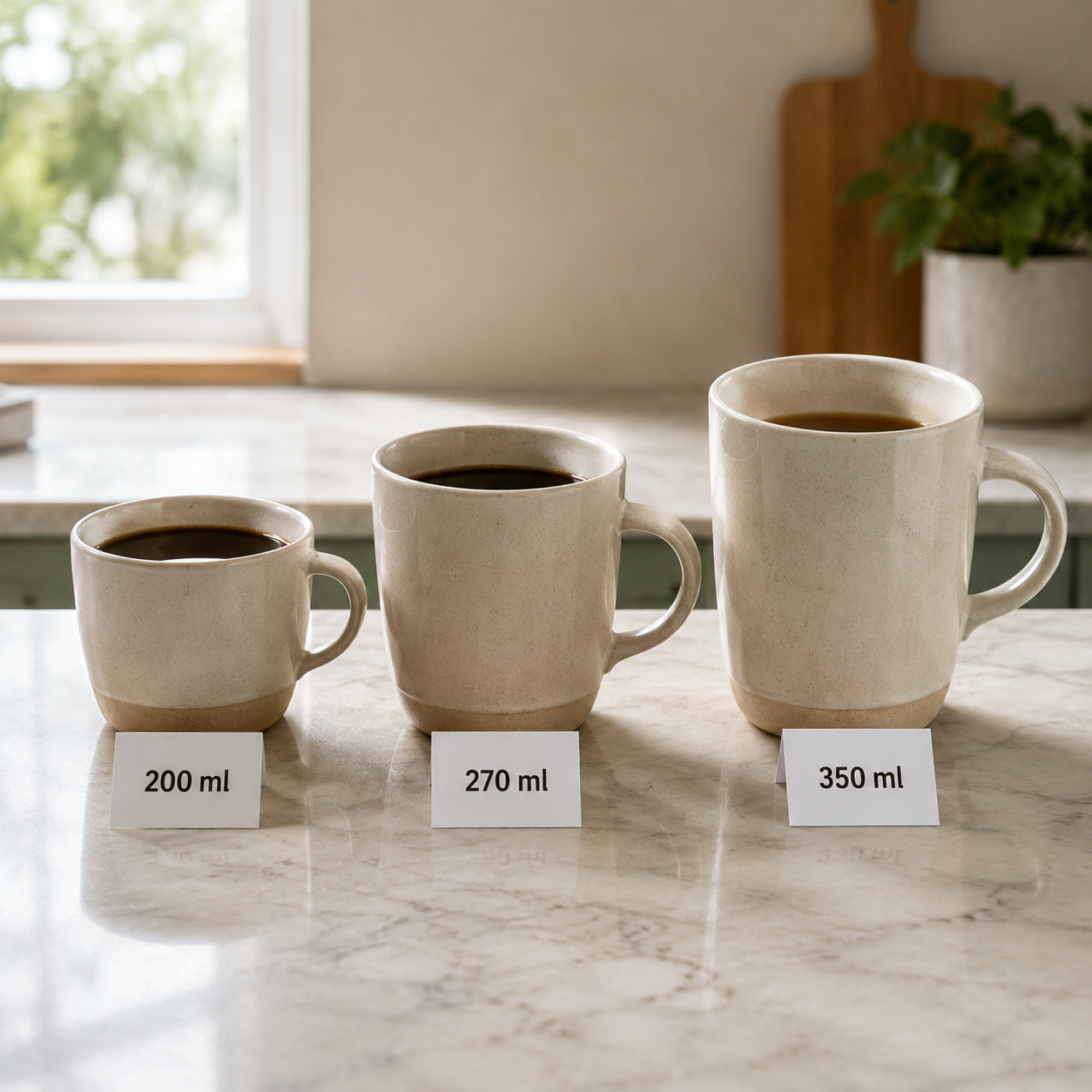
Americano Coffee Cup Guide: Capacity and Headroom
Compare 200 ml, 270 ml, and 350 ml cups using your planned pour and preferred headroom. This guide shows the capacity trade-offs without assuming a universal Americano size.
Czytaj dalej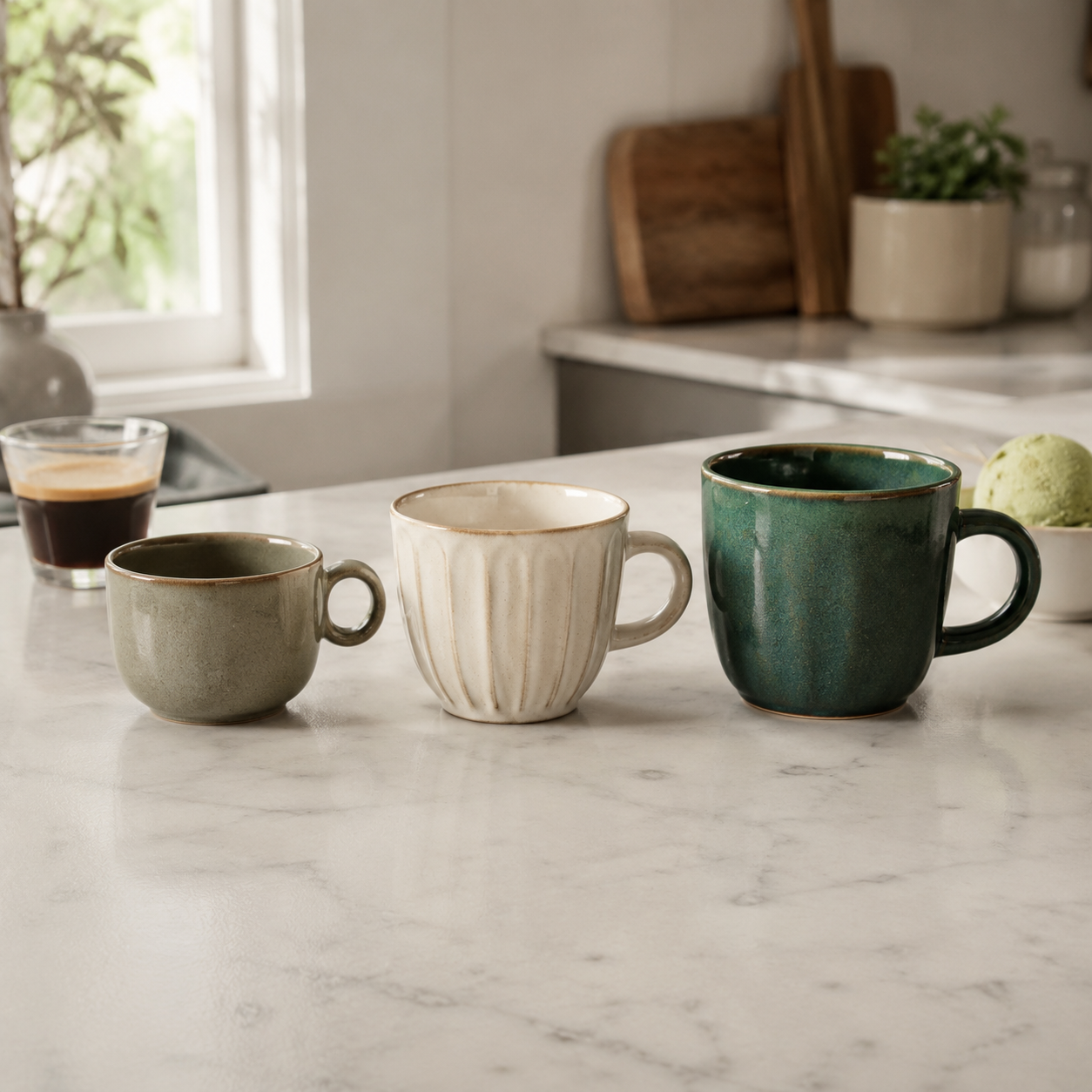
Affogato Cup Buying Guide: Capacity, Shape, and Serving
Compare 170 ml, 200 ml, and 270 ml cups for affogato service. This guide explains portion room, visible shape, presentation trade-offs, and which CoffeifyMug option fits each serving style.
Czytaj dalej
Zostaw komentarz
Ta strona jest chroniona przez hCaptcha i obowiązują na niej Polityka prywatności i Warunki korzystania z usługi serwisu hCaptcha.