
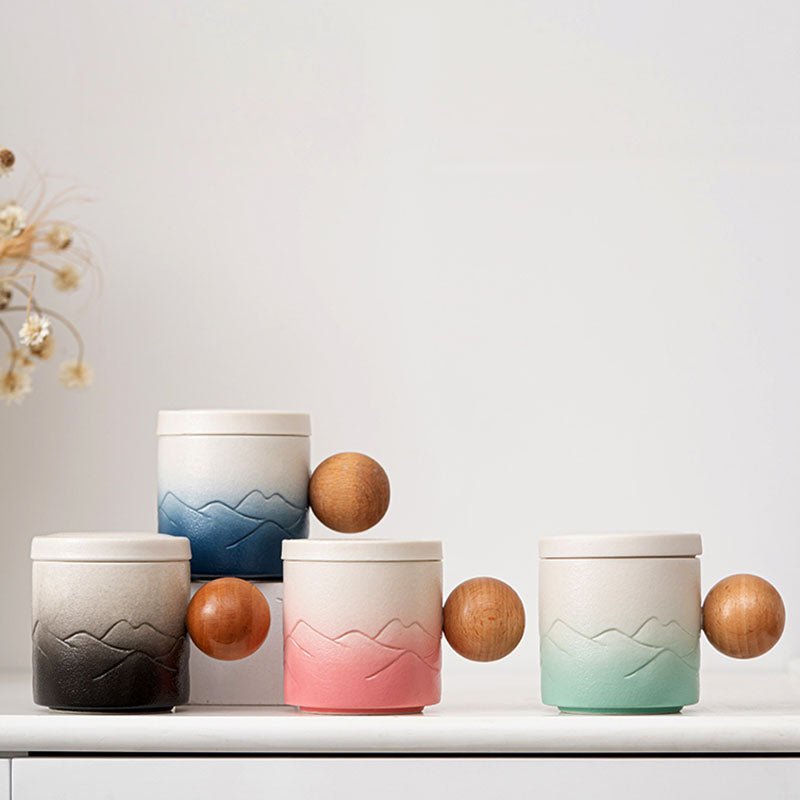
Handmade Ceramic Coffee Mugs: Buyer’s Guide for Daily Use
Reading time: about 9 minutes
A mug that feels fine in photos can still be awkward on a kitchen counter at 7 a.m. The handle may pinch two fingers, the rim may feel too thick, or the glaze may show marks after a few dishwasher cycles. That is the reality we look at in our store when we evaluate handmade ceramic coffee mugs.
If you are comparing options for daily use, gifts, or a desk mug that actually gets used, the details matter more than the styling. We handle ceramic pieces for the same reasons shoppers do: to see how they sit in the hand, how they clean up, and what kind of trade-offs come with handmade work.
For a quick browse of our current range, start with our full collection. If you already want a closer look at a few customer favorites, the Pleated Coffee Tea Cup, the The Flow Coffee Tea Mug, and the Mountain Sea Coffee Tea Mug are good starting points.
What makes handmade ceramic coffee mugs different from mass-produced mugs?
Handmade ceramic mugs usually show more variation in shape, glaze, and surface feel than factory-made mugs. That is part of the appeal. A slight ripple in the rim, a more sculpted handle, or a glaze that pools differently around the base can make the mug feel more personal on the table.
The trade-off is consistency. With handmade pieces, you should expect small differences from mug to mug. In our experience, that is not a flaw if you want character. It becomes a problem only if you are expecting every piece to match exactly or stack like uniform café wares.
Here is what usually separates handmade ceramic from standard mass production:
- Surface variation: Glaze may break differently over texture, which gives depth but can also make one mug look a little darker or lighter than another.
- Form variation: Handles, rims, and walls may not feel identical. That is normal in handmade work.
- Feel in use: Handmade mugs often have more tactile grip, which some people love and others prefer to avoid.
If you want a deeper buying framework for everyday ceramic pieces, our guide on how to choose the right one for daily use is a useful companion read.
Which details should you check before buying a mug?
We recommend checking the parts that affect comfort first, then the details that affect care. A mug can look excellent and still be a poor fit if the handle is tight or the rim is too heavy for your preferred drink.
These are the most practical checkpoints:
- Handle clearance: Make sure two to three fingers can pass through comfortably if you use a normal grip.
- Rim thickness: A thinner rim feels lighter for black coffee and tea; a thicker rim can feel more substantial but less refined.
- Glaze finish: Glossy finishes usually wipe clean more easily, while matte or textured finishes can show tea residue or fingerprints differently.
- Wall thickness: Thicker ceramic holds heat a bit longer, but it also adds weight. Lighter walls are easier for long desk sessions.
- Base stability: A flat, steady base matters on crowded counters and office desks, especially if you move the mug around a lot.
For readers comparing capacity and daily comfort, our article on Ceramic Coffee Mugs 20 oz: Buyer's Guide for Fit, Heat, and Care covers the fit-and-function side in more detail. It is especially useful if you tend to brew larger morning pours.
Are handmade ceramic coffee mugs good for everyday use?
Yes, if you want a mug that feels better in hand than a thin promotional cup and you are willing to treat it like ceramic, not plastic. Handmade ceramic coffee mugs are well suited to breakfast tables, office desks, and gift-giving because they bring some personality to a routine object.
They are not the best choice for every situation. If you need a travel mug, a very lightweight cup for commuting, or something that will be tossed into a bag every day, ceramic is the wrong material. It is also not ideal if you want an ultra-uniform set for a commercial kitchen or a strict matching display shelf.
For daily use, the sweet spot is simple: a mug that feels substantial without being heavy, a glaze that cleans up easily, and a handle that does not fight your grip. That combination is what we aim for when we choose pieces for our store.
Handmade does not mean delicate by default. It does mean you should look at the finish, the firing quality, and the intended use before you buy.
Which handmade ceramic mug style fits the way you drink coffee?
Different shapes suit different habits. We see this all the time in customer choices: some buyers want a fuller bowl for tea and milky drinks, while others want a more compact profile that feels stable on a desk.
| Style | Best for | Trade-off |
|---|---|---|
| Pleated shape | A more tactile grip and a decorative look on open shelving | Ridges can feel less minimal and may collect dust a little more easily |
| Flowing silhouette | People who like softer lines and a smoother hand feel | Usually less visual contrast than a more sculpted mug |
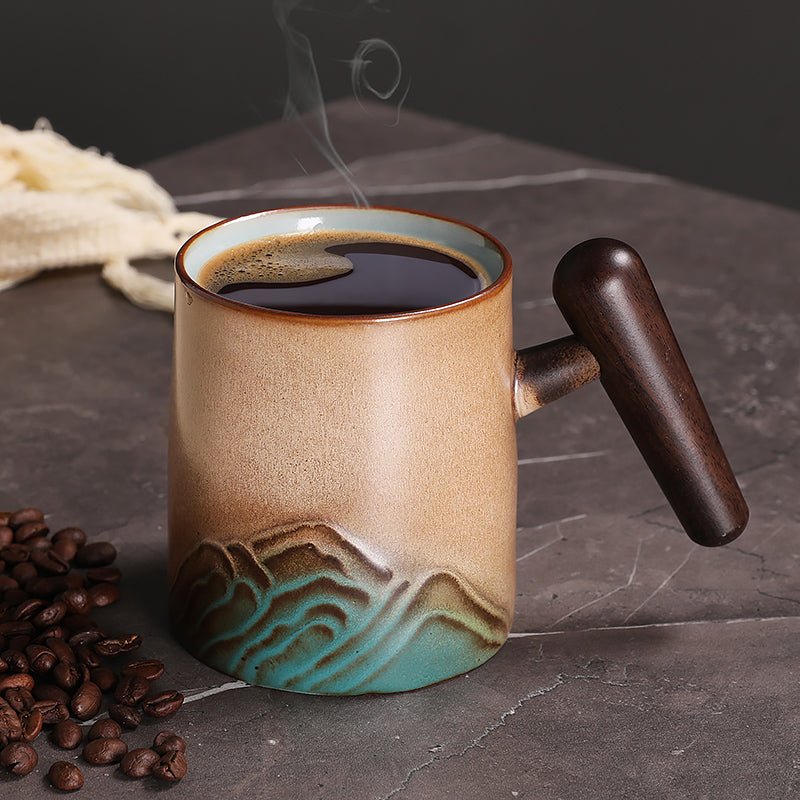
| Landscape-inspired form | Gift buyers and shoppers who want a mug with a stronger design story | Can be more of a display piece if the shape is especially expressive |
The Pleated Coffee Tea Cup is a good fit if you want a mug with more surface character. The The Flow Coffee Tea Mug suits buyers who prefer a smoother profile. The Mountain Sea Coffee Tea Mug is the sort of piece people often choose when they want something with a stronger visual identity.
How should you care for handmade ceramic coffee mugs?
Care depends on the glaze, the form, and how often you use the mug. We always advise customers to treat handmade ceramic with a little more respect than a basic workhorse mug, especially if the mug has texture, a matte surface, or a more sculptural rim.
Use these habits to extend the life of the piece:
- Wash with a soft sponge instead of an abrasive scrub pad.
- Avoid extreme thermal shock, such as moving a very hot mug straight into cold water.
- Dry the base fully before stacking if the mug sits on porous shelving or in a crowded cabinet.
- Check the handle and rim after shipping, because hairline chips are more likely to show there first.
Common defect modes in handmade ceramic include small glaze pinholes, slight crazing, and tiny differences in symmetry. Those are not always failure points, but they are worth knowing about before purchase. If you want the lowest-maintenance ceramic option, a simpler glazed mug will usually age more predictably than a heavily textured one.
For shoppers who are still deciding between plain daily-use ceramics and something more stylized, our guide on what to look for before you buy is a useful checkpoint list.
What should you buy if you want a gift that feels personal?
Handmade ceramic mugs work well as gifts because they feel chosen, not generic. A mug is one of the few kitchen items people see every day, which means the shape and surface need to be pleasant long after the wrapping paper is gone.
We usually recommend choosing a gift mug based on the recipient's habits, not just appearance:
- If they drink black coffee, choose a mug with a comfortable rim and a balanced weight.
- If they drink tea or milk-based drinks, look for a shape that feels a little more open and relaxed.
- If they keep mugs on display, choose a piece with stronger visual texture or a more distinctive silhouette.
For gift buyers, handmade ceramic has one real advantage over generic mugs: it reads as intentional. That matters at unboxing and later at the desk. The mug feels like a kept object, not a disposable one.
How do handmade mugs compare with other ceramic options?
Not every ceramic mug belongs in the same buying bucket. A handmade piece, a painted mug, and a large-capacity daily mug all solve different problems. If your goal is a 20 oz work mug, you may want a different shape than a decorative handmade cup. If your goal is a mug to paint, you will care more about surface and finish than daily comfort.
That is why we point shoppers to adjacent guides when needed. If size is your main concern, read Ceramic Coffee Mugs 20 oz: Fit, Heat, and Daily Use Guide. If you want to understand the difference between display-friendly mugs and practical drinkware, our article on ceramic mugs to paint is also worth a look.
The main point is simple: handmade ceramic coffee mugs are best for buyers who care about feel, presence, and small design details. They are not the best choice for rough handling, commuter use, or anyone who wants perfectly identical pieces in a large set.
Frequently asked questions
Are handmade ceramic coffee mugs dishwasher safe?
Some are, but you should not assume all handmade ceramic pieces are equally suited to the dishwasher. Glaze type, surface texture, and the maker's firing process all matter. If you want the mug to last longer and keep its finish, hand washing is the safer routine.
Do handmade ceramic coffee mugs keep coffee hot longer?
They usually hold heat better than very thin cups because ceramic has more body. The trade-off is weight, so a thicker mug may feel sturdier but less quick to lift and carry. For long desk sessions, that balance matters more than raw heat retention.
What defects are normal in handmade ceramic mugs?
Small glaze variations, slight differences in shape, and minor surface marks can be normal in handmade work. What you should not ignore is a sharp rim chip, a wobbly base, or a crack that looks structural. Those are quality issues, not character marks.
Are handmade ceramic coffee mugs good for espresso?
They can be, but many handmade mugs are better suited to drip coffee, tea, or milk-based drinks. Espresso drinkers often prefer a smaller, denser cup that concentrates aroma and fits a tighter serving size. If you mostly drink espresso, check the mug's shape before buying.
What should I choose if I want one mug for work and home?
Pick a mug with a comfortable handle, a stable base, and a glaze that cleans easily. If the mug will move between office desk and kitchen counter, avoid overly decorative surfaces that are hard to wipe down. A balanced, medium-weight mug is usually the most practical choice.
If you want to compare styles side by side, start with our full mug collection, then narrow it down by shape, handle feel, and how you actually drink coffee. That is the fastest way to avoid buying a mug that looks right but feels wrong in daily use.
Read more
Grandpa Coffee Mug Buying Guide: Size, Style, and Best Picks
A practical guide to choosing a grandpa coffee mug that feels good in the hand, works for daily use, and actually suits the person receiving it. We cover size, comfort, materials, and where differe...
Czytaj dalej
Snowman Coffee Mugs: What to Check Before You Buy
Snowman coffee mugs should do more than look seasonal on a shelf. We break down the mug details that matter in daily use, gifting, and cleanup so you can buy one that feels good to hold and still e...
Czytaj dalej
Zostaw komentarz
Ta strona jest chroniona przez hCaptcha i obowiązują na niej Polityka prywatności i Warunki korzystania z usługi serwisu hCaptcha.