
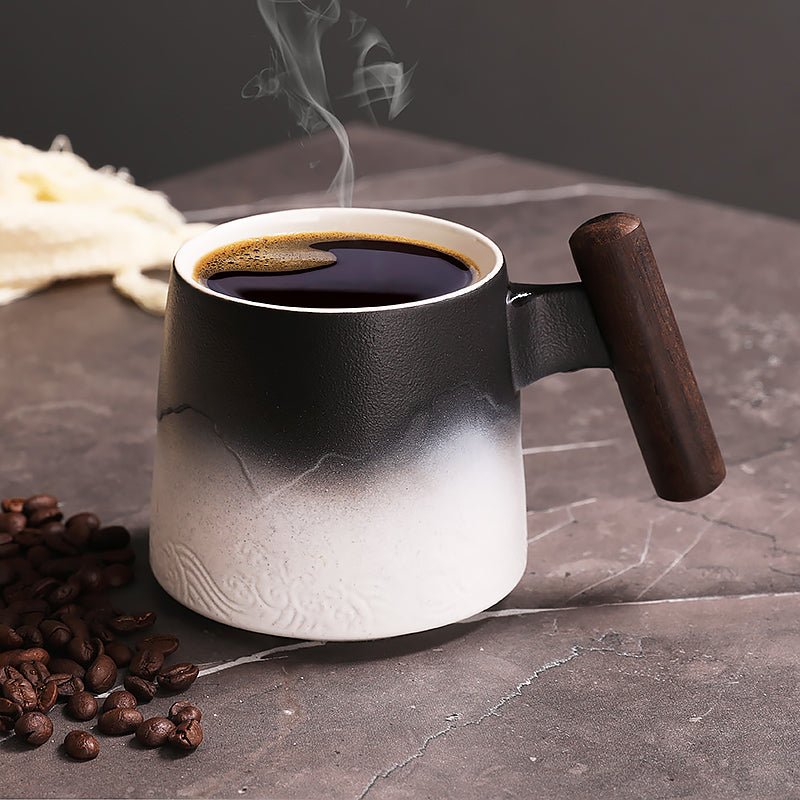
Giant Tea Mug: What to Check Before You Buy
Reading time: about 8 minutes
A giant tea mug sounds simple until you try to use one at a desk with a half-open laptop, a tea bag string, and not much room around the keyboard. We see the same thing in our store: the mug that looks perfect in a photo can feel clumsy once it is full, hot, and sitting on a crowded counter.
The right oversized mug gives you a longer drink window, room for milk or honey, and fewer refills. The wrong one is too tall for the cabinet, too heavy for one hand, or too wide to drink comfortably. If you want a broader view of everyday tea cup choices, our Tea Mug Buying Guide: Best Materials, Sizes, and Everyday Use and Best Tea Mug: What to Buy for Daily Tea, Desk Use, and Gifts are useful companion reads.
What counts as a giant tea mug?
For most shoppers, a giant tea mug starts at 16 ounces and goes up from there. We usually see the sweet spot around 16 to 20 ounces: enough room for a standard tea bag, a splash of milk, a spoonful of honey, or a loose-leaf infuser without feeling cramped. Once you get past that range, the mug starts acting more like a personal bowl than a daily cup.
- 16 ounces works well if you want a larger cup without a lot of extra weight.
- 18 to 20 ounces gives more room for add-ins and slower drinking.
- Above 20 ounces is useful for a very long tea session, but the mug can start to feel bulky on a desk or in small hands.
A giant tea mug is not the best choice if you want a delicate, two-sip tea service. It is also a poor fit for very small cabinets, narrow dishwasher racks, or shelves with tight clearance. Size only helps when the cup still fits your daily routine.
Which material works best for a giant tea mug?
Material matters more as the cup gets larger. A giant tea mug has more surface area, more weight when full, and more stress at the handle joint. That is where details like wall thickness, glaze quality, and rim finish stop being cosmetic and start affecting daily use.
| Material | What it feels like | Best for | Trade-off |
|---|---|---|---|
| Ceramic | Solid, familiar, usually comfortable in hand | Everyday tea, desk use, gifting | Can chip if it gets knocked against sinks or other mugs |
| Stoneware | Heavier, often thicker, good heat retention | Slow tea drinking, a substantial feel | More weight when full, which some buyers notice quickly |
| Porcelain | Smoother and lighter-looking, with a cleaner rim feel | People who want a refined look without a bulky profile | Can feel less forgiving if you want a very thick, sturdy mug |
| Glass | Shows the tea color clearly | Loose-leaf tea, tea presentation | More fragile and often hotter to hold without a sleeve or careful handle design |
| Stainless steel | Very durable and practical | Travel or rough use | Usually not the first pick for a tea drinker who wants a classic mug feel |
In practice, we look for three things: a smooth rim, a handle that is integrated cleanly with no sharp seam, and a base that sits flat without wobble. Common defect modes in oversized mugs are hairline cracks near the handle, rough glaze on the foot ring, and small chips on the rim from shipping or stacked storage. None of those are features; they are the first things we check when we unpack stock.
Care also matters. A plain ceramic or stoneware mug is often dishwasher safe, but hand-painted trims, metallic accents, and novelty decals can change that. If a listing says hand wash only, we treat that as a real limitation, not a footnote. For a side-by-side look at large cup sizing from the coffee angle, our Giant Coffee Mug: What to Check Before You Buy covers the same balance questions from another angle.
How should a giant tea mug feel in your hand?
Size on paper does not tell you whether the mug is actually comfortable. A giant tea mug should still let you get a secure grip without forcing your knuckles into the body of the cup. If the handle is too narrow, your fingers pinch. If it is too open, the mug feels harder to control when full.
- Check the handle opening so your fingers are not pressed against the mug when it is hot.
- Check the base width so the cup does not feel top-heavy once filled.
- Check the rim for a smooth drinking edge, especially if you drink tea without a lid.
- Check the wall thickness because very thin oversized mugs can feel fragile, while very thick ones feel heavy fast.
A good oversized mug feels heavy in the right way: stable on the table, easy to lift, and not top-heavy once filled.
That balance matters at a desk. It matters even more on a crowded kitchen counter where you are setting the mug down one-handed between email replies and breakfast. A giant tea mug should make the routine easier, not add a small daily hassle.
This style is not ideal for walking around the house, commuting, or carrying in a bag. For that, a travel tumbler or lidded cup is a better buy.
What should you check before you buy one?
Buy the mug by the details, not the photo. The best oversized tea mug can still disappoint if the care instructions or dimensions do not match how you actually drink. We try to look at these mugs the way a customer would after unboxing, washing, and using them a few times, not just the way they look on a product page.
- Capacity - Confirm whether the listing uses fluid ounces and whether the number refers to usable capacity or an overfill measurement.
- Care instructions - Check dishwasher and microwave notes separately. A mug can be one and not the other.
- Handle clearance - Make sure your fingers fit without brushing the hot cup body.
- Rim shape - A smoother, even rim usually feels better for daily tea than a thick lip with a noticeable seam.
- Bottom finish - A flat, smooth foot ring helps the mug sit securely on wood, stone, or a desktop tray.
- Cabinet fit - Measure shelf height before you buy if your storage is already tight.
For gifts, we pay extra attention to packaging. A giant tea mug is only a good gift if it arrives with a clean rim, no wobble, and a box that can survive a delivery truck. A mug with a tiny chip on the lip tends to become an instant disappointment, especially when it was bought for someone who drinks tea every day.
Is a giant tea mug good for work, gifts, or everyday tea?
It depends on how you drink.
- Good for: long tea sessions, desk use, people who like milk or honey, and buyers who want fewer refills.
- Not a fit for: formal tea service, very small cabinets, tiny hands, or anyone who wants a cup that disappears into a bag.
At work, a giant tea mug is useful if you can keep it near the keyboard and you do not mind a larger footprint. At home, it is comfortable for reading, streaming, or slow mornings. As a gift, it works best when the design is clean and the shape feels substantial rather than novelty-driven.
If you are still deciding between a standard mug and a large one, our 10 oz Coffee Mug: Size, Fit, and What to Check Before You Buy is a helpful size contrast. If you want to compare the larger end of the range from a coffee angle, the Giant Coffee Mug: What to Check Before You Buy article is the next stop.
For shoppers ready to compare options directly, our products page is the fastest place to start, and the full collection makes it easier to sort by shape, color, and size.
Frequently asked questions
How many ounces should a giant tea mug hold?
Most buyers land in the 16 to 20 ounce range. That size gives enough room for tea, milk, honey, or an infuser without feeling cramped. If you want a mug that stays easy to lift when full, 16 ounces is usually the safer starting point.
Is a giant tea mug microwave safe?
Sometimes, but not always. Plain ceramic and stoneware mugs are often microwave safe, while metallic trim, foil accents, and some hand-finished glazes are not. Check the listing and the base stamp before you rely on it for reheating.
Is stoneware or porcelain better for a giant tea mug?
Stoneware usually feels heavier and holds heat well, which works for slow drinking. Porcelain is generally lighter in the hand and can look cleaner on a desk or gift shelf. If you want a substantial everyday mug, stoneware is often the safer feel test; if you want a lighter visual profile, porcelain is worth a look.
Can I use a giant tea mug for loose-leaf tea?
Yes, if the mug opening leaves enough room for an infuser or basket. A very narrow opening can make loose-leaf tea annoying to clean and steep. For loose-leaf drinkers, a wide mouth and easy-to-clean interior matter as much as capacity.
What is the biggest downside of a giant tea mug?
Weight and storage are the usual trade-offs. A larger mug can get heavy when filled, and it may not fit well on small shelves or in compact dish racks. If you want a mug for travel or tight kitchen storage, a smaller cup is usually the better buy.
Use the checks above as a quick filter: capacity, handle clearance, material, care instructions, and cabinet fit. If you want to compare styles next, start with our products page and then narrow it down through the full collection.
More from our blog
Read more
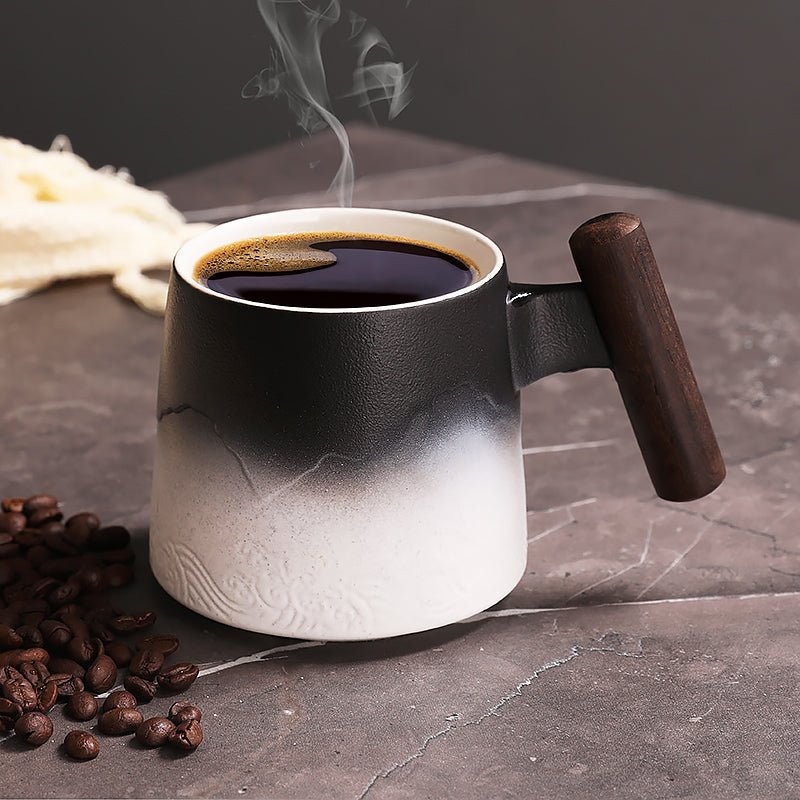
Dragon Coffee: What Buyers Should Check Before They Buy
Dragon coffee usually points to a dragon-themed mug or gift search, not a single product type. We break down what to check for size, material, care, and fit before you buy.
Czytaj dalej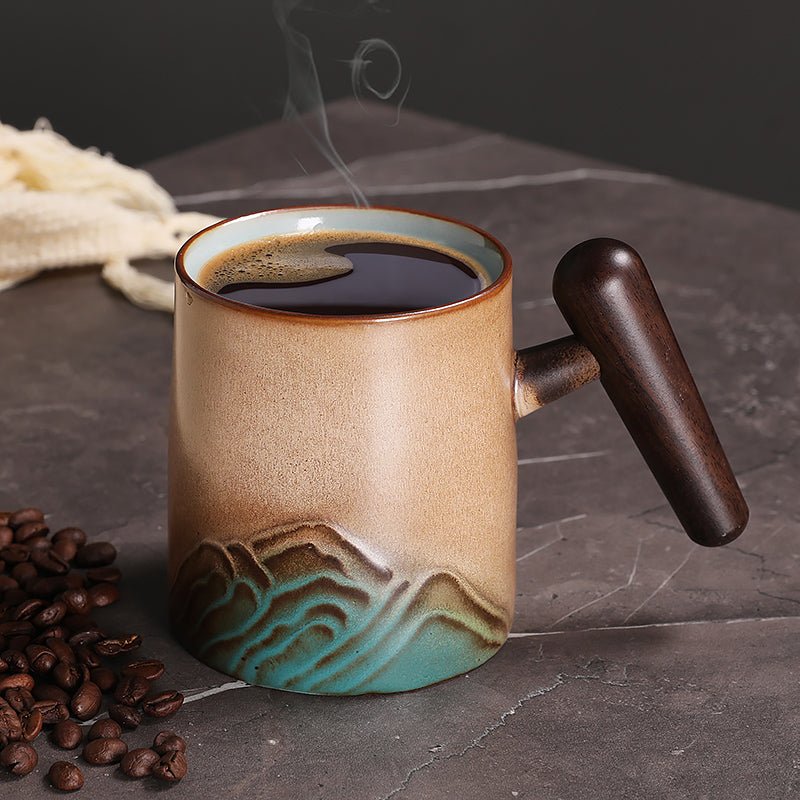
Large Coffe Mugs: How to Choose the Right Size, Shape, and Material
A practical guide to large coffe mugs that covers real-world size, shape, material, and care trade-offs. Use it to narrow down a mug that works on your counter, desk, and dishwasher.
Czytaj dalej
Zostaw komentarz
Ta strona jest chroniona przez hCaptcha i obowiązują na niej Polityka prywatności i Warunki korzystania z usługi serwisu hCaptcha.