
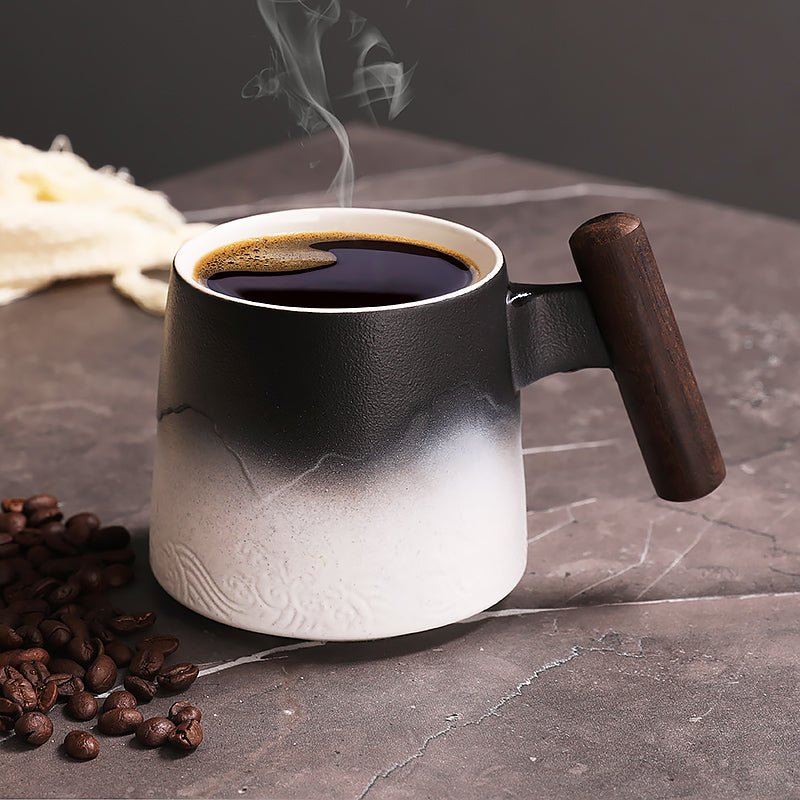
Giant Mugs for Coffee: How to Choose the Right Size and Shape
Reading time: about 8 minutes
A 40 oz mug looks great on a kitchen counter until the handle feels too tight, the cup is too heavy to lift with one hand, or the coffee cools before the second refill. We see that trade-off a lot in our store: giant mugs for coffee solve one problem and create another if the shape, weight, and finish are wrong.
That is why the best oversized mug is not just the biggest one. It needs enough capacity for your actual pour, a handle you can grip without knuckle scrape, and a base that stays steady on a desk or breakfast table. If you are comparing options, our products page and collection page are the easiest places to start, but the details below will help you narrow the field before you buy.
What makes giant mugs different from standard coffee mugs?
Size is the obvious difference, but it is not the only one that matters. Once a mug gets into the 20 oz, 32 oz, or 40 oz range, the shape starts affecting how it feels in the hand, how hot the coffee stays, and whether the mug still fits in a cabinet or under a pod machine.
In practice, giant mugs usually need three things standard mugs can get away without: a wider handle opening, a more stable base, and thicker walls that do not feel flimsy when full. We also pay close attention to rim thickness. A thin, sharp rim can make a huge mug feel cheap even if the glaze looks good in photos.
- Capacity: More than just a bigger fill line. It changes weight, cooling speed, and storage.
- Handle clearance: A handle that only fits two fingers can be annoying once the mug is full.
- Base diameter: A wider base helps a tall mug stay planted on a desk or tray.
- Wall thickness: Thicker walls usually feel sturdier, but they can add weight fast.
If you are still deciding between everyday sizes, our 16 oz Coffee Mugs: What to Check Before You Buy and 20 oz Coffee Mugs: What Buyers Should Check Before Ordering guides are useful benchmarks. They show where a mug stops feeling standard and starts feeling oversized.
How much coffee do you actually pour into one?
Most shoppers think in ounces, but the real question is how the mug fits into a routine. One person wants a single large pour at 6 a.m. Another wants a desk mug that can hold a long meeting's worth of coffee without constant refilling. Those are different use cases, and they need different shapes.
| Capacity | Best for | Main trade-off |
|---|---|---|
| 20 oz | A larger home mug without going fully oversized | Still manageable, but not ideal if you want a very long coffee session |
| 32 oz | Desk use, long mornings, or coffee with milk and room to spare | Heavier when full and can crowd a small dishwasher rack |
| 40 oz | True giant mug buyers who want fewer refills | Can feel bulky, especially if the handle or base is undersized |
Biggest mistake we see: buying the largest option because it sounds practical, then realizing the mug is too heavy to lift comfortably when filled to the top. A giant mug only makes sense if you actually want the extra volume. If you drink coffee quickly, a smaller cup may stay more enjoyable and easier to handle.
Which material holds up best in daily use?
Most giant coffee mugs fall into ceramic, stoneware, or porcelain. Each one has a different feel in the hand and a different failure mode. We look at the material first because a large cup magnifies any weakness. A small chip on a 12 oz mug is one thing. On a heavy 40 oz mug, it can be a bigger problem.
- Ceramic: Common, versatile, and usually the most familiar feel for coffee. It can be a smart everyday choice if the glaze is even and the rim is smooth.
- Stoneware: Often thicker and heavier. It tends to feel sturdy, but that extra mass matters once the mug is full.
- Porcelain: Usually lighter in the hand and can look refined, but it still needs a stable base and a comfortable handle to work as a giant mug.
In our experience, the best oversized mugs have even glaze coverage, a flat bottom, and no rough seam where the handle joins the body. Common defect modes we watch for are hairline cracks near the handle, unglazed rough spots on the foot, small glaze pinholes, and a slightly warped base that makes the mug rock on a table.
Care also matters. A mug that says dishwasher-safe is easier for daily use, but if it has metallic accents, delicate decals, or a matte finish, hand washing can protect the surface longer. Microwave-safe is useful too, but it is not automatic. Some decorative finishes and metallic details should stay out of the microwave even if the mug itself is ceramic.
What details matter before you order online?
Photos can make a mug look larger and sturdier than it really is. We have seen plenty of cups that look great from the front but disappoint once they are on a counter. The useful details are the ones that affect the first month of daily use, not just the unboxing photo.
- Handle comfort: Check whether your fingers can fit without touching the mug body. A cramped handle becomes a problem fast once the mug is hot.
- Rim quality: A smooth rim makes a giant mug more pleasant to drink from, especially if you like drinking straight black coffee.
- Base stability: A wide, flat bottom is important if you will set the mug down on a desk, side table, or kitchen island.
- Care instructions: Confirm whether it is dishwasher-safe, microwave-safe, or hand wash only before you assume anything.
- Storage fit: Measure your cabinet shelf height. A tall mug that looks perfect online may not fit where you keep your daily cups.
If spill resistance is part of your buying decision, read our Over 40 oz Giant Coffee Mugs Spill Proof: What Buyers Should Check article before you order. It covers the practical details that matter when a mug gets truly large.
Are giant mugs right for every coffee routine?
Not always. Giant mugs for coffee make sense for some routines and are the wrong fit for others. We say that plainly because oversized drinkware is easy to buy for the idea of convenience and then regret in daily use.
- Good fit: Home offices, slow mornings, long meetings, and coffee drinkers who want one large pour instead of multiple refills.
- Good fit: Gift buyers who want a mug that feels generous and practical rather than decorative only.
- Not a good fit: Espresso drinkers, tiny kitchen shelves, people with very small hands, and anyone who wants a cup that feels light when full.
- Not a good fit: Commuting, unless the mug has a truly spill-resistant design and you are willing to treat it more like a handled vessel than a carry item.
If you are not sure how far to go on size, our A buyer's guide to large capacity coffee mugs piece helps separate large mugs from genuinely giant ones. It is a useful middle step for shoppers who want more than standard size but do not want a bulky cup.
How should you compare options in our shop?
In our store, we usually narrow the choice by use case first and style second. A mug that works on a kitchen counter may not be the one you want at a laptop, and a showpiece gift mug may not be the one you reach for every weekday morning.
Use this simple comparison path:
- Choose the capacity you can finish comfortably.
- Check whether the handle feels roomy enough for your grip.
- Confirm the care instructions so you know how much upkeep the mug needs.
- Look at the base width and overall height if storage space is tight.
- Decide whether you want a plain everyday finish or a more decorative piece for gifting.
We also recommend thinking about the surface it will live on. A huge mug with a narrow foot can leave more ring risk and feel less secure on a crowded desk. A slightly smaller mug with a better base can be the smarter buy if your kitchen or office setup is compact.
For shoppers who want to compare across the whole range, start with our collection page and then move to the product details that match your routine. That is usually faster than chasing size alone.
Frequently asked questions
What size is considered a giant coffee mug?
Most shoppers think of 20 oz and above as large, with 32 oz and 40 oz clearly in giant mug territory. The right size depends on how much coffee you actually drink before it cools, not just how much liquid the mug can hold.
Are giant mugs dishwasher safe?
Many are, but not all. The safest approach is to check the care instructions for the specific mug, because metallic accents, printed designs, matte surfaces, and decorative glazes can change how it should be washed.
Do giant mugs keep coffee hotter longer?
They can, but not automatically. A larger mug holds more heat at first, yet a wide opening can also let heat escape faster, so wall thickness and lid use matter a lot.
Is a giant mug better than a travel tumbler?
Only if you are using it at home or at a desk. A giant mug gives you the familiar coffee-mug feel, while a travel tumbler is the better choice if you need leak resistance and plan to carry it in a bag.
What should I avoid when buying a giant mug online?
Avoid vague sizing, unclear care instructions, and product photos that hide the handle and base. Those are the parts most likely to make a large mug annoying after the first week of use.
If you want the shortest path to a good choice, compare the mug's capacity, handle comfort, base stability, and care instructions side by side, then browse our products page for the sizes that match your routine.
More from our blog
Read more
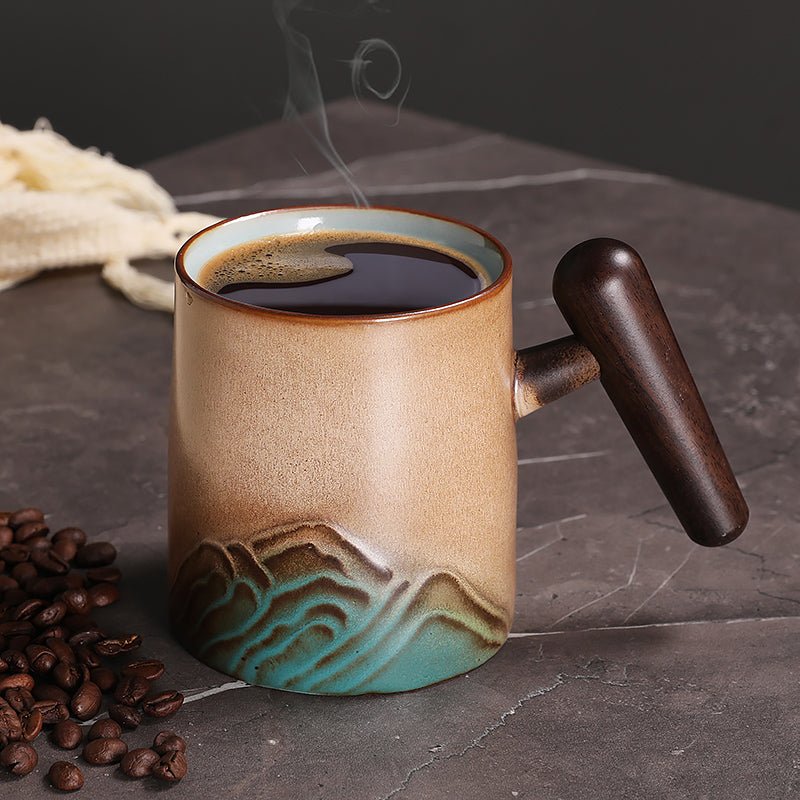
Extra Large Ceramic Coffee Mugs: What Buyers Should Check
Extra large ceramic coffee mugs need more than a big volume number. We break down the size, weight, handle comfort, glaze, and care details that matter on a kitchen counter or office desk.
Czytaj dalej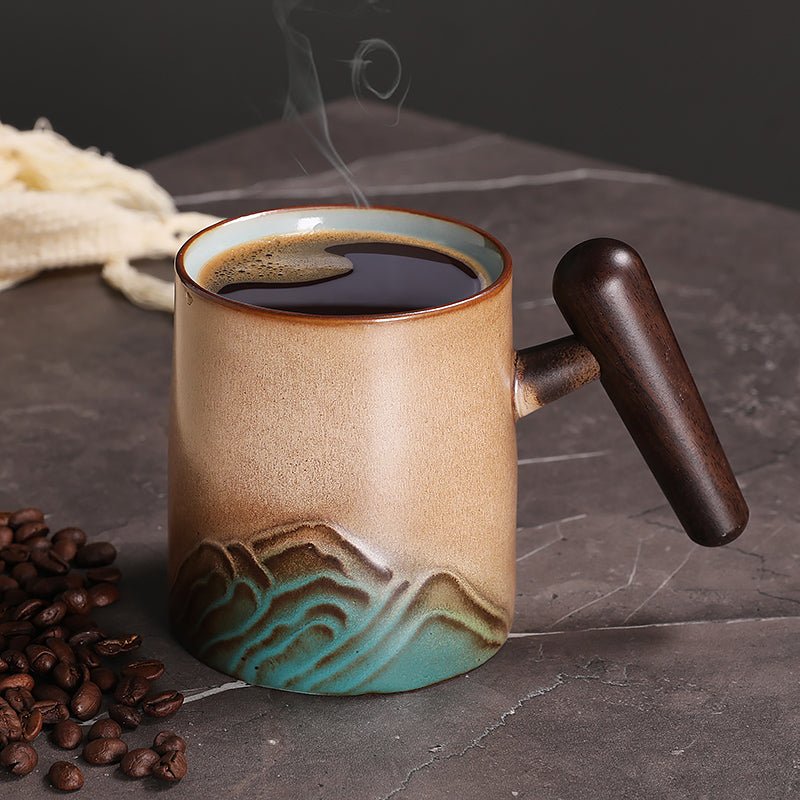
Big Mugs for Daily Coffee: Size, Material, and Fit Guide
Big mugs work best when the size, handle, and material match your routine. We break down what to buy, what to skip, and which details matter for daily coffee, desk use, and dishwasher care.
Czytaj dalej
Zostaw komentarz
Ta strona jest chroniona przez hCaptcha i obowiązują na niej Polityka prywatności i Warunki korzystania z usługi serwisu hCaptcha.