
Fancy Tea Cups: How to Choose a Set That Looks Good and Lasts
Reading time: about 8 minutes
A cup can look elegant on a shelf and still feel awkward after the third refill at a desk. That is usually where the real decision starts: not with the photo, but with how the cup sits in your hand, how stable it feels on a table, and whether you will still enjoy using it next week.
We handle a lot of drinkware in our store, and the same pattern comes up again and again. The buyers who are happiest with fancy tea cups usually want more than decoration. They want a piece that feels special, but still survives ordinary use on a kitchen counter, office desk, or gift table.
If you are comparing options right now, start with our full collection and keep a few practical questions in mind: does it balance well, is the rim comfortable, and is the shape easy to clean after tea stains or milk residue?
What should fancy tea cups do beyond looking good?
The best fancy tea cups do three jobs at once. They make the drink feel more considered, they hold up in normal routines, and they do not create extra frustration every time you wash or store them. A pretty cup that chips easily or feels unstable on a crowded tray stops being enjoyable fast.
In our experience, shoppers usually notice the details that a product photo cannot show: whether the base sits flat, whether the handle leaves enough room for two fingers, and whether the glaze feels smooth around the lip. Those are the details that separate a display piece from a cup you actually keep reaching for.
- Balance: A cup should not feel top-heavy, especially if you carry it from the kitchen to a couch or desk.
- Rim comfort: A clean, even lip matters more than people expect, especially for hot tea.
- Cleaning access: Curved interiors and narrow openings need more attention when tea leaves, milk, or sugar are involved.
- Surface finish: Glossy finishes look polished, but they can also show scratches, tea marks, and fingerprints sooner.
If you want a deeper pre-purchase checklist, our guide to Fancy Tea Cups: What to Look For Before You Buy goes into the basics we use when we evaluate new pieces.
Which style fits your table, desk, or gift?
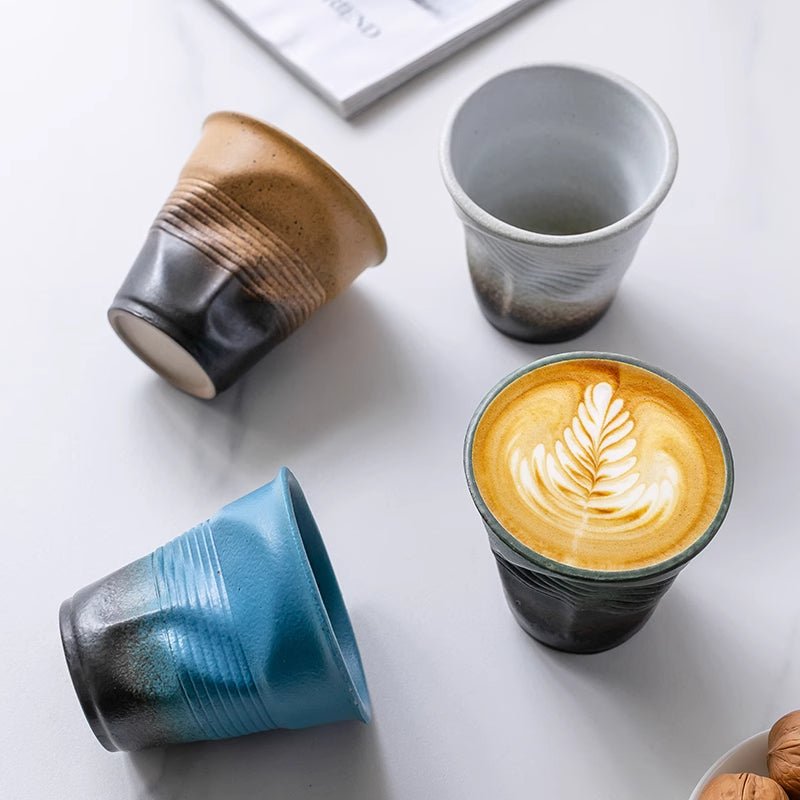
Style matters because it changes how the cup gets used. A sculptural cup can be perfect for an office desk or a display shelf, while a simpler shape may be better for daily tea refills, stacked storage, or a shared kitchen.
| Style | Best for | Trade-off |
|---|---|---|
| Sculptural novelty cup | Gifting, decor, conversation pieces | Can be harder to stack or store in a tight cabinet |
| Geometric modern cup | Clean tables, office setups, minimal interiors | May feel less traditional for formal tea service |
| Classic rounded cup | Daily tea, shared kitchens, frequent refills | Usually less striking as a gift if the buyer wants something playful |
If you want to compare styles side by side, our collection is the fastest place to do that without jumping between product pages.
For gift shoppers, shape often matters as much as color. A friend who loves desk decor may prefer a dramatic silhouette. Someone who drinks tea every afternoon may want a more familiar cup that is easier to rinse, dry, and store.
Which materials and finishes hold up best?
Fancy tea cups are often chosen for appearance first, but material is where the daily experience changes. Ceramic and porcelain are the most common choices shoppers compare because they can deliver a clean look without feeling too delicate in normal use. Stoneware tends to feel heavier and more grounded, which some people like for a desk or breakfast table.
We look for a few concrete details when we inspect a cup in person. The first is the rim: it should feel even and smooth, not sharp or slightly rough. The second is the glaze: pinholes, uneven gloss, or tiny bare spots can be early signs of inconsistent finishing. The third is the base: if a cup wobbles on a flat counter, that becomes annoying very quickly.
Care also changes the buying decision. If you plan to use a cup every day, ask whether the finish is fine with regular dishwasher cycles. Decorative pieces may be better hand-washed, especially if they have intricate shapes or painted accents that can wear more quickly. Sudden temperature changes matter too; very hot water into a cold cup, or the reverse, can be hard on some finishes.
Not every fancy cup is the right fit for every routine. A highly decorative piece is usually not the best choice for someone who wants a mug to throw into a crowded dish rack, stack in a narrow cupboard, or carry in a travel bag. For that kind of use, simpler shapes usually make more sense.
Which of our fancy tea cups fits different buying goals?
We keep a few styles in the store because buyers do not all want the same thing. Some want a statement piece. Some want a gift that feels personal. Some want a cup that looks good in photos but still works at the kitchen table.
The Planet Coffee Tea Mug is a strong pick if you want something sculptural with a more playful presence on a desk or shelf. It suits buyers who want their cup to start a conversation, not disappear into the background.
The Rhombus Coffee Tea Mug fits a cleaner, more geometric look. That makes it a good match for modern interiors, minimal setups, or anyone who likes a sharp silhouette without extra ornament.
The Handbag Coffee Tea Mug leans more giftable and more decorative. It is the kind of piece people remember after unboxing it. It is not the most practical choice if your priority is stacking cups tightly or using the same mug every morning without thinking about it, but it can be a better fit for a present or a display-led kitchen.
If you are shopping around gifts, our article on Christmas Tea Cups for Gifts, Daily Use, and Holiday Tables is a useful companion read because it covers how presentation and everyday usability pull in different directions.
What trade-offs should you expect before you buy?
Fancy pieces usually ask for a little more care, and that is normal. The trade-off is not a flaw. It is just the cost of getting a more distinctive look.
- Novel shapes are less stackable: A handbag-shaped or highly angular cup may take up more cabinet space than a standard round mug.
- Decorative finishes need gentler handling: If the surface has a detailed glaze or painted accent, hand-washing may be the safer long-term choice.
- Small openings can be harder to clean: Curved interiors and narrow mouths need a brush if you use loose tea, milk, or sweeteners often.
- Statement cups are not always the best daily commuter choice: They are better for home, office, or gifting than for a bagged commute.
For shoppers comparing size and comfort, our article on Large Cups for Tea: How to Choose the Right Size and Shape is worth reading before you decide on a cup that looks great but feels too small for your habit.
We also see buyers split into two groups: the ones who want a cup for slow tea moments, and the ones who want a cup that makes the room feel styled. If you want both, look for a shape that is distinctive without becoming fussy to wash or hold.
Frequently asked questions
Are fancy tea cups practical for daily use?
Yes, if the shape is stable, the rim feels comfortable, and the finish is easy to care for. We usually steer daily users toward cups that are attractive but still simple to rinse, dry, and store. Very ornate pieces are better when appearance matters more than speed and convenience.
Are fancy tea cups dishwasher safe?
Some are, but not all. Decorative finishes, painted details, and unusual shapes may be better washed by hand to avoid wear. If you plan to use a cup every day, check the care guidance before you buy instead of assuming all fancy pieces are the same.
What size tea cup is best for everyday tea?
That depends on how you drink tea. Smaller cups suit focused, traditional servings, while larger cups work better if you like milk tea, herbal blends, or fewer refills. If you tend to sip over a long work session, size and shape matter more than the style of the handle.
Do novelty tea cups make good gifts?
Yes, especially when the recipient likes decor, collecting, or playful kitchenware. The best gift is one that feels personal without being too fragile or awkward to use. A novelty cup can be memorable, but it should still feel comfortable enough to hold and clean.
What should I check first if I am buying online?
Start with the shape, care instructions, and how the cup will be used. Then check whether the style fits a gift, a desk, or a daily tea routine. If the photos do not make those basics clear, it is worth looking for a more detailed product page or a broader comparison guide.
What should you compare before you add one to cart?
If you want the fastest path to the right cup, compare these four things before you buy:
- Use case: daily tea, office desk, gifting, or display.
- Shape: rounded, geometric, sculptural, or novelty.
- Care: dishwasher-friendly or better for hand-washing.
- Storage: easy to stack, or better kept as a display piece.
If you are buying for someone else, pick the style first and the function second. If you are buying for yourself, reverse that order. Practical use usually beats a clever shape after the first week, but the best fancy tea cups give you both.
Start with the pieces that match your routine, then browse our collection to compare the sculptural options against a more everyday shape. If you are still narrowing it down, the buying guide at Fancy Tea Cups: What to Look For Before You Buy will help you check the details that matter before checkout.
Read more
Gingerbread Coffee Mugs: What to Buy for Gifts and Daily Use
Gingerbread coffee mugs can be a fun seasonal buy, but the useful ones still need a comfortable handle, a stable base, and a finish that holds up in real kitchen use. We break down what to check, w...
Czytaj dalej
Gnome Coffee Mug Buying Guide: What Real Buyers Should Check
A practical guide to choosing a gnome coffee mug for daily use, gifting, or display. We cover size, handle comfort, care, and the trade-offs that matter before you buy.
Czytaj dalej
Zostaw komentarz
Ta strona jest chroniona przez hCaptcha i obowiązują na niej Polityka prywatności i Warunki korzystania z usługi serwisu hCaptcha.