
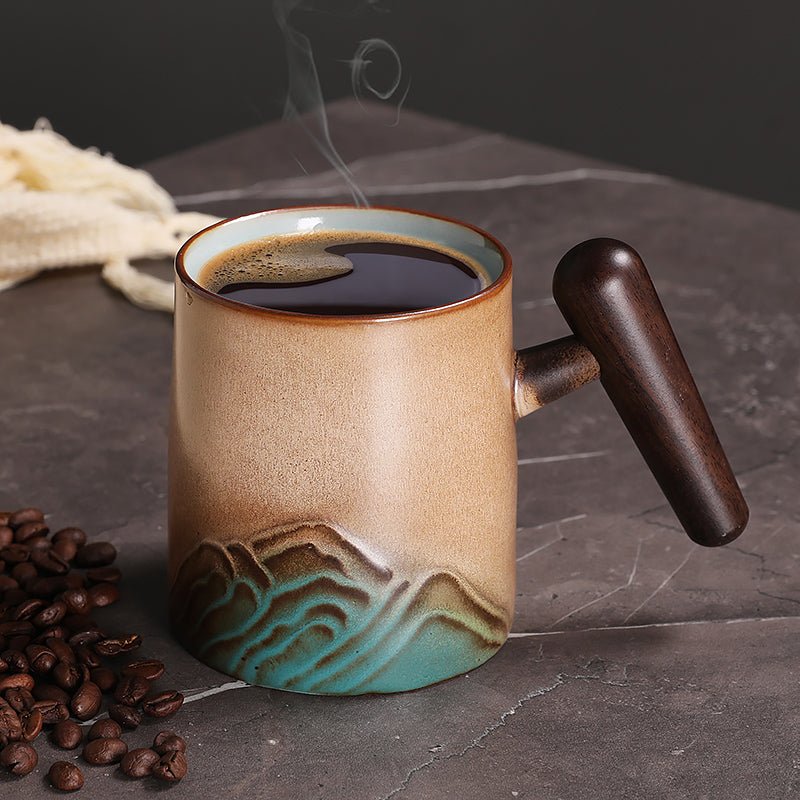
Extra Large Coffee Mugs: What to Look for Before You Buy
Reading time: about 10 minutes
A mug that looks roomy in a product photo can feel completely different once it’s sitting beside a coffee maker, a laptop, and a sink full of dishes. We see that all the time in our store: shoppers want extra large coffee mugs because they’re tired of refilling, but they still need something that fits the hand, clears the cupboard, and survives normal dishwasher use.
The best oversized mug is not just the biggest one. It’s the one that matches how you actually drink coffee. If you want a deep-dive on sizing beyond the oversized category, our buyer’s guide to large capacity coffee mugs is a helpful companion read. If you already know you want to browse what we carry, start with our full collection or check our current products page.
What counts as an extra large coffee mug?
In practical terms, most shoppers use “extra large” for mugs that go beyond the standard 11 to 16 oz range. Once you get into 18 oz, 20 oz, 24 oz, and larger, you’re in the territory where one mug can replace multiple refills during a work session or a long breakfast.
That said, capacity alone doesn’t tell the full story. A tall, narrow mug and a wide, bowl-style mug can both hold a lot, but they behave differently on a counter and in the hand. A tall mug usually feels more compact for its volume, while a wide mug gives you more surface area for cooling and easier access with a spoon or milk frother.
We look at three things first:
- Usable volume, not just the labeled capacity. Real fill level matters if you add milk or leave room for creamer.
- Footprint, especially for office desks and microwave turntables.
- Handle clearance, because a big mug with a cramped handle is annoying from day one.
If you’re comparing oversized mugs to slightly smaller daily drivers, our article on Big Mugs Coffee: How to Choose the Right Large Mug for Daily Use breaks down the trade-offs in a simple way.
Which size is right for your daily routine?
The right size depends on what you actually pour into the mug and where you use it. In our experience, the wrong size is usually the one that looks impressive but becomes awkward after a week.
| Typical size | Best for | Main trade-off |
|---|---|---|
| 18 oz | Long black coffee, smaller lattes, tea at a desk | Still manageable, but less room for milk-heavy drinks |
| 20 oz | Most everyday oversized coffee drinkers | Can feel heavy when filled to the top |
| 24 oz and above | Very long mornings, soup-style sipping, fewer refills | Bulkier, slower to cool, not ideal for small cabinets |
Here’s the quick way we help shoppers think about it:
- Choose 18 oz if you want oversized capacity without making the mug feel like a bowl.
- Choose 20 oz if you want a true large mug for drip coffee, cold-weather drinks, or milk-and-espresso drinks.
- Choose 24 oz or more if your priority is staying put at one desk or one seat and you don’t mind a heavier load.
There is a limit, though. Extra large coffee mugs are not the best choice if you want something lightweight for commuting, tight cup holders, or a quick one-cup espresso-style pour. For those use cases, a smaller cup is usually the better buy.
What materials make a big mug feel better to use?
Material matters more as the mug gets larger, because weight and heat retention become more noticeable. A 20 oz ceramic mug can feel completely different from a 20 oz thin-walled cup with a broad handle.
Here are the materials we see buyers compare most often:
- Ceramic - the most familiar choice for everyday coffee. It usually feels solid, holds heat reasonably well, and is easy to match with most kitchen styles. The downside is weight; larger ceramic mugs can feel noticeably heavy when filled.
- Stoneware - often thicker and more substantial in the hand. It tends to feel sturdy on a desk or counter, but it can be a little bulkier and slower to heat up.
- Porcelain - usually lighter and more refined. Good if you want a large mug that does not look bulky, though some shoppers prefer the sturdier feel of ceramic or stoneware for daily use.
In our experience handling this category, the common failure points are not dramatic. They’re small annoyances that add up: handles that are too narrow for two fingers, rims that feel too thick on the lip, and glazes that show utensil marks after repeated use. Those details matter on a mug you’ll pick up every morning.
For shoppers who want a broader comparison of size, shape, and material, our article on Large Coffee Mugs: How to Choose the Right Size, Shape, and Material goes deeper into the everyday differences.
How do handle shape, wall thickness, and rim size change the experience?
These are the details most listings skip, and they’re the details people notice after two weeks of use.
Handle shape affects comfort first. A large mug should still leave enough clearance for a secure grip, especially if you carry it from the kitchen to the desk with one hand. If the handle opening is too tight, the mug feels bigger than it should.
Wall thickness affects temperature and weight. Thicker walls can keep heat in a little longer and make the mug feel sturdy, but they also add mass. Thin walls feel lighter, but the coffee cools faster and the mug can feel less substantial.
Rim size changes how the drink lands. A slightly rolled or balanced rim feels easier on the lip than a sharp, heavy edge. If you sip slowly at a desk, this becomes noticeable fast.
Our rule is simple: a mug should feel easy before the coffee goes in, and still feel easy after the last sip.
That is why we pay attention to real-life use, not just capacity numbers. A mug can hold a lot and still be the wrong purchase if it tips forward on a crowded desk or takes over the top shelf of a cabinet.
Which extra large coffee mugs work best for home, office, or gifting?
The same oversized mug can be excellent in one setting and frustrating in another. We see the most satisfied buyers match the mug to the environment first, then the style.
For home kitchens, bigger mugs make sense if you brew a full pot, drink slowly, or use the mug for coffee and tea. Ceramic and stoneware are usually the most straightforward choices because they feel familiar and are easy to wash.
For offices or desks, shape matters more than decoration. A mug with a stable base and a handle that does not snag on your notebook or keyboard tray is worth more than a flashy design. If your desk is crowded, watch the footprint carefully.
For gifting, oversized mugs should feel generous, not awkward. A mug that is too massive can read as novelty instead of practical. For gift buyers, we usually recommend a classic shape and a finish that feels easy to live with, not overly specific.
There is also a category boundary worth saying out loud: extra large coffee mugs are not the best fit for people who want a lightweight travel cup, a very delicate espresso cup, or a tiny shelf-friendly set. If those are the priorities, a different style will serve you better.
How should you care for an oversized mug so it lasts?
Big mugs are not hard to maintain, but they do show wear in a few predictable ways. We always tell shoppers to think about cleaning before they buy, especially if they use the microwave or dishwasher daily.
Good care habits usually include:
- Rinsing soon after use, especially if you drink dark coffee or tea that can leave staining at the base.
- Checking whether the mug is dishwasher safe before regular machine washing. Many ceramic and stoneware mugs handle dishwasher cycles well, but printed or specialty finishes may need gentler care.
- Avoiding sudden temperature swings. Putting a very cold mug straight into a very hot environment can stress the material over time.
- Drying the handle area and base if water tends to pool there on your drying rack.
Common wear signs we watch for are glaze crazing, hairline chips around the rim, and handle stress at the join point. None of those are guaranteed to happen, but they are the kinds of details that separate a mug that ages well from one that looks tired after a few months.
If you’re comparing broader shopping sources, our post on Amazon Coffee Mugs: How to Compare Materials, Sizes, and Everyday Use can help you spot the features that matter before you click buy.
How do you choose the right one without overbuying?
The easiest way to avoid regret is to compare the mug against your real routine, not your ideal one. A lot of oversized mugs get purchased for “big coffee” and then sit unused because they are too bulky for everyday cabinets or too heavy for a one-handed carry.
Use this checklist before you buy:
- Measure your cabinet clearance and make sure the mug height and handle width will fit where you store it.
- Think about your pour: black coffee, latte, tea, cocoa, or soup all favor slightly different shapes.
- Check the base width if you use it on a narrow desk or a coffee cart.
- Confirm care needs if you want dishwasher and microwave convenience.
- Decide how heavy feels acceptable once the mug is full.
If you already know you want to compare options across our store, browse the full collection and look for the size and shape that matches your routine. If you’re narrowing down by a specific size band, our article on 20 Ounce Coffee Mugs: What Buyers Should Check Before Ordering is a practical next read.
Frequently asked questions
Are extra large coffee mugs good for daily use?
Yes, if you regularly drink large servings and don’t mind a heavier mug. They are especially useful for long desk sessions, big morning pours, and tea drinkers who want fewer refills. If you want something light and compact, a smaller mug is usually the better daily choice.
What size extra large coffee mug is best for coffee with milk?
Many shoppers find 20 oz to be the sweet spot for milk-heavy drinks because it leaves room for foam, milk, or cream without feeling oversized on the table. If you add a lot of milk or ice, 24 oz can make sense. For straight black coffee, 18 oz may be enough.
Are ceramic extra large coffee mugs microwave safe?
Many ceramic mugs are microwave safe, but not all finishes or decorative elements are. Check the product details before microwaving, especially if the mug has metallic accents, special coatings, or a highly textured finish. We always recommend using a mug that is clearly labeled for microwave use if convenience matters.
Do bigger mugs keep coffee hot longer?
Not always. A larger mug can hold more heat overall, but the wider opening on some oversized mugs can also let coffee cool faster. Shape, wall thickness, and how full you pour the mug all affect heat retention.
What should I avoid when buying an extra large coffee mug?
Avoid a mug that is too heavy once filled, has a cramped handle, or looks too tall for your cabinet or microwave. Also watch for finishes that are hard to clean or a base that feels unstable on a busy desk. The biggest mug is not automatically the best one.
If you want the most practical next step, compare your preferred capacity against your storage space, handle comfort, and care needs, then browse our products page to find the extra large coffee mugs that fit your routine.
More from our blog
Read more

Christmas Coffee Cup Buying Guide for Gifts, Daily Use, and Sets
A practical guide to choosing a christmas coffee cup that looks festive without sacrificing comfort, durability, or everyday use. We break down materials, sizes, care, and gift-ready trade-offs bef...
Czytaj dalej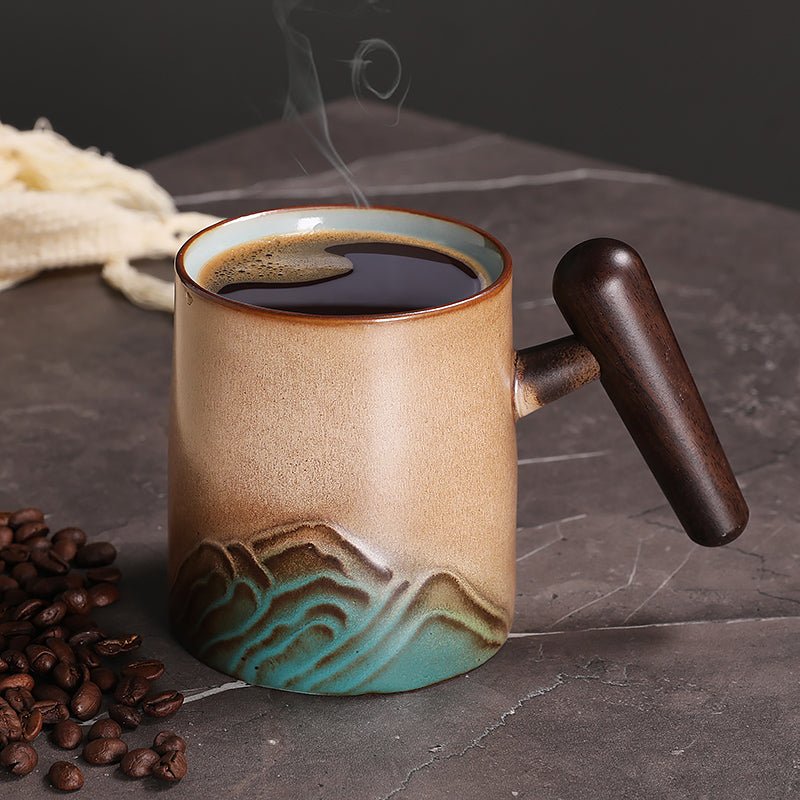
Big Mug Buying Guide: Sizes, Materials, and Daily Use Trade-Offs
A practical guide to choosing a big mug for coffee, tea, desk use, or gifting. We break down size, shape, material, and care so you can buy the right one the first time.
Czytaj dalej
Zostaw komentarz
Ta strona jest chroniona przez hCaptcha i obowiązują na niej Polityka prywatności i Warunki korzystania z usługi serwisu hCaptcha.