
Eggnog mug shape and handle guide: 170, 200, or 270 ml
Reading time: about 9 minutes
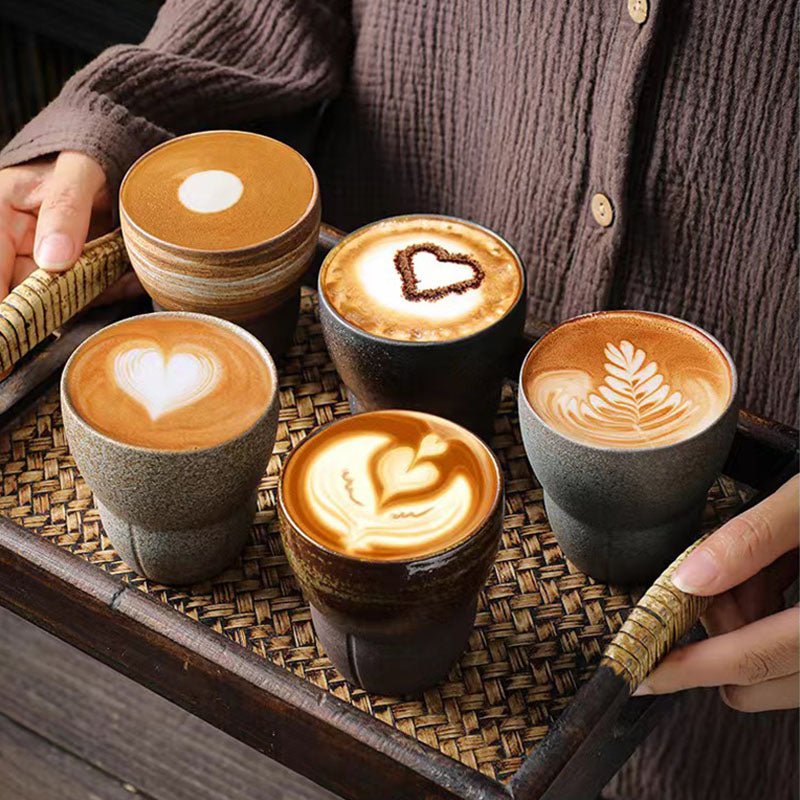
A holiday tray makes a capacity mismatch obvious. A compact cup that looked generous in an isolated product photo can leave too little room for the pour you planned, while a larger mug can make a small dessert serving look lost. This eggnog mug shape and handle guide compares the three verified capacities in our current catalog: Retro at 170 ml, Pleated at 200 ml, and Emerald at 270 ml.
In our store, we separate what the listings establish from what a photograph cannot prove. We can compare listed capacity, visible body profile, and the handle form shown in current imagery. We cannot turn those details into unsupported claims about hand comfort, heat retention, durability, or dishwasher performance. Nothing in this article means that eggnog, garnish, spoons, saucers, gift packaging, or other props are included; the live product page defines what is sold.
Eggnog mug shape and handle guide: what changes from 170 to 270 ml?
| Current option | Listed capacity | Visible design cue | Handle check | Most relevant situation |
|---|---|---|---|---|
| Retro Coffee Tea Cup | 170 ml, about 5.7 US fl oz | Compact, retro-styled cup profile | Compare the photographed handle with a cup you already use; capacity does not establish finger clearance | A deliberately small eggnog or dessert serving |
| Pleated Coffee Tea Cup | 200 ml, about 6.8 US fl oz | Pleated exterior treatment and compact cup proportions | Judge the handle separately from the pleated body; raised detailing does not prove grip performance | A middle-size serving with 30 ml more nominal volume than Retro |
| Emerald Coffee Tea Mug | 270 ml, about 9.1 US fl oz | The largest mug profile in this three-option comparison | Check overall width, including the handle, against your shelf and tray space | The fullest serving among these compact choices |
These are listed capacities, not recommended fill lines. Rim shape and the amount of space you leave for carrying or garnish affect the real serving level. The broader unique coffee mugs collection is the next place to look if none of these three capacity and shape combinations matches your routine.
Which capacity matches the amount you actually pour?
Start with the beverage, not the product photograph. Measure your usual serving in a liquid measuring cup once. That gives you a concrete number to compare with 170, 200, and 270 ml instead of relying on labels such as small or regular.
For example, a planned 150 ml pour creates these simple arithmetic differences from the nominal capacities:
- Retro 170 ml: 20 ml between the planned pour and listed capacity.
- Pleated 200 ml: 50 ml between the planned pour and listed capacity.
- Emerald 270 ml: 120 ml between the planned pour and listed capacity.
Those figures are comparison margins, not guaranteed usable headroom. They do show why the 30 ml step from Retro to Pleated can matter: 30 ml is roughly two US tablespoons. Emerald adds 70 ml over Pleated and 100 ml over Retro. If your measured serving is 220 ml, only the 270 ml option has a listed capacity above that amount.
All three remain compact. A US 12 fl oz serving is about 355 ml, so shoppers expecting that scale should move beyond this group and use our 12 oz mug shape and handle comparison as a more relevant starting point.
Which visible profile suits the way you plan to serve eggnog?
Retro 170 ml for the smallest planned portion
A shopper setting out a short after-dinner pour may prefer the visual scale of the Retro option. Its 170 ml listing is the smallest of the three, and its current presentation supplies the retro styling cue. That situation maps directly to the Retro 170 ml cup. It is not the sensible choice for someone who routinely wants more than 170 ml before accounting for carrying space.
Pleated 200 ml for a middle capacity and surface detail
The Pleated option fits a shopper who finds 170 ml too restrictive but does not need the full 270 ml. Its visible pleated treatment also gives the body more surface detail than a plain silhouette. Choose the Pleated 200 ml cup for that specific combination. We would not infer that the pleating improves insulation, prevents slipping, or changes cleaning performance without an explicit product claim.
Emerald 270 ml for the largest option in this group
The Emerald listing fits a shopper who wants the most nominal capacity while staying within these three compact options. At 270 ml, it provides 100 ml more listed volume than Retro, and its product title presents it as a mug rather than a coffee tea cup. Review the current shape and handle photography on the Emerald 270 ml mug before ordering. It is still not a 12 oz mug.
What should you check about the handle before ordering?
In our store, we treat hand fit as a separate question from capacity. A 270 ml body does not automatically have a larger handle opening than a 170 ml body, and an isolated photograph cannot provide an exact scale unless corresponding measurements are supplied.
- Measure a handle you already like. Record its inner height and inner width. Compare those figures only when the new product listing gives equivalent measurements.
- Check handle projection. Overall width including the handle matters for cupboard spacing, serving trays, and a crowded office desk.
- Look at the attachment geometry. Current photos can show where the handle joins the body, but they cannot prove strength or long-term comfort.
- Match your grip habit. Note how many fingers you normally place through your current handle and whether you support the base. Do not assume the same grip will fit from capacity alone.
The practical rule is simple: use photographs to compare form and listed measurements to compare fit. If a handle-opening dimension is absent, treat exact finger clearance as unknown rather than estimating it from the image.
Cupboard, desk, and gift fit: which dimensions matter?
Capacity is an internal-volume figure. It does not tell you the vessel's height, opening diameter, base footprint, body diameter, or maximum width with the handle. The source facts used for this comparison do not provide a complete, common set of exterior dimensions for all three products, so we will not invent one.
- For a kitchen cupboard: compare product height with shelf clearance and maximum width with the space between neighboring mugs.
- For an office desk: check the base footprint and handle projection against the clear area beside your keyboard, notebook, or monitor stand.
- For a serving tray: use overall width, not body diameter alone, when estimating how many pieces fit across the tray.
- For a gift: compare the recipient's frequently used cup with the live listing. Our coffee mug gift shape and handle guide covers the fit questions that become harder when you cannot ask the recipient directly.
At checkout, copy any supplied measurements using consistent labels: height, body diameter, opening diameter, and overall width including the handle. If a dimension is not listed, ask rather than treating the product photo as a ruler. Plan gift packaging separately unless it is expressly included on the product page.
Where do compact 170-270 ml options fall short?
Compact serving sizes are useful only when they match the intended pour. These options are not a strong fit for every drink or every shopper.
- They are not designed around a 12 oz or larger serving. Even Emerald is about 9.1 US fl oz by nominal conversion.
- They are poor capacity matches for a large iced drink because ice uses space that would otherwise hold liquid.
- They do not guarantee a particular number of fingers inside the handle. That requires handle-opening measurements or direct handling.
- Their visible shapes do not establish special temperature performance. We make no heat-retention or insulation comparison here.
- A product name and capacity do not establish microwave or dishwasher compatibility, included accessories, or a specific material. Confirm each point on the current listing.
The compact sizes can also work as a reference for other small dessert servings. Our 170, 200, and 270 ml affogato cup comparison uses the same capacity steps for a different serving decision, without suggesting that any food or beverage comes with the cup.
What should you inspect and verify before first use?
A careful delivery check catches visible problems before a mug reaches the kitchen counter or a gift unboxing. These are standard drinkware checks, not a statement that any of the three models commonly arrives damaged.
- Inspect the rim under good light for a chip, sharp spot, or visible crack.
- Look closely at both handle attachment points for a hairline fracture or shipping damage.
- Set the empty item on a flat counter and check for unexpected rocking from an uneven base.
- Confirm the material and current care instructions on the live product page, then wash the item as directed before use.
- Do not assume microwave or dishwasher compatibility from appearance. Repeated dishwasher cycles should only be used when the current care instructions permit them.
Photograph visible delivery damage before using the item and contact the store. Stop using drinkware that develops a crack or a damaged rim.
The checkout checklist for 170, 200, and 270 ml options
- Measure your planned eggnog serving in milliliters.
- Choose 170, 200, or 270 ml based on that pour and the margin you want to leave.
- Compare the Retro, Pleated, and Emerald body profiles in current product photography.
- Measure a handle you already like, then compare any equivalent listed dimensions.
- Verify exterior dimensions, material, care instructions, and exactly what the listing includes.
Use this eggnog mug shape and handle guide to eliminate capacities that do not fit first. Then compare the remaining visual options in the current unique mug collection.
Frequently asked questions
What does this eggnog mug shape and handle guide compare?
Our eggnog mug shape and handle guide compares the Retro 170 ml, Pleated 200 ml, and Emerald 270 ml options. It covers verified listed capacity, visible body form, handle checks, and buyer fit without claiming unverified comfort, durability, or temperature performance.
Is a 170 ml mug too small for eggnog?
It is too small if your planned pour exceeds 170 ml, and it may feel restrictive if you want substantial carrying space below the rim. Measure your normal serving first. For a deliberately short dessert pour, the Retro 170 ml option may be the most proportionate of these three.
How much larger is the Emerald mug than the Pleated cup?
Emerald is listed at 270 ml and Pleated at 200 ml, so the nominal capacity difference is 70 ml. Emerald also holds 100 ml more by listed capacity than the 170 ml Retro option.
Can I assume these mugs are dishwasher and microwave safe?
No. Shape, handle style, and capacity do not establish dishwasher or microwave compatibility. Check the current material and care details on the specific product page before using either appliance.
Where can I compare all current mug options?
Start with the CoffeifyMug unique coffee mugs collection. Keep your measured serving, cupboard clearance, preferred handle dimensions, and care requirements beside you while comparing the live listings.
Read more
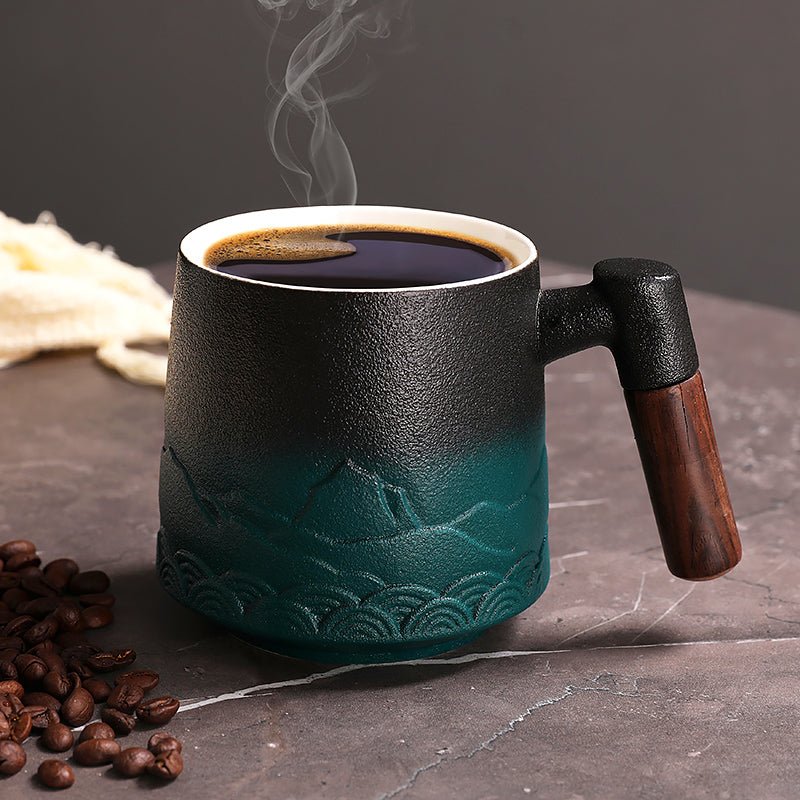
Rustic Ceramic Coffee Mugs Shape and Handle Guide: Current Options
Compare current Mountain & Sea, Elk and Moon, and wooden-handle mug listings by visible profile, handle clearance, capacity, dimensions, and care. This guide separates listing facts from practi...
Czytaj dalej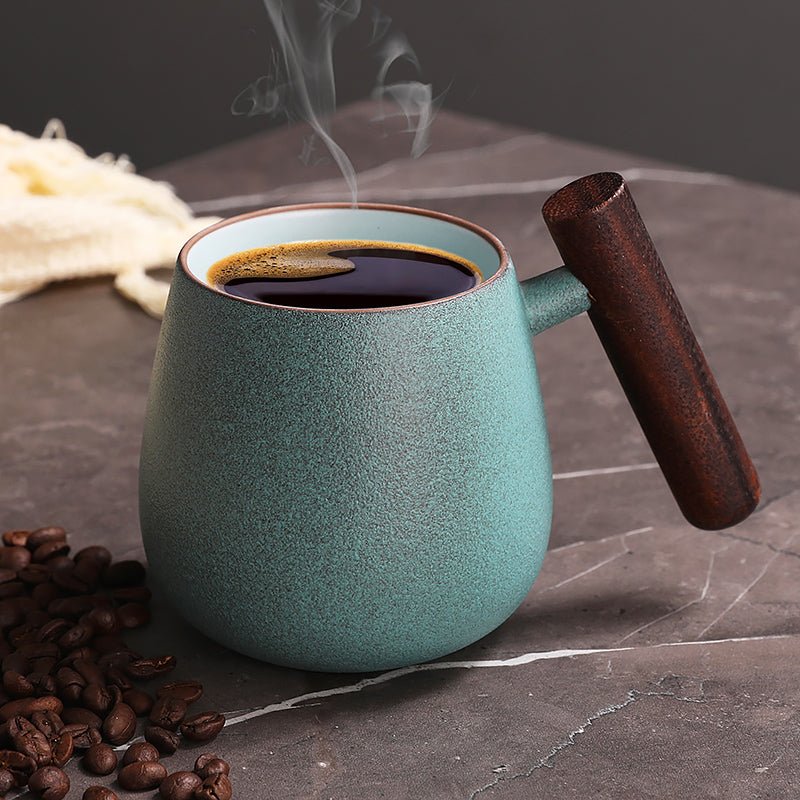
Black Tea Mug Shape and Handle Guide: 3 Current Options
Compare the Round 390 ml, Gradient 400 ml, and The Flow 400 ml by listed capacity, visible shape, handle form, and everyday fit. See which dimensions and care details to verify before ordering.
Czytaj dalej
Zostaw komentarz
Ta strona jest chroniona przez hCaptcha i obowiązują na niej Polityka prywatności i Warunki korzystania z usługi serwisu hCaptcha.