
Drawing a Coffee Mug: What to Check Before You Buy
Reading time: about 9 minutes
A mug can look fine in a product photo and still feel awkward on a real desk. We see it when the handle is too narrow for two fingers, the rim feels sharp after a few sips, or the base rocks on a kitchen counter that is not perfectly flat.
If you are looking at drawing a coffee mug as a buying topic, the useful question is not just how the mug looks. It is whether the shape reads clearly, feels balanced, and holds up after repeated use. That is how we look at mugs in our store: on the table, in the hand, and after normal cleanup.
What should a mug look like on paper and in the hand?
A good mug sketch usually starts with a clean silhouette. The body should read clearly from the side, and the handle should have enough space so your fingers do not crowd the cup. That same logic helps when you are choosing a mug for everyday use. If the shape is easy to understand visually, it is usually easier to live with on a busy kitchen counter or office desk.
When we evaluate mugs, we pay attention to a few details that shoppers do not always notice in photos:
- Handle clearance: You should be able to get two fingers through the opening without scraping the cup.
- Base stability: A mug should sit flat. A slight wobble is annoying every time you set it down.
- Rim feel: A smooth, even rim matters more than most people expect, especially for tea and black coffee.
- Wall shape: Straight, slightly tapered, or rounded walls change how the mug feels in the hand and how it looks in a drawing.
- Finish: Glossy glazes show light and color clearly; matte or textured surfaces can feel more decorative but may show wear differently over time.
That is why a mug that looks simple can still be a better purchase than one with a crowded, overly stylized profile. If you want the mug to work as a daily cup and not just an object on a shelf, keep the form plain enough to handle real use.
Which mug shapes work best for a desk, shelf, or gift table?
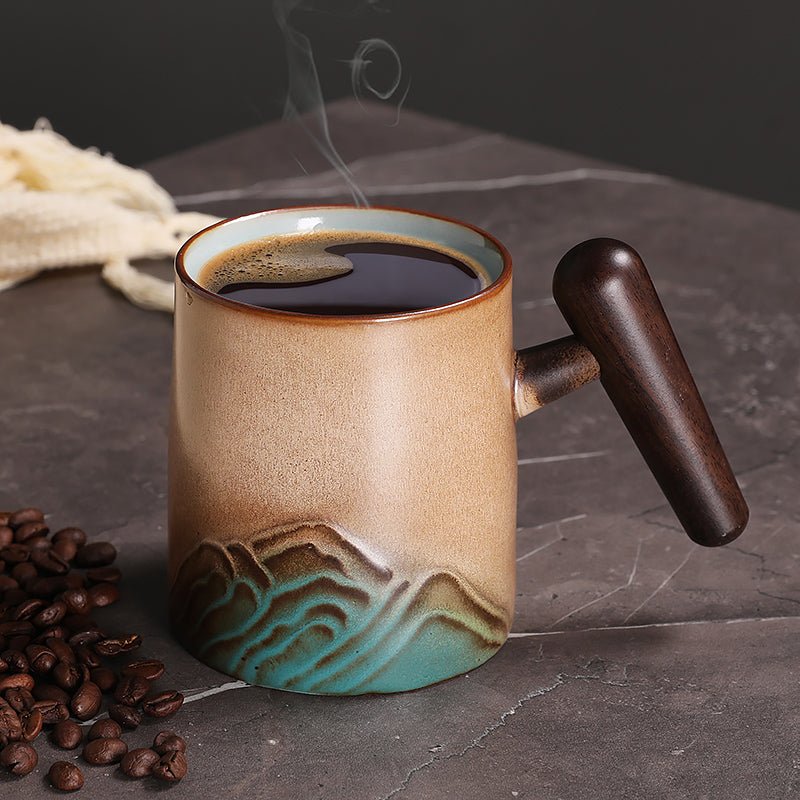
Shape changes the whole buying decision. A rounded mug feels warmer and softer. A more tapered mug can look sharper in a sketch and take up a little less visual space on a desk. A wooden-handle mug brings in a different material mix, which can be useful if you want the cup to stand out without relying on a loud print.
| Option | Visual feel | Best use | Trade-off |
|---|---|---|---|
| Green Waves Coffee Tea Mug | Calm, flowing, and easy to read in a sketch | Desk coffee, gift boxes, or a softer kitchen look | More decorative than a plain office mug, so it may not suit someone who wants a neutral everyday cup |
| Mountain Sea II Coffee Tea Mug with Wooden Handle | Natural contrast with a clear handle accent | Buyers who want a more tactile, handcrafted feel | The wooden handle asks for gentler care than an all-ceramic mug |
| The Cloud Coffee Tea Mug Wooden Handle | Soft, minimal, and light on the eye | Giftable setups and quieter desk styling | Less practical if you want a heavier, stack-friendly mug for a shared cabinet |
If you want to compare the full range before choosing a style, start with our all mugs collection. That makes it easier to compare silhouettes side by side instead of judging one product page at a time.
For shoppers who are comparing presentation as much as capacity, the shape should answer a simple question: does this mug belong on my desk, in my hand, and in my routine? If the answer is yes, the design is doing real work instead of just looking good in a photo.
What flaws do we check before we recommend a mug?
In our experience, the small flaws are the ones that create returns or disappointment later. A mug does not need to be perfect in a gallery sense, but it does need to be consistent where the hand and the lip meet it every day. We check this kind of product the same way a shopper uses it: on a flat surface, under normal light, and with no special setup.
These are the issues we look for most often:
- Uneven base: If the mug rocks, even slightly, it feels cheap and can be noisy on a desk.
- Rough rim: A sharp or inconsistent edge is one of the fastest ways to turn a pretty mug into an annoying one.
- Glaze pinholes or thin spots: Small finish defects are not always visible in a product photo, but they matter when you want a clean look.
- Handle seam or awkward angle: A handle can be strong but still uncomfortable if the opening is too tight or the angle fights your grip.
- Printing or color drift: Decorative mugs should still have a clean, intentional finish, not a messy transfer or uneven tone.
These checks are not about chasing perfection. They are about avoiding the obvious frustrations that show up on day two, not day one. A mug with a comfortable rim, a stable base, and a usable handle is usually the better buy, even if the design is less dramatic.
How do size and capacity change the decision?
Size changes how a mug feels before you ever take the first sip. A smaller mug can be easier to hold and finish quickly, while a standard mug gives you more room for milk, tea, or a longer work session at your desk. If you are comparing common sizes, our size guides for 10 oz Coffee Mug: What Fits, What Doesn’t, and What to Buy and 11 oz Coffee Mug: Size, Fit, and What to Check Before You Buy are the most useful place to start.
A drawing-inspired mug should still match your routine. A compact mug works well if you like smaller pours, pour-over coffee, or tea that you finish before it gets cold. A larger mug is better if you sit through long meetings, top up with milk, or prefer one cup that carries you through a full work block.
There is a practical limit here too. Larger mugs can feel heavy when filled, and a very sculptural handle can get tiring if you drink from it all day. That is why the right choice is not always the visually boldest one. Sometimes the best mug is the one that disappears into the routine because it simply works.
When is a drawing-inspired mug not the right choice?
A decorative mug is not the best option for every buyer. If you need stackable cups for a shared office cabinet, a more sculptural handle or a pronounced silhouette can take up too much space. If you run everything through the dishwasher every day, a mug with a wooden handle is usually not the smartest pick. And if you leave mugs in the sink overnight, finishes and detail work tend to show wear faster than they should.
That is the trade-off we call out most often. Visual character gives you a better gift and a more personal desk setup, but it can also ask for more care. A wooden handle can feel comfortable and warm in the hand, yet it is not the best match for someone who wants a fully low-maintenance cup. A bold glaze can look great on a shelf, but it may not fit a minimalist kitchen where every item needs to stack cleanly.
If you want the mug for travel, backpack use, or a workplace where cups are handled roughly, a simpler insulated travel mug is probably the better category. A drawing-inspired mug belongs at a desk, in a kitchen, or in a gift box where the shape and finish can be appreciated.
What should you compare before clicking buy?
Before you pick a mug just because the art is appealing, use a short checklist. It takes less time than reading ten product pages and will usually save you from choosing the wrong shape.
- Handle fit: Check whether you can comfortably hold it with two fingers.
- Rim comfort: Look for a smooth lip, especially if you drink tea or black coffee.
- Base stability: A mug should sit flat without a wobble on a counter or desk.
- Cleaning routine: Think about whether the finish or handle material matches how you actually wash dishes.
- Desk or cabinet space: Make sure the silhouette fits where it will live, not just where it will be photographed.
- Use case: Pick a mug for daily coffee, a display shelf, or gifting, not all three if the trade-offs do not line up.
If you want a simple next step, compare the product pages above, then decide whether you want a calm pattern, a natural handle accent, or a softer cloud-like profile. That is usually enough to narrow the field without overthinking it.
Frequently asked questions
What is the easiest mug shape to draw and use?
A slightly tapered or straight-sided mug is the easiest shape to understand visually and the easiest to live with. It gives you a clear silhouette for sketching and usually leaves enough room for a comfortable handle. If the handle sits too close to the body, the mug may look fine but feel cramped in daily use.
Are wooden-handle mugs practical for everyday coffee?
Yes, if you want a more tactile feel and a warmer visual contrast. The trade-off is care: a wooden handle is usually less forgiving than a plain ceramic handle if you soak it, leave it wet, or run it through heavy dishwashing all the time. For a low-maintenance kitchen, an all-ceramic mug is often the easier choice.
Should I choose 10 oz or 11 oz for a daily mug?
Choose 10 oz if you prefer smaller pours, tea, or coffee that you finish quickly. Choose 11 oz if you want more room for milk, a larger pour, or a mug that feels more like a standard desk cup. The better pick is the one that matches how you actually drink, not just the label size.
What should I check when the mug arrives?
Set it on a flat surface and see if it rocks. Then check the rim for any rough spots and make sure the handle feels natural in your grip. If the mug has a decorative finish, look for glaze inconsistencies or color shifts before you put it into regular use.
If you want the quickest next step, compare the shapes in our all mugs collection, then open the product page that matches your desk setup, cleaning habits, and preferred size.
More from our blog
Read more
Coffee Mugs with Pictures: How to Pick a Print That Feels Premium
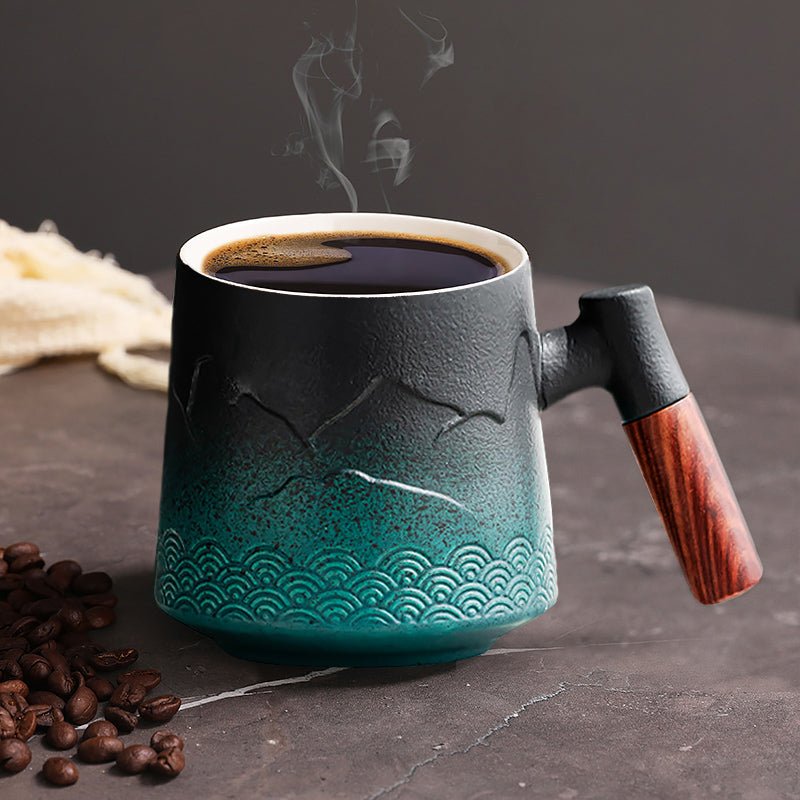
Coffee mugs with pictures look best when the print, mug shape, and care match how you use them. Here is what we check for in our store before we recommend one for gifting or daily use.
Czytaj dalej
Tea Cups for Sale: How to Compare Style, Size, and Comfort
We compare the tea cups for sale that make sense for daily brewing, office desks, and gifting, with real trade-offs on handle comfort, cleanup, and style.
Czytaj dalej
Zostaw komentarz
Ta strona jest chroniona przez hCaptcha i obowiązują na niej Polityka prywatności i Warunki korzystania z usługi serwisu hCaptcha.