
Drawing a Coffee Mug: Shape, Handle, and Buying Checks
Reading time: about 9 minutes
A mug that looks simple on a shelf can be awkward the moment you try to sketch it. The rim turns into a flat oval, the handle disappears into the body, and the whole shape feels off even if the cup itself is fine.
We see that a lot in our store mindset, because a mug is not just a drink vessel. It is also a small object with a very clear silhouette. That is why drawing a coffee mug is a useful exercise for anyone comparing styles, checking proportions, or choosing a mug that will photograph well on a kitchen counter or office desk.
In our store, we look at mugs the same way we look at still-life props: if the rim, handle, and body read cleanly from arm's length, the piece usually works in real life too. If the shape only looks good in one perfect angle, it is harder to live with, harder to gift, and harder to draw.
What should you notice first when you draw a coffee mug?
Start with the silhouette, not the decoration. A mug is basically a cylinder with an opening, a base, and a handle, but those three parts only work if their proportions are believable. The top ellipse, the height-to-width ratio, and the spacing between the handle and the body carry most of the realism.
When we sketch a mug for product checks, we look for a few practical things before adding any detail:
- Rim ellipse: The opening should read as an ellipse, not a flat line. If the angle is wrong, the mug looks tipped even when the body is straight.
- Body taper: Some mugs stay nearly vertical, while others narrow slightly toward the base. That small change affects the whole feel of the drawing.
- Handle gap: If the handle sits too close to the body, the negative space collapses and the mug looks heavy. If it sits too far out, the mug can feel detached.
- Base contact: A mug needs a clear point of contact with the table or counter. Without that shadow or foot line, it looks like it is floating.
That order matters in real buying decisions too. A mug with a clean silhouette is easier to place on a desk, easier to photograph, and easier to recognize in a crowded cabinet.
Which mug shape is easiest to sketch accurately?
A plain, straight-sided mug is the easiest starting point. It gives you a clear cylinder, a readable rim, and fewer visual interruptions. Tapered mugs are still manageable, but the perspective gets harder because the top and bottom widths no longer match.
| Shape | What it helps you practice | Where it trips people up |
|---|---|---|
| Straight-sided ceramic mug | Simple cylinder, clean ellipse, balanced handle placement | The drawing can look stiff if you ignore slight thickness in the rim |
| Tapered mug | Perspective and subtle volume changes | The base often gets too wide or too narrow if the angles are rushed |
| Wooden-handle mug | Material contrast and handle shape control | The mixed materials make the sketch busier and less forgiving |
If you want a reference with a cleaner read, the simpler styles in our collection are easier to study than a highly decorative piece. You can start browsing our full mug collection and compare side profiles before you commit.
For buyers who are also thinking about size and fit, our related guides on 11 oz Coffee Mug: Size, Fit, and What to Check Before You Buy and Drawing Coffee Mug Buyer's Guide: What to Check Before You Buy pair well with this topic.
What details make the sketch feel like a real mug?
The difference between a rough shape and a believable mug is usually in the edges. A real mug has thickness at the rim, a curve where the handle joins the body, and a base that rests with some weight. Even a tiny shadow under the lip can make the drawing read better than a dozen decorative lines.
- Mark the top ellipse first. Get the opening right before you chase the handle or the decoration. If the ellipse is wrong, everything else will feel unstable.
- Set the handle attachment points. Most handle problems come from guessing. Place the top and bottom anchors deliberately so the grip area feels usable.
- Compare left and right edges. A mug looks wrong if one side flares more than the other without a reason. Small asymmetry happens in real products, but it should feel intentional.
- Add the foot or base line. Some mugs have a visible foot ring, while others sit flatter. That line keeps the mug grounded on the page and on the table.
- Finish with the shadow. A soft shadow under the mug or handle separates it from the surface and makes the drawing easier to read.
We also see common defect modes in real mugs that show up in drawings if you are paying attention: an off-center handle, a rim that is slightly uneven, glaze pooling near the base, or a body that looks taller on one side because the curve was formed poorly. Those are small problems, but they change how the object feels in a hand.
How do material and finish change what you need to draw?
Material changes the edges. A glossy ceramic mug throws sharper highlights, while a matte finish softens the reflections and makes the contour easier to read. Wooden-handle mugs add a second material, so you are drawing both the cup and the grip, which is useful for practice but less forgiving if you want a clean, simple sketch.
That is also where care matters. A plain ceramic mug is usually more forgiving in everyday sink and dishwasher use, but a wooden handle should be treated more carefully because repeated heat and moisture are harder on wood than on ceramic. We do not treat wooden-handle styles as the best choice for rough use, long soaking, or a kitchen that relies on hot dishwasher cycles every day.
If your goal is to practice shape, a standard ceramic body is the easiest surface to study. If your goal is to practice product illustration or gift presentation, a wood-accent mug can be better because the contrast between materials forces you to control value, edge, and texture.
Which mugs in our store are useful references?
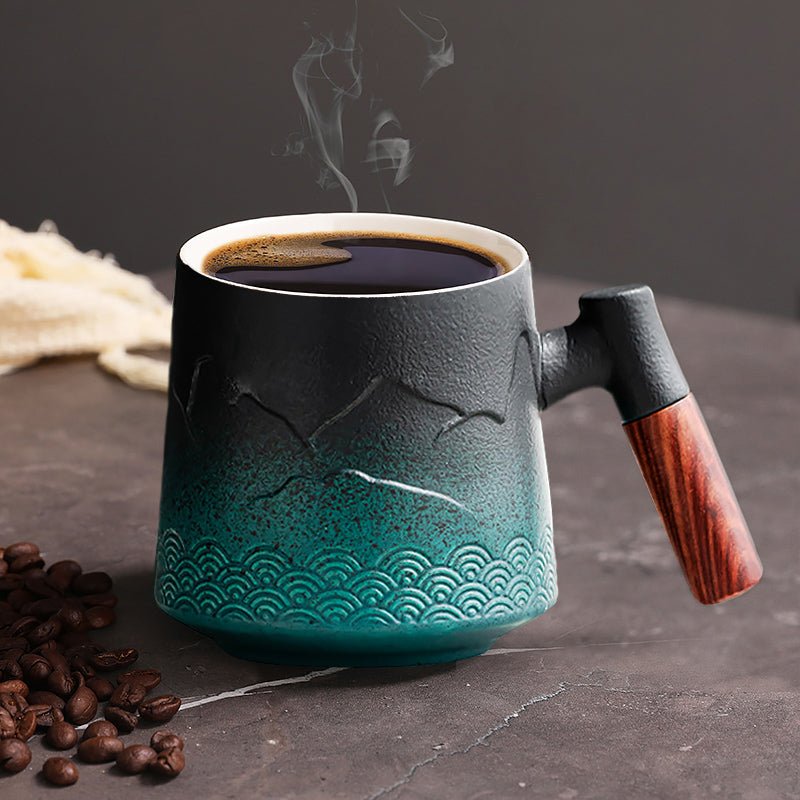
We built this topic around real product decisions, not just drawing theory. The Green Waves Coffee Tea Mug is a good reference if you want a pattern that follows the body without burying the silhouette. The repeated wave lines give you something to watch for in perspective, especially where the curve turns away from you.
The Mountain Sea II Coffee Tea Mug with Wooden Handle is more useful if you want to study mixed materials. The handle needs to read clearly against the cup, and that gap between wood and ceramic makes a sketch more dimensional. The The Cloud Coffee Tea Mug Wooden Handle has a cleaner profile, so it works well when you want the form to stay simple and the handle to carry most of the visual interest.
If you are comparing options for a desk, gift box, or shelf display, those three are different enough to teach you something. One shows pattern, one shows contrast, and one shows restraint. That is useful because a mug that draws well is often a mug that presents well in real life too.
What should you avoid if you want a mug that draws well?
Not every mug is a good sketch reference. Some styles hide the form instead of revealing it. If you are buying with drawing in mind, we would avoid anything that makes the outer shape hard to read at a glance.
- Heavy all-over pattern: It can obscure the body lines and make proportion checks harder.
- Very reflective or high-gloss finish: It creates strong highlights that can distract from the contour.
- Handle too close to the cup: The negative space collapses and the cup looks clumsy in a drawing.
- Oversized logo placement: Large graphics can overpower the silhouette if your goal is to study form.
- Unclear rim thickness: If the lip is too thin or too blended into the body, the top opening reads badly on paper.
If your main goal is pure practice, a plain ceramic mug is usually better than a busy one. If your goal is a more styled gift piece, then a more decorative mug can still work, but expect the sketch to take longer and the form to matter less than the finish.
Frequently asked questions
Is a coffee mug easier to draw with or without a handle?
Without a handle, the shape is simpler and easier for beginners to block in. With a handle, you get more realism and a better test of proportion, but the drawing becomes more sensitive to spacing and negative space. If you are learning, start with the body first and add the handle second.
What mug shape is best if I want to practice perspective?
A straight-sided mug is the easiest place to start, but a slight taper gives you more useful perspective practice. The top ellipse, bottom ellipse, and handle angle all have to agree, which forces you to be more accurate. That is helpful if you want your drawing to look grounded on a table.
Are wooden-handle mugs harder to draw than plain ceramic mugs?
Yes, usually. The wood adds another material, another edge, and another shape to control, so the sketch has more moving parts. That said, wooden-handle mugs are good if you want to practice product illustration or contrast.
What is the most common mistake when drawing a coffee mug?
The most common problem is treating the rim like a straight line instead of an ellipse. The next most common mistake is placing the handle too flat against the body, which makes the mug feel heavy and cramped. Both issues are easy to spot once you compare the drawing to a real mug on a counter.
Can a patterned mug still be a good drawing reference?
Yes, if the pattern follows the form instead of fighting it. A design like the wave styling on some of our mugs can help you understand curvature, but an overcrowded print can hide the silhouette. If the goal is to learn structure, choose pattern with restraint.
What should you compare before you buy one to sketch?
Before you choose a mug as a drawing reference, compare four things: the rim shape, the handle spacing, the finish, and the care note. Then decide whether you want a simple study piece or a more complex object that teaches material contrast. That small check saves you from buying a mug that looks good in photos but is frustrating on paper.
- Rim: clean ellipse, readable thickness
- Handle: enough gap to draw clearly
- Finish: matte for simpler sketches, glossy for stronger highlights
- Care: especially important if the mug has wood elements
- Use case: desk mug, gift mug, or sketch reference
If you want to compare styles side by side, start with our full mug collection and look for the shape that matches how you plan to use it. The right mug is the one that works on the counter, in the hand, and in the sketchbook.
More from our blog
Read more
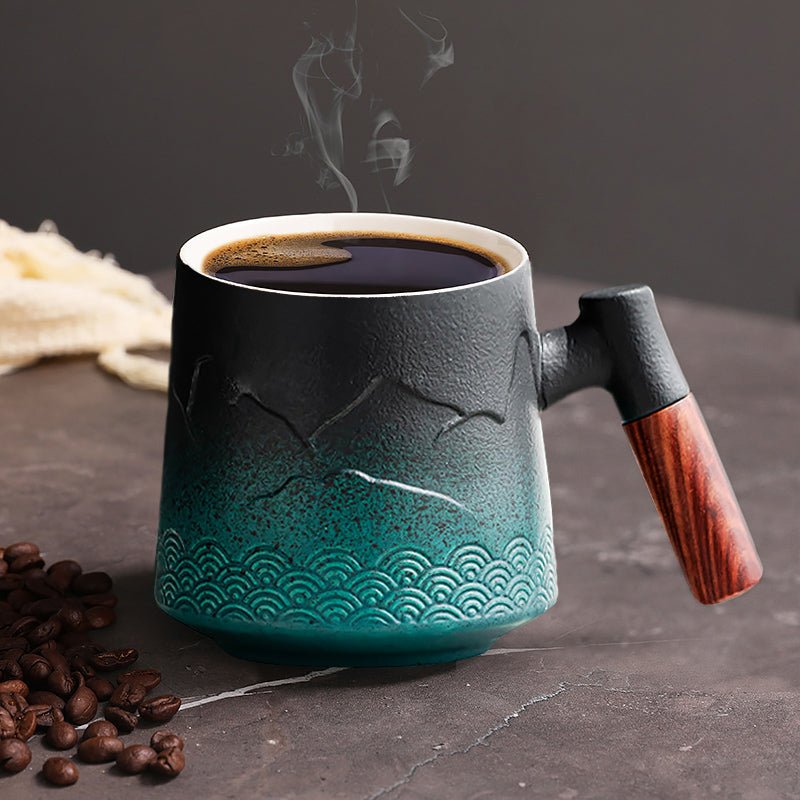
Coffee Mugs with Pictures: How to Choose a Mug That Holds Up
Coffee mugs with pictures need more than a nice image. We break down print quality, size, finish, and everyday use so you can choose a mug that looks good on day one and still feels right after reg...
Czytaj dalej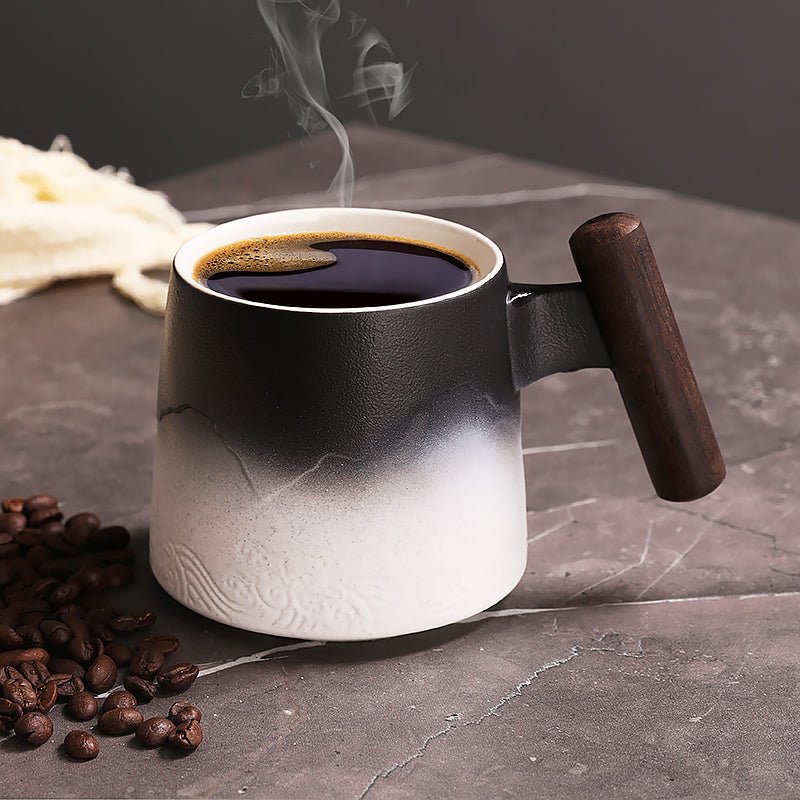
Bear Coffee Mug: What to Check Before You Buy
A bear coffee mug should do more than look cute on a shelf. We break down size, comfort, finish, and gift checks so you can pick one that gets used.
Czytaj dalej
Zostaw komentarz
Ta strona jest chroniona przez hCaptcha i obowiązują na niej Polityka prywatności i Warunki korzystania z usługi serwisu hCaptcha.