
Coffee Mugs and Stand: What to Check Before You Buy
Reading time: about 9 minutes
A mug that looks fine on a product page can become annoying the first week it lives on your counter. The usual problems show up fast: the stack is too tall for the shelf above it, the handle bumps the mug next to it, or the stand wobbles every time someone grabs the top cup.
That is why we look at coffee mugs and stand setups as a storage decision first and a style choice second. In our store, we pay attention to everyday use: how the mug sits in the hand, how much room it needs on a shelf, and whether the stand actually keeps the set tidy instead of turning into clutter.
What makes coffee mugs and stand setups work in real kitchens?
A good mug-and-stand set does three jobs at once. It stores the mugs, keeps them easy to reach, and avoids wasting space on a crowded counter. That sounds simple until you place it under a cabinet or beside a coffee machine and realize the handle path matters just as much as the footprint.
We usually check for these practical details before recommending a set:
- Stack height: Make sure the full stack clears nearby shelves, cabinet bottoms, and backsplash ledges.
- Handle clearance: Handles should not bind against the mug above or below when you lift one out.
- Base stability: A stand should sit flat and stay steady on tile, stone, or sealed wood.
- Daily reach: The mug you use most should be the easiest one to grab, not the hardest one to remove.
For buyers comparing shapes, our blog post on Stackable Coffee Mugs with Stand: Fit, Care, and Buying Checks covers the spacing questions that tend to get missed before purchase. It pairs well with this guide if you are deciding between a stand and a standard cabinet stack.
One trade-off is worth saying out loud: a mug stand is not ideal if you want to store oversized travel mugs or very wide brunch cups. Those usually need open shelving or a deeper cabinet bay. A stand works best for matching everyday mugs that are designed to live together.
Which mug materials and finishes are easiest to live with?
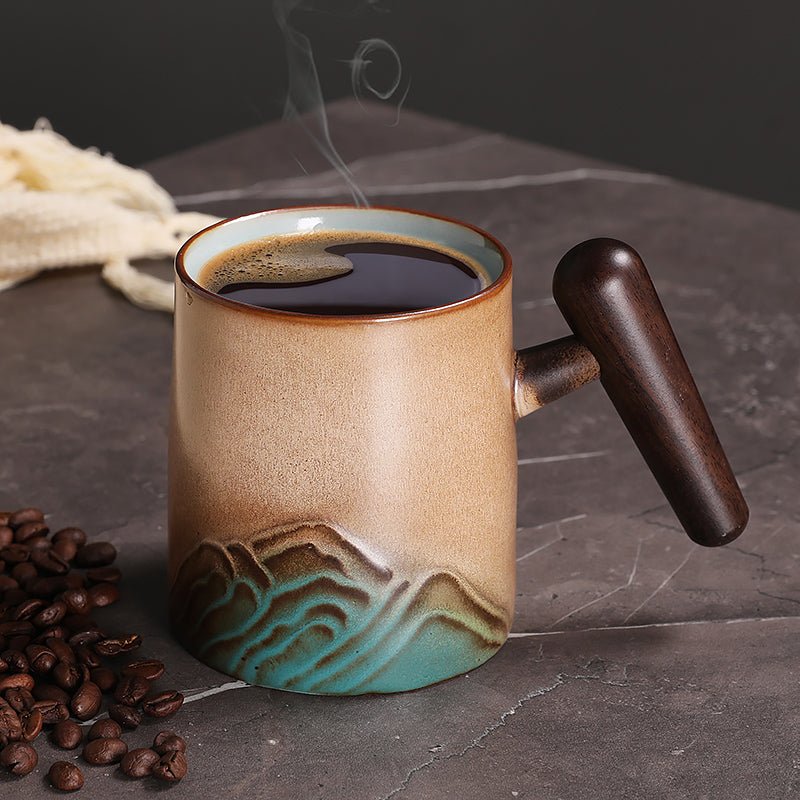
Material changes the whole experience. Ceramic is the common choice for daily coffee because it feels solid, holds heat reasonably well, and is easy to rinse after use. It also gives you the most flexibility in glaze, color, and shape. Wooden handles, by contrast, bring a warmer grip and a different look, but they are not the right pick for every buyer.
Three concrete points we look at in this category:
- Ceramic body: Better for regular kitchen use and easier to match with a stand or shelf display.
- Wooden handle: Comfortable and distinctive, but best for buyers who are willing to be a little more careful during washing and drying.
- Glaze finish: A smooth glaze is easier to wipe clean than a textured surface that can catch coffee residue near the rim or base.
If you prefer a cleaner, more minimal look, the The Cloud Coffee Tea Mug Wooden Handle is a useful example of a mug that feels refined without being fussy. If you want something with a stronger visual pattern, the Green Waves Coffee Tea Mug brings more movement to a shelf display and is easier to style as part of a visible counter setup.
Not every material suits every buyer. Wooden details are not the best option if you want to toss everything into a dishwasher without thinking. Likewise, a very delicate decorative mug is not the best choice for a busy office desk where cups get stacked, moved, and cleaned repeatedly.
How do you choose the right size for daily use?
Size is where many buyers get the fit wrong. A mug can look compact in photos and still feel bulky on a stand, or the opposite: it can look elegant and end up too small for a real morning pour.
We usually tell shoppers to think in terms of routine, not just capacity labels. If you drink a standard cup of coffee at home, a mug that is comfortable to hold and easy to place back on the stand matters more than a dramatic shape. If your coffee machine dispenses closer to a fuller pour, you will want a mug that gives you a little margin at the top.
For buyers who are comparing sizes more closely, our posts on 10 oz Coffee Mugs: How to Choose the Right One for Daily Use and 12 Ounce Coffee Mugs: Fit, Shape, and Buying Tips are useful because they break down the practical differences between a lighter daily mug and one that feels more generous in the hand.
Here is the short version we use when helping customers:
- Choose a smaller mug if you want a lighter feel and a more compact stand footprint.
- Choose a mid-size mug if you want the best balance of comfort, counter fit, and daily flexibility.
- Choose a larger mug only if your cabinet height and stand spacing can handle it without crowding.
If you are trying to narrow the options quickly, our full collection is the fastest place to compare shapes side by side before picking a final set.
Which coffee mugs and stand styles fit a counter, desk, or gift box?
Different use cases call for different mug personalities. A kitchen counter needs a stable and tidy setup. An office desk needs a mug that is easy to reach without occupying the whole workspace. A gift box needs a design that looks finished right out of the package.
We see three buying patterns most often:
- Counter display: Best for buyers who want mugs visible and easy to grab every day.
- Desk setup: Better for one or two mugs with a smaller footprint and a cleaner silhouette.
- Gift purchase: Works best when the mug has a noticeable finish or handle detail that feels intentional on unboxing.
The Mountain Sea II Coffee Tea Mug with Wooden Handle is a good example of a mug that reads well as a gift because it has a more distinctive visual profile. It is the kind of piece people remember after the box is opened, which matters if you are buying for a housewarming or office present.
If you are comparing stack behavior as much as appearance, the article Stackable Coffee Mugs with Stand: What to Check Before Buying is worth reading before you place an order. It focuses on the details that can save you from a set that looks good online but crowds your shelf in real life.
One limitation to keep in mind: a decorative mug-and-stand setup is not the best solution if you need heavy-duty, high-volume kitchen ware for constant refills. For that, plain, sturdier mugs without a display component may be the smarter choice.
What should you check before you place an order?
Before buying, we recommend checking the same few points every time. These are simple, but they prevent the most common disappointments after delivery.
| Check | What to look for | Why it matters |
|---|---|---|
| Height | Will the stacked mugs clear your shelf or cabinet? | Prevents a set that cannot live where you planned to store it. |
| Handle spacing | Can you lift one mug without catching the next? | Makes daily use smoother and reduces accidental chipping. |
| Surface finish | Smooth glaze or textured detail? | Affects cleaning and how visible coffee marks will be. |
| Care routine | Dishwasher-friendly or hand-wash preferred? | Helps you avoid wear on wood, paint, or delicate trims. |
| Counter footprint | Does the stand fit beside the machine you already use? | Keeps your coffee station from feeling crowded. |
A small scratch on a stand, a tight handle gap, or a glaze line near the rim can matter more than a flashy photo. We inspect for those kinds of details because they show up fast in normal use. A mug set should feel good on day one and still be easy to live with after repeated wash and dry cycles.
Our practical rule: if the mug is annoying to remove, awkward to wash, or too tall for the shelf you already own, it is probably the wrong fit no matter how nice it looks online.
How should you care for mugs with wooden handles or display stands?
Care is straightforward, but the details matter. Ceramic mugs usually handle everyday washing well, while wooden elements need a lighter touch. If a mug includes a wooden handle, we recommend avoiding soaking it for long periods and drying it promptly after washing. That helps reduce swelling, dulling, or surface wear over time.
For daily upkeep, keep it simple:
- Rinse after coffee or tea so staining does not sit in the glaze.
- Dry the base and handle area so moisture does not linger in seams or joints.
- Wipe the stand regularly, especially if it sits near a grinder, sugar bowl, or kettle.
- Check that the stand sits level after moving it, since uneven placement can cause wobble.
This is another place where trade-offs matter. Wooden handles are attractive and comfortable, but they ask for a bit more attention than a fully glazed mug. That does not make them fragile. It just means they suit buyers who will treat the set as part of the kitchen routine rather than something to toss around without thought.
Frequently asked questions
Are coffee mugs and stand sets good for small kitchens?
Yes, if the stand has a small footprint and the mugs stack neatly. They work best on counters with limited cabinet space because they turn vertical storage into a visible display. If your shelf height is very tight, measure first so the top mug does not hit the underside of the cabinet.
Can I put wooden-handle mugs in the dishwasher?
We would not treat wooden-handle mugs the same way as fully glazed ceramic mugs. The safer approach is gentle hand washing and prompt drying, especially around the handle area. That helps preserve the finish and reduces wear from repeated heat and water exposure.
What is the best mug style for a gift?
A mug with a distinctive shape, a clean glaze, or a wooden handle usually feels more giftable than a plain everyday mug. It looks intentional when opened and is easier to display on a kitchen shelf afterward. If you want a polished option, the Mountain Sea II and The Cloud styles are strong candidates.
Do stackable mugs save enough space to matter?
They usually do, but only if your current storage is messy or fragmented. Stackable mugs are most useful when you want one neat station instead of several scattered mugs in different cabinets. The real benefit is less visual clutter and easier grabbing during a busy morning.
What should I do if I want to compare more options before buying?
Start with the full collection so you can compare shapes, finishes, and handles in one place. Then narrow the choice by checking height, handle comfort, and whether the mug will live on a stand or in a cabinet. Our all collection is the simplest place to do that side by side.
If you want the fastest path to a good fit, compare one decorative option, one more minimal option, and one with a wooden handle. That gives you a realistic sense of what will work on your counter, at your desk, or as a gift. From there, move into the product pages and pick the mug that matches your storage space and care routine.
Read more
Jumbo Coffee Mugs for Daily Coffee, Tea, and Desk Use
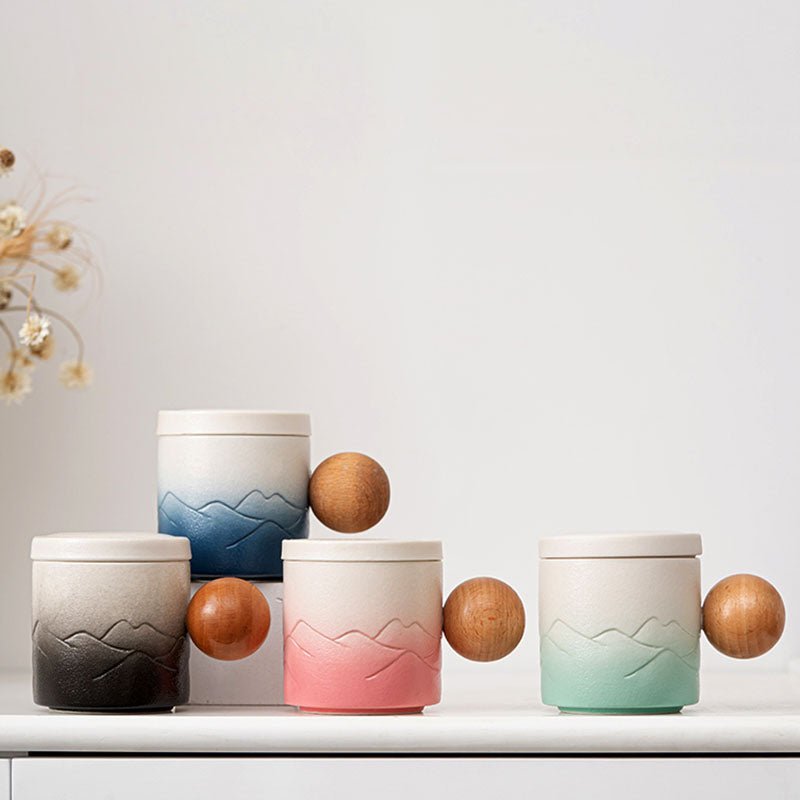
Jumbo coffee mugs solve the refill problem, but the right shape still matters. We break down the trade-offs, the best use cases, and which CoffeifyMug options are easiest to live with.
Czytaj dalej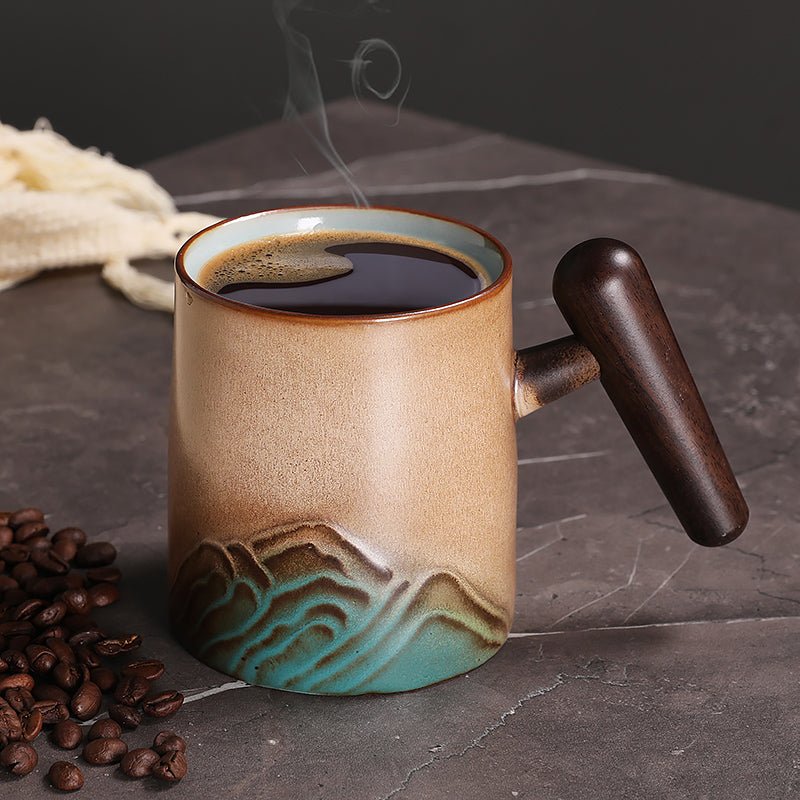
Cow Coffee Mugs: What to Look for Before You Buy
Cow coffee mugs can be playful, giftable, and genuinely useful, but the right pick depends on size, handle comfort, and how you plan to use it. Here’s how we compare them in our store before we rec...
Czytaj dalej
Zostaw komentarz
Ta strona jest chroniona przez hCaptcha i obowiązują na niej Polityka prywatności i Warunki korzystania z usługi serwisu hCaptcha.