
Coffee Mug Shelf Display Ideas for Kitchens That Actually Get Used
Reading time: about 10 minutes
A coffee mug shelf display falls apart fast when a mug clips the underside of the cabinet, the handles crowd together, or the shelf looks styled for a photo but not for breakfast. We see that problem a lot in our store: shoppers want a display that still works on a weekday, not a shelf that needs constant rearranging.
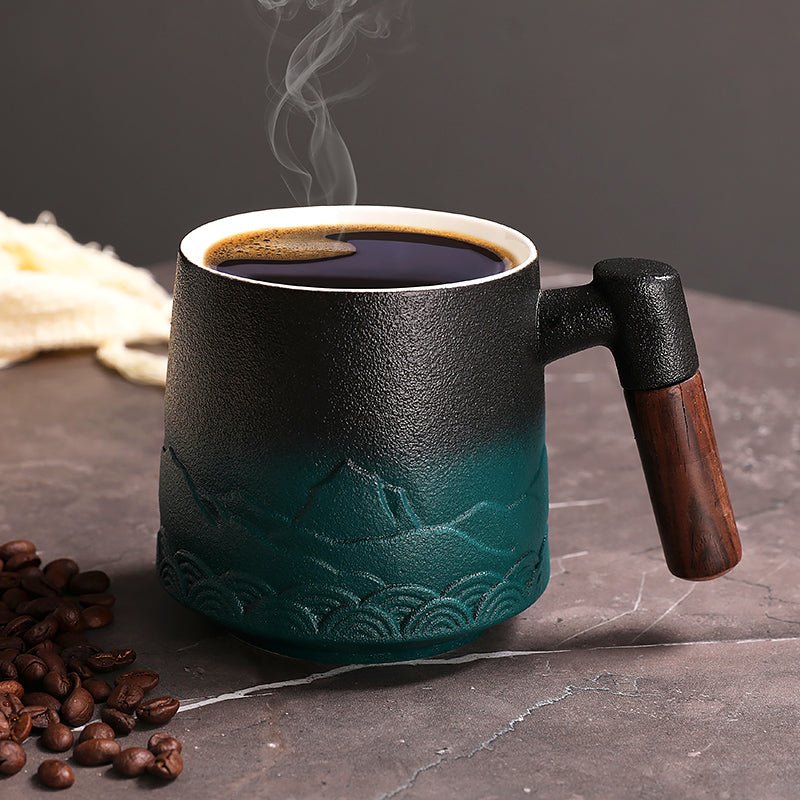
That is why we like starting with mugs that already have a clean profile and a shelf-friendly shape. A taller mug such as the White Golden Waves Tall Coffee Tea Mug can look right at home on an open shelf, while the Mountain Tall Coffee Tea Mug gives a more grounded, everyday feel. If you want to compare more options first, the full collection is the fastest place to scan shapes, finishes, and seasonal pieces together.
We are writing this from the same angle we use in our store: what works in a real kitchen, what looks good after a week of use, and what is better left in the cabinet. If you want a broader planning pass before buying, our Coffee Mug Display Shelf Buying Guide for Real Kitchen Use and Coffee Mug Shelf Display Ideas for Real Kitchens and Small Spaces cover the shelf side of the decision in more detail.
What makes a coffee mug shelf display work in a real kitchen?
A good coffee mug shelf display does three things at once. It keeps the mugs easy to reach, it leaves enough space so handles do not bang together, and it still looks deliberate when the kitchen is busy. If a shelf only looks good from one angle, it usually fails once people start using it every day.
The best displays usually share a few traits. The mugs are close in height, the shelf is deep enough to hold the base without hanging the handle over the edge, and the front row is not packed so tightly that you have to move one mug to grab another. That sounds simple, but it is where most setups go wrong.
| Shelf setup | Best for | Main trade-off |
|---|---|---|
| Open upper shelf | Daily mugs you want visible and reachable | Dust and grease build up faster |
| Floating shelf near the coffee station | Small collections and gift mugs | Less room for oversized handles |
| Wall-ledged display | Seasonal mugs or a color-coordinated set | Not ideal for heavy, oversized mugs |
If your shelf sits near a stove or toaster, expect a little more cleaning. In our experience, open displays above active cooking areas collect a light film faster than people expect, even when the mugs themselves never get touched. That is not a reason to avoid the setup, but it does change what kind of mug belongs there.
Which mugs should stay on display and which should stay in the cabinet?
Not every mug is a good shelf mug. Some are perfect for daily use but awkward on an open shelf because they are too wide, too heavy, or too visually busy. Others look good on a shelf but are not practical if you want to reach the same cup every morning.
For a coffee mug shelf display, we usually sort mugs into two groups:
- Best for display: tall mugs with clean lines, mugs with a stable base, pieces with one strong visual element, and seasonal mugs you want to rotate in and out.
- Better in the cabinet: very wide mugs, mugs with bulky handles that catch on the shelf edge, heavy stoneware pieces that are hard to move one-handed, and low-profile mugs that disappear visually on a tall shelf.
This is also where the display goal matters. If you want a shelf that looks curated, the Christmas Coffee Tea Mug works well as a front-row seasonal accent. It should not be buried behind everyday mugs where the design gets lost. The same logic applies to any bright or themed mug: give it space to read clearly.
For shoppers comparing styles, the question is not just, 'Does this mug look nice?' It is also, 'Will this mug still look neat after a week of use, a rinse cycle, and a busy counter?' That second question is usually the one that saves buyers from regret.
How do you arrange a shelf so it looks intentional instead of crowded?
The easiest way to make a coffee mug shelf display look intentional is to repeat one or two visual rules. That could mean keeping all handles facing the same direction, grouping mugs by height, or using one accent color to break up the row. Random spacing almost always reads as clutter.
- Start with the tallest mug in the back or at the far side of the shelf.
- Place the mugs you use most often closest to the front edge, but leave enough room to lift one out without scraping the handle next to it.
- Group mugs in odd numbers when possible. Three or five usually looks more natural than a full, perfectly even row.
- Rotate seasonal mugs to the front and move everyday mugs slightly behind them.
- Leave one empty spot if the shelf is already visually busy. Negative space helps more than another mug would.
That last step matters more than people expect. A shelf that is 80 percent full often looks more curated than one that is completely packed. It also gives you room to add a new mug later without redoing the whole layout.
If you want the planning side before you buy anything, our Coffee Mug Display Shelf Guide for Real Kitchen Use is a useful companion piece. It focuses on fit decisions that save time later, especially for shoppers working with a small coffee corner.
What shelf depth, spacing, and material make daily use easier?
We usually start with measurements, not style. Measure the depth of the shelf, the height of the mug, and the full reach from the back of the mug to the end of the handle. If the handle is too close to the front edge, the whole display will feel cramped even if the colors look right.
For many standard shelf setups, about 8 to 10 inches of usable depth is a practical starting point, but the mug itself matters more than the number. A tall mug with a narrow base can fit better than a short mug with a wide handle. The real test is whether you can remove one mug without nudging the next one.
Material changes the feel too:
- Wood shelves feel warmer and are forgiving visually, especially in kitchens with natural finishes.
- Metal shelves read cleaner and more modern, but they can make the display feel colder if the mug colors are already muted.
- Glass shelves look light and open, but they show dust, fingerprints, and dust lines more quickly than most people expect.
We also look at the wall space around the shelf. A mug display above a busy coffee machine should have slightly more breathing room than one in a quiet pantry corner. That extra gap makes the whole setup easier to wipe down.
One practical cleaning habit helps a lot: wipe the shelf edge and the mug bases regularly, especially if the display sits near cooking steam. For decorated mugs, use a soft sponge and avoid abrasive scrubbers that can dull the finish over time. If you want a shelf that stays neat with less maintenance, simpler designs are usually safer than heavily textured ones.
Which mug styles sell the display without making the shelf impractical?
Some mugs do a better job of holding the visual line on a shelf while still working for everyday coffee. That is the balance we try to keep in mind when we choose what to stock and what to recommend.
The White Golden Waves Tall Coffee Tea Mug works well if you want something clean and polished. It gives a shelf a neater silhouette, which helps in kitchens where the rest of the decor is already busy. The Mountain Tall Coffee Tea Mug is a stronger fit for buyers who want a more grounded, outdoorsy feel and do not want the shelf to look too delicate.
The Christmas Coffee Tea Mug is a good example of a display-first mug that still has a job to do. It is not meant to live at the back of the cabinet all year. It is better as a rotating accent that comes forward during the season and then goes back into storage once the holiday look is over.
That is the trade-off with display-focused mugs. They are often more expressive, which is good for an open shelf, but they are not always the best choice if you want one utilitarian mug for every dishwasher cycle and every kind of coffee. If durability and stackability matter more than appearance, a plainer mug is usually the better buy.
How do you keep a coffee mug shelf display from looking messy over time?
A shelf display looks finished on day one. The real test is day twenty. That is where dust, fingerprints, and mismatched mug sizes start to show.
The simplest way to keep the display tidy is to decide what role each mug plays. Everyday mugs stay closest to the coffee machine. Seasonal mugs rotate to the front when needed. Decorative mugs stay visible, but they do not take over the whole shelf. Once every mug has a job, the display is easier to maintain.
We also recommend checking for three common problem modes before you commit:
- Rim chips: even a small chip stands out on an open shelf because the mug is always visible.
- Uneven bases: a mug that rocks slightly will look wrong every time you pass by it.
- Handle crowding: if two handles touch, the shelf looks overfilled even if there is technically enough space.
If you buy a mug mainly for display, ask yourself whether it still looks good after being moved around, washed, and returned to the shelf a few times. That is a better test than the first unboxing photo.
Frequently asked questions
How many mugs should I put on one shelf?
Start with fewer than you think you need. A row of three to five mugs usually looks cleaner than a shelf packed edge to edge. If the shelf is long, leave one open slot so you can add a mug later without rebuilding the whole display.
What is the best shelf depth for coffee mugs?
A usable depth around 8 to 10 inches works for many mugs, but the handle shape matters as much as the number. Measure the full reach of the mug from the back edge to the handle tip, then make sure there is still room to lift the cup out easily.
Do tall mugs work better than short mugs on open shelves?
Often, yes. Tall mugs create a clearer line on the shelf and are easier to see from across the room. Short mugs can work too, but they are easier to visually lose among canisters, appliances, and other kitchen items.
How do I keep mugs from getting dusty on an open shelf?
Use the mugs regularly and wipe the shelf edge and mug bases during normal kitchen cleaning. If the shelf sits near a stove, expect more buildup and plan for a quick wipe more often. Open shelves look best when they are treated as part of the daily kitchen routine, not as a set-and-forget display.
Can I mix everyday mugs with seasonal mugs on the same shelf?
Yes, but keep the seasonal piece as the accent, not the filler. A holiday mug works best in front or slightly off-center, with the everyday mugs supporting it. That keeps the shelf from feeling themed all year.
If you are ready to compare options, start with a quick checklist: shelf depth, handle clearance, daily-use count, and whether you want a year-round mug or a seasonal accent. Then browse the full collection and pick the mugs that fit your shelf instead of forcing the shelf to fit the mug.
Read more
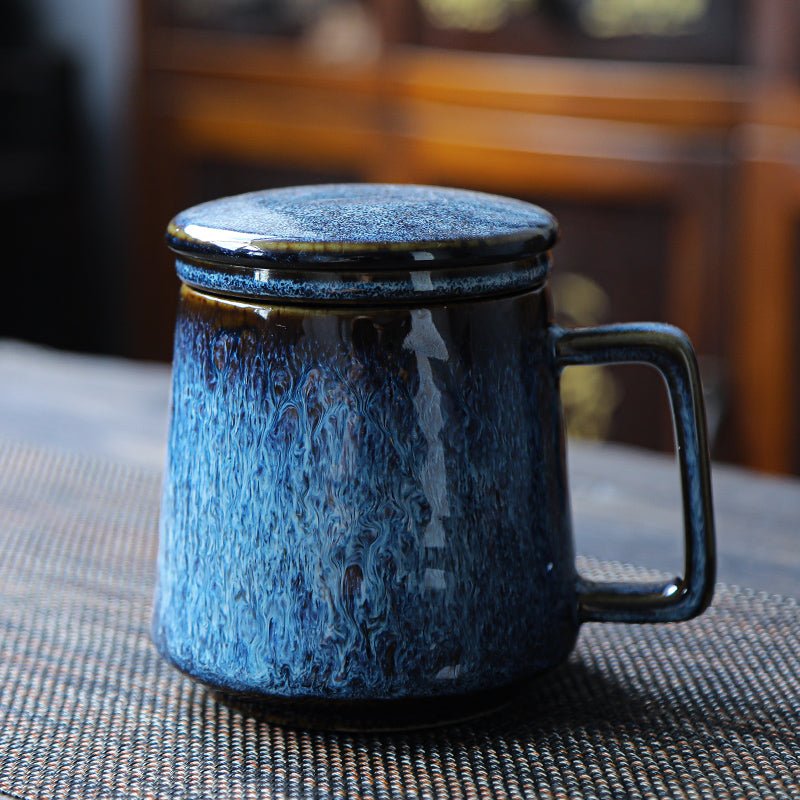
How to Get Rid of Coffee Stains in Mugs Without Damaging the Finish
Coffee stains build up fast on mugs with light glazes, printed finishes, and rougher interiors. Here is the safest way to clean them, what to avoid, and when a stained mug should be retired.
Czytaj dalej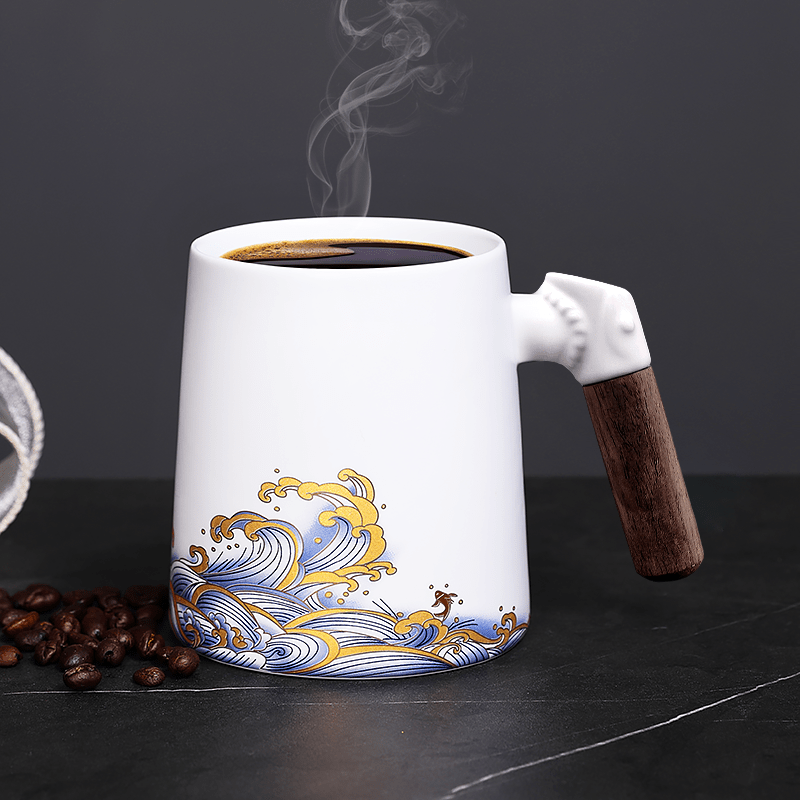
White Coffee Mug Buying Guide for Daily Use and Better Fit
A practical guide to choosing a white coffee mug that actually fits your drink, your hand, and your routine. We cover size, finish, care, and the trade-offs that matter before you buy.
Czytaj dalej
Zostaw komentarz
Ta strona jest chroniona przez hCaptcha i obowiązują na niej Polityka prywatności i Warunki korzystania z usługi serwisu hCaptcha.