
Coffee Mug Organizer Guide: Fit, Materials, and Buying Choices
Reading time: about 10 minutes
A crowded cabinet usually shows the problem first: one mug gets buried, another chips against a plate, and the handle you wanted is always facing the wrong direction. A good coffee mug organizer fixes that by making mugs easy to see, reach, and store without rattling them around every time you open the door.
We handle mugs for real kitchens, office desks, and gift orders in our store, so we pay attention to the details shoppers actually notice after delivery. That means fit, handle clearance, material finish, and whether a mug still feels easy to grab after a dishwasher cycle and a full week of use. If you are comparing a coffee mug organizer for your home, start with the space you have, then choose the mug shape that will work with it.
If you want a broader overview first, our Coffee Mug Organizer Guide: Best Styles, Fit, and Materials breaks down the main organizer styles and where each one makes sense.
What should a coffee mug organizer actually solve?
A coffee mug organizer is not just about stacking cups neatly. It should protect mug rims, keep handles usable, and cut down on cabinet friction so you are not scraping glaze every morning. In practical terms, that means enough vertical clearance for the mug body, enough side room for the handle, and a layout that matches how you reach for your coffee.
In real homes, the common pain points are pretty consistent:
- Cabinet clutter: mugs are packed too tightly and the front row blocks the rest.
- Handle conflict: the handle points inward or collides with another mug.
- Chip risk: stacked rims and tight shelves create contact points.
- Hard-to-clean storage: dust and crumbs collect where a mug sits too long.
That is why we always tell shoppers to think beyond capacity. A coffee mug organizer should fit your mug shapes, not just your shelf width.
Which mug sizes fit best in an organizer?
Size matters more than people expect. A mug that looks compact online can feel bulky in a cabinet once you add a rounded body and a wide handle. Our own buyers often compare 10 oz, 11 oz, and 12 oz mugs first because those sizes cover a lot of daily-use cases without taking over the shelf.
If you are deciding between sizes, these two size guides are useful side by side: 10 oz Coffee Mug: Size, Fit, and What to Check Before You Buy and 12 oz Coffee Mug Buying Guide for Fit, Comfort, and Daily Use. We also have a 11 oz Coffee Mug: Size, Fit, and What to Check Before You Buy article if you are stuck between the two common middle sizes.
| Mug size | Typical use | Fit considerations |
|---|---|---|
| 10 oz | Smaller coffee pours, tea, compact cabinets | Easier to line up in rows; usually simpler to store under shorter shelves |
| 11 oz | Everyday coffee and mixed kitchen use | A balanced choice if you want versatility without a bulky footprint |
| 12 oz | Larger daily drinks or longer sipping sessions | Needs more shelf depth and taller clearance, especially with wide handles |
For organizer shopping, the bigger issue is not just volume. It is body width, handle projection, and shelf height. A mug with a wooden handle, for example, may need a little more side clearance than a plain round ceramic cup.
Which materials hold up best in daily use?
We see three material questions come up again and again: ceramic finish, handle material, and how the mug behaves in the dishwasher. A good coffee mug organizer should pair with mugs that can handle normal routines without delicate treatment.
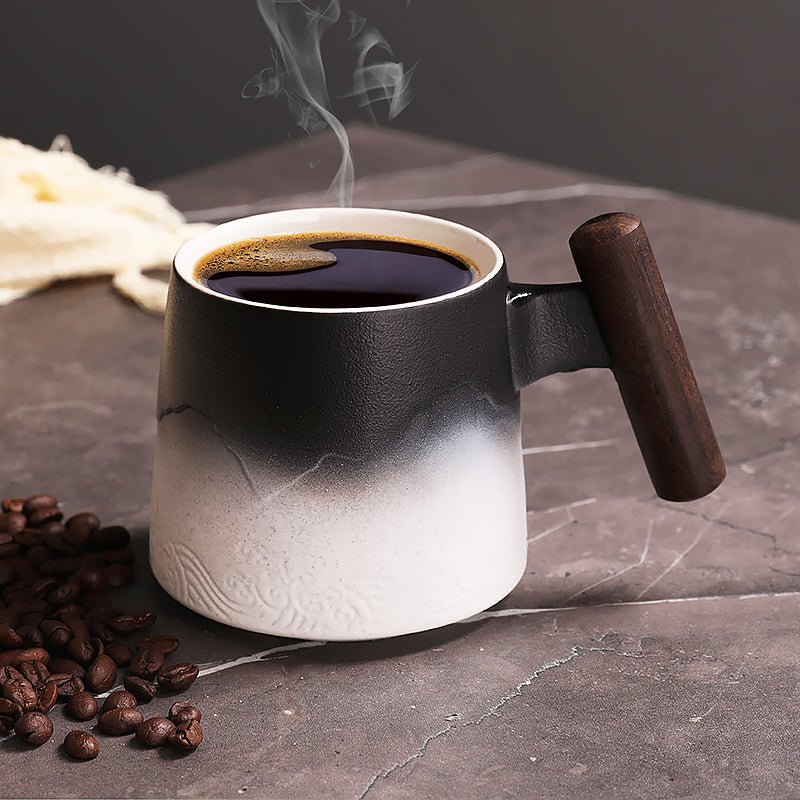
Our mugs are designed for everyday handling, with smooth glazed bodies that wipe clean easily and wooden-handle options that change the grip feel in a useful way. Wooden handles are not for every buyer, though. They offer a warmer touch and a more distinctive look, but they are not the best choice if you want a fully matching stack of round mugs or if you prefer the simplest dishwasher routine. In most homes, the body is what goes in the dishwasher; the handle finish is what needs a closer look before purchase.
Here are a few practical trade-offs we tell customers about:
- Glazed ceramic: easy to clean, stable on shelves, and familiar for daily use.
- Wooden handle styles: attractive and comfortable, but not ideal if you want uniform stacking or the lowest-maintenance setup.
- Textured or painted finishes: can look great on display, but may show wear differently depending on use and washing habits.
If you want to compare actual mug styles that tend to pair well with a tidy storage setup, look at the Green Waves Coffee Tea Mug, the Mountain Sea II Coffee Tea Mug with Wooden Handle, and the The Cloud Coffee Tea Mug Wooden Handle. Each one solves the same basic need—daily coffee or tea—but the handle and profile make a different storage story.
Is a coffee mug organizer better for cabinets, counters, or desks?
The best location depends on how often you use the mugs. A cabinet setup works best if you want to keep dust off and preserve counter space. A counter organizer makes sense if you brew coffee every morning and want the mugs close to the machine. A desk or office setup is more about convenience and less about capacity.
We usually sort buyers into three groups:
- Cabinet buyers: want better visibility and less mug stacking.
- Counter buyers: want fast access beside a coffee maker or kettle.
- Desk or office buyers: want one or two favorite mugs within reach without clutter.
The limitation is simple: a coffee mug organizer is not the right answer if your shelf is already too short for mug height or if you need to store oversized travel cups. In that case, a deeper shelf, hook rail, or open mug tree may work better. A mug organizer also is not the best choice for very delicate mugs that you never want touching anything else.
What features do shoppers forget to check before buying?
The smallest details are often the ones that decide whether a setup feels polished or annoying. In our experience, shoppers usually remember style first and forget the practical fit pieces until they unpack the order.
Before buying, check these points:
- Handle clearance: make sure you can grip the mug without bumping the next one.
- Shelf depth: a mug may fit in height but still stick out too far at the front.
- Base stability: the mug should sit flat without rocking.
- Cleaning routine: smooth surfaces are easier to wipe after coffee drips or cabinet dust.
- Finish durability: watch for glaze wear, hairline cracks, or handle joins that feel uneven.
One common defect mode we watch for is a handle that feels slightly misaligned or too close to the body, which can make the mug awkward to place in a tight organizer. Another is a rim or base that is not fully even, which matters more on a hard shelf than it does on a soft dish towel. Those are small issues on paper, but they show up fast in daily use.
Which coffee mug styles are easiest to organize?
Some mug shapes are simply easier to live with. Straight-sided mugs usually fit more predictably than very tapered or very rounded ones. Handles that sit cleanly off the body also make retrieval easier, especially in a narrow cabinet where your fingers only have one safe angle.
Our practical rule: if you are buying a coffee mug organizer for a standard home kitchen, choose mugs with a stable base and a moderate handle size. That gives you fewer surprises when you line them up beside each other. If you like sculptural mugs, asymmetrical handles, or extra-wide cups, they can still work—but they may need more generous spacing than a compact organizer can offer.
For shoppers comparing detailed size and fit guidance, the 12-ounce and 11-ounce articles linked earlier are useful if you already know your organizer dimensions. If you are still choosing the mug itself, our product pages are the better starting point because they show the shape and handle style clearly.
How do you set up a mug organizer so it stays practical?
A tidy setup is easy on day one and messy by week two if the layout is wrong. We recommend a simple, repeatable setup that keeps the mugs you use most in the easiest slot and leaves less-used mugs slightly farther back or higher up.
Use this basic setup process:
- Measure shelf height, shelf depth, and door clearance before buying anything.
- Count the mugs you use weekly, not the mugs you own overall.
- Group similar mug sizes together so the handles do not fight for space.
- Place the daily-use mugs closest to the coffee maker or kettle.
- Leave a small gap if the mug glaze is glossy or if you tend to pull mugs out quickly.
That last step sounds minor, but it matters. A tiny buffer can reduce rim contact and make the organizer feel easier to use, especially if multiple people reach for mugs in the morning.
What should you buy if you want mugs that fit a neat organizer?
If you want a coffee mug organizer to feel intentional instead of crowded, choose mugs that match the storage plan. For a calm, balanced look, the Green Waves Coffee Tea Mug pairs well with a clean cabinet setup. If you want a more distinctive handle and a slightly more expressive profile, the Mountain Sea II Coffee Tea Mug with Wooden Handle is the kind of mug that works best when you give it a little breathing room. The The Cloud Coffee Tea Mug Wooden Handle suits buyers who want a softer, more decorative feel on a counter or open shelf.
If you want to browse the full range before choosing, our all products collection is the easiest next stop.
In our store, we see fewer returns and happier buyers when the mug and the organizer are chosen together. The fix is usually not “buy a bigger organizer”; it is “buy a mug shape that actually fits the space you already use.”
Frequently asked questions
What size coffee mug organizer do I need for 10 oz mugs?
Most 10 oz mugs are easier to organize than larger cups, but you still need to check shelf height and handle clearance. A shallow cabinet can work well if the mug body is compact and the organizer leaves enough room to grasp the handle without scraping the next mug.
Can I use a coffee mug organizer on an open kitchen counter?
Yes, if you use mugs often and want them close to the coffee maker or kettle. Open-counter setups are practical, but they do collect dust faster than cabinet storage, so they make the most sense for daily-use mugs that get washed regularly.
Are wooden-handle mugs harder to store?
They can be, depending on the organizer shape. Wooden-handle mugs often need a little more side room, and they are less ideal if you want tight stacking or a very narrow mug row. They work best in a layout with enough space to rotate the handle comfortably.
What is the easiest mug style to organize in a cabinet?
Straight-sided mugs with a stable base and a moderate handle are usually the simplest. They sit predictably, stack more cleanly visually, and are less likely to snag when you pull one mug out from a full row.
Should I buy the organizer or the mugs first?
If your cabinet space is fixed, buy the organizer plan first and choose mugs to match it. If you already have mugs you love, measure those mugs first so you can confirm the organizer has enough height, depth, and handle room before you add anything else.
If you are ready to compare options, start with your shelf measurements, then check the mug shapes in our collection of all mugs and choose the style that fits the space you actually use every day.
Read more
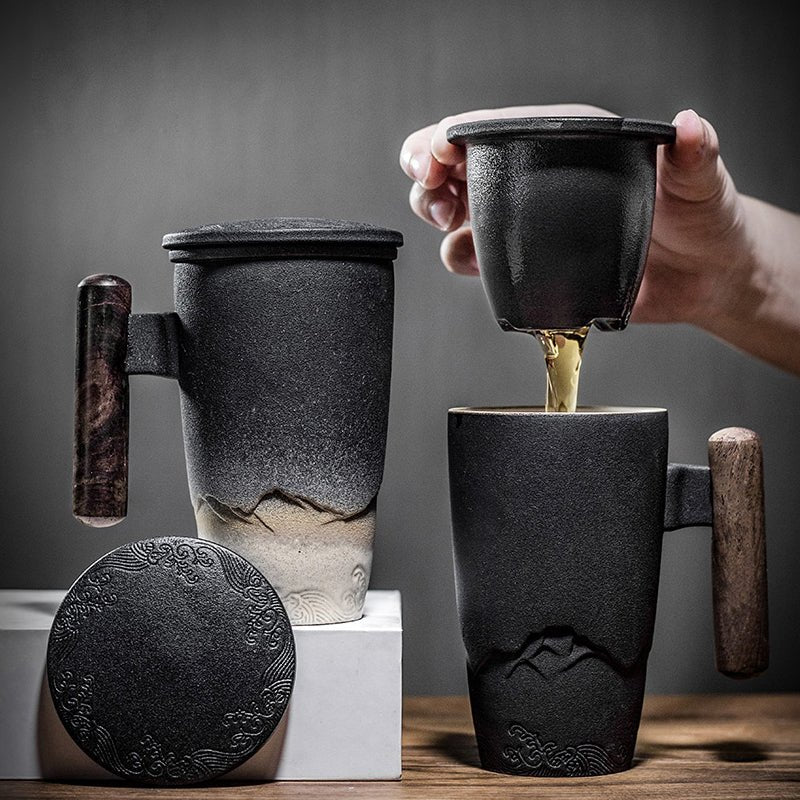
Tall Coffee Cups: How to Choose the Right Shape for Daily Use
Tall coffee cups feel right on a desk and in the hand, but only if the height, balance, and finish match the drink you actually use. Here we compare our options, the trade-offs, and the details we ...
Czytaj dalej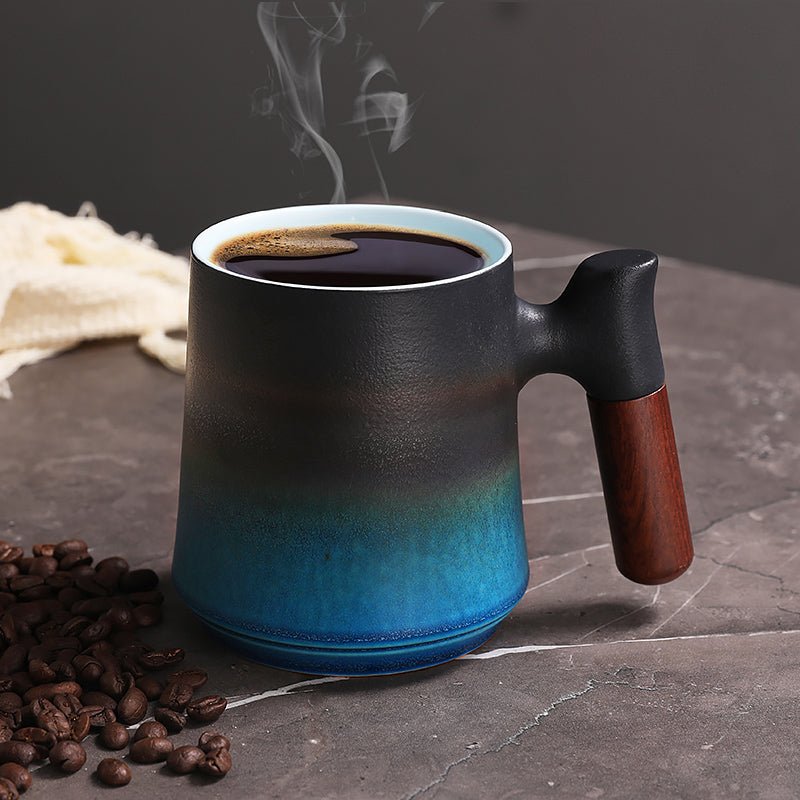
Bee Coffee Mug: What to Check Before You Buy
A bee coffee mug should do more than look cute on the counter. We break down the details that matter most: size, handle feel, print quality, care, and which nature-themed alternatives are worth con...
Czytaj dalej
Zostaw komentarz
Ta strona jest chroniona przez hCaptcha i obowiązują na niej Polityka prywatności i Warunki korzystania z usługi serwisu hCaptcha.