
Coffee Mug Measurement Guide for Better Fit, Capacity, and Buying Choices
Reading time: about 9 minutes
A mug can say 12 oz on the listing and still feel very different once it lands on your desk. One may have a tall, narrow body that fits a drip machine better. Another may have a wide mouth that looks great in photos but loses heat faster on a cold morning.
That is why coffee mug measurement matters before checkout. At our store, we look at the numbers shoppers actually use: capacity, height, mouth opening, handle clearance, and how the mug behaves on a real kitchen counter or office desk.
If you are comparing options right now, start with our full mug collection and then narrow by size and shape. If you already know you want a specific style, a product page tells you more about the feel in hand than a general category page ever will. For example, our Christmas Coffee Tea Mug is a simple everyday style that makes sense if you want a seasonal design without overcomplicating the size choice.
What does coffee mug measurement actually mean?
Most buyers think mug measurement only means ounces. That is only part of the picture. A mug’s listed volume tells you how much liquid it can hold, but not how comfortable it is to drink from or where it will sit on your machine tray.
We measure mugs in a few practical ways:
- Capacity — usually listed in ounces or milliliters. This is the headline number shoppers compare first.
- Height — important for coffee makers, travel shelves, and cabinet clearance.
- Mouth diameter — affects sip comfort, heat loss, and whether a lid fits neatly.
- Handle clearance — the space between handle and body matters for larger hands.
- Base diameter — helps determine if the mug sits securely on a tray or warmer.
In our experience, the biggest disappointment happens when a mug fits the drink but not the routine. A 12 oz mug can be too tall for a compact espresso machine. A low, wide mug can feel roomy for tea but awkward in a crowded dishwasher rack.
Why is mug capacity different from usable fill?
The printed capacity is rarely the amount you should actually pour in. Most mugs need headroom so coffee does not splash, foam does not overflow, and you can carry the cup without drips on the rim.
For hot coffee, many shoppers are happiest if the mug’s usable fill is a little under the stated volume. That is especially true if you add milk, foam, or a spoon. A mug marketed as 11 oz may feel like the right everyday size for a standard pour, while a 12 oz mug gives a little more breathing room for cream or a larger serving.
If you want more size-by-size detail, our related guides on 10 oz coffee mug size and fit, 11 oz coffee mug buying guide, and 12 ounce coffee mug buying guide can help you compare the real-world trade-offs.
What measurements should you check before buying a mug online?
Online shopping can hide the details that matter most. A photo is useful, but it will not tell you if the mug will block your cabinet door or crowd the space beside your keyboard. Before you buy, check these points carefully:
- Capacity — Decide whether you drink espresso-style pours, standard drip coffee, tea, or larger milky drinks.
- Height — Make sure it fits under your coffee maker, shelf, or mug warmer.
- Top diameter — Wider openings cool faster and can be easier to sip from.
- Handle size and shape — A handle should allow at least a comfortable finger grip without feeling pinched.
- Material — Ceramic, porcelain, stoneware, and mugs with wooden handles all behave differently in hand and in the wash.
Our Green Waves Coffee Tea Mug is a good example of why shape matters as much as volume. A mug like that can be a strong choice if you want a clean everyday drinkware piece, but the visual style and handle profile still need to work with your cabinet space and grip preference.
Which mug size fits daily coffee best?
For most everyday coffee drinkers, the sweet spot is usually between 10 oz and 12 oz. That range gives enough room for a standard pour without turning every cup into a large serving. It also tends to work well for tea, cocoa, and smaller milk drinks.
Here is how we usually frame it in our store:
- 10 oz — Better for smaller servings, compact coffee setups, and people who do not want a heavy mug. Good if you like a tighter pour and less wasted heat.
- 11 oz — A common everyday middle ground. Often the easiest fit for shoppers who want one mug for both coffee and tea.
- 12 oz — Helpful if you add milk, like a fuller cup, or want a little buffer for spill-free carrying.
That said, larger is not always better. A bigger mug can feel bulky in small hands, take longer to finish, and cool unevenly if the opening is wide. If you mostly drink short coffees or want a mug that disappears neatly into a cabinet, oversized options are probably not the best fit.
How do materials change the way a mug measures and feels?
Material affects more than appearance. It changes weight, heat retention, durability, and even how a mug feels after a dishwasher cycle.
Here are the practical differences we point out to shoppers:
- Ceramic — Common, comfortable, and usually easy to maintain. It tends to hold heat reasonably well and feels familiar in the hand.
- Porcelain — Often a bit lighter and finer in feel. Good if you prefer a cleaner, more refined drinking edge.
- Stoneware — Usually heavier and more substantial. Nice for a sturdy desk mug, but it may feel too heavy for some users.
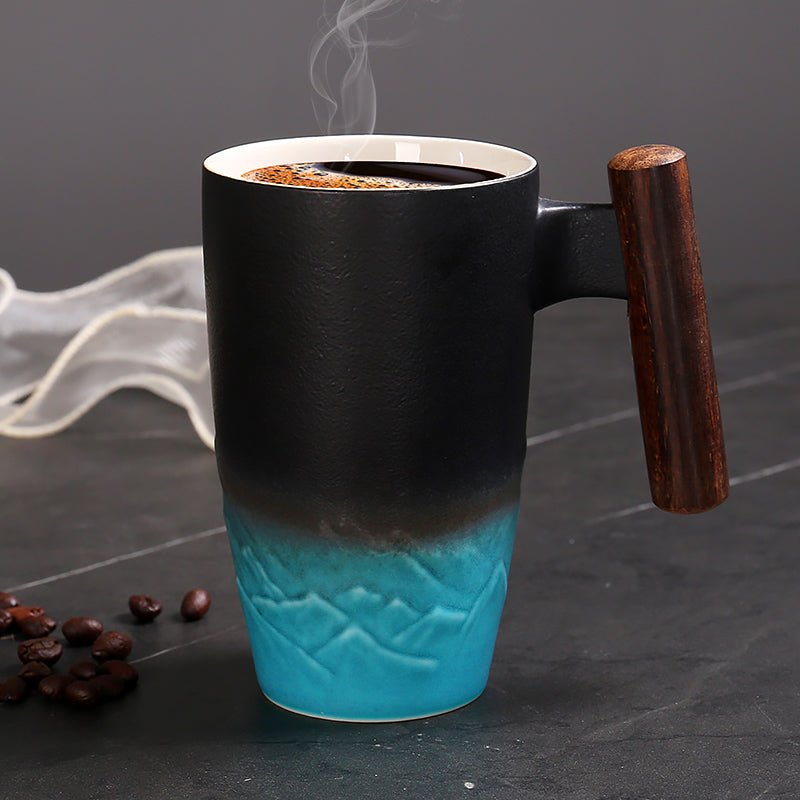
- Wooden-handle mugs — A distinctive option that changes grip and look. For example, the Mountain Sea II Coffee Tea Mug with Wooden Handle offers a different handling experience than a standard all-ceramic mug.
There are also trade-offs. A wooden handle can be comfortable and visually appealing, but it is not the first choice if you want a mug that lives in the dishwasher every day. Likewise, a heavier stoneware mug may feel reassuring, but it is less ideal for a commute-style office setup where every ounce matters.
What do we check in real use before we recommend a mug?
We do not just look at the label. We think through the situations shoppers actually run into: the kitchen cabinet that only allows a certain height, the office mug that sits beside a laptop, the gift that gets unboxed and used right away, and the dishwasher cycle that gets repeated all week.
Our practical check list looks like this:
- Cabinet fit — Will the mug stack or store without hitting the shelf above it?
- Machine fit — Will it clear a drip tray, pod machine, or espresso station?
- Grip comfort — Can you hold it with one hand when it is full?
- Wash routine — Will the finish, print, or handle style hold up to repeated dishwasher use?
- Gift appeal — Does it look good straight out of the box without needing a matching set?
In our experience, a mug that passes all five checks is usually the one people keep reaching for. A mug that only looks good in photos often gets set aside after a week.
Which coffee mug measurement is not the right choice for you?
Some buyers need to skip the common sizes altogether. That is not a bad thing. It just means the mug has to match the use case.
You may want a different style if:
- You need a mug that fits under a very low espresso machine.
- You prefer very large latte bowls and do not want a standard cup shape.
- You want a lightweight mug for travel, which usually means looking at insulated or lidded options instead.
- You wash everything by hand and want to avoid decorative handles or delicate finishes.
A standard ceramic mug is not the best choice for someone who wants maximum insulation. It is also not ideal if you need a spill-proof container for a car cup holder. In those cases, a tumbler or travel mug makes more sense than any classic mug measurement guide can solve.
How do you compare mugs without guessing?
Start with the numbers, then compare the shape. We recommend using a simple shortlist so you are not distracted by graphics or seasonal artwork alone.
| What to compare | Why it matters | What to look for |
|---|---|---|
| Capacity | Determines serving size | 10 oz, 11 oz, or 12 oz depending on your routine |
| Height | Checks cabinet and machine clearance | Enough space under shelves and drip trays |
| Mouth width | Affects sip feel and cooling | Comfortable rim, not overly wide unless you want faster cooling |
| Handle | Controls comfort and grip | Room for fingers without crowding |
| Material | Changes durability and feel | Ceramic, porcelain, stoneware, or wooden-handle options |
If you want a simpler starting point, our collection of mugs lets you compare styles in one place and move from there to the product pages that matter most.
Frequently asked questions
How do I measure a coffee mug at home?
Use a ruler or measuring tape to check height, top diameter, and base width. For capacity, fill the mug with water and pour it into a liquid measuring cup so you can see the real usable volume. Leave a little headroom when you compare that number to the listing.
Is an 11 oz mug too small for daily coffee?
Not for most standard coffee drinkers. An 11 oz mug is often a practical everyday size for drip coffee, tea, and medium servings. If you like larger milk drinks or want extra room for cream, a 12 oz mug may feel more comfortable.
What mug size fits under most coffee makers?
That depends on the machine, not just the mug. Many standard mugs fit under basic drip machines, but taller mugs can fail under compact pod brewers or espresso setups. Check the mug height against the clearance under your machine before buying.
Are wooden-handle mugs dishwasher safe?
Some are, but the wooden handle changes the care routine and may not suit aggressive dishwasher use. If you prefer low-maintenance cleaning, an all-ceramic mug is usually the safer choice. For decorative mugs with special handles, hand washing can help preserve the finish longer.
Should I choose a wider mug or a taller mug?
A taller mug usually helps keep heat a little longer and may fit better in tighter spaces. A wider mug can feel easier to sip from but often cools faster. If you drink quickly at a desk, either can work; if you sip slowly, a narrower shape is often the better fit.
If you are still deciding, compare the size, handle, and material first, then choose the mug that fits your actual routine. Start with the full CoffeifyMug collection, then open the product pages for the styles you would actually use every day.
Read more
16 Ounce Ceramic Coffee Mugs for Daily Use: What to Buy
A practical guide to choosing 16 ounce ceramic coffee mugs for everyday coffee, tea, and desk use. We cover shape, weight, handle comfort, care, and which styles fit different routines.
Czytaj dalej
Kate Spade Coffee Mug: What to Check Before You Buy
A practical guide to choosing a kate spade coffee mug, with the size, handle, finish, and giftability checks that matter once the mug is actually in use.
Czytaj dalej
Zostaw komentarz
Ta strona jest chroniona przez hCaptcha i obowiązują na niej Polityka prywatności i Warunki korzystania z usługi serwisu hCaptcha.