

Coffee Mug Holders: How to Choose the Right Style for Your Space
Reading time: about 9 minutes
A crowded coffee corner usually tells the whole story: mugs stacked two deep, handles catching on each other, and one favorite cup always buried at the back. Coffee mug holders solve that problem only if the style matches the mug size, the space, and the weight of what you actually use every morning.
We see the same pattern in our store advice. Shoppers want faster access, a cleaner counter, and a display that does not feel flimsy after a week of daily use. The right holder should keep mugs visible, stable, and easy to grab without bumping the rest of the setup.
Which coffee mug holder fits your counter or cabinet?
The first decision is not the finish or the look. It is where the holder will live. A countertop mug tree, an under-cabinet hook rack, and a wall-mounted rail all solve different problems, and each one has a different trade-off.
| Holder type | Best for | Main trade-off | What to check before buying |
|---|---|---|---|
| Countertop mug tree | Open coffee bars, small kitchens, easy grab-and-go use | Takes up visible counter space | Base width, balance, hook spacing, and height clearance under shelves |
| Under-cabinet rack | Freeing counter space and keeping mugs near a coffee machine | Needs secure installation and cabinet clearance | Screw placement, door swing, and the depth of the cabinet lip |
| Wall-mounted rail | Fixed coffee corners and display-oriented setups | Least flexible if you rent or move things often | Anchor type, stud placement, and distance from backsplash or outlets |
| Compact hook stand | Two to four mugs in tight spaces | Not ideal for heavy or oversized mugs | Hook finish, stem stability, and whether the base can tip when loaded unevenly |
For a small kitchen, a countertop tree may be the easiest starting point. If the counter is already crowded with a grinder, kettle, and machine, under-cabinet hooks can free up more usable space. Wall-mounted rails work well in a fixed coffee bar, but they are the least forgiving if you rent and cannot drill cleanly.
That is why we usually tell shoppers to measure the space first, not the mug. Measure the counter depth, the cabinet clearance, and the distance the mug needs to hang without hitting the wall or backsplash.
How do you match the holder to your mug size?
A holder that looks fine in a photo can still fail once you hang a real mug on it. The handle shape, mug height, and weight matter more than the printed capacity alone. If you are still comparing mug options, our size guides for 10 oz Coffee Mug: Size, Fit, and What to Check Before You Buy, 11 oz Coffee Mug: Size, Fit, and What to Check Before You Buy, and 16 Ounce Coffee Mug Buyer’s Guide: Size, Material, and Fit are useful reference points before you choose a holder.
- Standard mugs with wide handles need deeper hooks or wider arms, not just a thin peg.
- Oversized 14 oz to 16 oz mugs usually need more spacing between hooks and a sturdier base.
- Short cups fit low-slung trees better than tall mugs with high handles.
- If the mug is heavy stoneware, check the holder’s support design rather than guessing from the photos.
- Handles that are thick or squared off can scrape against a sharp weld or narrow hook tip.
We also look at the mug’s footprint on the shelf below. A tall mug can hang correctly and still create a collision problem if it swings into a cabinet edge or a second mug beside it. That is the kind of detail buyers only notice after unboxing.
If a holder is only usable when every mug hangs perfectly straight, it is too tight for daily use.
That matters even more if your mugs go through dishwasher cycles every day. A mug that is slightly damp, warm, or handled quickly in the morning needs a holder with smooth contact points so the handle is not constantly rubbing against rough metal.
What materials and finishes hold up best day after day?
Material choice is where a lot of buyers make a quick decision and then regret it later. A holder can look decorative and still be inconvenient if the finish chips, the base wobbles, or the hook ends are rough.
- Powder-coated steel is a practical choice for most kitchens. It resists daily scuffs better than bare metal, but the coating can chip at hook tips if mugs are slammed on or dragged off.
- Stainless steel is easy to wipe and suits humid coffee stations. It is not immune to fingerprints, so it tends to look better in a busy office or a more utilitarian setup than on a spotless open shelf.
- Wood and bamboo add warmth to a kitchen counter. They are better for dry, indoor spaces and need gentler care. They are not the best choice if you often wipe surfaces with very wet cloths or harsh cleaners.
- Silicone feet or felt pads help prevent sliding on stone, tile, or polished wood. They also reduce the little vibrations that make a light holder feel unstable when you grab a mug quickly.
In our experience, the most overlooked detail is the quality of the contact points. Check for sharp edges, burrs, or a rough weld where the hook meets the frame. That is where handle scratches and finish wear usually begin. A good holder should feel smooth in the hand before it ever goes on the counter.
Another practical point: if the holder will sit near a sink or espresso machine, choose a finish that is easy to wipe dry. Coffee splashes, steam, and mineral spots are normal in a real coffee corner. The holder should handle that routine without needing special treatment.
What should you check before buying coffee mug holders?
The best purchase decisions come from looking past the product photo. A holder can appear compact and elegant online, then feel awkward once it is loaded with real mugs. Before you buy, check the details that affect daily use, not just the style.
- Base stability. A narrow base or a tall center column can tip if you load one side first. That matters for kids, shared kitchens, and office break rooms where mugs are not always hung gently.
- Hook spacing. Mugs should not bang together when you remove one from the rack. If the hooks are too close, the holder will look full even with only a few cups on it.
- Installation method. Under-cabinet and wall-mounted designs need the right screws, anchors, and cabinet material. If you cannot drill into the space, a countertop model is usually the safer move.
- Cleaning access. Open frames are easier to wipe than crowded hook clusters that trap dust, coffee grounds, or sticky residue from nearby syrup bottles.
- Long-term wear. Watch for paint chips, loose screws, rust at joints, and bent hooks. Those are the common failure points we see first in low-cost holders.
If you are building a whole setup rather than buying one piece at a time, start with the mugs you already like using. Then browse our products page or the full collection to compare pieces that fit the same coffee corner without crowding it.
That approach also helps if you are buying for a gift. A neat holder plus a mug set can look thoughtful on the shelf, but only if the mug sizes and hook depth line up. A display that is too tight will feel improvised instead of intentional.
Where do coffee mug holders make sense, and where do they not?
Coffee mug holders are at their best when the mugs are used daily and stored near the coffee routine. They are less useful when the collection is mixed, oversized, or more decorative than functional.
- Good fit: small kitchens that need vertical storage, office desks that need a tidy reset, and coffee bars where the mugs are part of the display.
- Good fit: households that use classic handled mugs in the 10 oz to 16 oz range and want fast access in the morning.
- Not ideal: oversized travel mugs, handleless cups, or heavy stoneware pieces that need extra support.
- Not ideal: rentals where you cannot drill into cabinets or walls, unless you choose a stable countertop option.
- Not ideal: deep mugs with wide handles if the rack has shallow hooks or cramped spacing.
If your coffee setup changes often, a flexible countertop holder is usually the safer choice. If the mugs are part of a permanent built-in coffee nook, a mounted rack can be cleaner and more efficient. We usually recommend matching the holder to the way the space is actually used, not the way it looks on day one.
There is also a simple maintenance trade-off. Countertop models are easier to move and wipe, but they use precious surface space. Mounted models free that space, but they ask for better planning and a more permanent installation. Pick the compromise you can live with.
Frequently asked questions
How many mugs can a coffee mug holder hold?
That depends on the design, not just the size of the base. A compact countertop holder may be right for two to four everyday mugs, while a larger tree or wall rack can handle more if the hooks are spaced well. The practical limit is the point where mugs start bumping each other or the holder starts to wobble.
Are under-cabinet coffee mug holders safe for heavy mugs?
They can be, but only if the cabinet is solid and the hardware is installed correctly. Heavy stoneware or oversized mugs put more stress on the mount, so weak particleboard or loose screws are a real problem. If the cabinet feels flimsy, a countertop holder is the safer choice.
What is the best material for a coffee mug holder in a humid kitchen?
Powder-coated steel or stainless steel usually makes the most sense in a humid space because they wipe down easily. Wood and bamboo can work, but they need more care and are better kept away from constant moisture. The key is to choose a finish that will not degrade if you clean around the coffee station often.
Do coffee mug holders scratch mug handles?
They can if the hook ends are sharp, the welds are rough, or the mugs are forced on and off at an angle. Smooth, rounded contact points reduce that risk. We always recommend checking the hook finish before you load your best mugs on it.
Should I buy a mug holder before or after I choose my mugs?
Choose the mugs first if you care about fit. The handle shape, height, and weight tell you more than the capacity alone. If you already own the mugs, measure them and compare those dimensions against the holder so you do not end up with a rack that looks good but works badly.
If you want a practical next step, measure the space, count the mugs, and decide whether you need counter, wall, or under-cabinet storage. Then compare the mug sizes in our guides and browse the full collection to build a setup that fits the room instead of fighting it.
More from our blog
Read more
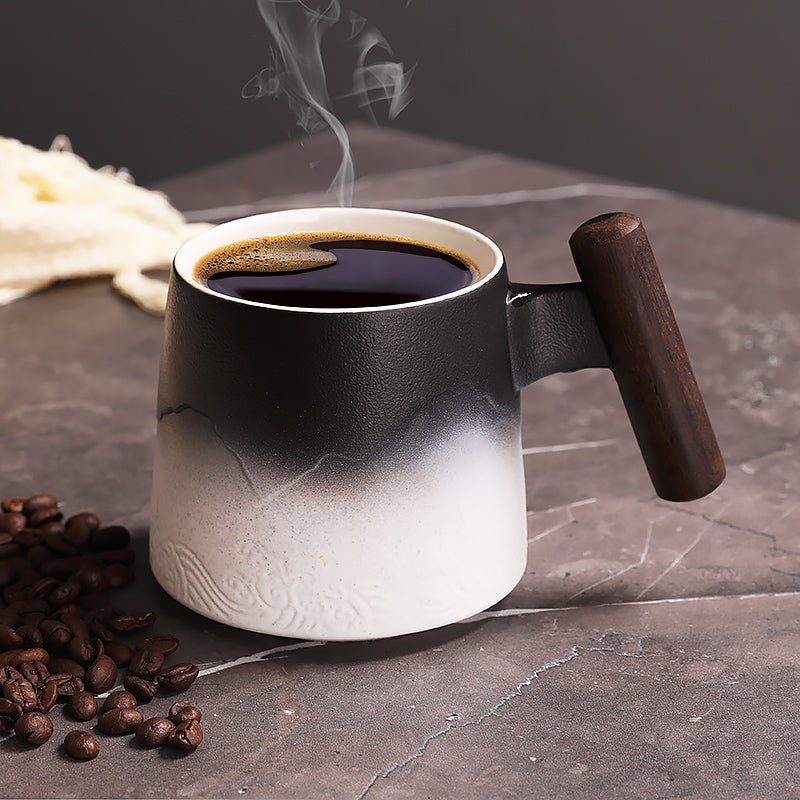
Coffee Mug Holder Wall: How to Choose the Right Fit for Your Kitchen
A coffee mug holder wall can clear counter space, display your mugs, and still stay practical if you match the rack to your wall type and mug sizes. We cover the fit checks, materials, and common m...
Czytaj dalej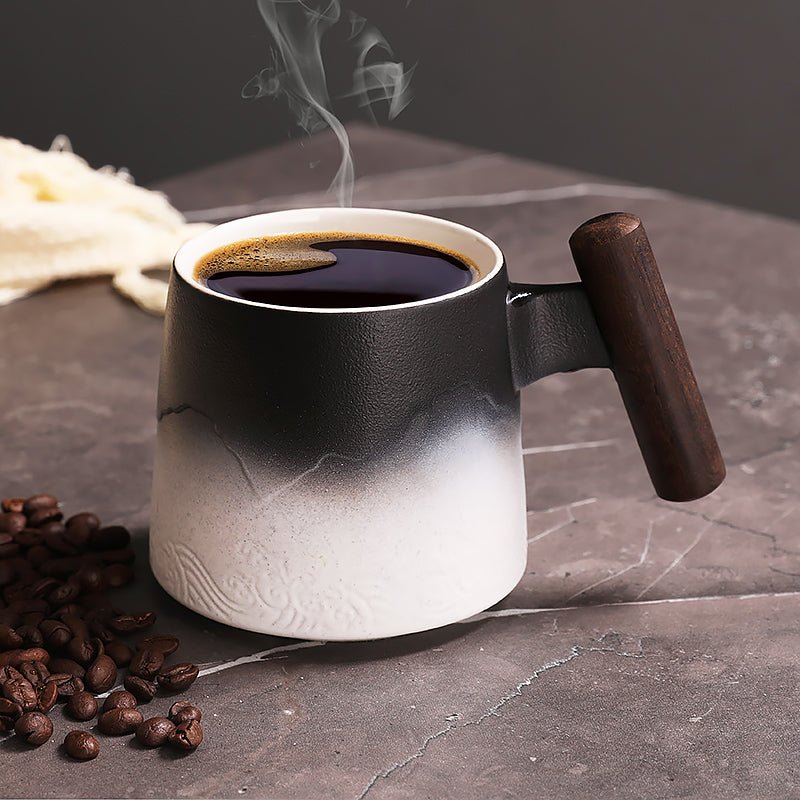
Coffee Mug Set of 4: What to Check Before You Buy
A practical guide to choosing a coffee mug set of 4 for daily use, gifts, or office setups, with sizing, material, and care details that matter before you buy.
Czytaj dalej
Zostaw komentarz
Ta strona jest chroniona przez hCaptcha i obowiązują na niej Polityka prywatności i Warunki korzystania z usługi serwisu hCaptcha.