
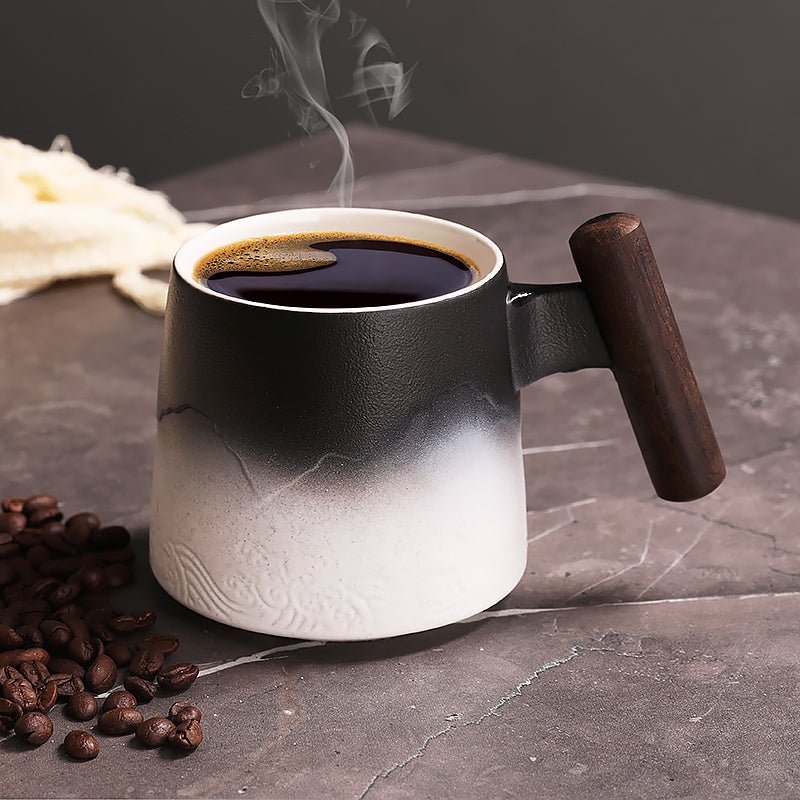
Coffee Mug 20 oz: What to Check Before You Buy
Reading time: about 8 minutes
A coffee mug 20 oz sounds simple until you set one on a kitchen counter, try to lift it with one hand, and realize the size changes everything. The first sip feels generous. The second feels practical. The third tells you whether the mug belongs in your daily routine or just on a shelf.
In our store, we see the same pattern over and over: shoppers want more capacity, but they still want a mug that feels balanced on an office desk, in a morning kitchen rush, or when it is opened as a gift and immediately judged by the handle. A 20 oz mug can be the right size for drip coffee, tea, cocoa, or a longer work session, but it is not the right choice for everyone. This guide keeps the trade-offs clear so you can buy with fewer surprises.
If you want to browse while you read, start with our full collection and then compare specific styles like the Round Coffee Tea Mug, the Elk and Moon Coffee Tea Mug, and the Koi Fish Coffee Tea Mug.
What does a coffee mug 20 oz change in daily use?
Twenty ounces is not just a bigger number. It is roughly 2.5 standard cups, which means one mug can handle a fuller pour without the spill risk that comes from filling a smaller cup to the brim. That extra space matters on a busy morning when you add cream, oat milk, or room for foam, and it matters again at a desk when you do not want to stand up for a refill every hour.
A 20 oz mug tends to work best for:
- Large drip coffee or pour-over servings
- Tea drinkers who like a long, slow drink
- Hot chocolate, matcha, or milk-forward drinks
- People who want one mug to last through a meeting or work block
The downside is real, though. A bigger mug is usually heavier when full, takes more cabinet space, and can feel awkward if you prefer a quick espresso or a compact morning cup. If you want something that lives in a car cup holder, a 20 oz ceramic mug is usually the wrong tool. It is a kitchen mug, a desk mug, and a gift mug, not a travel mug.
Which material and shape make a 20 oz mug easier to live with?
Most shoppers focus on the artwork first. We check the body, the rim, the handle, and the foot ring first. That is the difference between a mug that looks good in a product photo and one that feels right after a week of dishwasher cycles and countertop use.
For a coffee mug 20 oz, these details matter most:
- Ceramic body: It gives the mug a solid feel, holds heat well, and is common for home use. The trade-off is weight. A full ceramic mug is heavier than a thin metal or plastic alternative.
- Handle clearance: A good handle should leave room for at least a comfortable two-finger grip without squeezing. If the opening is too tight, the mug feels awkward before you have even finished the first pour.
- Rim and finish: A smooth rim matters more than people expect. A mug can have a beautiful design and still feel off if the lip is uneven or the glaze has rough spots.
- Foot ring stability: The base should sit flat. A mug that rocks slightly on the counter becomes annoying fast, especially on a desk with a coaster.
In practical terms, the common failure points are easy to spot if you know what to look for: hairline crazing in the glaze after temperature swings, small rim chips from sink contact, printed artwork that softens after repeated aggressive washing, and a handle that looks generous in photos but feels cramped in the hand. Those are the details that separate a mug you keep from one you replace.
Which of our 20 oz mugs fits your routine best?
If you want a straightforward daily mug, the Round Coffee Tea Mug is the most familiar shape to compare first. A round profile is usually the easiest to clean, easiest to stack in your mind as a basic everyday cup, and easiest to gift if you do not know the buyer’s style.
If you want something with a more decorative, gift-ready feel, the Elk and Moon Coffee Tea Mug fits a more rustic or cabin-style look. It makes sense for someone who wants the mug to feel like part of the room, not just a utility item on the counter.
The Koi Fish Coffee Tea Mug works best for buyers who want a stronger visual statement. That matters if the mug will live on a desk, be opened as a gift, or sit on a shelf between uses where the artwork matters as much as the capacity.
| Mug | Best for | Why it may fit you | Possible drawback |
|---|---|---|---|
| Round Coffee Tea Mug | Everyday home or office use | Simple shape, easy to reach for, low learning curve | Less decorative if you want a more personal gift |
| Elk and Moon Coffee Tea Mug | Rustic decor, gifting, quiet morning coffee | Stronger visual character, good for buyers who like themed drinkware | Not as neutral if you want a plain kitchen look |
| Koi Fish Coffee Tea Mug | Desk display, gift opening, art-forward buyers | Distinct design that stands out without needing accessories | Less suited to minimalists who want a plain mug |
If you are still comparing styles, our broader blog posts can help you narrow the decision. We recommend starting with 20 oz Coffee Mug: What to Check Before You Buy and then reading 20 oz Coffee Mug Buying Guide for Fit, Heat, and Everyday Use for a closer look at daily handling.
What should you check before you buy?
We think a 20 oz mug should be judged the way it will actually be used: on a counter, in a sink, in a dishwasher, and in a hand that may already be half-awake. The design matters, but the buying checklist should stay practical.
- Grip: Make sure the handle looks large enough for your hand, not just for the product photo.
- Weight: A 20 oz mug should feel sturdy, but not so heavy that it becomes tiring once filled.
- Rim comfort: The lip should feel smooth if you drink coffee or tea straight from the mug.
- Cleaning: If you want low effort, choose a mug you will not hesitate to rinse and wash often.
- Display value: If it is a gift, ask whether the design still looks good after the box is opened and the mug is placed on a shelf.
That is also why our own buying notes often push shoppers toward the details that are easy to skip. The product description should tell you enough to judge the shape, the theme, and the practical fit. If it does not, that is a warning sign. For a more ceramic-specific pass, see Ceramic 20 oz Coffee Mug: What Buyers Should Check Before Buying.
How should you care for a 20 oz ceramic mug?
Most ceramic mugs are easy to live with, but easy does not mean careless. If you want the artwork and glaze to keep looking good, the safest approach is simple: wash it gently, avoid sudden temperature swings, and do not let chips sit unnoticed.
We recommend a few habits that save a lot of wear:
- Rinse coffee and tea residue soon after use so stains do not set into the glaze.
- Use a soft sponge on decorated areas instead of abrasive scrubbers.
- Let the mug cool before adding very cold liquid if it has just held something hot.
- Dry it before stacking so moisture does not sit in the base or handle area.
The trade-off with a decorative ceramic mug is that repeated rough handling shows up eventually. Dishwasher cycles can be fine for many mugs, but hot water, detergent strength, and crowded racks can wear down printed surfaces over time. If you want to be conservative, hand-washing is the safest default. If you want a broader care discussion, our article 20 oz Ceramic Coffee Mug Buying Guide for Everyday Use breaks down heat, fit, and daily handling in more detail.
Who should skip a 20 oz mug and choose something smaller?
A coffee mug 20 oz is not the right answer if you drink short pours, rotate between several cups a day, or want something that tucks neatly into a small cabinet. It is also not the best fit if you prefer a lightweight mug that you can lift with one finger while walking from the kitchen to the table.
Choose a smaller mug instead if you:
- Drink espresso or small cappuccinos
- Need a mug that fits tight shelves or narrow cupboard slots
- Prefer a lighter feel over long heat retention
- Want a travel cup rather than a home or office mug
That is the main limitation of the 20 oz size. It solves the refill problem, but it introduces a bulk problem. If your drink routine is modest, a smaller mug will feel better from the first use. If you want one mug for a long work block, a bigger size usually makes more sense.
Frequently asked questions
Will a coffee mug 20 oz fit under most coffee makers?
Not always. A 20 oz mug is often tall enough that some single-serve brewers or low-spout machines feel tight, so the safest move is to measure the clearance on your machine before you buy. Open countertop setups are usually easier than compact pod machines.
Is ceramic the best material for a 20 oz coffee mug?
For home and desk use, ceramic is one of the most practical choices because it feels sturdy and holds heat well. It is not the best choice if you want something ultralight or travel-ready, but it is a strong pick for everyday coffee, tea, and gift use.
How heavy does a 20 oz mug usually feel once it is full?
Heavier than a small mug, which is exactly why handle comfort matters. Once filled, the mug should still feel balanced in one hand, but if you have wrist sensitivity or prefer very light drinkware, a smaller size may be more comfortable.
What should I do if I am still deciding between styles?
Start with the full collection, then compare the Round Coffee Tea Mug, Elk and Moon Coffee Tea Mug, and Koi Fish Coffee Tea Mug against the checklist above. If the mug will be a gift, choose the style that looks right on a kitchen counter or office desk after the unboxing moment, not just in the product photo.
Read more
Farmhouse Coffee Mugs: How to Choose the Right Everyday Set
A practical guide to farmhouse coffee mugs with real buying trade-offs, style differences, and fit tips for daily use, gifting, and kitchen display.
Czytaj dalej
Lang Coffee Mugs: What to Compare Before You Buy
Lang coffee mugs work best when the handle, shape, and finish match how you actually drink coffee. This guide compares our options, what to check in person, and which mug fits daily use.
Czytaj dalej
Zostaw komentarz
Ta strona jest chroniona przez hCaptcha i obowiązują na niej Polityka prywatności i Warunki korzystania z usługi serwisu hCaptcha.